On the Upper West Side, Kefi occupies a position that few Greek restaurants in New York hold: a neighbourhood address with enough culinary seriousness to draw diners from across the city. The kitchen applies technique-forward thinking to the Aegean pantry, placing it in a different conversation from the midtown Greek seafood houses that dominate the borough's perception of the cuisine.
- Address
- 222 W 79th St, New York, NY 10024
- Phone
- +1 212 873 0200
- Website
- kefirestaurant.com
- Directions
- Get directions
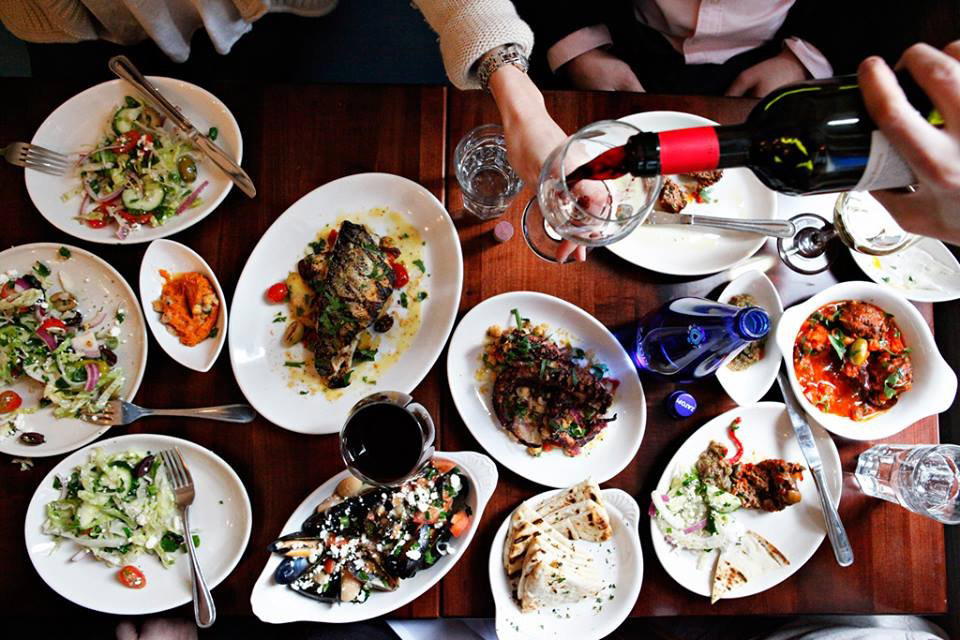
Upper West Side, Where Neighbourhood Dining Gets Serious
West 79th Street between Broadway and West End Avenue is not where New York's restaurant press tends to look first. The Upper West Side has long been coded as a residential dining corridor, strong on comfort and accessibility, lighter on the kind of culinary ambition that draws critics downtown or across the river. That reputation has been shifting. A cluster of addresses along this stretch have quietly repositioned what neighbourhood dining means at the summit of Manhattan, and Kefi, a rustic Greek restaurant at 222 W 79th St in New York City, sits inside that recalibration. Arriving on foot from the 79th Street subway stop, the block reads as residential in the way the Upper West Side always has: prewar limestone, stroller traffic, the particular unhurried pace of a neighbourhood that considers itself complete. The restaurant's presence on that block is less statement than argument: that Aegean cooking, applied with seriousness, belongs in this tier of the city.
The Greek Kitchen in a New York Context
Greek cuisine in New York has historically been parsed into two categories: the white-tablecloth seafood house, where whole fish command prices that match the surrounding zip codes, and the casual taverna, where the pitch is familiarity and portion size. Neither category fully describes what a more technique-conscious approach to the Aegean pantry looks like when it operates at neighbourhood scale. That intersection is where Kefi situates itself. The editorial angle worth holding onto here is not the venue itself but the broader pattern: across American cities, a generation of kitchens has worked to apply European and American fine-dining methods to regional ingredient traditions without abandoning the accessibility of the original cuisine. You see this at Smyth in Chicago, where fermentation discipline meets Midwest sourcing, and at Single Thread Farm in Healdsburg, where Japanese precision frames Northern California produce. The Greek pantry, with its emphasis on legumes, preserved fish, wild greens, and high-quality olive oil, is well-suited to exactly this kind of treatment.
In New York specifically, that treatment is harder to find than the city's Greek restaurant count might suggest. The midtown seafood houses, many charging at the level of Le Bernardin or Per Se, trade primarily on ingredient provenance and occasion dining. The downtown end of the market leans casual. The middle register, where technique and affordability share the same table, is where Kefi has built its identity.
Local Ingredients, Global Technique: The Aegean Pantry Applied
The editorial angle worth developing in any assessment of Kefi is how the kitchen positions itself against the tradition it draws from. Greek cooking is not a cuisine that suffers from a lack of technique. The slow-braising traditions of the mainland, the preserving and curing practices of the islands, the careful seasoning logic built around lemon, olive oil, and dried herbs: these are not primitive methods awaiting refinement. The question for any kitchen working in this space is what imported discipline adds without flattening the source material.
Kitchens that get this balance right, whether at Blue Hill at Stone Barns in Tarrytown, where the discipline is agricultural traceability, or at Addison in San Diego, where California produce is filtered through classical French structure, tend to treat technique as a tool for clarity rather than transformation. The leading results in this genre make the source ingredient more legible, not less. For the Aegean pantry, that means lamb that tastes specifically of where it grazed, olive oil that reads as a seasoning rather than a cooking medium, and herbs that arrive with enough intensity to function as more than garnish.
Whether Kefi consistently achieves that standard is a question the kitchen has to answer course by course. What the address and the positioning signal is that the ambition is there, which puts it in a different conversation from most of its Upper West Side peers and from the majority of Greek restaurants in the five boroughs.
Where Kefi Sits Against the New York Field
New York's most-discussed restaurants operate at the summit of a specific price and prestige tier. Atomix, Eleven Madison Park, and Masa compete on a playing field where tasting menus and Michelin recognition define the comparable set. Kefi does not occupy that tier. Its competitive set is the middle band of serious neighbourhood restaurants: places where a full dinner for two lands in a range that does not require advance financial planning, where the room is accessible rather than ceremonial, and where the cooking earns its authority through consistency and sourcing rather than through format and production.
That middle band is, where New York dining is most interesting to track right now. The ultra-premium end has become globally legible and relatively predictable in its logic. The neighbourhood tier, where kitchens are making decisions about what to cook and how without the scaffolding of a tasting menu or an omakase format, is where local character tends to emerge. Across the country, particularly instructive parallel addresses are places like Frasca Food and Wine in Boulder, Emeril's in New Orleans, and Providence in Los Angeles: restaurants that hold serious culinary intent within a format that remains readable to a broad dining public. For an overview of how Kefi fits within the wider New York dining field, see our full New York City restaurants guide.
How Kefi Compares on Logistics
| Venue | Cuisine | Price Tier | Format |
|---|---|---|---|
| Kefi | Greek, Aegean | Not confirmed | Neighbourhood restaurant |
| Le Bernardin | French, Seafood | $$$$ | Formal tasting and prix fixe |
| Atomix | Modern Korean | $$$$ | Counter tasting menu |
| Eleven Madison Park | French, Vegan | $$$$ | Tasting menu, seasonal format |
| Masa | Sushi, Japanese | $$$$ | Omakase counter |
Planning Your Visit
Kefi is located at 222 W 79th St, reachable from the 79th Street station on the 1 train. The Upper West Side corridor here is walkable and well-connected to Riverside Park and the American Museum of Natural History, which makes the address practical for combining a meal with broader neighbourhood activity. For current hours, booking availability, and menu details, direct confirmation with the venue is the appropriate route.
A Minimal comparable set
Comparable venues nearby, for context on price, style, and recognition.
| Venue | Cuisine | Price | Notes |
|---|---|---|---|
| KefiThis venue — the venue you are viewing | Not listed | $$ | Not listed |
| Ovelia | Not listed | $$ | Astoria (Central), Modern Greek Grill |
| The Greek Kitchen | Not listed | $$ | Upper West Side-Lincoln Square, Traditional Greek |
| Symposium | Not listed | $$ | Morningside Heights, Authentic Greek Taverna |
| Kiki's | Chinatown-Two Bridges, Authentic Greek | $$ | Not listed |
| Tinos | Not listed | $$ | Upper East Side-Yorkville, Authentic Greek Seafood |
Continue exploring
More in New York City
Restaurants in New York City
Browse all →
Bars in New York City
Browse all →


Hotels in New York City
Browse all →







At a Glance
- Rustic
- Cozy
- Intimate
- Classic
- Casual Hangout
- Group Dining
- Family
- Standalone
Intimate atmosphere with small dining rooms evoking a palatial Greek hideaway.