Jimmy's Famous American Tavern - Point Loma
Our verdict
Positioned along North Harbor Drive at Point Loma, Jimmy's Famous American Tavern occupies a stretch of San Diego waterfront where the marina meets the everyday. The format leans toward approachable American tavern dining with direct access to harbour views, placing it in a different tier from San Diego's fine-dining circuit but squarely in the category of dependable, setting-driven casual dining that the city does well.

Pearl is the En Primeur Club membership app, where members save venues, book tables and use the concierge.
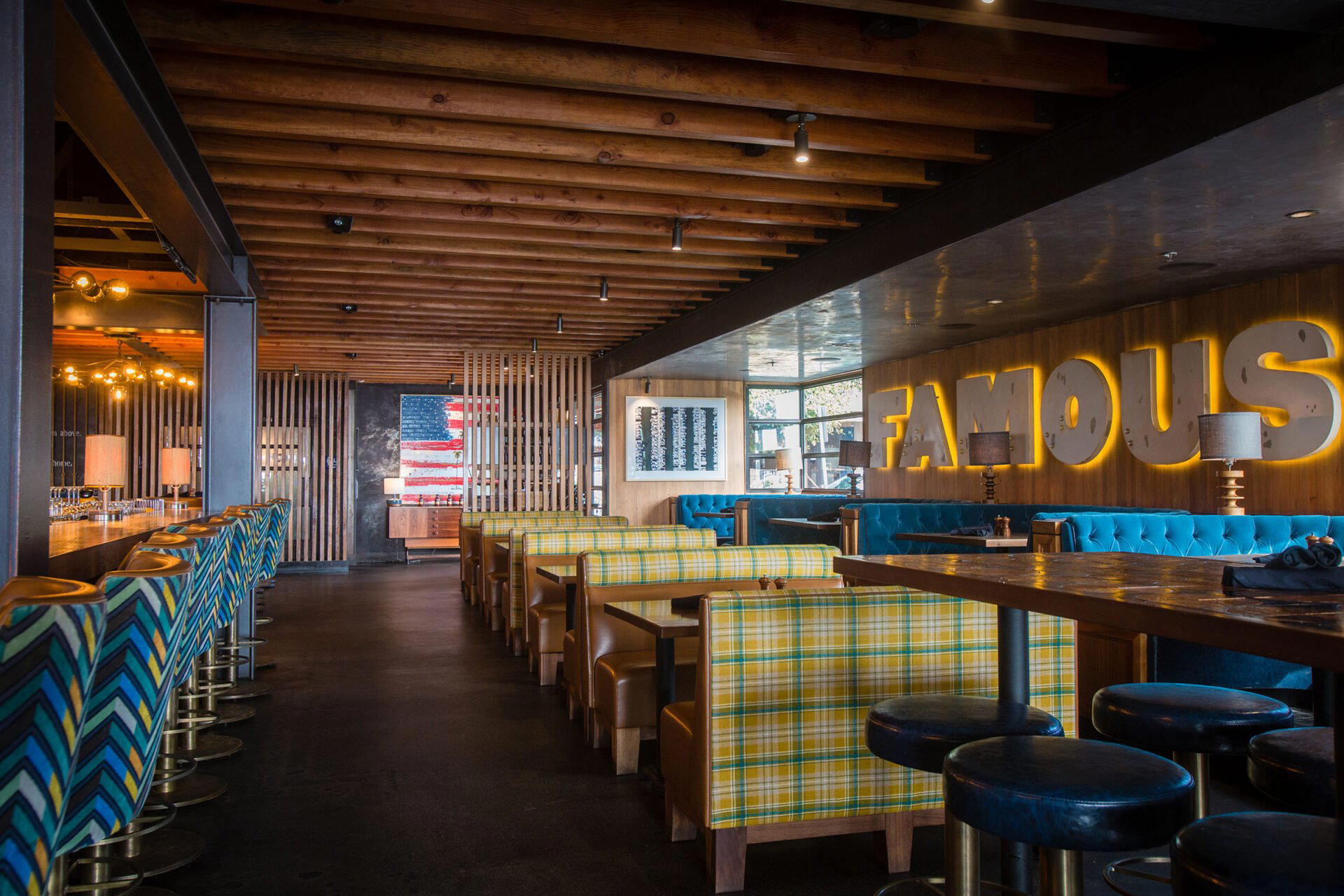
Harbor-Side American, Without the Fine-Dining Ceremony
San Diego's dining identity has long been shaped by its coastline. The city's most compelling casual venues don't merely sit near the water; they use the proximity as context, letting the maritime setting do work that a conventional dining room cannot. Along North Harbor Drive at Point Loma, the approach taken by Jimmy's Famous American Tavern fits that pattern: harbour views, an open and social atmosphere, and a format that prioritises accessibility over ceremony. This is the kind of American tavern dining that functions as a neighbourhood anchor rather than a destination meal, and in San Diego's casual-coastal tier, that is a meaningful position to hold.
Point Loma itself sits at the western edge of the city, where the peninsula separates San Diego Bay from the Pacific. The neighbourhood draws a mix of military personnel from the nearby naval installations, local families, and visitors coming from Shelter Island and the marina district. A tavern at this address operates within a specific social contract: the setting promises something relaxed, the menu should deliver on that promise, and the harbour backdrop is not incidental but structural. For American tavern dining across the country, venues that commit to a genuine sense of place consistently outperform those that treat location as mere real estate.
The Sourcing Logic Behind American Tavern Cooking
The American tavern format, at its most considered, is not simply a category of casual eating. It represents a particular approach to ingredient sourcing: food that draws from regional supply chains, prepared with minimal distance between origin and plate. In Southern California, that sourcing logic has access to one of the more diverse agricultural and marine environments in the country. The Pacific fisheries that supply San Diego's waterfront restaurants include albacore, yellowtail, halibut, and rockfish, depending on the season. The growing regions within a few hours' drive encompass citrus, avocado, stone fruit, and year-round leafy greens from the San Diego County farm belt and Imperial Valley.
For a venue on North Harbor Drive, the honest application of that sourcing story would mean local seafood as a primary protein category, produce that reflects the California agricultural calendar, and a menu that changes character as the season turns. American tavern cooking at its most grounded reads as a direct expression of regional supply rather than a standardised pub menu applied to any geography. The question for any tavern operating in this setting is how deliberately it connects its menu to the specific region it occupies, and whether that connection is visible in what lands on the table.
This kind of sourcing-led approach is visible across the tier: farms-to-fork positioning that characterises properties like Single Thread Farm in Healdsburg or the hyper-local sourcing commitments at Blue Hill at Stone Barns in Tarrytown operate at the fine-dining end of the same principle. The logic, however, scales. A tavern that takes its geography seriously can deliver the same connective tissue between place and plate without the tasting-menu format.
Where Point Loma Sits in San Diego's Dining Spread
San Diego's restaurant scene has developed distinct geographic clusters. Downtown and East Village anchor the city's more ambitious dining: Addison operates at the fine-dining summit with its French-contemporary format, while Soichi holds a quieter but significant position in the Japanese dining tier. Properties like 1450 El Prado and 777 G St each anchor specific neighbourhood identities, while 94th Aero Squadron occupies a comparable setting-driven casual category near the airport. For a full orientation to what San Diego's restaurants offer across price tiers and formats, our full San Diego restaurants guide maps the competitive terrain in detail.
Point Loma as a dining destination sits outside the downtown density, which creates a different dynamic. Visitors who make the drive out to North Harbor Drive are usually doing so deliberately, drawn by the marina setting and the waterfront approach rather than the proximity to other dining options. That journey is a filter in itself: the clientele at any harbour-side venue in this part of San Diego tends to arrive with lower ambient stress than the downtown dinner crowd, and the pacing of a meal can reflect that. The venue format of a casual American tavern suits this geography better than it would the more competitive, trend-conscious restaurant corridors closer to the Gaslamp Quarter.
The American Tavern in National Context
Across the United States, the casual American restaurant category encompasses everything from neighbourhood diners to waterfront taverns. The venues that age well within that category share a few characteristics: they serve food that is honest about what it is, they lean into their specific setting rather than against it, and they price to the expectation they create. The premium American dining tier, occupied by venues like Emeril's in New Orleans or at the furthest reach, The French Laundry in Napa, operates on different terms entirely. So does the technically sophisticated middle tier, where Smyth in Chicago, Lazy Bear in San Francisco, or Frasca Food and Wine in Boulder compete on craft and concept.
The American tavern format sits below all of that, and that positioning is not a criticism. The casual-dining tier at its finest is a genuine expression of regional identity without the performance overhead. In coastal California, that means a version of American cooking inflected by Pacific seafood access, Mexican culinary influence from across the border, and a produce calendar that runs longer than almost anywhere else in the country. A tavern that anchors itself to that regional identity delivers something that the fine-dining tier, for all its technical reach, cannot: a direct, uncomplicated connection between a specific place and what you eat there. For reference on how that marine sourcing principle operates at the fine-dining level, Le Bernardin in New York City and Providence in Los Angeles each demonstrate how seriously the Pacific and Atlantic fisheries can be taken when the format demands it. Atomix in New York City and Atelier Moessmer Norbert Niederkofler in Brunico each show how the sourcing-led philosophy translates across very different culinary traditions when applied with discipline.
Planning Your Visit
Jimmy's Famous American Tavern at Point Loma sits at 4990 North Harbor Drive, along the waterfront stretch between Shelter Island and the downtown marina. The location works well approached from the west, coming off Rosecrans Street toward the harbour. Given the casual format and waterfront setting, this is a venue that performs differently at different times of day: the harbour light shifts considerably through an afternoon, and the early evening period along North Harbor Drive has a particular quality as boat traffic settles and the bay catches the last of the day's light.
Frequently asked questions
What part of town is Jimmy's Famous American Tavern - Point Loma in?
Jimmy's Famous American Tavern - Point Loma is located at 4990 N Harbor Dr, San Diego, CA 92106, San Diego.
Is Jimmy's Famous American Tavern Point Loma a good option for waterfront dining in San Diego?
The Point Loma location at 4990 North Harbor Drive sits along the waterfront corridor between Shelter Island and the downtown marina, which is one of San Diego's more consistent stretches for harbor-facing casual dining. The American tavern format positions it differently from the city's upscale waterfront options, making it a practical choice when the priority is proximity to the water without a tasting-menu price point. San Diego's coastal dining geography means this stretch competes with several established harbor-side venues, so the tavern's casual register is its clearest differentiator.
What's the signature dish at Jimmy's Famous American Tavern - Point Loma?
The American tavern format the restaurant operates within typically centers on craft burgers, sandwiches, and shareable plates built around domestic sourcing. For the current menu, checking directly with the Point Loma location is the most reliable approach.
How hard is it to get a table at Jimmy's Famous American Tavern - Point Loma?
Jimmy's Famous American Tavern at Point Loma operates in a casual tavern format rather than a reservation-priority fine-dining model, which generally means walk-in access is more realistic here than at San Diego's tighter ticket venues like Addison. That said, the North Harbor Drive waterfront position draws consistent harbor-view demand, particularly on weekends. Contacting the venue directly will give you the clearest picture of current wait times.
Comparable Spots
Comparable options at a glance, pulled from our tracked venues.
| Venue | Cuisine | Price | Awards | Notes |
|---|---|---|---|---|
| Jimmy's Famous American Tavern - Point LomaThis venue (the venue you are viewing) | Classic American Tavern Fare | $30–50 | Not listed | Not listed |
| Addison | Modern California Fusion Fine Dining | $300–500 | 3 Michelin Stars · World's 50 Best #31 | French, Contemporary |
| Callie | Modern Mediterranean | $50–100 | Michelin Bib Gourmand · Wine Spectator Best of Award of Excellence | Greek, Mediterranean Cuisine, Californian-Mediterranean |
| Trust | Modern American Wood-Fired Small Plates | $30–50 | Michelin Plate | New American, American |
| Sushi Tadokoro | Traditional Edomae-Style Omakase | $50–100 | Michelin Plate | Sushi, Japanese |
| Soichi | Modern Japanese Omakase | $150–200 | 1 Michelin Star | Japanese |