Ippuku



A Michelin Bib Gourmand izakaya in Berkeley's downtown core, Ippuku ranks among North America's most recognized casual Japanese venues, appearing on Opinionated About Dining's list in both 2024 and 2025. The room trades in the low-lit, wood-heavy aesthetic of a Tokyo backstreet bar, while the menu holds to traditional izakaya logic: small plates, skewers, and a serious shochu program at a price point that makes repeat visits the obvious move.
Pearl is the En Primeur Club membership app — saves, bookings, and concierge access live there. Same editors, same standards.
- Address
- 2130 Center St, Berkeley, CA 94704
- Phone
- (510) 655-1969
- Website
- ippukuberkeley.com
- Directions
- Get directions
 Saves & bookings on Pearl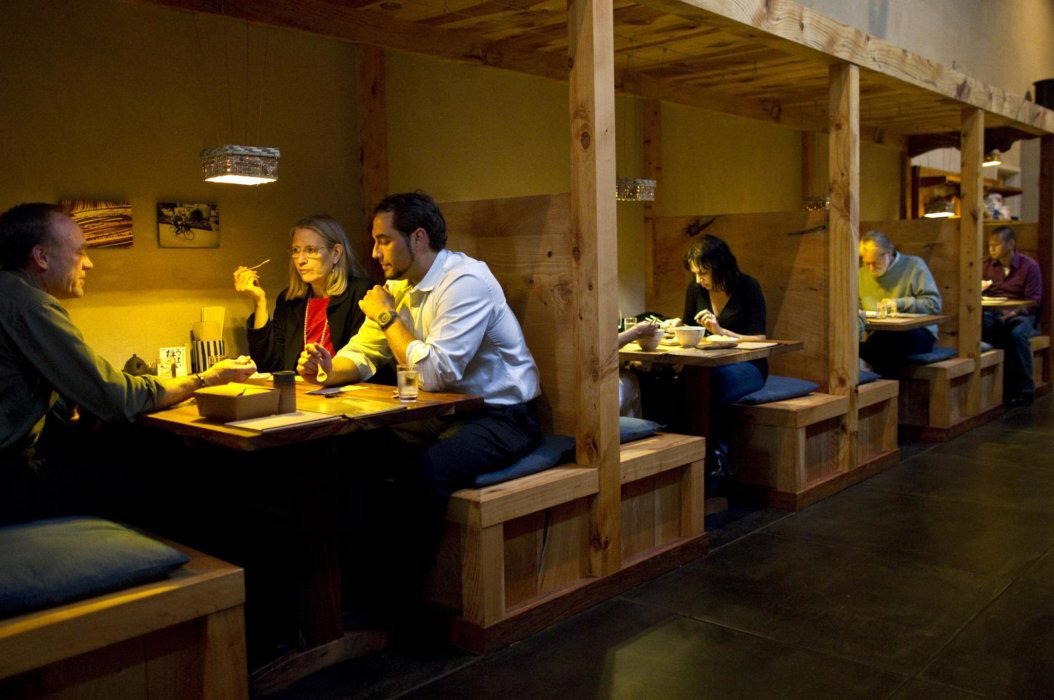
A Berkeley Room Built Like a Tokyo Backstreet
The East Bay has long served as the quieter counterpart to San Francisco's dining scene, drawing chefs and operators who want lower rents and a more local clientele without sacrificing seriousness. Izakaya culture fits that context particularly well. The format is inherently communal, unhurried, and resistant to the performance dynamics of high-end tasting menus. Ippuku, on Center Street in downtown Berkeley, occupies a space that reads more like a deliberate architectural statement than a retrofitted dining room. Dark timber panels, low ceilings, and a narrow layout compress the interior into something that recalls the drinking corridors of Tokyo's Shinjuku or Shibuya — spaces where the physical container is part of the ritual, not just a backdrop for it.
That spatial logic matters in izakaya dining. The format evolved in Japan as a way of extending time at the table: plates arrive in sequence, drinks stay cold, and the room itself is designed to discourage the instinct to rush. Ippuku reproduces that principle in a California context, which is harder than it sounds. The Bay Area's dining culture tends toward transparency and brightness; this room does the opposite, using light and material to create compression rather than openness.
Where Ippuku Sits in the Bay Area's Dining Tier
San Francisco and the wider Bay Area sustain a dining culture at the high end that few American cities can match. Atelier Crenn, Benu, and Quince all hold three Michelin stars. Lazy Bear and Saison operate at the two-star level. These are $$$$ operations with tasting menus, reservation lead times measured in months, and price-per-head figures that position them against peer counters in New York, Chicago, and Los Angeles — places like Le Bernardin and Alinea.
Ippuku operates at a different register entirely. The $$ price point places it in the accessible tier, closer to a neighborhood regular than a destination splurge, and yet its award record is serious. Michelin has awarded it the Bib Gourmand in both 2024 and 2025, a designation reserved for restaurants offering quality cooking at moderate prices. Opinionated About Dining, which runs one of the more data-driven casual dining ranking systems in North America, listed it at #90 in 2024 and #303 in 2025, having recommended it in 2023. The slight movement in ranking is less significant than the consistency of recognition across multiple years and multiple systems.
Among American izakaya specifically, that combination of sustained credentialing and accessible pricing is uncommon. Tei-An in Dallas operates in the same Japanese-leaning casual space but skews toward soba. The izakaya format at Ippuku's price and recognition level is a narrow peer group domestically. For international comparison, Kōnā in Buenos Aires works within similar Japanese-casual territory, though in a different culinary context entirely.
The Izakaya Format and What It Demands
Izakaya dining operates on a logic that differs from both casual American dining and formal Japanese kaiseki. The expectation is plurality: multiple small plates ordered across an extended sitting, with drinks serving as structural anchors rather than accompaniments. In Japan, the shochu selection at an izakaya often tells you more about the kitchen's intentions than the food menu does. A serious shochu list, covering different base ingredients, regions, and distillation styles, signals that the operator understands the format well enough to build around it properly.
That depth of drinks programming is a marker that separates izakayas worth spending time at from those using the format as a loose aesthetic frame. The food side follows a parallel logic: skewers (yakitori, kushikatsu), small cold plates, and cooked items that reward sharing rather than individual plating. The format is inherently anti-tasting-menu, it's designed for conversation and choice, not for sequential progression.
Berkeley's academic and international population makes it a plausible home for this kind of venue. The neighborhood around Center Street draws a clientele comfortable with non-Western dining formats and less dependent on the legibility cues, large menus, familiar proteins, recognizable sauces, that can limit izakaya programming elsewhere in the United States.
Design as Argument
The editorial angle that matters most at Ippuku is spatial. The interior functions as a thesis about what izakaya dining should feel like in physical terms. Low-lit, timber-heavy rooms don't just create atmosphere in the decorative sense; they modify behavior. Diners in compressed, darker spaces tend to linger longer, speak more quietly, and drink more steadily. That behavioral logic is built into the izakaya format and Ippuku's room reproduces it with some fidelity.
The contrast with Berkeley's broader dining context sharpens the point. The city's most prominent restaurants tend toward the open and the agrarian, light wood, white walls, farmer-supplier credits on the menu. Ippuku's interior makes a different argument: that the right room for Japanese drinking food is one that borrows from Tokyo rather than Sonoma. It's an editorial position expressed through architecture, and it holds up across multiple visits in a way that more trend-oriented design choices often don't.
For the Bay Area's wider dining geography, venues with this kind of physical specificity are worth tracking. The region is home to internationally recognized addresses like Single Thread Farm in Healdsburg and The French Laundry in Napa, both of which have their own strong spatial identities. Ippuku operates at a lower price tier but applies a comparable level of intentionality to its room. See our full San Francisco restaurants guide for the broader regional picture, along with guides to San Francisco hotels, bars, wineries, and experiences. For West Coast Japanese dining comparisons beyond the Bay Area, Providence in Los Angeles anchors the high end, while Emeril's in New Orleans shows how regional American institutions build long-term recognition in a different format entirely.
Know Before You Go
- Address: 2130 Center St, Berkeley, CA 94704
- Price range: $$ (moderate)
- Hours: Tuesday–Thursday 5–10 pm; Friday–Saturday 5–11 pm; Sunday 5–10 pm; Monday closed
- Awards: Michelin Bib Gourmand (2024, 2025); Opinionated About Dining Casual North America #90 (2024), #303 (2025), Recommended (2023)
- Format: Izakaya, small plates, skewers, drinks-led sitting
- Leading for: Groups of two to four comfortable with sharing-format dining
A Credentials Check
| Venue | Cuisine | Price | Awards |
|---|---|---|---|
| IppukuThis venue — the venue you are viewing | Izakaya, Japanese | $$ | Bib Gourmand |
| Lazy Bear | Progressive American, Contemporary | $$$$ | Michelin 2 Star |
| Benu | French - Chinese, Asian | $$$$ | Michelin 3 Star |
| Atelier Crenn | Modern French, Contemporary | $$$$ | Michelin 3 Star |
| Quince | Italian, Contemporary | $$$$ | Michelin 3 Star |
| Saison | Progressive American, Californian | $$$$ | Michelin 2 Star |
Recognition history
Dated appearances from independent guides and award organizations, with the underlying list record or original source where available.
Michelin Bib Gourmand
Michelin
Opinionated About Dining Casual in North America Ranked #131
Opinionated About Dining
San Francisco Chronicle Top 100 Bay Area Restaurants #91
San Francisco Chronicle
Michelin Bib Gourmand
Michelin
Opinionated About Dining Casual in North America Ranked #303
Opinionated About Dining
Michelin Bib Gourmand
Michelin
Opinionated About Dining Casual in North America Ranked #90
Opinionated About Dining
Opinionated About Dining Casual in North America Recommended
Opinionated About Dining
Continue exploring
More in San Francisco
Restaurants in San Francisco
Browse all →
Bars in San Francisco
Browse all →
Hotels in San Francisco
Browse all →

At a Glance
- Cozy
- Intimate
- Trendy
- Date Night
- Group Dining
- Casual Hangout
- Open Kitchen
- Sake Program
Current opening hours
- Monday
- 5–10 PM
- Tuesday
- 5–10 PM
- Wednesday
- 5–10 PM
- Thursday
- 5–10 PM
- Friday
- 5–11 PM
- Saturday
- 5–11 PM
- Sunday
- 5–10 PM
Hours can change for holidays and private events. Last verified .
Cozy and inviting with low Japanese-style tables, extensive woodwork, subtle lighting, exposed kitchen, and a warm, mystical atmosphere.
Know Before You Go
- Getting there
- 2130 Center St, Berkeley, CA 94704