Ink Sack
Our verdict
Ink Sack focuses on Modern American Sandwiches at 1 World Wy, with counter service, casual dress, and a quick-bite pace that suits breakfast, lunch, or dinner.

Pearl is the En Primeur Club membership app, where members save venues, book tables and use the concierge.
The menu
What to order
- Cold Fried Chicken
- José Andrés
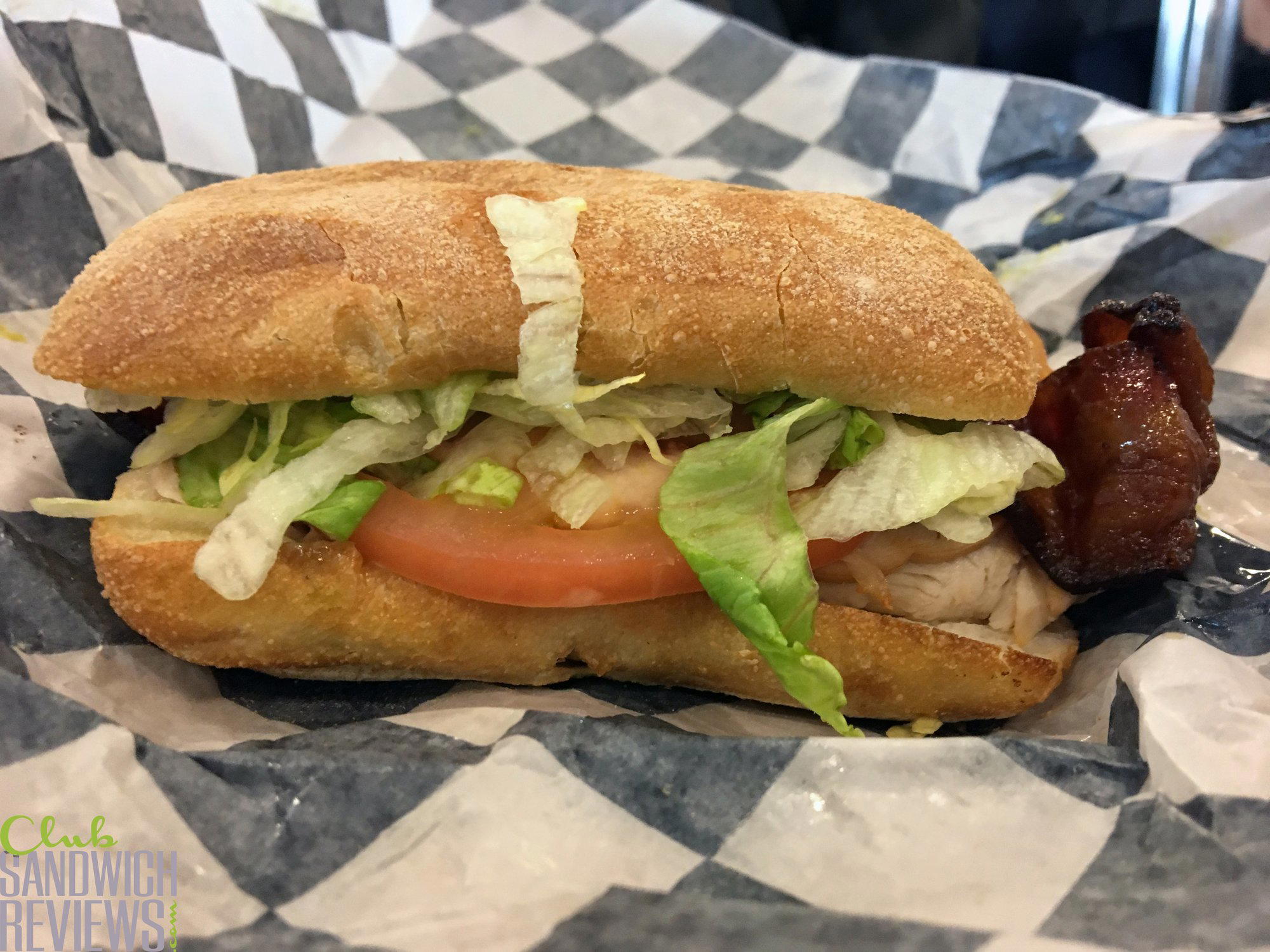
- Turkey Club
Airport Dining, Reconsidered
The prevailing assumption about food at Los Angeles International Airport is that you endure it rather than choose it. That assumption has been slowly eroding. Ink Sack, positioned within LAX's terminal complex at 1 World Way, belongs to a category of airport food operations that emerged from a broader American rethinking of transit dining: the idea that a recognizable, quality-forward concept could survive, and even hold its identity, inside the constraints of an airport concession. Whether that promise holds in practice is a question worth examining honestly rather than taking on faith.
The evolution of airport dining in the United States tracks closely with shifting traveler expectations. A decade ago, the dominant model was branded fast-casual chains chosen for licensing ease and minimal staffing complexity. The pivot toward chef-adjacent or city-specific concepts accelerated in airports like San Francisco, JFK, and LAX as terminal renovations brought in new concession frameworks. Ink Sack's presence at LAX sits inside that broader shift, representing the airport-as-dining-destination aspiration that major hub operators have pursued with mixed results.
The Concept in Its Transit Context
Squid ink sandwiches in an airport represent a specific kind of ambition. The format, compact and hand-held, translates more cleanly to a terminal environment than, say, a plated tasting menu. Los Angeles has a strong throughline of sandwich culture, from Italian delis in Silver Lake to the banh mi counters running through the San Gabriel Valley, and the squid ink format positions Ink Sack somewhere in that conversation while adding a visual theatricality suited to a city that takes presentation seriously.
What matters in evaluating any airport concept is whether the kitchen conditions and throughput pressures strip away whatever made the original version worth eating. Transit volumes at LAX's Tom Bradley International Terminal, where Ink Sack is located, are substantial. The terminal handles international departures and is among the busiest single structures in the airport. Maintaining any kind of quality discipline under those conditions is harder than it looks from the outside.
For comparison, the broader Los Angeles dining scene that Ink Sack nominally represents operates at the opposite end of the pressure spectrum. Kato, the New Taiwanese counter in West LA, controls every variable of its tasting menu. Hayato operates a kaiseki format with months-long wait times. Providence has held two Michelin stars across multiple guide cycles. These are not peer comparisons for Ink Sack, but they frame the city's culinary ambitions that airport concepts are implicitly borrowing from when they position themselves as representative of LA's food character.
How the Category Has Changed
The evolution angle matters here because Ink Sack is not a static operation. Airport concessions change formats, expand footprints, adjust menus under contract pressure, and sometimes disappear entirely when terminal leases turn over. The history of airport food is littered with concepts that arrived with genuine intent and departed as shadows of themselves. The interesting editorial question is not whether Ink Sack is good relative to the airport's previous occupants, but whether it has managed to hold enough of its original proposition as terminal conditions and years of operation have pushed against it.
Across American airports, the concepts that survive with integrity tend to share a few traits: a format simple enough that kitchen variability doesn't compound, a price point calibrated to the captive audience without becoming predatory, and an identity clear enough that travelers who've eaten at the original (if one exists) can still recognize what they're getting. Ink Sack's sandwich format passes the first test on paper. The second and third depend on operational decisions that shift over time and are difficult to assess from outside the terminal.
Other American cities have produced similar experiments worth noting as context. Lazy Bear in San Francisco and Alinea in Chicago represent the city-anchor dining standard against which airport versions are judged. Further afield, Le Bernardin in New York City and The French Laundry in Napa set a national reference point for what serious dining at the highest level looks like. Ink Sack is not competing in that tier, and it shouldn't be evaluated as though it is.
Where Ink Sack Sits in the LA Airport Food Picture
LAX has historically underperformed relative to its position as the primary international gateway for Southern California. Recent terminal renovations have started to close that gap, bringing in a more considered mix of concepts. Ink Sack is part of that cohort, alongside other operators selected to give the airport something resembling the food character of the city it serves.
The sandwich as a format has particular logic for a pre-flight meal. It doesn't require cutlery, travels reasonably well if a departure is delayed, and can be eaten in the compressed time windows that terminal dining imposes. The squid ink component adds a degree of differentiation from the generic lunch counter, which is presumably the point. Whether that differentiation holds up under the lighting conditions and ambient noise of an international terminal departure lounge is a different question entirely from how it reads on a menu board.
Los Angeles dining overall has moved toward a more ingredient-specific, provenance-conscious posture across the past decade. Somni operates in the molecular-progressive space. Osteria Mozza holds a durable place in the Italian-American conversation. These venues share a commitment to deliberate sourcing and kitchen discipline that the leading airport concepts try, with varying success, to import into transit conditions. Elsewhere in the US, comparable attempts at airport dining elevation can be tracked at Addison in San Diego, Bacchanalia in Atlanta, and through the broader market represented by Emeril's in New Orleans, each of which has navigated the tension between chef-driven identity and mass-transit throughput in its own way.
For the full picture of where Ink Sack fits within Los Angeles's broader dining geography, see our full Los Angeles restaurants guide, which covers everything from counter omakase to fine dining tasting formats across the city's neighborhoods.
Know Before You Go
Is Ink Sack accessible to travelers on connecting flights through LAX?
Ink Sack is located airside at LAX, meaning it is accessible only to passengers who have cleared security. International connecting travelers whose layover keeps them within the sterile zone of Tom Bradley International Terminal can access it, but those connecting between domestic and international terminals at LAX face the added variable of terminal transfers, which at this airport often require exiting and re-entering security. The airport's ongoing renovation program has affected terminal connectivity over time, so confirming your specific routing before planning a meal stop is advisable. For context on how LAX's dining scene fits into the wider Los Angeles food picture, see our full city guide.
Frequently asked questions
What's Ink Sack's location?
Ink Sack is located at 1 World Wy, Los Angeles, CA 90045, Los Angeles.
Is Ink Sack only accessible from certain terminals at LAX?
Ink Sack is located at 1 World Way, Los Angeles, CA 90045, placing it within the LAX complex airside, meaning passengers must clear security before accessing it. Travelers on connecting international itineraries whose layover keeps them in a separate secure zone may not be able to reach it. Confirming your terminal assignment before banking on a stop here is worth doing.
What should I eat at Ink Sack?
The squid ink sandwich is the defining item and the reason for the name. In an airport concession context at LAX, where most offerings default to generic fast-casual formats, a squid ink sandwich represents a deliberate point of difference. Order that.
Should I book Ink Sack in advance?
Ink Sack does not take reservations. It operates as a walk-up airside concession inside LAX, so access requires a valid boarding pass and cleared security. During peak travel windows at one of the busiest international gateways in the United States, expect wait times to reflect terminal foot traffic.
Side-by-Side Snapshot
Comparable venues nearby, for context on price, style, and recognition.
| Venue | Cuisine | Price | Notes |
|---|---|---|---|
| Ink SackThis venue (the venue you are viewing) | Modern American Sandwiches | $10–20 | Not listed |
| Sweet Rose Creamery | Organic Ice Cream Shop | $1–10 | Brentwood |
| Donut Friend | Artisanal Plant-Based Donuts | $10–20 | Highland Park |
| The Bigg Chill | Frozen Yogurt Shop | $1–10 | West L.A. |
| All About The Bread | American Deli Sandwiches | $10–20 | Melrose |
| Simplethings 3rd Street | American Sandwich & Pie Shop | Not listed | Beverly Grove |