
A Michelin-starred creative restaurant in Fiumicino's Nautilus Marina, Il Tino earns a 4.6 Google rating from 555 reviews with a menu driven by Lazio coastal produce, seasonal herbs from an on-site kitchen garden, and technique shaped by time in some of Italy's most demanding professional kitchens. Dinner service runs Thursday through Monday from 8 PM, with Tuesday and Wednesday closed.
 Discover on Pearl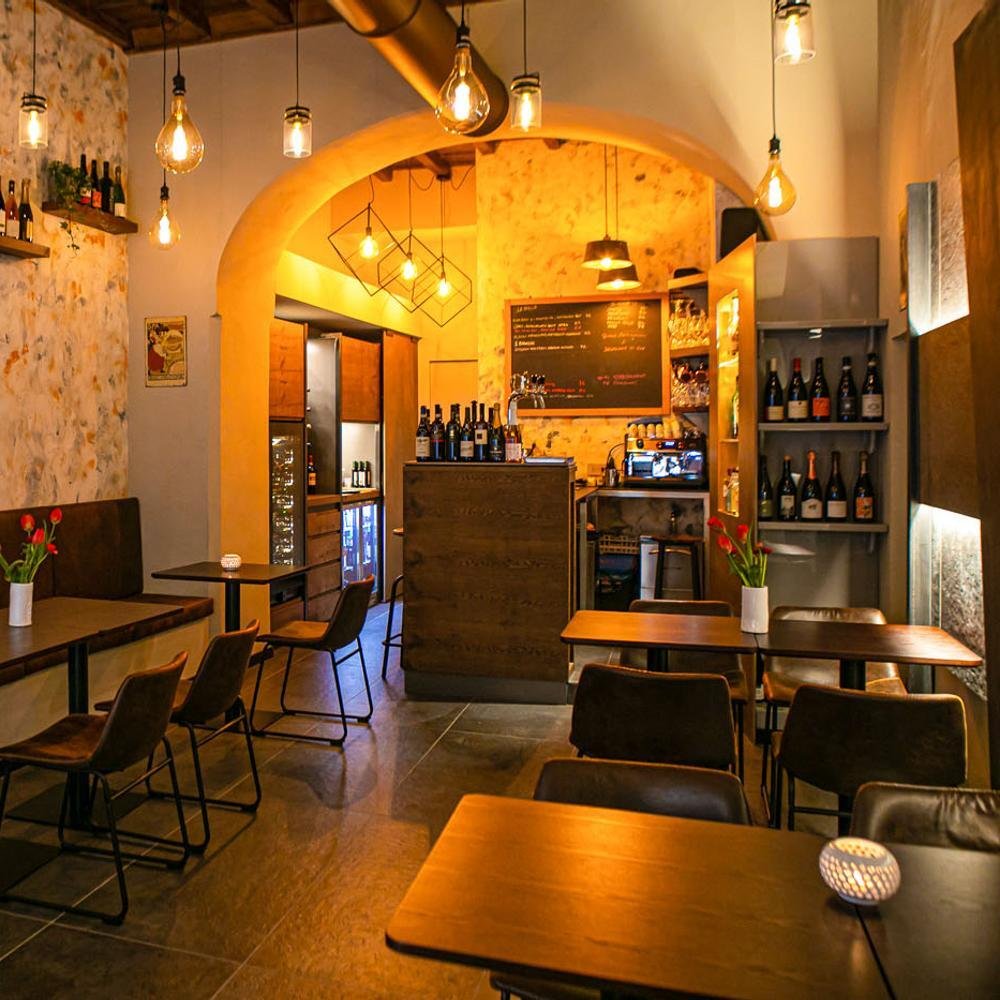
Where the Tiber Meets the Table
The approach to Il Tino sets the meal's register before a dish arrives. The Nautilus Marina in Fiumicino frames the building with moored boats and the slow width of the Tiber, a working waterway that has fed this stretch of the Lazio coast for centuries. Inside, the dining room is modern and stripped back, minimalist in the way that serious kitchens often prefer: the room makes no competition with the plate. The kitchen garden, visible from the steps leading into the dining room, signals immediately what kind of cooking this is. Herbs grown metres from the pass are not an amenity; they are the operational logic of a menu built around proximity, season, and the specific character of this coastline.
Fiumicino sits roughly 30 kilometres from central Rome, close enough to draw a sophisticated city audience and far enough to have developed its own identity around the fishing port and the Tiber delta. That identity is fish-forward and regionally specific, rooted in traditions that predate the airport that now shares the city's name. Il Tino, holding a Michelin star since at least 2024 and rated 4.6 across 555 Google reviews, operates at the upper tier of that local scene.
The shortlist, unlocked.
Hard-to-book tables, cellar releases, and concierge-planned trips.
Get Exclusive Access →Creative Cooking with a Regional Spine
Italy's creative restaurant category has evolved considerably over the past two decades. Where early interpretations often meant importing international technique onto Italian ingredients with uncertain results, the more persuasive contemporary approach anchors creative ambition to a specific regional identity. The Lazio coast provides Il Tino with a firm foundation: fish and seafood drawn from local waters, seasonal produce that shifts with the calendar, and herbs from the kitchen garden that ground each dish in a particular place and moment.
The chef's training included a formative period with Gualtiero Marchesi at L'Albereta, a lineage that carries weight in Italian fine dining. Marchesi's influence on a generation of Italian chefs was structural: he argued that Italian cuisine deserved the same technical rigour and intellectual seriousness that French kitchens had claimed for themselves, while insisting that the identity of the food remain recognisably Italian. That inheritance is legible in the cooking at Il Tino, where contemporary technique serves regional character rather than displacing it. Asian aesthetic influences, particularly in presentation, appear as a secondary layer rather than a dominant frame, reflecting a broader shift in how Italian creative kitchens have absorbed global reference points without losing their own coordinates.
This position in the Italian creative canon places Il Tino in a conversation with restaurants working at similar intersections elsewhere in the country. Kitchens such as Osteria Francescana in Modena, Piazza Duomo in Alba, and Le Calandre in Rubano represent the higher end of Italy's creative tier, while Enrico Bartolini in Milan and Enoteca Pinchiorri in Florence anchor the tradition in urban settings. Il Tino's coastal, region-specific approach is its own point of difference within that group. For the European creative frame at its widest, Alléno Paris au Pavillon Ledoyen and Arpège in Paris represent the French equivalents of the same ambition, just oriented around very different larders and culinary inheritances.
The Lazio Coastal Tradition on the Plate
The Roman coastline has never carried the same gastronomic prestige as the Amalfi Coast or the fishing traditions of Sicily and Sardinia, but the ingredients available to kitchens working along the Tiber delta and the Tyrrhenian shore are serious. Seasonal seafood, locally grown vegetables, and a herb culture that reflects both Roman and broader Lazio agricultural traditions give a kitchen like Il Tino a specific palette to work from. The kitchen garden is part of that logic: fresh herbs used to add colour and flavour to fish and seafood dishes are not ornamental but compositional, integrated into the cooking in the way that proximity to growing things makes possible.
The wine list at Il Tino is noted as excellent, and the cocktail program is specifically recommended as a starting point for the meal. For a kitchen working at this register, the beverage program often functions as a structural element rather than an afterthought. Opening a Michelin-starred tasting experience with a considered cocktail reflects an approach to hospitality that treats the full arc of the meal, from arrival through dessert, as a coherent sequence.
Fiumicino's Wider Dining Scene
Il Tino does not operate in isolation. Fiumicino has developed a concentrated cluster of serious seafood and fish-focused restaurants over the past decade, making the town worth the trip from Rome as a dining destination in its own right rather than simply a transit point. Pascucci al Porticciolo works in the modern Italian seafood register at the same €€€ price tier, while L'Osteria dell'Orologio brings a more traditional Italian seafood approach at comparable pricing. QuarantunoDodici operates at the €€ tier for those looking for quality seafood without the full fine dining commitment, and Clementina adds further breadth to what has become a genuinely substantial local restaurant scene.
For those building a longer visit around dining, our full Fiumicino restaurants guide maps the wider scene. The Fiumicino hotels guide covers accommodation options for those arriving by air or making a dedicated trip, while the Fiumicino bars guide, wineries guide, and experiences guide provide context for planning time in the area beyond the meal itself. For other Italian restaurants working at the intersection of regional identity and creative ambition, Atelier Moessmer Norbert Niederkofler in Brunico and Dal Pescatore in Runate represent different but instructive regional anchors.
Planning Your Visit
Il Tino opens for dinner service Thursday through Monday, from 8 PM to 9:30 PM. The restaurant is closed on Tuesdays and Wednesdays. The address is Via Monte Cadria, 127, Fiumicino, in the Nautilus Marina overlooking the Tiber. The price range sits at the €€€ tier, in line with the Michelin-starred positioning and consistent with comparable creative restaurants in this category across Italy. Given the 8 PM start and the nature of tasting menus at this level, arriving punctually and allowing the full evening is the appropriate approach. Booking in advance is advisable, particularly for weekend evenings; the restaurant's recognition and Google rating of 4.6 from over 555 reviews indicate consistent demand relative to its capacity.
The shortlist, unlocked.
Hard-to-book tables, cellar releases, and concierge-planned trips.
Get Exclusive Access →Frequently Asked Questions
A Pricing-First Comparison
These are the closest comparables we have in our database for quick context.
| Venue | Price | Awards | Notes |
|---|---|---|---|
| Il Tino | €€€ | Michelin 1 Star | This venue |
| L'Osteria dell'Orologio | €€€ | Italian Seafood, Seafood, €€€ | |
| Pascucci al Porticciolo | €€€ | Modern - Italian Seafood, Seafood, €€€ | |
| QuarantunoDodici | €€ | Seafood, €€ | |
| Clementina |
Need a table?
Our members enjoy priority alerts and concierge-led booking support for the world's most difficult tables.
Get Exclusive AccessThe shortlist, unlocked.
Hard-to-book tables, cellar releases, and concierge-planned trips.
Get Exclusive Access →