
Tabelog 100 #65
Our verdict
Ikeda Farm gives Aomori’s beef culture a rural, ingredient-led frame rather than an urban luxury one. Its Tabelog 100 Yakiniku EAST selections from 2022 through 2025 place it in a serious regional conversation, while the cooking stays focused on yakiniku, steak, and beef dishes at a price tier below many comparable grill rooms.

Pearl is the En Primeur Club membership app, where members save venues, book tables and use the concierge.
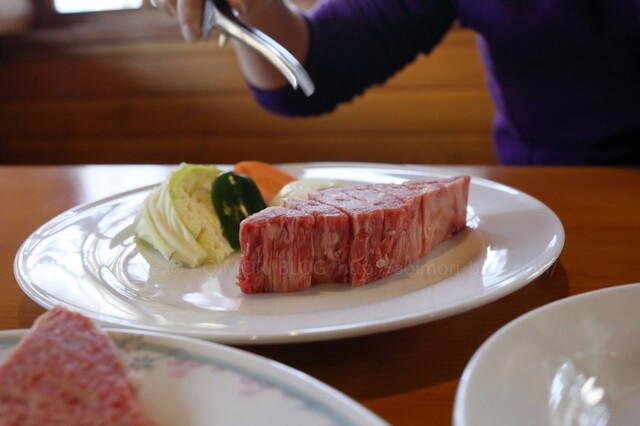
The menu
What to order
- Takko A4–A5 wagyu yakiniku platters
- Takko beef steak
- Takko beef set lunches
Yakiniku in Aomori does not need to be framed around neon, late-night drinking, or metropolitan ceremony. It can be shaped by directness, value, and the expectation that beef should justify the meal. In Aomori, Ikeda Farm represents ingredient-first Japanese grilling: plain in format, direct in purpose, and judged by beef quality rather than dining-room theatre.
That matters because Japanese yakiniku now runs in two lanes. One is urban and high-spend, with tasting-style pacing, choreographed service, and beef treated almost like sushi. The other is regional, where sourcing, portion value, smoke, and repeat local custom matter more. Aomori sits closer to the second lane: not minimalism for its own sake, but a narrower promise of beef cooked in a format where origin and handling are harder to hide.
Beef, garlic country, and the appeal of regional yakiniku
Aomori’s food identity frames the meal. Northern Japanese grill restaurants often use local produce, dipping sauces, rice, and side dishes to root the meat rather than drop it into a generic barbecue template. The public category is Yakiniku, steak, and beef dishes, signalling a grill-led restaurant rather than a broad izakaya or multi-course wagyu counter.
Ikeda Farm’s recognition is the main external marker of seriousness. It was selected for Tabelog 100 Yakiniku EAST in 2025, with a listed score of 3.63. Tabelog’s regional 100 lists are not Michelin substitutes, but in Japan they usefully cluster restaurants by category and geography, exposing Aomori rooms to comparison with stronger urban markets.
Price is also part of the story. Ikeda Farm is listed in the JPY 2,000 - JPY 2,999 range for both dinner and lunch, which gives the restaurant a sharper lane: a beef restaurant with category recognition, without the pricing profile usually attached to heavily staged wagyu dining. For travellers, that is more interesting than another polished counter in a major station district.
Aomori rewards this specificity. Seafood and apples dominate outside perceptions of the prefecture, but local dining also adds meat, preserved foods, rice, and cold-season appetite. Readers planning beyond one meal should treat the city and prefecture as a network, not a single centre. Other Aomori dining rooms, Casa del cibo, and Dan Dan each point to a different part of the local dining map.
A recognized grill room without city-centre assumptions
Regional Japanese restaurants often ask more of the traveller before the meal begins. The payoff is not convenience but a clearer read on place. In a city-centre yakiniku room, provenance can become a sales pitch surrounded by private rooms, wine upgrades, and service rituals. In Aomori, the regional food economy is harder to separate from the plate. Ikeda Farm’s public categorisation as Yakiniku, steak, and beef dishes points to a local dining function as well as a destination one.
That dual identity makes Ikeda Farm editorially useful. It is not just a place to eat beef; it shows how a recognized Japanese grill restaurant can remain tied to everyday regional use. The listed budget, JPY 2,000 - JPY 2,999 for both lunch and dinner, places the experience outside assumptions that serious beef in Japan must always mean a luxury bill.
The format also avoids the chef-as-protagonist problem in too much modern restaurant writing. No named chef or house manifesto is needed. The evidence lies in the category, 2025 Tabelog selection, Aomori setting, and price band. Here, the absence of a glossy narrative helps: the meal is read through beef, local appetite, and the durability required to stand out in a category list.
For travellers building an Aomori itinerary, Ikeda Farm is the kind of lunch or early-evening anchor that changes the day’s rhythm. It suits a plan focused on Aomori dining rather than a tight city crawl, and diners who care more about regional food economies than ceremony. For broader planning, Our full Aomori restaurants guide maps the dining options, while Our full Aomori hotels guide, Our full Aomori bars guide, Our full Aomori wineries guide, and Our full Aomori experiences guide place the meal inside a wider northern Japan route.
How to read it against Japan's beef restaurants
Japan’s beef restaurants are often flattened into one wagyu narrative, but the category is varied. Sukiyaki, steakhouse, horumon, yakiniku, teppanyaki, and regional grill formats each make different claims on the same animal. Other dining rooms in Japan may lean into sweetness, broth, set-piece cooking, or counter theatre. Aomori yakiniku is more direct: heat, cut, seasoning, rice, and appetite.
That comparison clarifies expectations. This is not the polished international Japan of sake bars, design cafés, and concept-led casual dining, useful as those can be elsewhere. Travellers comparing categories across the country can read Ikeda Farm alongside other Aomori options such as Ban'ya, Casa del cibo, Dan Dan, Homura, and ROSE GARDEN to see how local demand reshapes genre. Format matters only when local context is legible.
The editorial case for Ikeda Farm is narrow but strong. Go for an Aomori beef meal with 2025 category recognition, not luxury signalling or a chef-driven story. It makes sense for travellers already committed to exploring Aomori dining, who understand that regional dining in Japan often trades convenience for a tighter relationship between place, product, and regular custom.
Frequently asked questions
Is Ikeda Farm expensive?
Pricing at Ikeda Farm is listed as JPY 2,000 - JPY 2,999 for dinner and JPY 2,000 - JPY 2,999 for lunch.
What are the opening hours for Ikeda Farm?
Opening hours for Ikeda Farm should be checked directly with the restaurant before visiting.
Where exactly is Ikeda Farm?
Aomori.
What is Ikeda Farm known for?
Ikeda Farm is known for Yakiniku, steak, and beef dishes in Aomori, with Tabelog 100 Yakiniku EAST recognition in 2025.
Comparable Spots, Quickly
Nearby venues at a similar price tier for orientation.
| Venue | Cuisine | Price | Awards | Notes |
|---|---|---|---|---|
| Ikeda FarmThis venue (the venue you are viewing) | Takko wagyu yakiniku restaurant & butcher | $20–30 | Tabelog 100 #65 | Not listed |
| Minato Shokudo | Casual Japanese seafood diner & kaisen-don | $10–20 | Tabelog 100 #76 | Hachinohe (Mutsu Minato area) |
| Kaikyo So | Traditional Japanese Seafood | Not listed | Tabelog 100 #91 | Oma Town |
| Dan Dan | Traditional Japanese Izakaya | $30–50 | Tabelog 100 #85 | Hachinohe City |
| Strauss | Viennese pastry & cafe | $10–20 | Tabelog 100 #5 | Shinmachi |
| Sushi Izakaya Taru | Sushi Izakaya & Seafood Tavern | $50–100 | Tabelog 100 #90 | Shimmachi |
Recognition history
Dated appearances from independent guides and award organizations, with the underlying list record or original source where available.
Tabelog 100 #65 · No. 65
Tabelog · Tabelog 100 - Yakiniku - EAST - 2025
Continue exploring
More in Aomori
Restaurants in Aomori
All restaurants in Aomori →
Hotels in Aomori
Browse all →
Details
- Family
- Group Dining
- Casual Hangout
- After Work
- Standalone
- Local Sourcing
- A La Carte
- Family Style
Current opening hours
- Monday
- 11 AM–3 PM
- Tuesday
- 11 AM–3 PM
- Wednesday
- Closed
- Thursday
- 11 AM–3 PM
- Friday
- 11 AM–3 PM
- Saturday
- 11 AM–3 PM
- Sunday
- 11 AM–3 PM
Hours can change for holidays and private events. Hours as of .
Based on local tourism descriptions and listings, the restaurant has a direct, casual atmosphere focused on serving high-quality Takko beef rather than design flourishes, attracting both local families and visitors for relaxed meals.