Our verdict
Akai Ringo sits in Aomori, a city whose agricultural identity is inseparable from its food culture. The restaurant draws on one of Japan's most celebrated ingredient regions, where apple orchards, cold-water seafood, and Tohoku farm traditions shape the menu's raw material before any cooking begins. For travelers willing to look beyond Japan's major dining circuits, Aomori's local restaurant scene offers something the metropolitan counters cannot replicate.

Pearl is the En Primeur Club membership app, where members save venues, book tables and use the concierge.
The menu
What to order
- Heart Apple Pie
Aomori as an Ingredient Region
Japan's northern prefectures have long supplied the country's finest kitchens with raw material that rarely gets credited on menus further south. Aomori sits at the top of Honshu, where the cold Tsugaru Strait separates it from Hokkaido and where the combination of volcanic soil, heavy snowfall, and sharp seasonal contrast produces some of the country's most sought-after produce. The prefecture accounts for roughly half of Japan's total apple harvest, and the variety and quality of those apples, from Fuji to Orin to Mutsu, carry a specificity that Tohoku growers and regional cooks understand better than anyone. Akai Ringo, whose name translates directly as "red apple," operates inside that agricultural context rather than alongside it.
Dining in a city like Aomori requires a different calibration than dining in Tokyo, Osaka, or Kyoto. The reference points shift from Michelin density and chef-lineage hierarchies toward something more grounded in place. Venues like Kashu and Casa del cibo operate in this same mode, drawing identity from the prefecture's larder rather than from alignment with national dining trends. Aomori's restaurant scene is smaller and less internationally documented than its southern counterparts, but that relative quietness is partly what allows the ingredient story to stay intact. Proximity to source matters here in a way that is harder to sustain in cities where supply chains are longer and more anonymous.
What the Region Puts on the Plate
The Aomori ingredient map is unusually rich for a prefecture of its size. Beyond apples, the prefecture produces Jidori chicken under cold, slow-growth conditions, cultivates scallops and sea urchin in the shallow bays of Mutsu and Oma, and raises Wagyu cattle in the southern highlands. Oma tuna, caught in the strait between Aomori and Hokkaido, has a documented reputation among Tokyo's leading tuna buyers: the cold water and strong currents produce fish with a fat distribution that commands premium prices at Tsukiji and Toyosu alike. Any kitchen in Aomori that takes ingredient sourcing seriously has direct access to this supply that metropolitan restaurants can only partially replicate through express delivery.
The apple connection deserves more than a name check. Aomori apples enter regional cooking in multiple forms: pressed for juice and used in braising liquids, sliced raw alongside pork and game, reduced into glazes, or served as a primary dessert element. This is not a decorative local-color gesture. The sugar structure of cold-climate apples produces different results in a pan than warmer-grown varieties, and cooks who work with Aomori fruit over years develop an intuition for that difference that no sourcing note in a metropolitan restaurant can fully substitute. Akai Ringo's name is a direct signal of where the kitchen's identity is anchored.
For a broader view of what Aomori's dining scene offers, our full Aomori restaurants guide maps the city's restaurant options across cuisine types and price tiers. European-influenced rooms such as Petit Restaurant Bouquet de France, which operates in the JPY 10,000 to JPY 19,999 range, and Italian-leaning addresses like OSTERIA ENOTECA DA SASINO and アルチェントロ sit alongside Akai Ringo in a city where the dining tier above casual izakaya remains genuinely compact.
Placing Aomori in Japan's Wider Dining Conversation
Japan's most discussed restaurants tend to cluster in three cities. The high-concentration omakase counters of Tokyo, the kaiseki lineage of Kyoto, and the ingredient-forward creative kitchens of Osaka dominate international coverage. Venues like Harutaka in Tokyo, Gion Sasaki in Kyoto, and HAJIME in Osaka sit inside recognized international frameworks with award histories, booking queues, and critical documentation to match. Aomori is not competing in that register, and the restaurants here are not trying to.
What the regional tier offers instead is a different kind of access: to ingredients at or near their source, in rooms without the performance pressure of a destination-restaurant booking, at price points that do not require the advance planning of a Tokyo omakase. akordu in Nara and Goh in Fukuoka represent regional Japanese dining that has earned international attention on its own terms. Aomori's scene is earlier in that trajectory, which makes the current moment an argument for visiting rather than waiting.
Japan's regional dining circuit, which runs through lesser-documented stops like 一本木ながた川制 in Nanao, 夕仙々乃 in Sapporo, and 湖畔荘窓 in Takashima, rewards travelers who move beyond the metropolitan shortlist. Tohoku as a region has historically been underrepresented in international food writing, partly because the infrastructure for food tourism (English-language booking, international press coverage, review aggregation) is thinner than in Kansai or the Kanto plain. That gap is narrowing, slowly, but Aomori's kitchens are working with the same raw material they always have.
Planning a Visit
Aomori city is accessible by Shinkansen from Tokyo in roughly three hours on the Tohoku line, making it a viable stop on a northern Honshu circuit that might also include Hirosaki, Hachinohe, or a crossing to Hokkaido. The city's compact center means that restaurants in the dining district are walkable from the main station. Seasonal timing matters in Aomori: the apple harvest runs from late September through November, which is when ingredient sourcing is at its sharpest and when the prefecture's agricultural identity is most legible on a plate. Winter, while cold, brings peak quality for Oma tuna and cold-water seafood. Summer delivers lighter produce and a different register of the same regional larder.
Given the sparse online documentation for Aomori's dining scene, booking directly and in advance is the practical approach, particularly for dinner. Walk-in availability varies by venue and season. For comparable regional experiences elsewhere in Japan, 庄羽屋 in Nishikawa Machi and Birdland in Sakai offer reference points for what regional Japanese kitchens do when they commit to a specific ingredient or technique with consistency. For international comparison points in ingredient-led cooking, Le Bernardin in New York City and Atomix in New York City demonstrate how sourcing clarity can anchor a restaurant's identity across years and formats.
Frequently asked questions
Is Akai Ringo a good restaurant to visit when travelling through Aomori by Shinkansen?
Aomori is a practical stop on a northern Honshu Shinkansen circuit, sitting approximately three hours from Tokyo on the Tohoku line. Akai Ringo, based in Aomori city, positions itself within one of Japan's most produce-rich prefectures, known for apples, cold-water seafood, and Jidori chicken. For travellers building a multi-stop itinerary through Tohoku, the venue offers a regionally grounded dining option that reflects the prefecture's ingredient identity rather than replicating the urban omakase or kaiseki formats common further south.
What should I order at Akai Ringo?
Akai Ringo sits in Aomori, a prefecture whose larder includes Jidori chicken raised under cold slow-growth conditions, local seafood from the Tsugaru Strait, and the apples the prefecture is nationally associated with. Given the venue's regional position, dishes anchored to those Aomori ingredients are the logical focal point of any visit.
What's the best way to book Akai Ringo?
Visitors planning a stop in Aomori, reachable from Tokyo in roughly three hours on the Tohoku Shinkansen, should check the venue's official channels or use a hotel concierge with local connections to confirm reservation procedures and availability.
What makes Akai Ringo worth seeking out?
Aomori rarely appears in the Tokyo-Kyoto-Osaka conversation that dominates Japan's restaurant coverage, which means serious ingredient-focused venues here operate with far less international foot traffic than their quality would warrant in a major city. Akai Ringo occupies that quieter northern circuit, in a prefecture whose apple orchards, cold-water seafood, and Jidori chicken supply kitchens across the country. For a traveller routing through northern Honshu, that regional provenance is the core reason to stop.
| Venue | Cuisine | Price | Awards |
|---|---|---|---|
| Akai RingoThis venue (the venue you are viewing) | Aomori Apple Patisserie | $10–20 | Not listed |
| Casa del cibo | Italian with Aomori Local Ingredients | $100–150 | Tabelog Bronze #42 |
| Kashu | Modern French Omakase with Aomori Ingredients | $200–300 | Tabelog Bronze #169 |
| OSTERIA ENOTECA DA SASINO | Farm-to-Table Italian | $150–200 | Tabelog Bronze #344 |
| Petit Restaurant Bouquet de France | French with Local Aomori Ingredients | $100–150 | Tabelog Bronze #38 |
| アルチェントロ | Locally-Sourced Italian with Tohoku Ingredients | $50–100 | Tabelog 100 #62 |
Continue exploring
More in Aomori
Restaurants in Aomori
All restaurants in Aomori →
Bars in Aomori
Browse all →
Details
- Cozy
- Quiet
- Casual Hangout
- Standalone
- Local Sourcing
- A La Carte
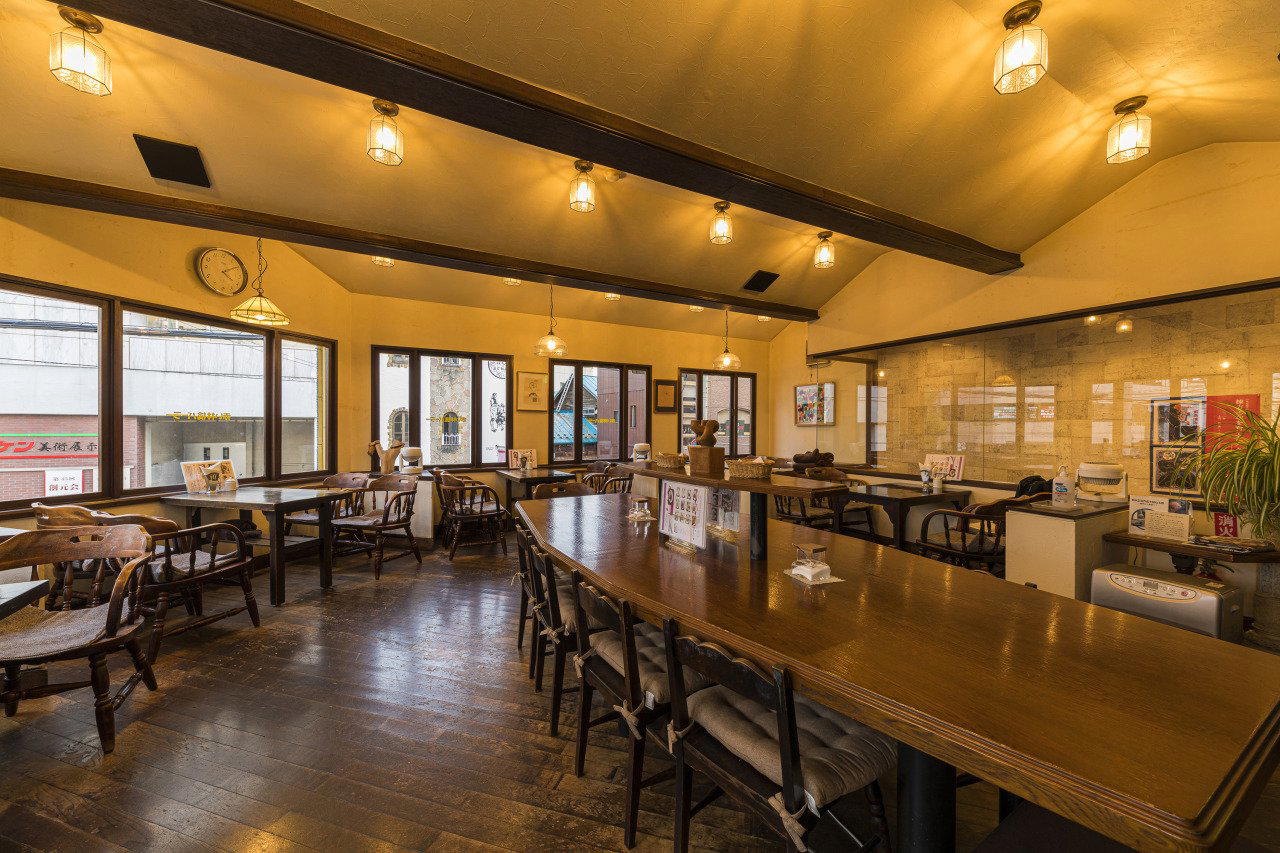
Calm and cozy atmosphere on the second floor with an eat-in space for enjoying cakes and coffee.