Hearth



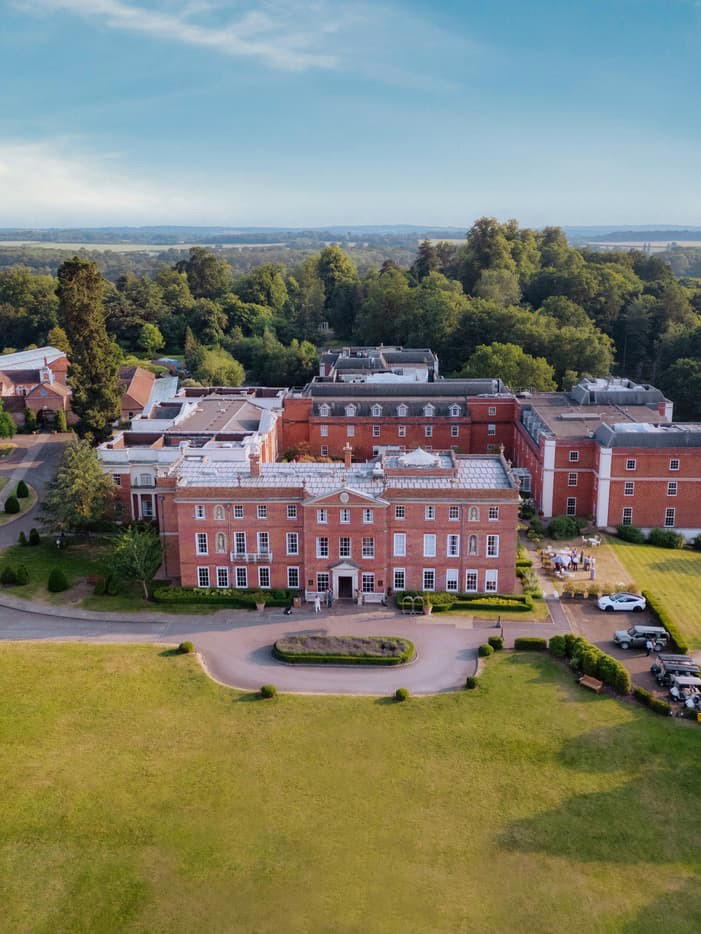
Set within Heckfield Place's 18th-century Hampshire estate, Hearth occupies the vaulted former stable yard and builds its entire menu around an open wood fire. The sharing format moves from flatbreads and seasonal small plates to fire-cooked centrepiece cuts, with a distinct Italian accent running throughout. A Michelin Plate holder with consistent Opinionated About Dining recognition, it sits at the more casual end of the estate's two-restaurant offer.
Pearl is the En Primeur Club membership app — saves, bookings, and concierge access live there. Same editors, same standards.
- Address
- Heckfield Pl, Hook RG27 0LD, United Kingdom
- Phone
- +44 118 342 0669
- Website
- heckfieldplace.com
 Saves & bookings on Pearl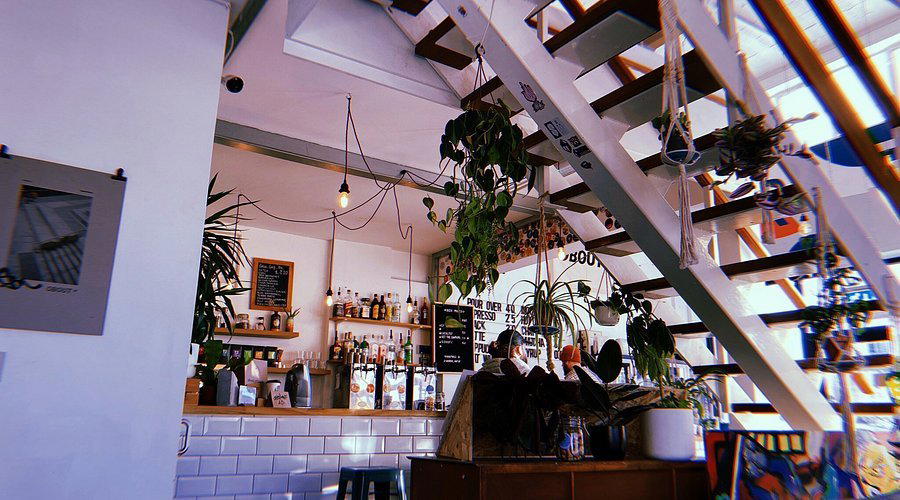
Fire, Farm, and the Hampshire Countryside
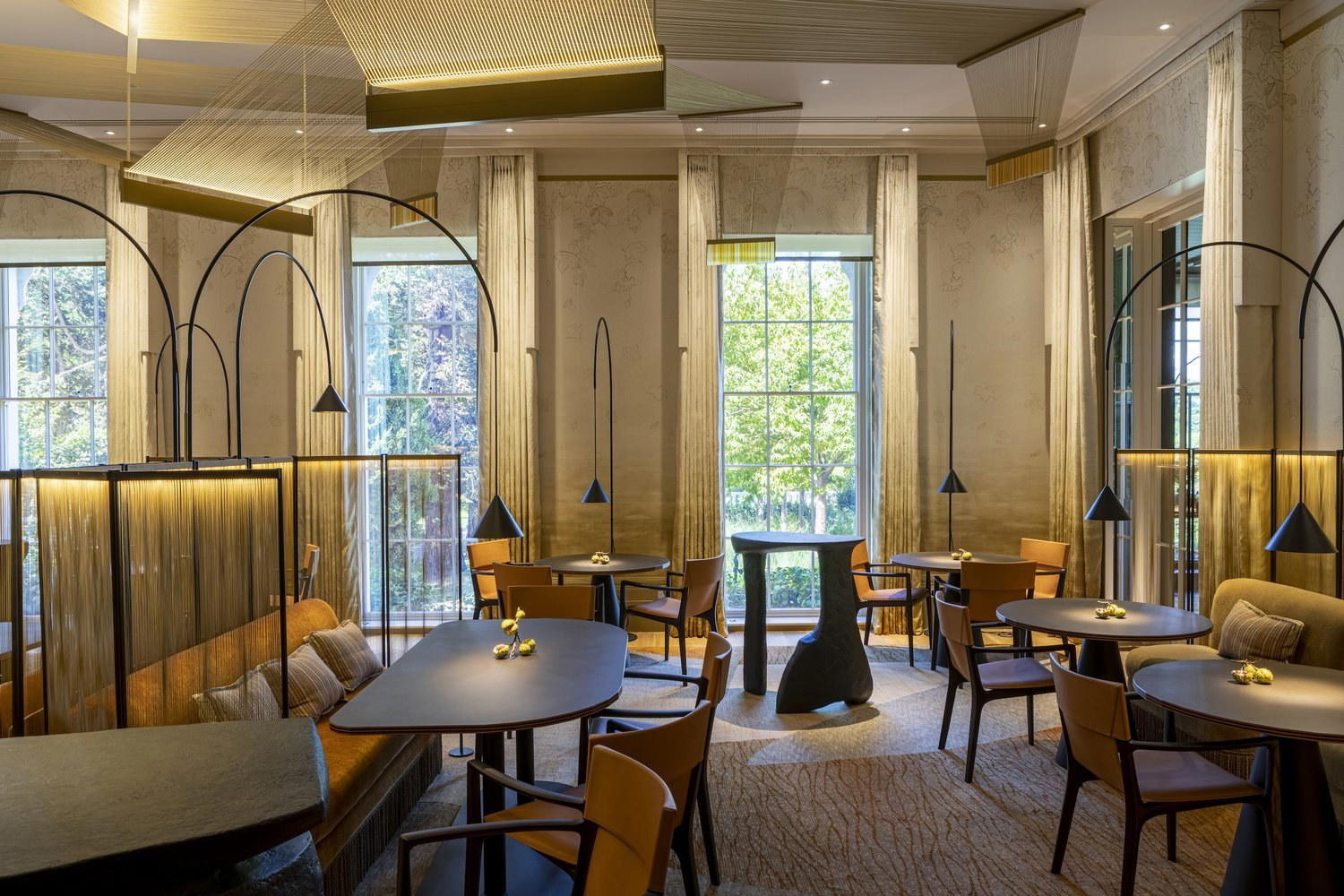
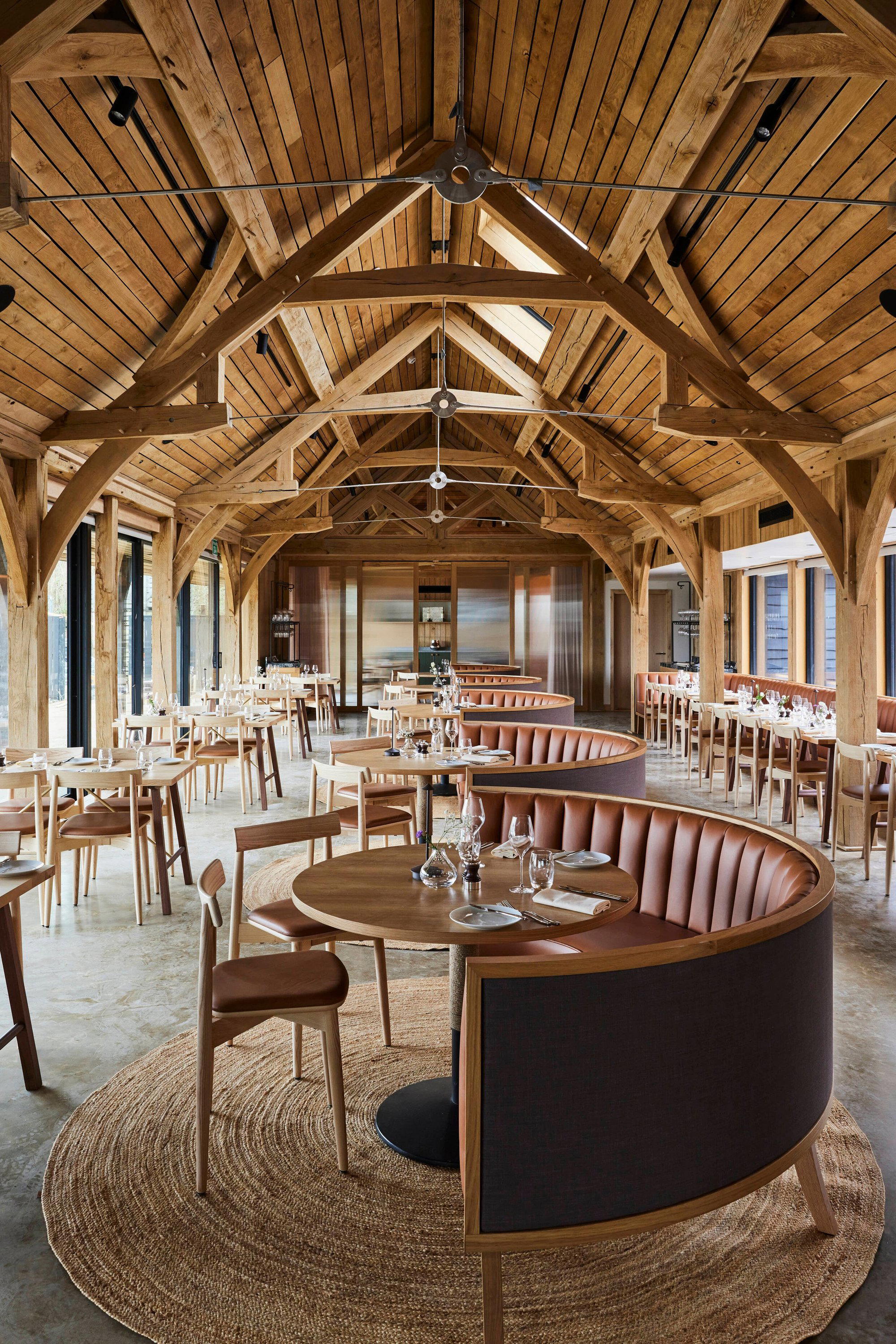
Hearth is a British Bakery Cafe in Heckfield, Hampshire, led by Marco Canora and priced around $15 per person. At Heckfield Place, a renovated 18th-century manor set across 438 acres of Hampshire farmland roughly an hour southwest of London, that second room is Hearth, and it earns considerably more attention than the format usually receives. Housed in the property's vaulted former stable yard, the room is organised around a large open fire over which everything is cooked. The physical environment does most of the work before a dish arrives: low ceilings, stone, the smell of wood smoke, and sheepskin-draped chairs that communicate warmth without pastoral kitsch.
This is not the same register as the estate's other restaurant, Marle, which operates under culinary director Skye Gyngell's more considered, composed framework. Hearth is built for conviviality, sharing plates, daily variation, and a menu that rewards those who pace themselves through the full arc rather than ordering selectively. The fire is not a theatrical prop. It is the only cooking method, and the kitchen's discipline in making that constraint produce delicate, thoughtful food is the central editorial point of the place.
The Italian Accent Inside a British Larder
British country-house cooking has long oscillated between roast-heavy tradition and Modern European refinement, the latter broadly meaning French technique applied to local produce. Hearth takes a less expected route: the menu carries a distinct Italian accent that sits alongside rather than underneath its Hampshire provenance. Saddle of rabbit encased in pancetta with cime di rapa, affogato with ricciarelli biscuits, and polenta cake with olive-oil ice cream are not concessions to a Mediterranean trend, they reflect culinary director Skye Gyngell's practice, which has always drawn on Italian ingredient logic even when working with British produce.
That combination of Italian structural thinking and hyperlocal sourcing is worth understanding as a category in itself. Among country-house restaurants in southern England, consider Le Manoir aux Quat' Saisons in Great Milton or Gidleigh Park in Chagford, both of which draw on French classical frameworks, Hearth's Italian inflection is an outlier. It also makes the produce-first philosophy more legible: Italian cooking's comfort with simplicity, with letting a single ingredient occupy the plate, aligns naturally with a kitchen that is, at its core, cooking over fire with what the farm and season provide.
The Cheese Thread: British Artisan Dairy in Context
The editorial angle that brings Hearth's sourcing approach into sharpest focus is how British artisan cheese functions within the menu. The kitchen's commitment to named, traceable producers appears directly in the flatbread section: roasted squash with brown butter and Spenwood is a case study in how a specific cheese shapes a dish rather than finishing it. Spenwood, a firm, raw sheep's milk cheese from a Berkshire dairy, carries enough acidity and depth to anchor the sweetness of roasted squash without a sauce structure doing that work. The choice is not decorative. It signals a kitchen that reads British artisan dairy the way a Burgundy-trained cook reads terroir: as a defining variable, not a garnish.
The broader British artisan cheese revival has given estate and farm-to-table kitchens in England a richer ingredient set to work with than at any point in recent memory. Where a decade ago a cheese course meant Stilton and perhaps a local cheddar, producers across Berkshire, Somerset, and the North are now turning out sheep's and goat's milk cheeses with a specificity that rewards exactly the kind of name-and-provenance signalling Hearth's kitchen deploys. Spenwood's appearance on a sharing flatbread, rather than a cheese board, is representative of how progressive farm kitchens are now using these producers: as cooking ingredients with a defined flavour role, mid-menu.
For a kitchen built around fire and a produce-first philosophy, this approach to dairy is consistent. It also distinguishes Hearth from the more technique-led end of the Modern British spectrum, venues like CORE by Clare Smyth or Dinner by Heston Blumenthal in London, where the ingredient story is filtered through a more constructed technical framework, and aligns it more closely with the farm-kitchen register of L'Enclume in Cartmel or Moor Hall in Aughton, both of which operate estate-scale ingredient sourcing programs.
Format, Pacing, and the Sharing Structure
The menu runs on a sharing format with a deliberate arc: dishes become more substantial as the list progresses. Wood-fired flatbreads open proceedings, followed by vegetable and smaller protein plates, grilled purple sprouting broccoli with almond, anchovy, and apple; stuffed mammole artichoke with pork, green olive, and jus, before the centrepiece cuts arrive. Beef sirloin on the bone with chimichurri and subtly smoked brill with Swiss chard and maltaise sauce represent the best of that arc. Desserts return to the Italian accent: affogato, ricciarelli, polenta cake with olive-oil ice cream.
The smaller plates are substantial enough that under-ordering and attempting to fill the gap with the centrepiece cuts produces an unbalanced meal. Sunday service adds a roast format, including fish and vegetable options, with seasonal fruit crumbles and sticky toffee pudding with bourbon toffee sauce and custard rounding out the afternoon.
Recognition and Positioning
Hearth holds eight awards and has a Google rating of 4.9 across 14 reviews. A Google rating of 4.8 across reviews reinforces the operational consistency the awards imply.
That positioning, Michelin Plate, OAD casual recognition, estate setting at the ££ price range, places Hearth in a peer group that includes the more casual rooms attached to serious British country-house properties, rather than standalone destination restaurants like The Fat Duck in Bray or Hand and Flowers in Marlow. The comparison with London's leading formal tier, Restaurant Gordon Ramsay, Sketch's Lecture Room, or The Ledbury, is not the right frame. Hearth operates at a different register, one where the cooking is serious but the room is explicitly designed for ease rather than occasion. That combination, at the ££ price point within an estate property, represents good value against its Hampshire context.
The Wine List and the Estate's Own Sparkling
The wine list opens with a section of local producers before moving through a global line-up organised by region, with notes on soil characteristics throughout. The estate produces its own sparkling wine, which leads the list. Bespoke pairings are available and have drawn positive attention from visitors.
Planning Your Visit
Hearth opens daily for both lunch and dinner, with lunch service running from 11:30am on weekdays (11am on weekends) through 3pm, and dinner from 5pm, closing at 9:30pm Sunday through Thursday and 10:30pm on Friday and Saturday. The Heckfield Place address is Hook, Hampshire, RG27 0LD. For international reference points in the fire-and-ingredient-led register, Le Bernardin in New York City and Atomix in New York City represent the upper end of the produce-led, critically recognised spectrum in North America.
Quick reference: Hearth at Heckfield Place, Hook, Hampshire RG27 0LD. Open Tue to Sun, with dinner service in the evening and Saturday lunch and dinner. ££ price range.
What Dish Is Hearth Famous For?
Hearth does not trade on a single signature dish in the way a tasting-menu restaurant might anchor its identity to one course. The kitchen's reputation is built on the open-fire cooking method itself, applied across a shifting seasonal menu. Dishes that recur in critical descriptions include the wood-fired flatbreads, specifically the version with Spenwood sheep's milk cheese, beef sirloin on the bone with chimichurri as a centrepiece cut, and the Italian-accented desserts, particularly polenta cake with olive-oil ice cream and affogato with ricciarelli biscuits. The daily specials board, which has featured ingredients like Yorkshire grouse in season, means the menu that drew one visitor's attention may differ substantially from the next. The Michelin Plate (2024) remains the clearest external signal of where the kitchen's overall output sits critically.
Same-City Peers
Comparable venues nearby, for context on price, style, and recognition.
| Venue | Cuisine | Price | Notes |
|---|---|---|---|
| HearthThis venue — the venue you are viewing | British Bakery Cafe | $$ | |
| Drapers Arms | Modern British Gastropub | $$ | Barnsbury |
| Roe | Modern British Small Plates | $$$ | Blackwall |
| Cora Pearl | Modern British Bistro | $$$ | Covent Garden |
| Kiln | Thai Barbecue | $$ | Soho |
| Sael | Modern British Brasserie | $$$ | St. James's |
Continue exploring
More in London
Restaurants in London
Browse all →
Bars in London
Browse all →
Hotels in London
Browse all →
At a Glance
- Cozy
- Rustic
- Trendy
- Casual Hangout
- Brunch
- Open Kitchen
- Local Sourcing
DIY feel, nothing flashy but in the best way possible, nestled in a car park of the industrial quarter with outside seating in summer.