Hawksmoor





Michelin Plate · Star Wine List · The Good Food Guide GFG Good
Our verdict
Hawksmoor Air Street sits at the serious end of London's steakhouse tier, operating out of an Art Deco room just off Regent Street with sweeping ceilings and stained-glass windows. The menu centres on British grass-fed beef dry-aged for 35 days and cooked over charcoal, backed by a deep wine list and a cocktail bar downstairs. Opinionated About Dining has ranked the group consistently since 2023, and a Michelin Plate in 2025 confirms its standing in London's mid-to-upper dining bracket.

Pearl is the En Primeur Club membership app — saves, bookings, and concierge access live there. Same editors, same standards.
- Address
- 5A Air St, London W1J 0AD, United Kingdom
- Phone
- +44 20 7406 3980
- Hours
- Mon–Sat 11:45 AM–11:30 PMSun 11:45 AM–10 PM
- Website
- thehawksmoor.com
- Directions
- Get directions
- Booking
- Book on OpenTable
The menu
What to order
- Chateaubriand
- Porterhouse steak
- Bone marrow
- Sticky toffee pudding
A Room That Sets Expectations Before the Menu Arrives
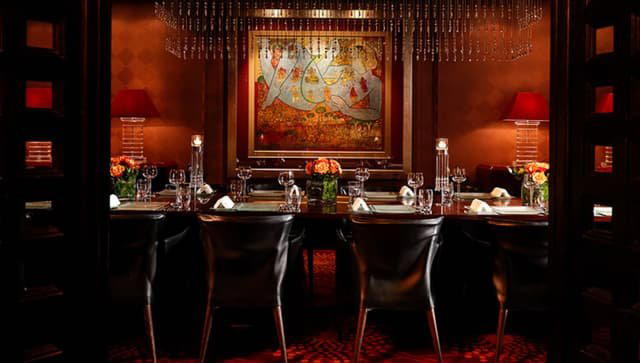
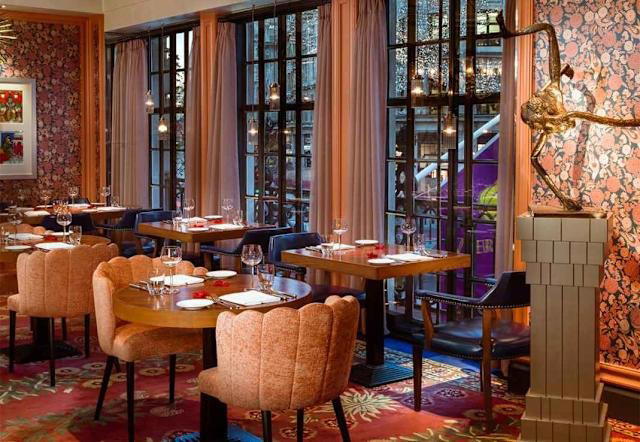
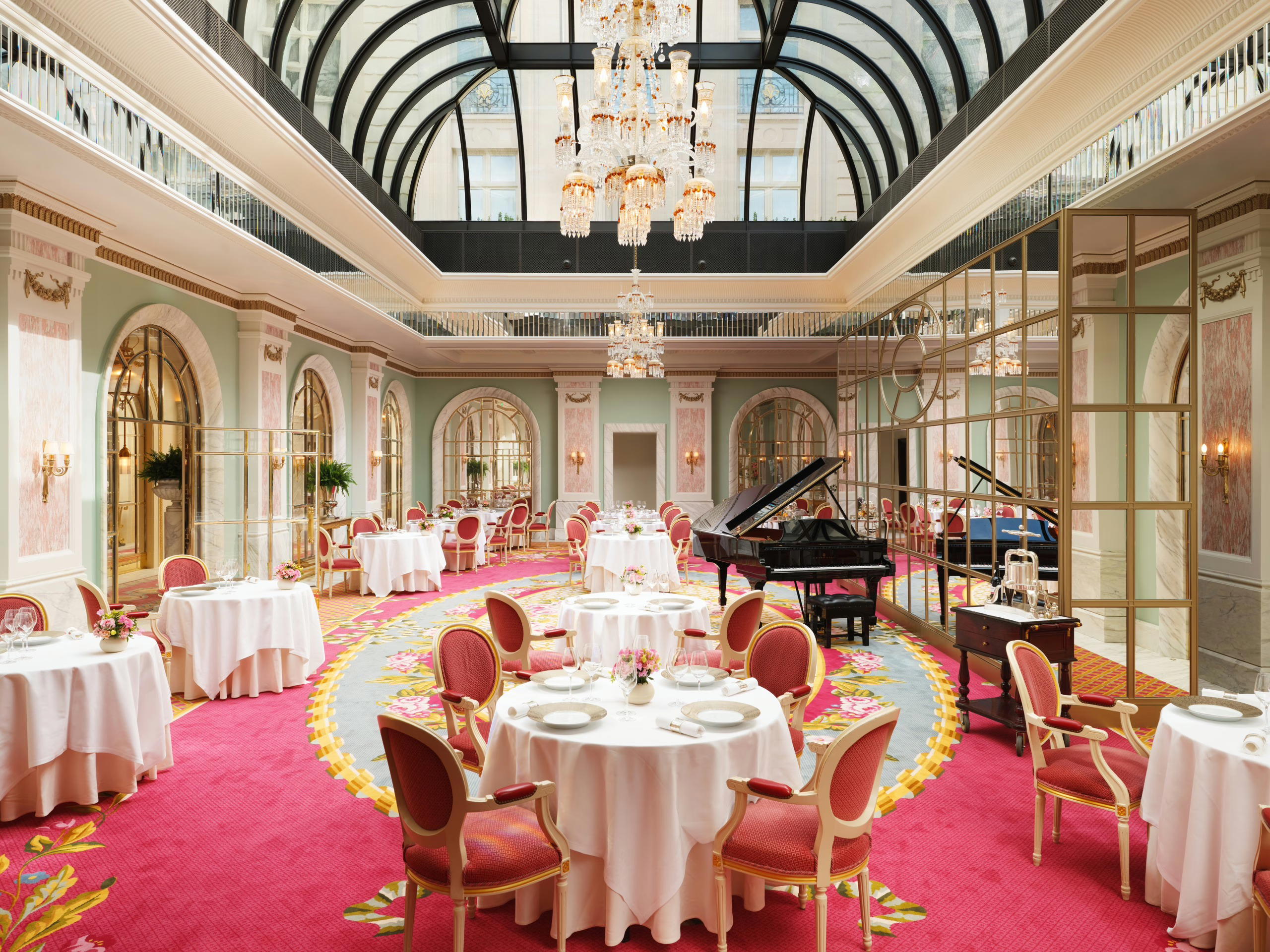
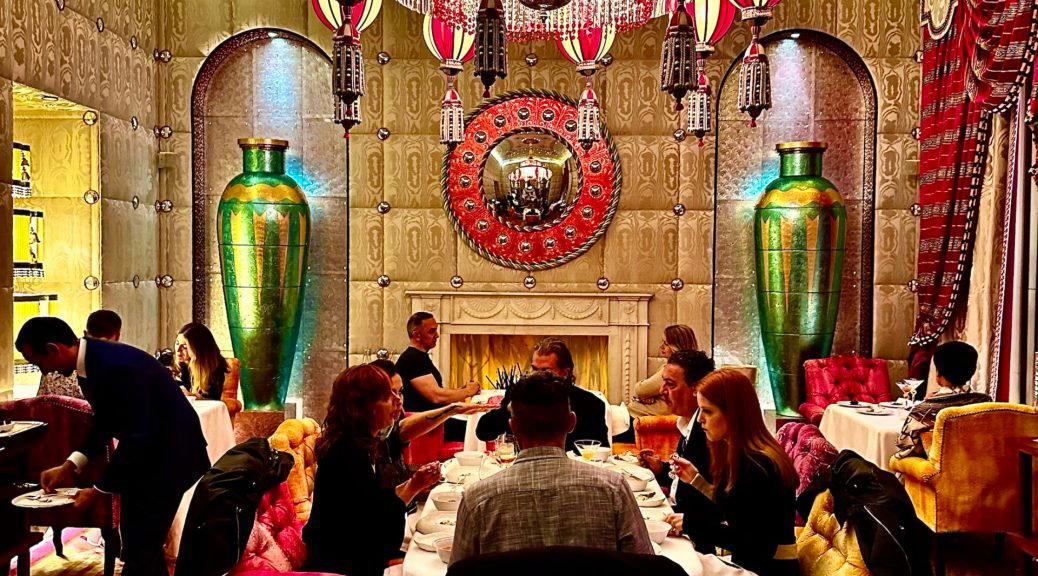
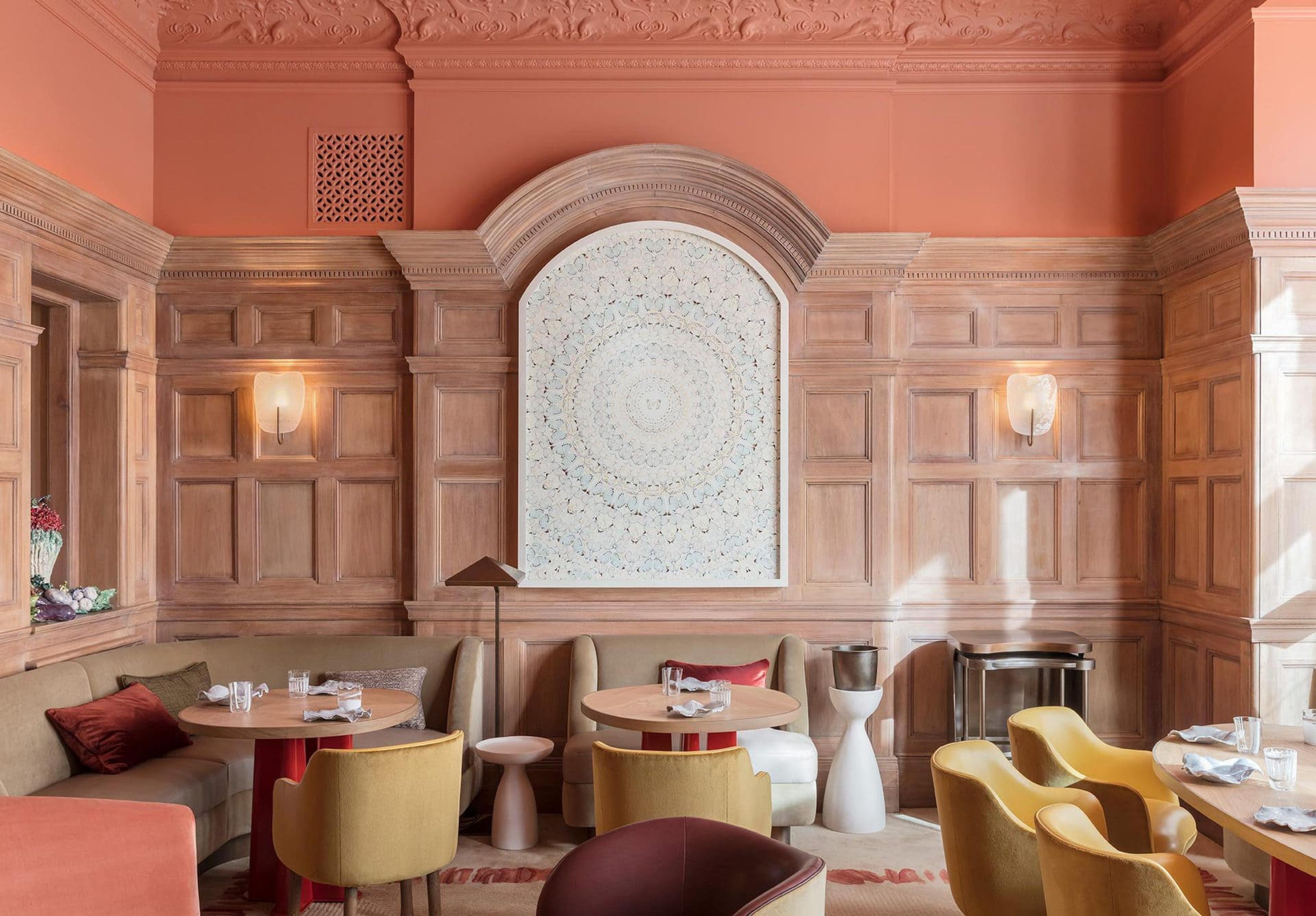
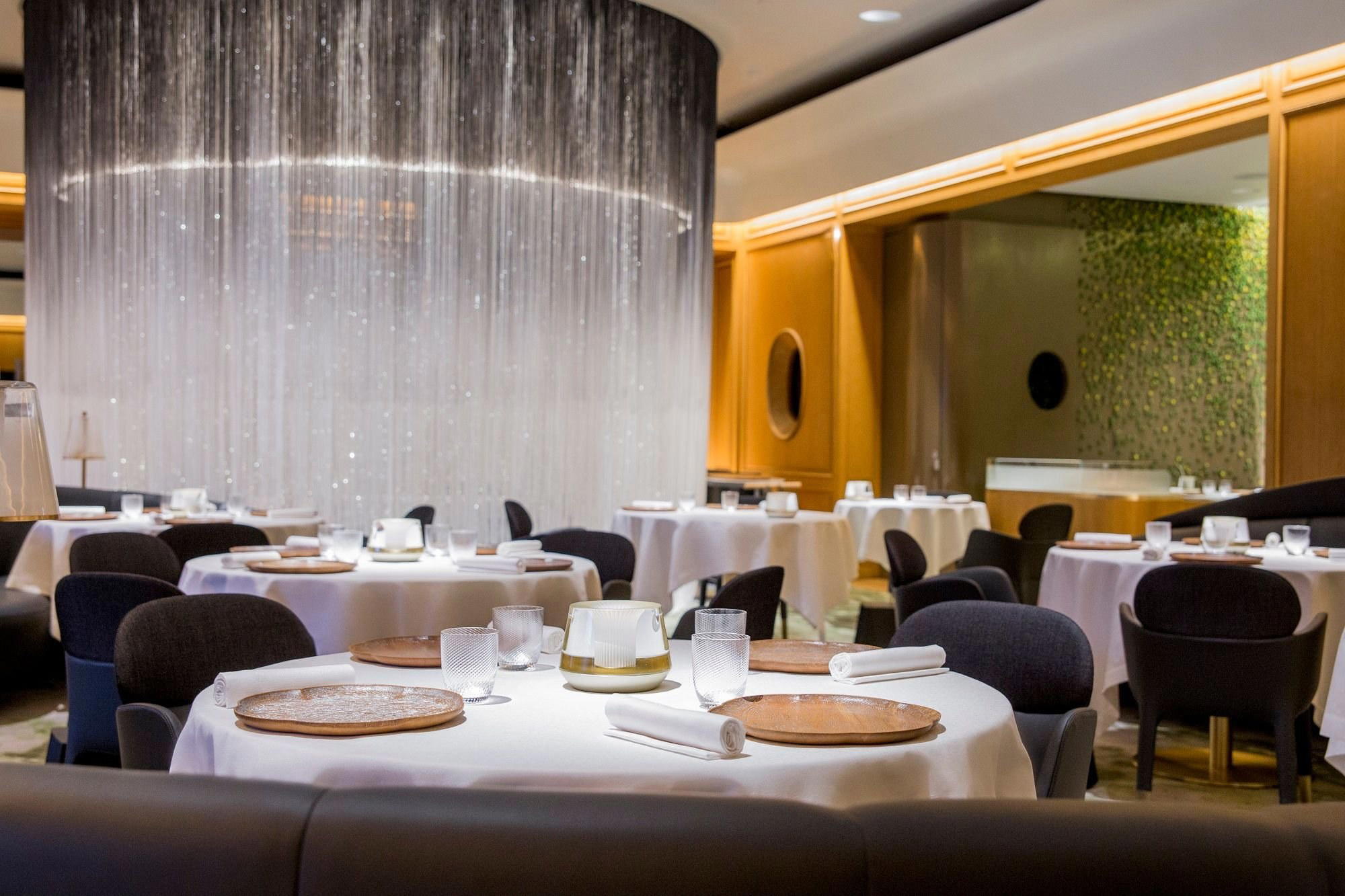
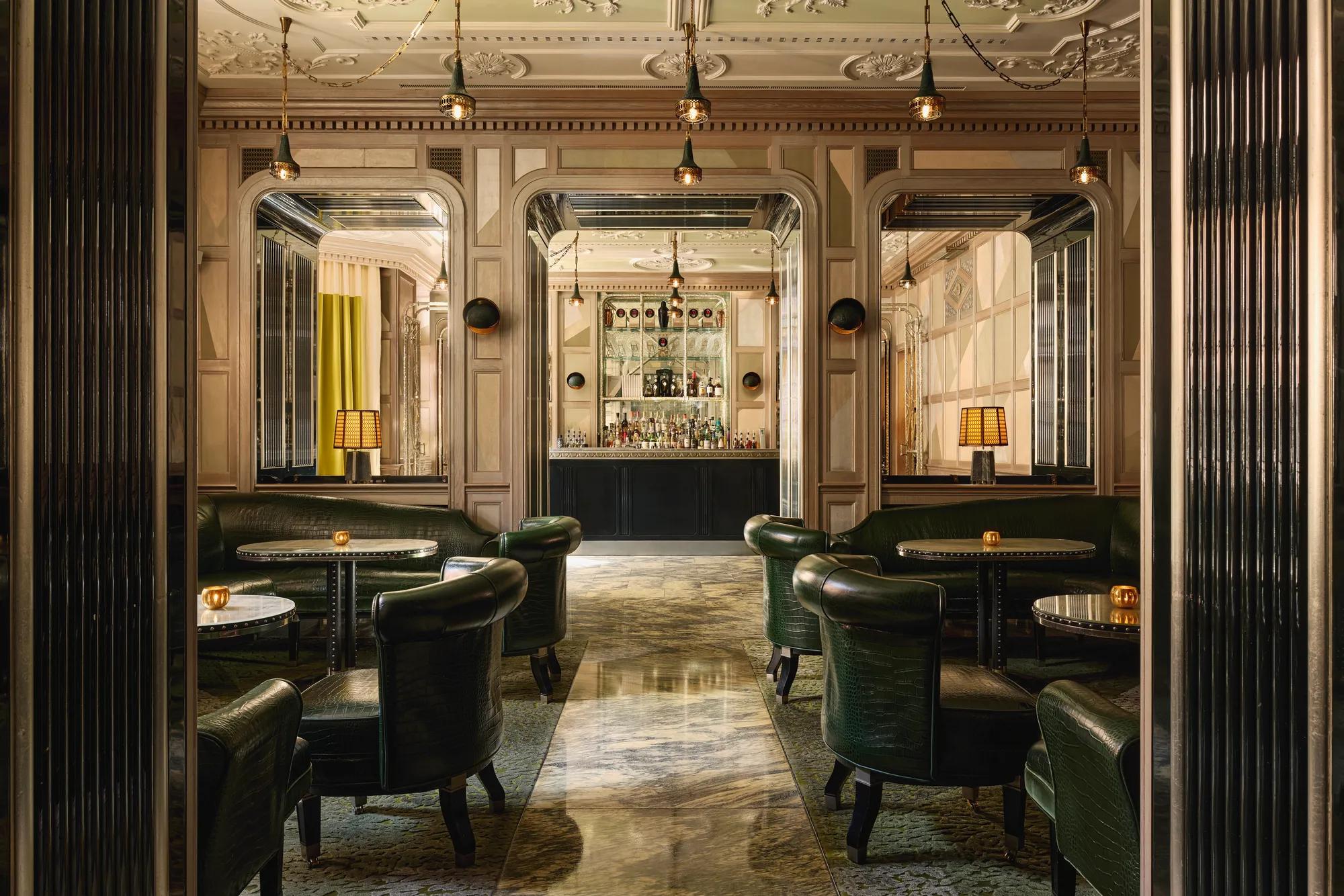
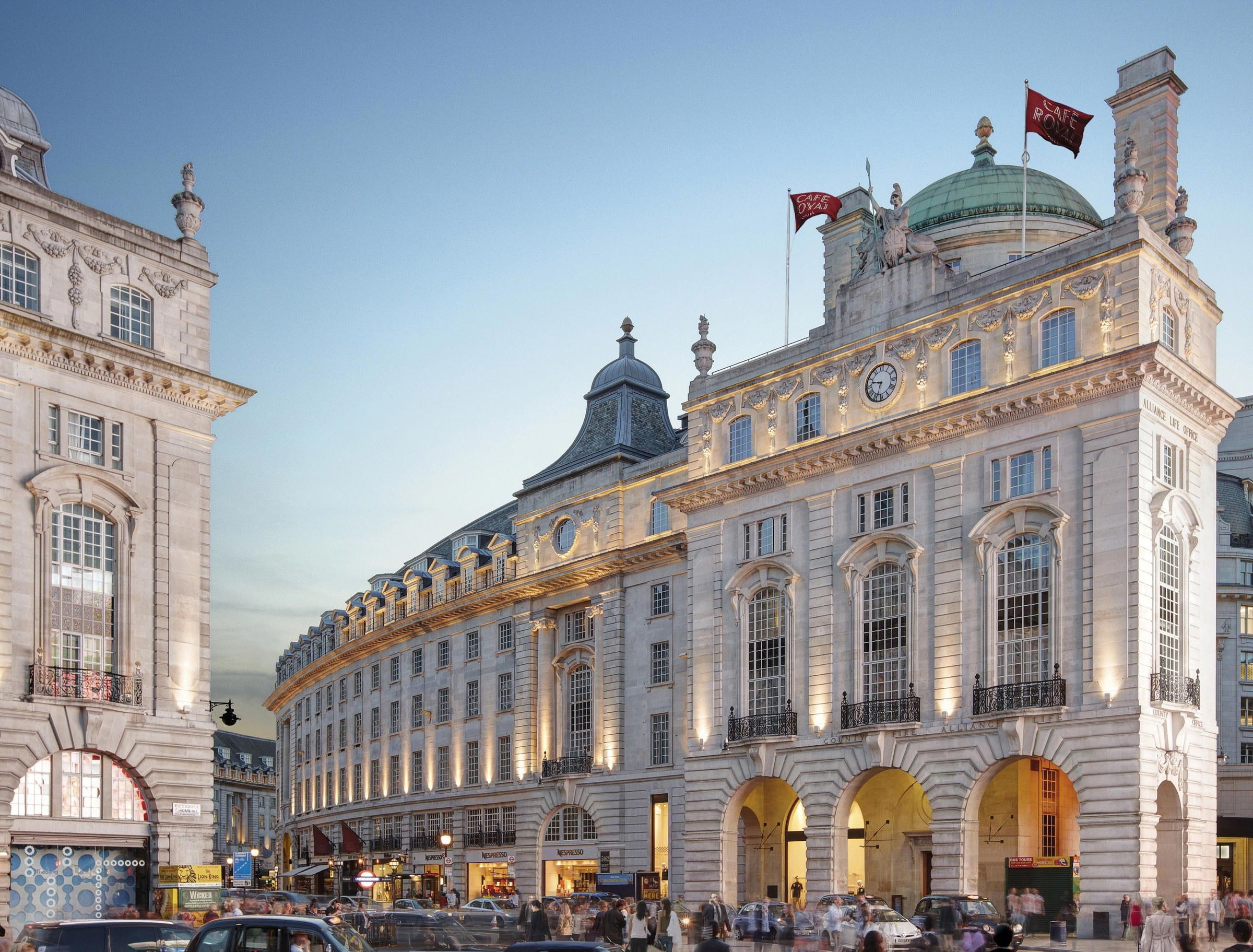
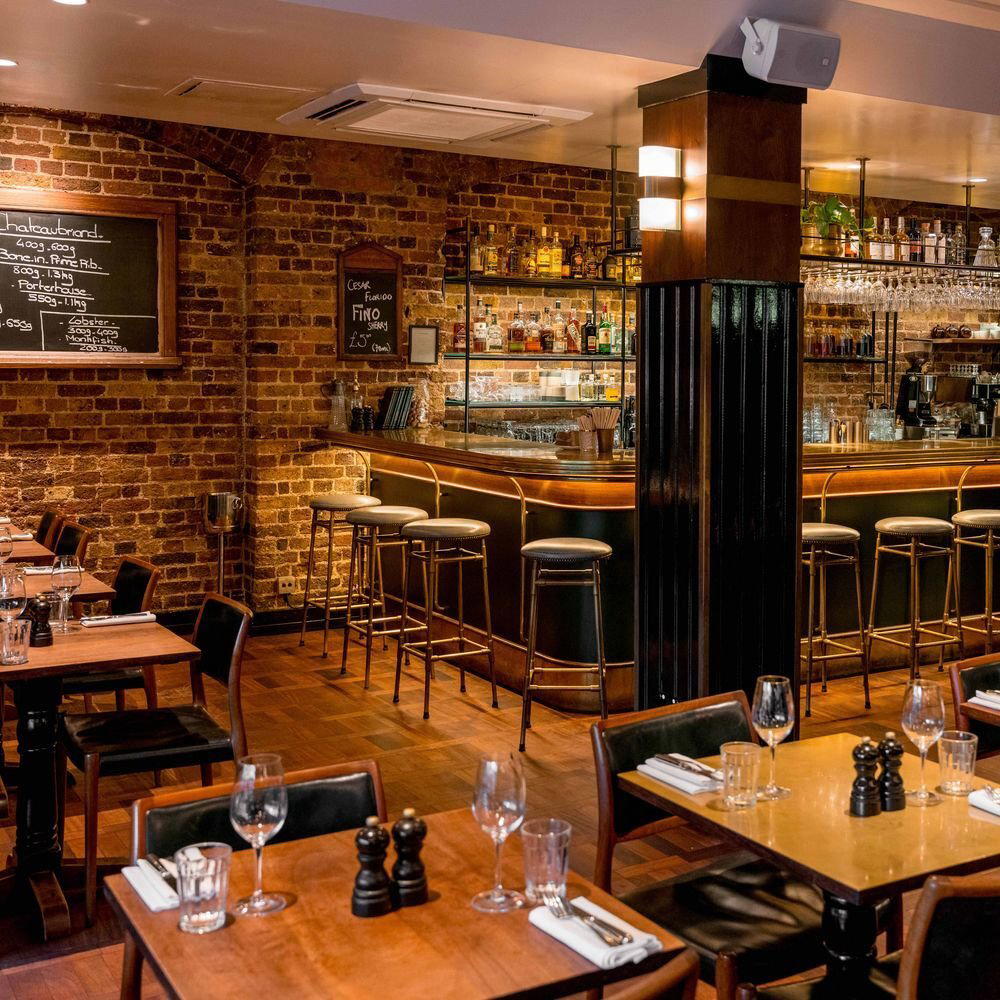
Walking into Hawksmoor Air Street, the architecture does the argumentative work first. The Art Deco room off Regent Street, with its sweeping ceilings and stained-glass windows dressed in dark wood and green leather, signals a particular kind of seriousness about the meal ahead. This is not the casual end of the steakhouse format. The room sits in the same West End postcode as venues in entirely different price brackets, including Sketch, The Lecture Room and Library and Restaurant Gordon Ramsay, and it carries that weight with a degree of composure. Staff dress in civvies rather than formal uniforms, which, in a room this grand, reads as a deliberate softening of the tone rather than an oversight.
The Hawksmoor group launched its first site in Spitalfields in 2006, and the Air Street opening represents its most architecturally ambitious London address. For London restaurants in this category, the combination of heritage interiors and a focused, technique-led menu is now a recognisable format, but few execute it with the consistency that Hawksmoor has built over nearly two decades of operation.
What Charcoal Actually Does to British Beef
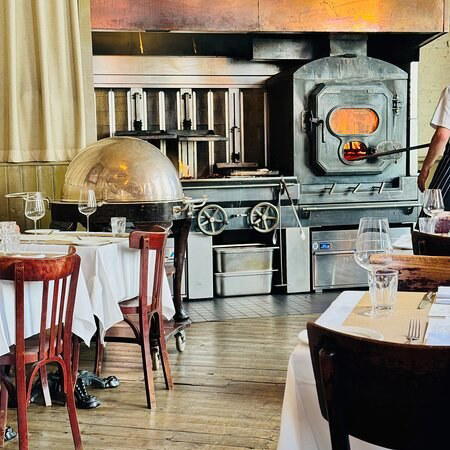
The editorial angle for understanding Hawksmoor is the grill, not the dining room. British steakhouse culture, at its lower end, often treats the grill as a finishing step rather than a defining technique. At the upper end, where Hawksmoor operates, the charcoal grill functions as the central tool through which sourcing decisions either justify themselves or fail. The beef here is grass-fed, sourced from small British farms where cattle eat grass and hay rather than grain, and then dry-aged for 35 days before service. That combination of rearing method, aging time, and charcoal cooking produces a flavour profile with more depth and less sweetness than grain-fed alternatives, but it also demands more precision at the grill: the moisture content and fat structure of grass-fed, dry-aged beef respond differently to heat than commodity cuts, and the margin for overcooking is narrower.
Group Executive Chef Matt Brown oversees the culinary programme across the Hawksmoor estate. The cuts available at Air Street, including porterhouse, bone-in prime rib, and ribeye, are the formats that benefit most from charcoal: large enough to develop a crust without losing internal temperature, aged long enough to carry smoke without it dominating. The larger cuts, particularly T-bones and prime rib, are noted to disappear quickly from the specials board, which is a reliable indicator of what regulars consider worth ordering first.
The side programme at Hawksmoor has always carried more editorial attention than most steakhouses receive for their accompaniments. Triple-cooked chips, Tunworth cheese mash, and anchovy hollandaise appear consistently across reviews as the defaults worth ordering rather than alternatives to consider. Bone marrow with onions on sourdough toast has served as the opening act for long enough that it now functions as a shorthand for the restaurant's philosophy: direct British technique, quality fat, no unnecessary elaboration.
Seafood, Sustainability, and the Non-Meat Case
The seafood component of the menu, developed in collaboration with chef Mitch Tonks, addresses a structural gap that most steakhouses do not bother closing. Whole native lobster and grilled Dover sole are formats that require sourcing discipline equal to the beef programme rather than being afterthoughts for non-carnivores in the party. Oysters with Scotch bonnet mignonette and lobster with garlic butter round out the offer for tables that split between meat and seafood.
Vegetable options exist, including a charred romanesco with Graceburn cheese, peanuts, and chilli, though the menu makes no particular argument that these are equivalent to the beef in terms of the kitchen's technical focus. That honesty about hierarchy is, in its own way, a form of editorial clarity about what the restaurant is actually for.
The Wine List and the Bar Below
The wine list at Air Street keeps bottles largely below three figures, which, in a West End room of this calibre, is a conscious pricing decision rather than an absence of ambition. The by-the-glass selection is specifically noted for depth, allowing the list to function for solo diners and weekday lunches as well as full table formats. The list skews toward reds suited to aged beef, which is the expected direction, but breadth rather than pure depth defines its approach.
Below the main dining room, the 120-seat Lowback Bar operates as a separate programme: cocktails, music, po'boys, snacks, and burgers. The lunchtime offering includes "The Big Matt", a double dry-aged beef patty burger created by Matt Brown, served with beef-dripping fries. It functions as an entry point into the Hawksmoor register at a lower price ceiling than the evening steak programme, and draws its own audience separate from dinner service.
Recognition and Position in the London Field
Hawksmoor Air Street holds a Michelin Plate for 2025 and appears in the Opinionated About Dining Casual Europe ranking, placed at number 668 in 2025. The group as a whole holds the number two position in EP Club's global ranking of restaurants with multiple outlets. These signals collectively place Hawksmoor in the tier of London restaurants where sourcing credentials and technical execution are taken for granted and the differentiator is consistency across a large operation, not the novelty of a single chef's output.
Compared to London's fully Michelin-starred Modern British bracket, which includes venues such as CORE by Clare Smyth, The Ledbury, and Dinner by Heston Blumenthal, Hawksmoor operates at a price point one bracket lower (£££ versus ££££) with a format that prioritises product over transformation. The proposition is different rather than lesser: where the starred bracket charges for technique applied to ingredients, Hawksmoor charges for ingredients treated with restraint.
For readers building a wider picture of British dining outside London, the conversation around seasonal produce, sourcing provenance, and technique at the grill connects to what kitchens like L'Enclume in Cartmel, Moor Hall in Aughton, and Hand and Flowers in Marlow are doing with different ingredients in different formats. The underlying logic of British-sourced, season-aware cooking runs across all of them; Hawksmoor simply applies it to beef and charcoal rather than vegetable tasting menus. Broader benchmarks like The Fat Duck in Bray, Gidleigh Park in Chagford, and Le Manoir aux Quat' Saisons illustrate how far the upper British dining tier extends, while internationally, a comparison with Asina Luna in Peschiera Borromeo or the seafood precision of Le Bernardin in New York City clarifies how specifically Hawksmoor has defined its lane.
Planning a Visit
Hawksmoor Air Street opens for lunch Monday through Friday from 11:45 am, with dinner service running until 9:30 pm Monday and Tuesday, 10 pm Wednesday and Thursday, and 10:30 pm on Friday. Saturday runs continuously from 11:45 am to 10:30 pm; Sunday service closes at 9 pm. The address is 5A Air St, London W1J 0AD, a short walk from Piccadilly Circus and easily reachable via the Bakerloo and Piccadilly lines. For those building a broader London stay, the London hotels guide, London bars guide, and London experiences guide cover the surrounding territory in detail.
Quick reference: Hawksmoor Air Street, 5A Air St, London W1J 0AD. Price range: £££. Cuisine: British steakhouse, charcoal grill, seafood. Lunch and dinner daily. Michelin Plate 2025.
What Do People Recommend at Hawksmoor?
Across reviews and editorial coverage, the bone marrow with onions on sourdough toast appears consistently as the recommended starting point, both for its flavour and as a summary of the kitchen's approach. Among the main cuts, bone-in prime rib and T-bone are the formats most frequently cited as the reason to book, with both disappearing from the specials board early on busy services. The triple-cooked chips, Tunworth cheese mash, and anchovy hollandaise are the side dishes that appear most regularly in recommendations. For the seafood side of the menu, whole native lobster with garlic butter is the standing reference. At lunch, "The Big Matt" burger with beef-dripping fries is the specific recommendation for those who want the Hawksmoor register in a less formal format. The Sunday roast, built around slow-roast rump of aged beef with bone marrow and onion gravy, has a dedicated following and is frequently cited as one of the more considered versions of the format available in central London.
Frequently asked questions
Is Hawksmoor Michelin-listed?
Hawksmoor has received recognition including: The most glamorous of the superb Hawksmoor group, who have been seriously upping the standard of British steakhouses since 2009. Also known for their good wine lists, they’ve got all the usual steakho...; This is where the now trans-Atlanti….
What are the operating hours at Hawksmoor?
Hours at Hawksmoor: Hours: Monday 11:45 am–3 pm, 4:45–9:30 pm Tuesday 11:45 am–3 pm, 4:45–9:30 pm Wednesday 11:45 am–3 pm, 4:45–10 pm Thursday 11:45 am–3 pm, 4:45–10 pm Friday 11:45 am–3 pm, 4:45–10:30 pm Saturday 11:45 am–10:30 pm Sunday 11:45 am–9 pm.
What do people recommend at Hawksmoor?
Bone marrow with onions on sourdough toast appears consistently as the recommended opening across editorial coverage, functioning as a concise summary of the kitchen's approach. For mains, the larger cuts — T-bone and prime rib — tend to disappear from the specials board first, which reflects where the kitchen puts its focus. The triple-cooked chips and anchovy hollandaise are repeatedly cited as sides worth ordering alongside. At lunch, Group Executive Chef Matt Brown's 'The Big Matt' burger, served with beef-dripping fries, draws a following in its own right.
Is Hawksmoor focused on a specific cuisine style?
How much does it cost to eat at Hawksmoor?
Pricing at Hawksmoor is listed as £££.
How do I find Hawksmoor?
Hawksmoor is located at 5A Air St, London W1J 0AD, United Kingdom, London.
At a Glance
| Venue | Cuisine | Price | Awards | Notes |
|---|---|---|---|---|
| HawksmoorThis venue — the venue you are viewing | British Steakhouse | $50–100 | Michelin Plate · Star Wine List | Not listed |
| The Ledbury | Modern British Fine Dining | $300–500 | 3 Michelin Stars · World's 50 Best #42 | Modern European, Modern Cuisine |
| Sketch, The Lecture Room and Library | Modern French Fine Dining | $200–300 | 3 Michelin Stars · World's 50 Best #18 | Modern French |
| CORE by Clare Smyth | Modern British Fine Dining | $150–200 | 3 Michelin Stars · World's 50 Best #97 | Modern British |
| Restaurant Gordon Ramsay | French Fine Dining | $200–300 | 3 Michelin Stars · World's 50 Best #13 | Contemporary European, French |
| Dinner by Heston Blumenthal | Historic British Fine Dining | $200–300 | 2 Michelin Stars · World's 50 Best #45 | Modern British, Traditional British |
Recognition history
Dated appearances from independent guides and award organizations, with the underlying list record or original source where available.
Michelin Plate
Michelin
Star Wine List
Star Wine List
Opinionated About Dining Casual in Europe Recommended
Opinionated About Dining
The Good Food Guide GFG Good
The Good Food Guide
World's Best Steaks 101 Best Steak Restaurants #23
World's Best Steaks
Full recognition history (11 entries)
Michelin Plate
Michelin
Opinionated About Dining Casual in Europe Ranked #668
Opinionated About Dining
World's Best Steaks 25 Best Burgers #8
World's Best Steaks
Michelin Plate
Michelin
Opinionated About Dining Casual in Europe Ranked #426
Opinionated About Dining
Opinionated About Dining Casual in Europe Recommended
Opinionated About Dining