Google: 4.4 · 2,038 reviews
Hamura Saimin
Hamura Saimin has anchored Lihue's working-lunch culture for decades, serving the noodle soup that functions as Kauai's most legible comfort food. The address on Kress Street places it at the center of the island's most lived-in commercial district, a world apart from the resort corridors to the north. For context on the broader Lihue dining scene, see our full Lihue restaurants guide.
 Discover on Pearl
Pearl is the En Primeur Club membership app — saves, bookings, and concierge access live there. Same editors, same standards.
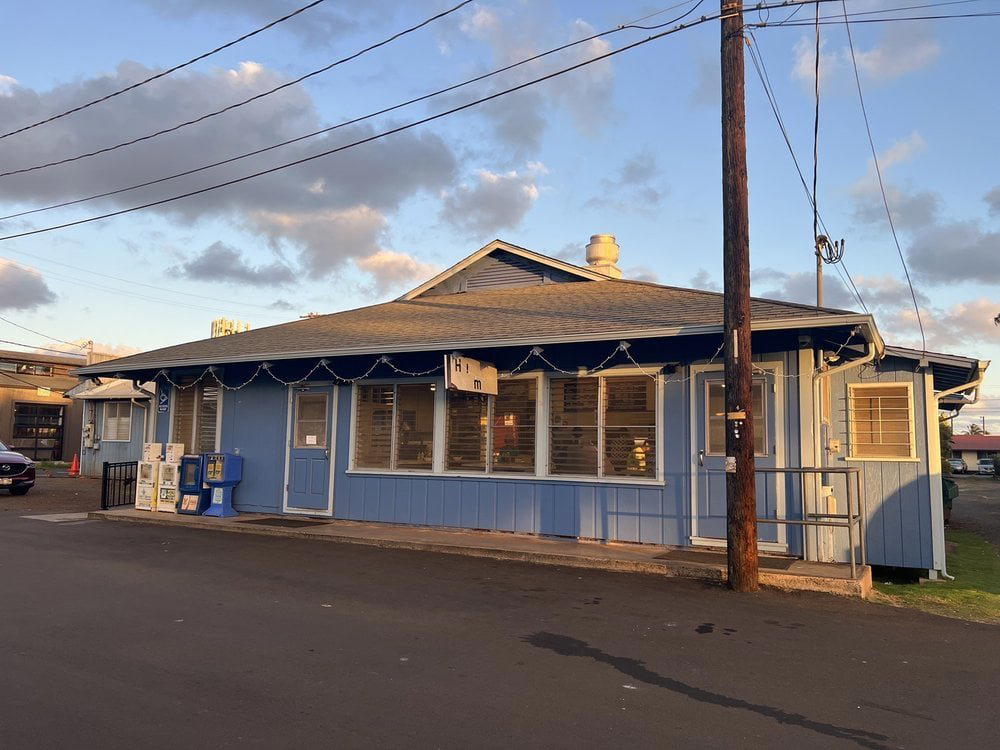
The Bowl That Defines Kauai's Table
There is a particular kind of restaurant that anchors a community's food identity not through ambition but through repetition: the place that has served the same thing, reliably, long enough that the dish and the room become inseparable. In Lihue, that role belongs to Hamura Saimin, a counter-and-booth operation on Kress Street that has occupied the same practical position in local eating culture for generations. The room is plain, the lighting unsparing, and the menu narrow — exactly the conditions under which a single dish tends to become definitive.
Saimin itself is the lens through which Hamura is leading understood. The noodle soup emerged from Hawaii's plantation era, when Chinese, Japanese, Filipino, Korean, and Portuguese laborers shared work camps and, eventually, cooking methods. The resulting dish drew on Japanese ramen and udon conventions, Chinese noodle-making traditions, and the dashi logic of Japanese broth cookery, producing something that is not quite any of its predecessors. Soft wheat-and-egg noodles sit in a clear broth derived typically from dashi, pork, and dried shrimp, topped with char siu, fishcake, and green onion. It is a dish that carries a specific social history — one of improvisation and cultural convergence , in every bowl.
Where Hamura Sits in Lihue's Dining Order
Lihue functions as Kauai's administrative and commercial center rather than as a resort destination, which gives its food scene a different orientation than the hotel-driven dining concentrated further north. Restaurants here serve residents more than visitors, and the range reflects that: plate-lunch counters, local seafood operations, and a handful of spots that trade on deep community familiarity rather than tourism marketing. Hamura belongs firmly to that local tier, positioned alongside places like Kikuchi's, Happy Eats, and Konohiki Seafoods in the part of the market that prioritizes substance over presentation.
The contrast with Lihue's more visitor-oriented options is instructive. Duke's Kauai operates at the other end of the register , waterfront setting, broader menu, beach-resort pricing , while Lawai'a Fish Co represents the island's contemporary local-seafood direction. Hamura operates in a different mode entirely: it is the kind of place that functions as a reference point rather than a destination, the bowl of saimin against which other bowls are measured. For those arriving from the mainland with a mental map built around tasting menus and reservation windows , the kind of dining represented by Le Bernardin in New York City, Alinea in Chicago, or Lazy Bear in San Francisco , Hamura reads as a recalibration. The cultural signal is more important than the formal signal.
The Cultural Weight of a Local Noodle
Hawaii's plantation-era food culture produced several dishes that are now deeply embedded in local identity: spam musubi, loco moco, plate lunch, malasadas. Saimin occupies a specific position within that group because it never crossed over into national food culture the way some of the others have gestured toward. It remains largely a Hawaii phenomenon, understood from the inside in a way that lends it a different kind of meaning for residents than for visitors. On Kauai specifically, that insularity is amplified: the island's relative distance from Honolulu's more cosmopolitan food scene has preserved older food habits in ways that are harder to find on Oahu.
The plantation origins of saimin are worth dwelling on because they explain the dish's structure. The blend of influences was not designed as fusion , it was the natural result of communities cooking with shared resources and varied culinary backgrounds. The broth reflects Japanese technique adapted to available ingredients; the toppings reflect Chinese char siu and Japanese kamaboko traditions; the noodle falls somewhere between the two. Hamura, as one of Lihue's longest-operating practitioners of this dish, serves as a living record of that convergence. The context matters as much as the execution.
For those tracking how local-specific dishes survive or evolve across different markets, the comparison with other regionally defined food cultures is useful. The way saimin functions in Hawaii parallels the way a bowl of pho functions in certain Vietnamese-American communities, or the way a specific regional ramen style carries the identity of its city of origin in Japan. In each case, a dish built from immigrant labor and ingredient improvisation became the shorthand for a community's food identity. Hamura serves that shorthand in its most direct form.
Planning Your Visit
Hamura Saimin is located at 2956 Kress Street in Lihue, in the commercial stretch that runs through the town's working center rather than along its tourist corridors. The address places it within easy reach of those staying in Lihue itself, and it requires minimal navigational effort from most points on the southern end of the island. Operating as a counter-and-booth format, the restaurant has historically accommodated walk-in traffic, which fits the quick-lunch and casual-dinner function it serves for locals. Specific hours are not confirmed in our current data, so verifying current opening times before arrival is advisable, particularly for those planning an early or late visit. Pricing aligns with the plate-lunch and noodle-counter tier of the local market , accessible enough that the visit carries no financial friction. For a broader orientation to eating and drinking in the area, see our full Lihue restaurants guide, and if you are planning a longer stay, our full Lihue hotels guide, Lihue bars guide, Lihue wineries guide, and Lihue experiences guide provide additional coverage. For reference on what a more formally constructed dining visit might look like at the higher end of the American restaurant spectrum, The French Laundry in Napa, Single Thread Farm in Healdsburg, Atomix in New York City, Emeril's in New Orleans, and 8 1/2 Otto e Mezzo Bombana in Hong Kong represent that separate tier entirely.
Price and Positioning
A quick look at comparable venues, using the data we have on file.
| Venue | Price | Awards | Notes |
|---|---|---|---|
| Hamura Saimin | This venue | ||
| Duke's Kauai | |||
| Happy Eats | |||
| Kikuchi's | |||
| Konohiki Seafoods | |||
| Lawai'a Fish Co |
Continue exploring
More in Lihue
Restaurants in Lihue
Browse all →
At a Glance
- Hidden Gem
- Iconic
- Cozy
- Rustic
- Casual Hangout
- Family
- Historic Building
Casual diner counter seating with basic, no-frills local atmosphere.