Google: 4.7 · 1,122 reviews
Konohiki Seafoods
A seafood-focused stop on Kuhio Highway in Lihue, Konohiki Seafoods draws on Kauai's working fishing culture rather than its resort dining circuit. The format leans toward direct, ingredient-led preparation — the kind of approach that makes sense when the supply chain is short and the fish is local. For visitors who want to eat closer to the island's actual food economy, it sits in a different register than the beachfront operations nearby.
 Discover on Pearl
Pearl is the En Primeur Club membership app — saves, bookings, and concierge access live there. Same editors, same standards.
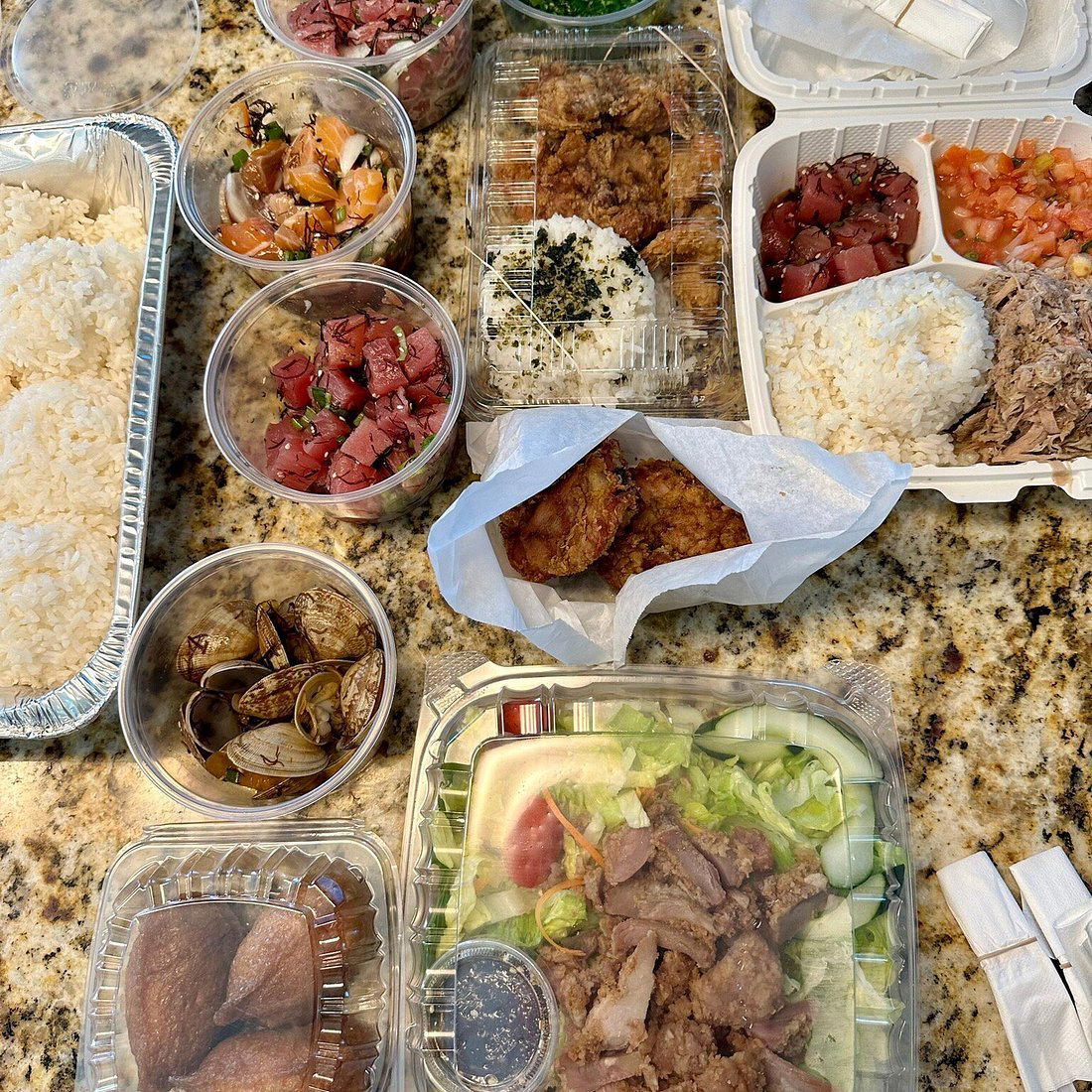
Where Kauai's Fishing Economy Meets the Plate
Lihue's dining scene divides roughly into two camps: the resort-adjacent operations built for visitors arriving with fixed expectations, and the smaller, locally embedded spots that reflect how people on the island actually eat. Konohiki Seafoods at 3-4301 Kuhio Highway occupies the latter territory. The Kuhio Highway corridor through Lihue is workaday Kauai — practical, multi-use, a stretch where hardware stores and plate lunch counters share the same strip malls as government offices. A seafood operation here is not performing tropical atmosphere. It is working within the actual geography of the island's food supply.
The name itself signals something about orientation. In Hawaiian, a konohiki was the headman of an ahupuaa — the land division system that ran from mountain to sea , responsible in part for managing coastal fishing rights. Using that term as a name is a positioning choice, one that places the operation in dialogue with Kauai's history of regulated, community-tied fishing rather than the globalized seafood trade. Whether that framing is fully realized in practice is a question the menu structure is the leading instrument for answering.
Reading the Menu as an Argument
Seafood menus in Hawaii exist on a spectrum from the tourist-facing (broad, safe, built around familiar preparations) to the supply-chain-honest (narrow, shifting, dependent on what came off the boats). The architecture of a menu tells you which of these a kitchen is committed to. A menu organized around specific local species , opah, ono, mahi-mahi caught in Hawaiian waters , signals a different operational logic than one built around salmon and shrimp sourced from the continental supply chain.
Konohiki's positioning along Kuhio Highway, away from the resort corridor and without the infrastructure of a large dining room, suggests a format where the catch drives the offering rather than the other way around. That is the version of Hawaii seafood dining that has the most integrity , and, historically, the least visibility to visitors who book through hotel concierges. In a market where operations like Duke's Kauai occupy the high-volume, beachside tier, and Lawai'a Fish Co pursues its own angle on local seafood, Konohiki sits in the part of the market defined by proximity to source and stripped-back format.
The most revealing detail in any seafood-forward operation is not the headline dish but the supporting structure: what the kitchen does with less-fashionable cuts, how it handles daily variation in supply, whether preparations are calibrated to the fish or applied uniformly regardless of species. These are the questions worth bringing to the counter at Konohiki.
Lihue's Quietly Functional Food Economy
Lihue functions as Kauai's administrative and commercial center, which means it eats differently from Poipu or Princeville. The lunch crowd here is drawn from government workers, tradespeople, and residents running errands , not from resort guests on a two-hour break between activities. That audience shapes what survives commercially. Spots that require theatrical presentation or premium pricing do not last long on Kuhio Highway. What does last is food that delivers on flavor-per-dollar, served at a pace that respects a working lunch window.
That context matters when assessing Konohiki. It sits alongside Hamura Saimin, a Lihue institution that has sustained a local following for decades by doing one thing with consistency, and near Happy Eats and Kikuchi's, which occupy similar functional-dining territory. In this company, Konohiki's differentiation lies specifically in its seafood focus , a narrower brief that either commits to the local supply chain or loses its reason to exist against broader plate lunch competitors.
For comparison's sake: the formal end of American seafood dining, represented by operations like Le Bernardin in New York City, works from a completely different set of assumptions about sourcing, presentation, and price architecture. The tasting-menu model at places like Single Thread Farm in Healdsburg or the tightly controlled counter formats at Atomix in New York City are not the relevant peer set here. The more useful frame is what honest, supply-responsive, local-catch seafood dining looks like when it is not trying to compete with the resort tier , a format that carries its own credibility precisely because it is not chasing that audience.
Planning a Visit
Konohiki Seafoods operates from the Kuhio Highway strip in Lihue, accessible by car and positioned along the main artery connecting the island's east and south coasts. For visitors staying along the South Shore or in Poipu, it sits on the natural route toward Kapaa and the North Shore, making it a practical stop rather than a detour. The format appears oriented toward counter service or quick-turnover dining rather than a reservation-required experience , consistent with the broader character of the Kuhio Highway corridor. Arriving at midday on a weekday gives you the leading read of what the kitchen is actually running, since seafood-forward operations of this type tend to show their range during the working lunch window rather than during weekend tourist traffic peaks.
For a fuller picture of where Konohiki fits within the island's eating options, the full Lihue restaurants guide maps the range across price points and formats. Visitors building an itinerary around Kauai's food scene may also find value in the Lihue hotels guide, the Lihue bars guide, the Lihue wineries guide, and the Lihue experiences guide for a broader orientation to what the area offers beyond the resort belt.
Recognition, Side-by-Side
A compact peer snapshot based on similar venues we track.
| Venue | Awards | Cuisine | Notes |
|---|---|---|---|
| Konohiki Seafoods | This venue | ||
| Duke's Kauai | |||
| Hamura Saimin | |||
| Happy Eats | |||
| Kikuchi's | |||
| Lawai'a Fish Co |
Continue exploring
More in Lihue
Restaurants in Lihue
Browse all →
At a Glance
- Hidden Gem
- Casual Hangout
- Standalone
- Local Sourcing
Casual deli counter in a strip mall with quick service and no seating, focused on fresh grab-and-go meals.