Gymkhana





2 Michelin Stars · La Liste Top Restaurants · Falstaff Restaurant - 95 Falstaff Points
Our verdict
Two Michelin stars and a La Liste ranking in the top 100 European restaurants signal exactly where Gymkhana sits in London's Indian dining hierarchy. The colonial-club setting on Albemarle Street frames cooking that draws on Northern Indian tradition while reaching for tandoor-grilled complexity and nashta-style small plates that read as genuinely contemporary. For the price point, the ambition is matched by the execution.

Pearl is the En Primeur Club membership app, where members save venues, book tables and use the concierge.
The menu
What to order
- Tandoori masala lamb chops
- Kid goat methi keema
- Butter chicken
- Keema pao
The Room Before the Food
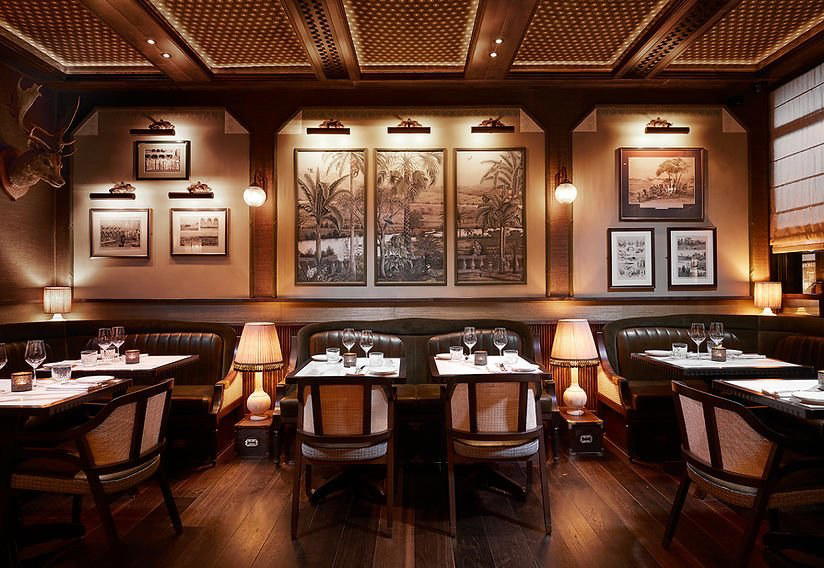
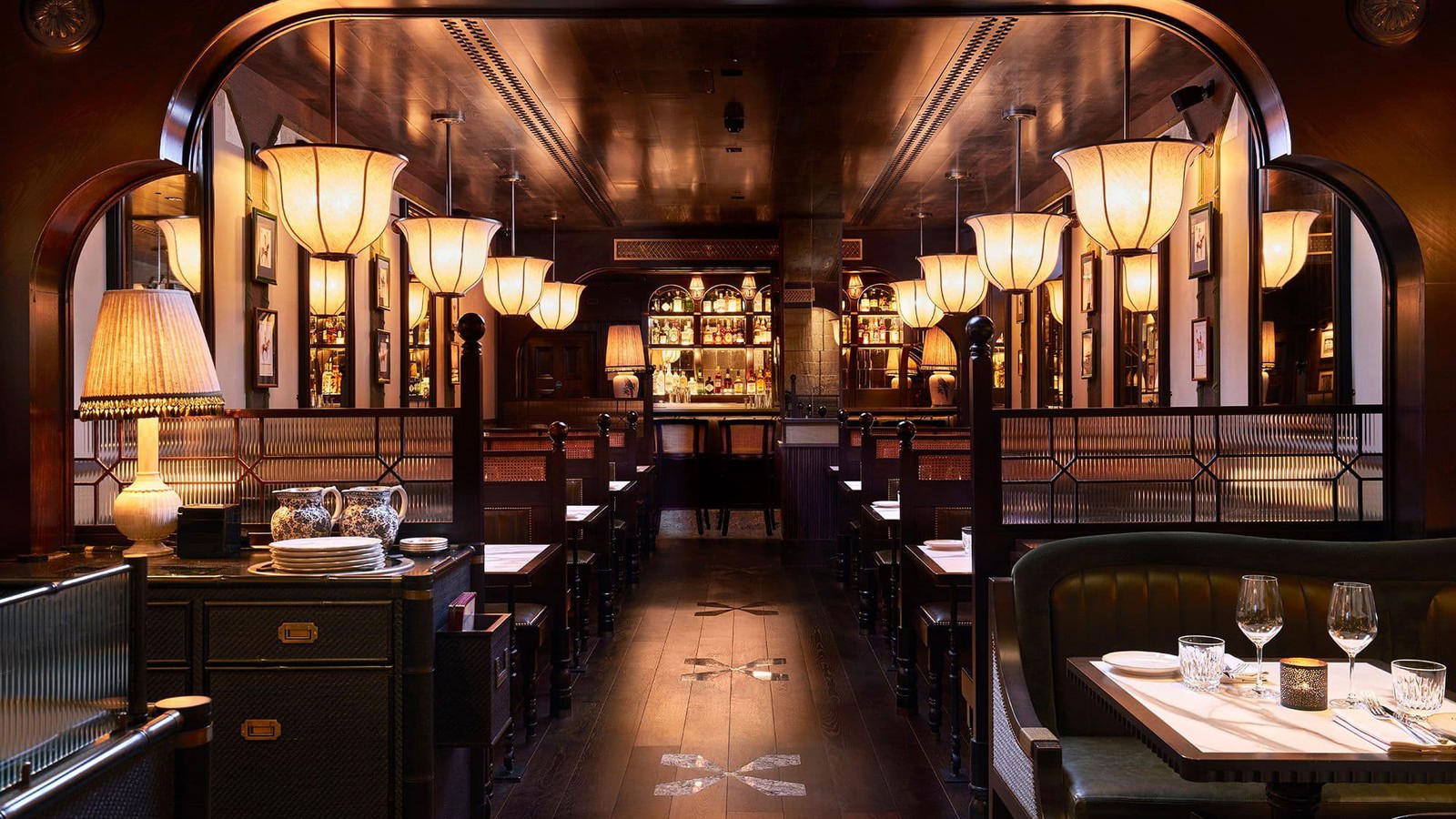
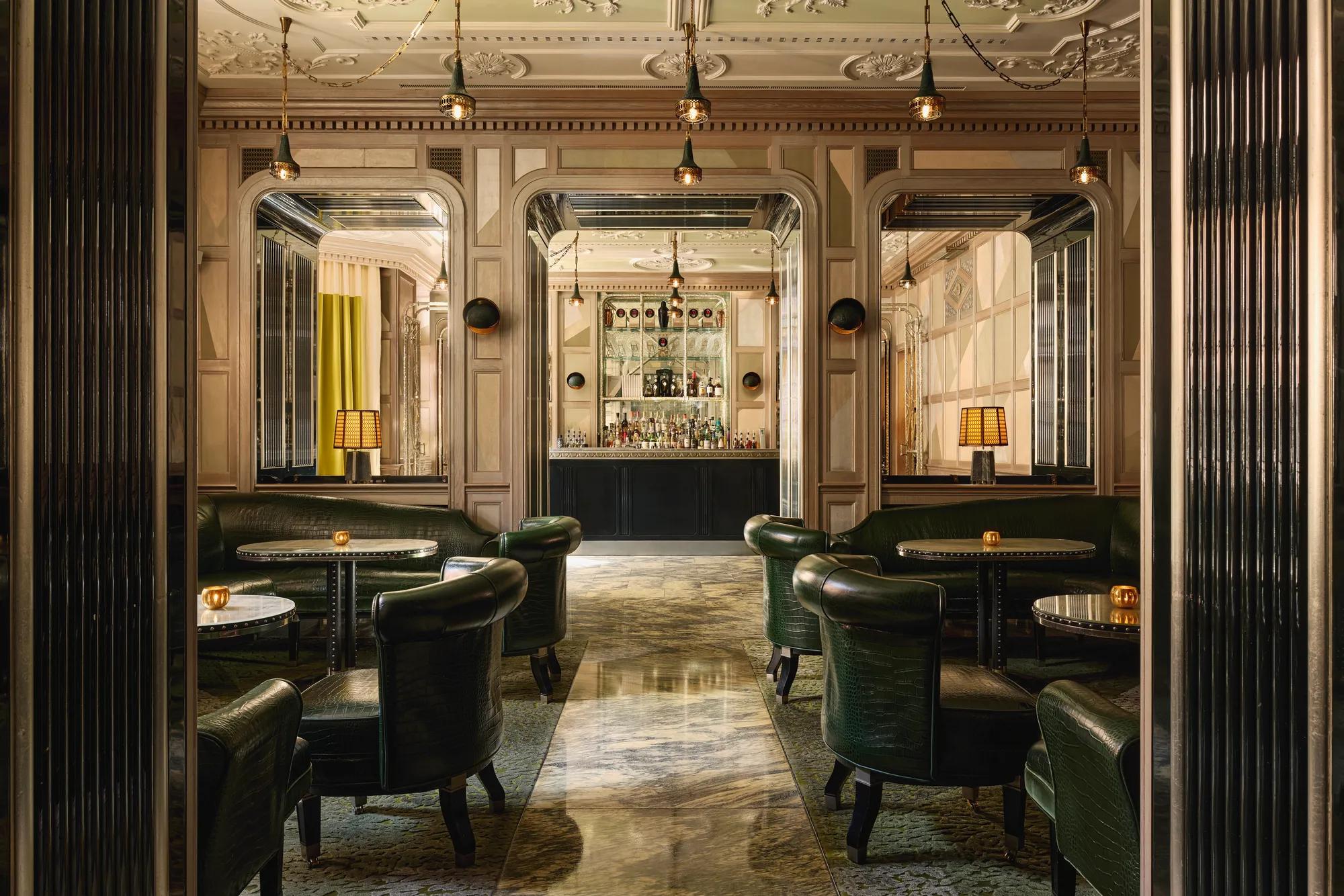
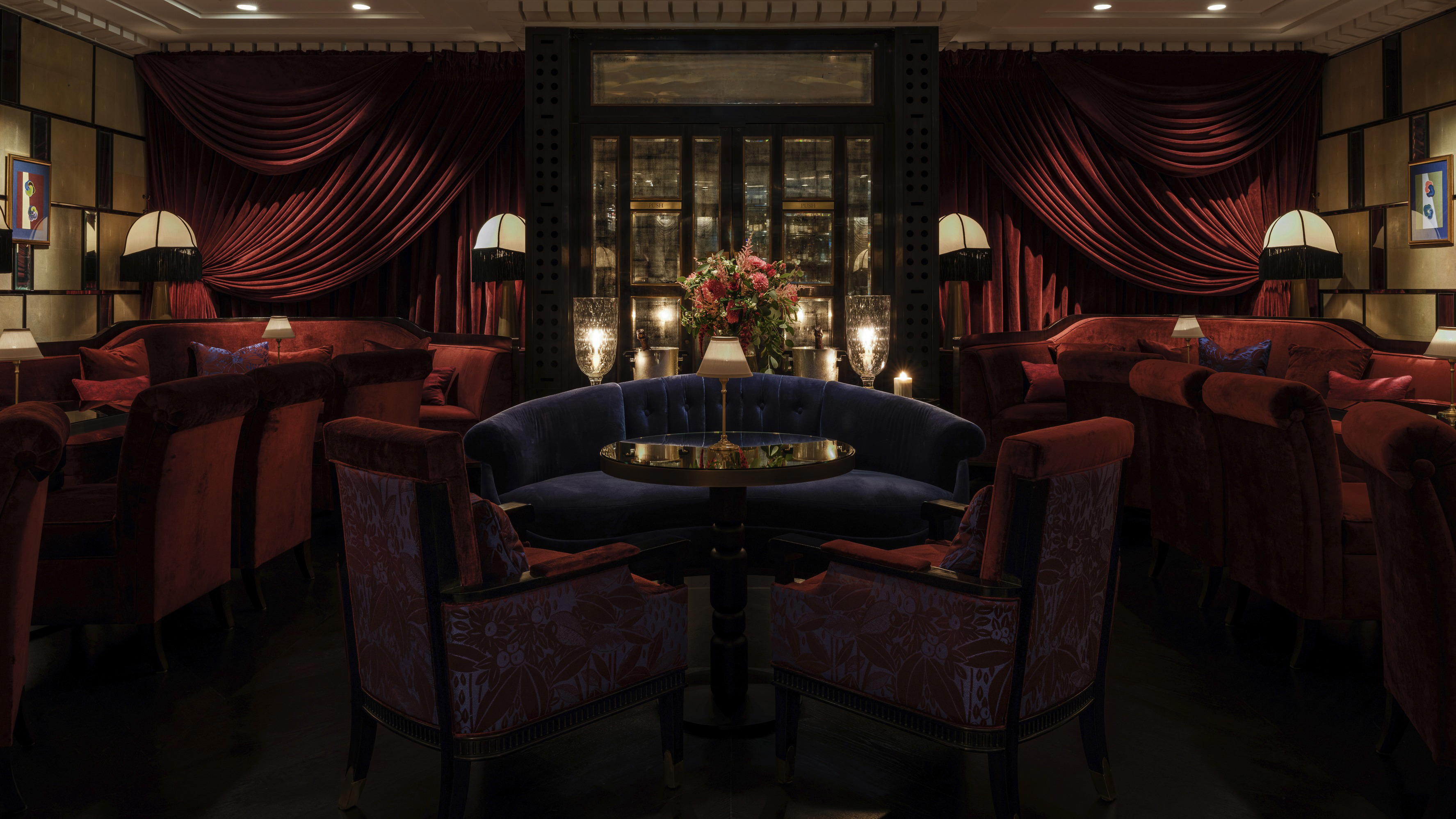
Mayfair has always had a particular talent for interiors that do the storytelling before a dish arrives. At Gymkhana, 42 Albemarle Street, the reference point is the colonial-era Indian sporting club: ceiling fans that turn slowly above richly upholstered leather seating, old prints and mounted stag's heads sharing wall space with hunting trophies from the Maharaja of Jodhpur. The ground floor runs to a dining room and bar, while the basement shifts register, deeper red, more enclosed, the kind of space that makes lunch feel like a considered act. A mirrored staircase connects the two levels, and that small architectural detail captures what the room is doing: reflecting one world back through another.
This is not the London Indian restaurant of twenty years ago, where the decor signalled either austerity or excess. The colonial-club format positions Gymkhana inside a Mayfair dining culture that includes places like Sketch, The Lecture Room and Library and CORE by Clare Smyth, restaurants where setting and food operate at the same level of intention. The room is making an argument, and the kitchen has to answer it.
Northern Technique, Contemporary Range
London's modern Indian dining scene has fragmented in interesting ways. Some kitchens push hard toward pure regional specificity; others run at international fusion. Gymkhana occupies a position that is more disciplined than either extreme: the menu is predominantly Northern Indian in structure, with the tandoor and the grill as its organising grammar, but the execution reaches across the subcontinent when the dish demands it. That editorial choice, stay rooted, but don't be constrained, is what has sustained two Michelin stars since at least 2024 and a ranking of 85th among European restaurants in Opinionated About Dining's 2025 list.
The cooking at this level is not about importing a French framework and draping Indian flavours over it. The complexity here is achieved through the logic of the subcontinent's own techniques: the char and smokiness of the tandoor, the layering of spice that Northern Indian cuisine demands, the slow-building heat of vindaloo made with pork cheek rather than the default lamb. Where global technique enters, it tends to be structural rather than decorative. A duck-egg bhurji scrambled with lobster and served alongside a Malabar paratha is a good example: the pairing is unexpected, but the method, scrambling, the paratha as vehicle, is entirely within an Indian culinary register. The ingredient is imported; the logic is indigenous.
This intersection of method and produce is where Gymkhana is most interesting to read as a restaurant. Compare it to Gaa in Bangkok, where the conversation between Indian training and Southeast Asian ingredients works in the other direction, or to Le Bernardin in New York City, where French technique is the fixed grammar and the fish simply passes through it. At Gymkhana, the tradition is Indian; the contemporary inflection is the variable.
The Menu in Detail
The nashta section, small plates with an Anglicised nod to the snacks served at colonial-era gatherings, gives the menu its most playful range. Minced kid goat methi keema with pao bread sits alongside duck-egg bhurji with lobster and Malabar paratha. These are the dishes that reward ordering adventurously rather than defensively. The main plates are anchored by grills and chops: tandoori masala lamb chops appear with walnut chutney, a pairing that is counterintuitive on the page and apparently coherent on the plate given the restaurant's sustained standing. Guinea fowl pepper fry arrives with a Malabar paratha; Goan-style salmon tikka comes with tomato chutney. Wild muntjac biryani and pork cheek vindaloo extend the game and offbeat-protein logic beyond what the conventional Indian restaurant menu typically allows at this price point.
Desserts continue the same structural approach. A tiramisu variant incorporates rasgulla, the syrupy, sponge-textured Bengali sweet, in place of ladyfinger. Basmati kheer, the rice pudding spiced with cardamom, is served with mango sorbet. These are not East-meets-West novelties; they are recombinations that use a pastry logic familiar to Western diners as a carrier for flavours and textures that are Indian in origin.
The bar operates independently, offering cocktails and reinvented punches alongside Amritsari shrimps and Punjabi samosas with tamarind-spiked saunth chutney. A house pale ale, 4th Rifles, has been brewed specifically for the restaurant. The wine list includes English sparkling wine, a relatively unusual commitment for a kitchen that has no obvious obligation to it, and reflects the broader JKS group's approach to pairing across its portfolio, which also includes BiBi.
Gymkhana in London's High-End Dining Context
At ££££ pricing, Gymkhana sits in the same tier as The Ledbury, Restaurant Gordon Ramsay, and the other two-star addresses in London. What distinguishes its position is that it holds that tier while representing a cuisine category that, historically, has not been priced or regarded at parity with French or Modern European cooking in the capital. The two Michelin stars, held consecutively through 2024 and 2025, along with an 85th ranking in the 2025 OAD European list and 76 points in La Liste's 2026 global rankings, are evidence that this parity has been established in the critical record, not merely claimed.
That matters for how you read the room and the price. The comparison set is not the broader Indian restaurant scene in London. It is the restaurants in this neighbourhood and this tier: the Mayfair and West End addresses that carry sustained international recognition. Seen through that frame, the colonial-club aesthetic is not a quirk; it is a positioning statement, and the kitchen's sustained decoration suggests the statement holds.
For readers building a London dining itinerary, Gymkhana fits alongside rather than in competition with modern European addresses like CORE by Clare Smyth. The cuisines don't overlap; the occasions do. Both reward advance planning and both assume a diner who is paying attention. The broader London high-end restaurant landscape also includes notable addresses outside the city at comparable or higher price points: The Fat Duck in Bray, L'Enclume in Cartmel, Moor Hall in Aughton, Gidleigh Park in Chagford, Hand and Flowers in Marlow, and Le Manoir aux Quat' Saisons in Great Milton.
Planning Your Visit
Gymkhana operates seven days a week with a lunch service running until 2:45 pm and dinner from 5:30 pm, closing at 10:45 pm daily. The ground floor is the more active space for lunch; the basement's enclosed atmosphere makes it the better choice for dinner when the red walls and lower light do more work.
The restaurant sits within walking distance of Green Park and Bond Street stations, placing it in the core of Mayfair's dining cluster. For those building a broader London trip, our full London restaurants guide, our full London hotels guide, our full London bars guide, our full London wineries guide, and our full London experiences guide cover the city across all categories.
Quick reference: 42 Albemarle St, London W1S 4JH. Open Monday to Sunday, lunch 12:00–2:45 pm, dinner 5:30–10:45 pm. Price range: ££££.
Frequently asked questions
Would Gymkhana be comfortable with kids?
At ££££ pricing in central Mayfair, the format is oriented toward adult dining. The two-level colonial-club interior, formal service, and the pacing of a full Northern Indian menu make it a difficult fit for young children. Families with older teenagers who can engage with a multi-course meal would fare better than those with young kids.
What's the overall feel of Gymkhana?
Gymkhana holds 2 Michelin stars and ranked 85th in the OAD Top European Restaurants in 2025, placing it firmly in London's top tier of formal dining. The room channels colonial India's polo and sporting clubs: richly upholstered leather seating, whirring ceiling fans, hunting trophies from the Maharaja of Jodhpur, and a mirrored staircase connecting two distinct levels. The cooking is Northern Indian in foundation, with a contemporary range that spans tandoori grills, game, and inventive nashta small plates.
Is Gymkhana award-winning?
Gymkhana has received recognition including: La Liste Top Restaurants (2026): 76pts; The clubs of colonial India are the inspiration for this impeccably run restaurant. It's spread across two levels: the ground floor booths are perfect for lunch, while the vivid red basement has a mor….
What should I order at Gymkhana?
The nashta small plates are the most direct expression of the kitchen's range: the kid goat methi keema with pao bread and the duck-egg bhurji scrambled with lobster alongside a Malabar paratha are both noted in La Liste's 2026 assessment of the menu. From the main courses, the tandoori lamb chops with walnut chutney and the wild muntjac biryani represent the kitchen's contemporary spin on Northern Indian grills. The standalone bar also merits attention for its reinvented punches and nibbles such as Punjabi samosas with tamarind saunth chutney.
How much does it cost to eat at Gymkhana?
Pricing at Gymkhana is listed as ££££.
When is Gymkhana open?
Hours at Gymkhana: Hours: Monday 12–2:45 pm, 5:30–10:45 pm Tuesday 12–2:45 pm, 5:30–10:45 pm Wednesday 12–2:45 pm, 5:30–10:45 pm Thursday 12–2:45 pm, 5:30–10:45 pm Friday 12–2:45 pm, 5:30–10:45 pm Saturday 12–2:45 pm, 5:30–10:45 pm Sunday 12–2:45 pm, 5:30–10:45 pm.
At-a-Glance Comparison
A quick peer reference to anchor this venue in its category.
| Venue | Cuisine | Price | Awards | Notes |
|---|---|---|---|---|
| GymkhanaThis venue (the venue you are viewing) | Northern Indian Fine Dining | $100–150 | 2 Michelin Stars · La Liste Top Restaurants | Not listed |
| The Ledbury | Modern British Fine Dining | $300–500 | 3 Michelin Stars · World's 50 Best #42 | Modern European, Modern Cuisine |
| Sketch, The Lecture Room and Library | Modern French Fine Dining | $200–300 | 3 Michelin Stars · World's 50 Best #18 | Modern French |
| CORE by Clare Smyth | Modern British Fine Dining | $150–200 | 3 Michelin Stars · World's 50 Best #97 | Modern British |
| Restaurant Gordon Ramsay | French Fine Dining | $200–300 | 3 Michelin Stars · World's 50 Best #13 | Contemporary European, French |
| Dinner by Heston Blumenthal | Historic British Fine Dining | $200–300 | 2 Michelin Stars · World's 50 Best #45 | Modern British, Traditional British |
Recognition history
Dated appearances from independent guides and award organizations, with the underlying list record or original source where available.
Michelin 2 Stars
Michelin
La Liste Top Restaurants
La Liste
Falstaff Restaurant - 95 Falstaff Points
Falstaff
Opinionated About Dining Top Restaurants in Europe Ranked #93
Opinionated About Dining
National Restaurant Awards Top 100 #92
National Restaurant Awards
Full recognition history (12 entries)
La Liste Top Restaurants
La Liste
Michelin 2 Stars
Michelin
Opinionated About Dining Top Restaurants in Europe Ranked #85
Opinionated About Dining
The Good Food Guide GFG Good
The Good Food Guide
Michelin 2 Stars
Michelin
Opinionated About Dining Top Restaurants in Europe Ranked #93
Opinionated About Dining
Opinionated About Dining Top New Restaurants in Europe Ranked #108
Opinionated About Dining
Gymkhana
Featured Guides
Continue exploring
More in London
More from Chef Karam Sethi
Browse all →
Restaurants in London
All restaurants in London →
Bars in London
All bars in London →



Details
- Elegant
- Sophisticated
- Intimate
- Classic
- Date Night
- Business Dinner
- Special Occasion
- Private Dining
- Craft Cocktails
- Extensive Wine List
- A La Carte
- Tasting Menu
- Small Plates
- Vegetarian Friendly
- Vegan Options
- Gluten Free Options
Current opening hours
- Monday
- 12–2:30 PM, 5:30–10:30 PM
- Tuesday
- 12–2:30 PM, 5:30–10:30 PM
- Wednesday
- 12–2:30 PM, 5:30–10:30 PM
- Thursday
- 12–2:30 PM, 5:30–10:30 PM
- Friday
- 12–2:30 PM, 5:30–10:30 PM
- Saturday
- 12–2:30 PM, 5:30–10:30 PM
- Sunday
- 12–2:30 PM, 5:30–10:30 PM
Hours can change for holidays and private events. Hours as of .
Vivid red basement with intimate feel, elegant sophisticated decor, and inviting atmosphere across two levels.