Gorse



Gorse holds a Michelin star on Kings Road in Cardiff's Pontcanna neighbourhood, where a tasting menu format built around the Welsh larder — Gower salt marsh lamb, seaweed, coastal seafood — draws a dedicated following. The kitchen operates with an open format and a two-service-per-day schedule Tuesday through Saturday, placing it squarely in the intimate, chef-led tier of British regional dining.
Pearl is the En Primeur Club membership app — saves, bookings, and concierge access live there. Same editors, same standards.
- Address
- 186-188 Kings Rd, Pontcanna, Cardiff CF11 9DF, United Kingdom
- Phone
- +44 29 2037 2055
- Website
- gorserestaurant.co.uk
- Directions
- Get directions
 Saves & bookings on Pearl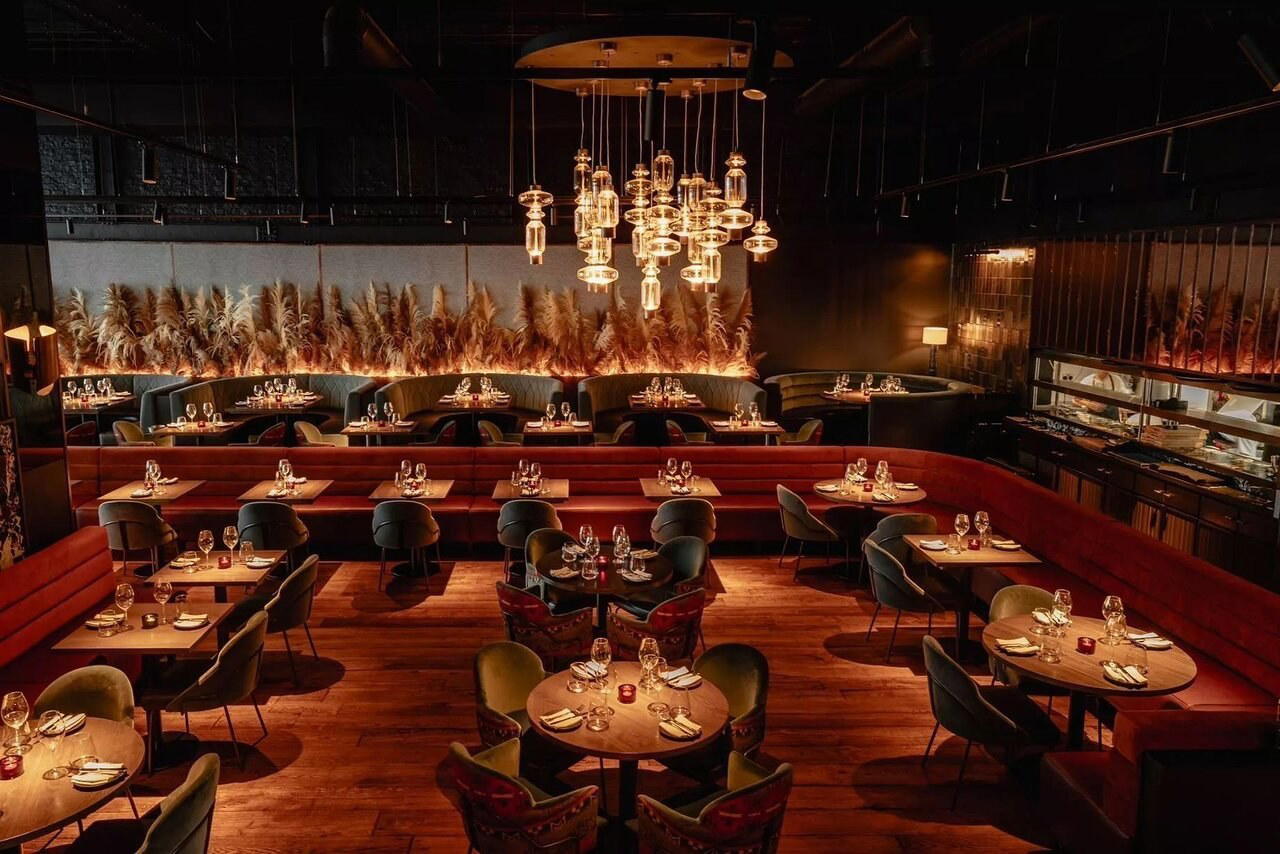
Pontcanna's Place in Cardiff's Fine Dining Conversation
Cardiff's premium restaurant scene has consolidated around a handful of distinct approaches: the wood-fire cooking at ember at No. 5, the produce-led Modern British at Cora, and the tasting menu format that Gorse has staked out in Pontcanna. Where Thomas and Asador 44 (Spanish) operate at the £££ tier with broader menu formats, Gorse commits to the stripped-back, tasting-only model at ££££ — the format that demands the most from a kitchen and offers the least margin for a guest to retreat into safe choices. That commitment, and a Michelin star awarded in 2024, places it in a different competitive register than most Cardiff dining rooms.
The address — 186-188 Kings Road, sits in Pontcanna, a residential stretch of the city that has gradually drawn the kind of neighbourhood restaurants that prize regulars over tourist traffic. It is not a dining district in the conventional sense; there is no cluster of marquee names to anchor it. That relative quietness is, in part, what defines the experience. Arriving at Gorse, the first thing you encounter is the open kitchen, where the chefs acknowledge guests at the door. That moment sets the register for everything that follows: personal, attentive, without ceremony for its own sake.
What the Welsh Larder Actually Means on a Plate
The phrase "Welsh larder" gets used often enough in the country's restaurant marketing to have become almost meaningless. What distinguishes the kitchens that use it seriously is specificity, not a gesture toward provenance, but an actual working knowledge of what the coastline and uplands produce at different points of the year. The Michelin recognition for Gorse cites seaweed and seafood alongside Gower salt marsh lamb as the building blocks of the menu. Those are not interchangeable ingredients. Salt marsh lamb from the Gower Peninsula carries a distinct mineral quality from the grasses and coastal plants the animals graze on. Seaweed sourced from Welsh waters varies significantly by species and season. A kitchen that works with both is making decisions about flavour and balance that go well beyond sourcing aesthetics.
This is the editorial thread that runs through the Michelin commentary on Gorse: "a great understanding of flavour and balance across dishes founded upon the bountiful Welsh larder." That language is unusual in Michelin citations, which tend toward economy. The explicit mention of balance suggests a kitchen that knows when restraint serves a dish better than addition, a discipline that is harder to maintain than it sounds, particularly in a format where every course must carry its own weight across a longer progression.
The Tasting Menu Format and What It Asks of Both Sides
Tasting menus in British regional dining have followed two broad trajectories over the past decade. One strand has moved toward ever-longer, more theatrical formats, the kind of twenty-course experiences that position themselves against destination restaurants like L'Enclume in Cartmel or Moor Hall in Aughton. The other strand has pruned itself: fewer courses, higher focus per plate, menus that read as arguments rather than surveys. Gorse, based on the available commentary, sits in the second category. The Michelin note recommends "the longer of the tasting menus", meaning there are at least two lengths on offer, which is itself a significant logistical choice. It keeps the format accessible to guests who want the full expression of the kitchen's thinking while offering a shorter route for those with time or appetite constraints.
The open kitchen format reinforces this directness. Kitchens that position themselves visibly within the dining room are making a statement about accountability, the food is the point, and the process is not hidden. It is a format that suits small, precise operations and sits awkwardly in larger, noisier rooms. At Gorse, where the scale is described as intimate, the arrangement works as it is meant to: it collapses the distance between cooking and eating without making theatre of it.
Service, according to the Michelin assessment, is "genial and unobtrusive", a pairing that is harder to achieve than it sounds. Unobtrusive service at this price tier requires confidence on the floor: the ability to be present without performing presence. Genial suggests warmth without the over-familiarity that sometimes passes for hospitality in smaller rooms. Together, those qualities describe a front-of-house culture that supports the food rather than competing with it.
Placing Gorse in the Wider Modern British Conversation
Modern British cooking at the single-star level occupies a specific and sometimes underappreciated position in the national dining conversation. The category's most discussed names tend to cluster in London, CORE by Clare Smyth, The Ritz Restaurant, or at established country destinations like Gidleigh Park in Chagford and Hand and Flowers in Marlow. The regional single-star cohort, which includes places like hide and fox in Saltwood, tends to operate with less critical attention than its food warrants. Gorse in Pontcanna sits clearly in that regional cohort, and its 2024 recognition is a meaningful data point for Cardiff's evolution as a serious dining city rather than a feeder market for London.
The comparison with The Fat Duck in Bray is instructive for what it is not: Gorse is not pursuing the multi-sensory conceptual format that defined British fine dining's early 2000s period. It is working in an older, more patient tradition, the kind of cooking that trusts good ingredients and skilled technique to carry a menu, without constructed narrative around every course. That is a position that requires genuine conviction about produce quality and kitchen discipline, because there is nowhere to hide when the format is that direct.
Planning a Visit
Gorse operates Tuesday through Saturday, with lunch service running 12:00 PM to 2:00 PM and dinner from 6:30 PM to 8:30 PM. The restaurant is closed Sunday and Monday. At the ££££ price point and with Michelin recognition, booking ahead is strongly advised; the intimate scale of the room means covers are limited. The Kings Road address in Pontcanna is residential and low-traffic, which means street access is direct by taxi or car from central Cardiff. The format, tasting menu only, two service windows per day, rewards guests who arrive having made a deliberate choice rather than those filling an impromptu gap in a schedule.
For context on the broader Cardiff dining scene, our full Cardiff restaurants guide covers the range from neighbourhood plates to tasting-menu formats. If you are extending a trip, our Cardiff hotels guide, bars guide, wineries guide, and experiences guide map the city's broader offer at the same editorial level.
What Regulars Order at Gorse
The Michelin commentary is specific enough to function as an ordering signal. Guests who know the room well tend to opt for the longer tasting menu format, which gives the kitchen more room to sequence its argument across the Welsh larder's range. The anchor ingredients, Gower salt marsh lamb, seaweed, coastal seafood, appear across the menu as throughlines rather than isolated showcases. For first-time visitors, the extended format is the more complete introduction to what chef Tom and the kitchen are doing with Welsh produce at this level.2024 Michelin star, reflects consistent execution across both lunch and dinner services rather than isolated peaks.
| Venue | Cuisine | Price |
|---|---|---|
| GorseThis venue — the venue you are viewing | Modern British | ££££ |
| Heaneys | Modern Cuisine | £££ |
| ember at No. 5 | Modern British | ££ |
| Heathcock | British Contemporary | ££ |
| Purple Poppadom | Indian | ££ |
| Asador 44 | Spanish | £££ |
Recognition history
Dated appearances from independent guides and award organizations, with the underlying list record or original source where available.
AA Rosettes 3 Rosettes
AA Rosettes
Michelin 1 Star
Michelin
SquareMeal UK Top 100 Restaurants #46
SquareMeal
Michelin 1 Star
Michelin
National Restaurant Awards Top 100 #56
National Restaurant Awards
Michelin 1 Star
Michelin

At a Glance
- Intimate
- Modern
- Elegant
- Sophisticated
- Special Occasion
- Date Night
- Celebration
- Open Kitchen
- Chefs Counter
- Sommelier Led
- Beer Program
- Local Sourcing
- Farm To Table
Current opening hours
- Monday
- Closed
- Tuesday
- Closed
- Wednesday
- 6:30–8 PM
- Thursday
- 12–2 PM, 6:30–8 PM
- Friday
- 12–2 PM, 6:30–8 PM
- Saturday
- 12–2 PM, 6:30–8 PM
- Sunday
- Closed
Hours can change for holidays and private events. Last verified .
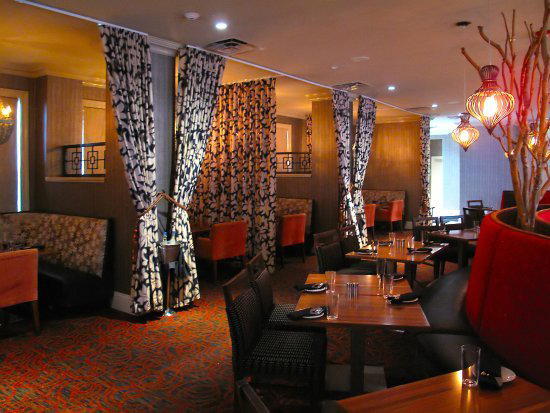
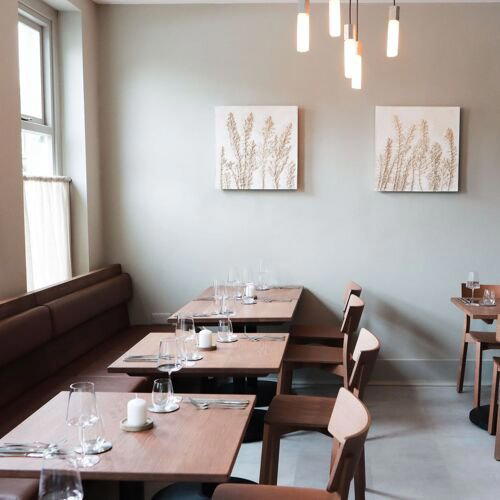
Bright, modern and intimate space with neutral grey walls, warm lighting, and simple wooden tabletops. The open kitchen creates an earthy, minimalist atmosphere that removes the boundary between guest and chef, with gorse-inspired artwork and seating for just 22 guests.
Know Before You Go
- Getting there
- 186-188 Kings Rd, Pontcanna, Cardiff CF11 9DF, United Kingdom