Gazala Place
Gazala Place on 9th Avenue in Hell's Kitchen brings Druze cooking to New York City at a price point that sits far below the Midtown tasting-menu tier. The kitchen draws on a culinary tradition rarely represented in the city, built around flatbreads, spreads, and slow-cooked preparations that define the Druze highlands of northern Israel and Syria. For a neighbourhood dense with quick-turn dining, the cooking here asks for more attention than the room might suggest.
- Address
- 709 9th Ave, New York, NY 10019
- Phone
- +12122450709
- Website
- gazalasrestaurant.com
- Directions
- Get directions
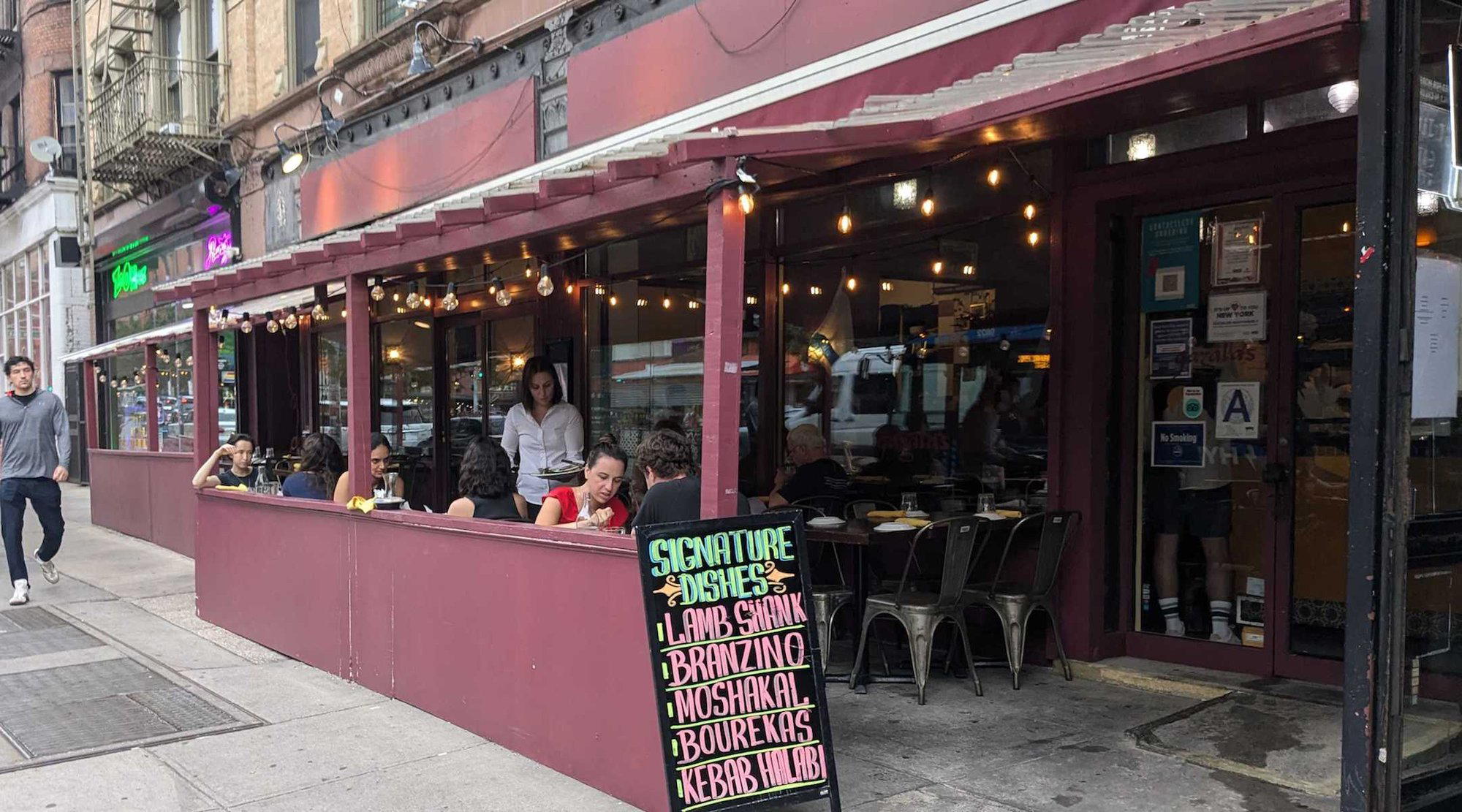
Hell's Kitchen and the Case for Minority Cuisines
New York's dining conversation tends to orbit the same tier of restaurants: the Michelin-validated tasting counters of Midtown, the tightly booked omakase rooms, the progressive American kitchens that attract critics and collectors in roughly equal measure. Places like Le Bernardin, Atomix, and Eleven Madison Park define one pole of what the city does with food. But the more instructive story, for anyone paying attention to how cities actually eat, is what fills the middle distance between those rooms and the street. Hell's Kitchen, the stretch of 9th Avenue running through the West 40s and 50s, has long been where cuisines without institutional backing find their footing in Manhattan.
Gazala Place, at 709 9th Avenue, is a casual, recommended restaurant in New York City serving authentic Druze Middle Eastern food at about $25 per person. It operates in that zone. It represents a culinary tradition that receives almost no coverage in the mainstream food press: Druze cooking, a distinct branch of the broader Levantine kitchen shaped by the communities of the Druze highlands straddling northern Israel, Syria, and Lebanon. That specificity matters. At a moment when New York diners can access Georgian wine bars, Hunanese tasting menus, and Oaxacan-focused pop-ups without leaving lower Manhattan, Druze cooking remains genuinely underrepresented. The restaurant is not a novelty act or a fusion concept; it is the real thing, and in this city that distinction carries weight.
The Sensory Register of Druze Cooking
The Druze kitchen is not widely documented in English-language food writing, which means most diners arrive at Gazala Place with few reference points. That unfamiliarity is worth treating as an asset rather than a barrier. Druze cooking shares structural DNA with the broader Levantine tradition, flatbreads baked on a convex griddle, chickpea and eggplant preparations, herb-forward salads, slow-cooked meats, but the seasoning profiles and specific preparations carry a regional accent distinct from the Israeli, Lebanese, or Palestinian dishes that New York diners may already know.
Aroma is the first signal. The kitchen works with dried herbs, toasted spices, and olive oil in proportions that read differently from the sharper citrus notes of Lebanese cooking or the cumin-forward character of Egyptian food. The flatbreads, especially discussed element among the menu, emerge from the kitchen still warm, with a faint char and a suppleness that signals they were made to order rather than held. In a neighbourhood where the ambient smell of 9th Avenue tends toward the generic, the specific herbal warmth that filters from Gazala Place's kitchen is a reliable orientation point.
The room itself is modest in scale, which concentrates the experience. There is no architectural spectacle, no design statement. What the space does is remove distraction. The walls are not doing the work that the food is supposed to do, a discipline that the city's higher-end operators, from Per Se to Masa, have spent considerably more money to achieve through different means. Sound levels stay conversational, the lighting does not perform, and service operates at a pace calibrated for neighbourhood regulars rather than event-dining guests.
Where Gazala Place Sits in the New York Dining Spread
New York's Levantine and Middle Eastern restaurant tier is more competitive than it was a decade ago. Israeli-American cooking, in particular, has moved from niche to mainstream, with a cluster of well-funded restaurants in lower Manhattan and Brooklyn now occupying the middle-to-upper price tier. Against that backdrop, Druze cooking occupies a distinct niche: more regionally specific, less thoroughly marketed, and still largely unknown to the food-press mainstream.
The restaurant predates most of that wave, which gives it a different kind of authority. It was not opened to capture a trend. The restaurant has long held its place on 9th Avenue, and that neighborhood credibility is accumulated rather than declared. That longevity is its own trust signal in a city where concepts turn over quickly and address changes often mean concept resets. For comparison, the broader comparable set in New York's progressive dining tier, the kitchens covered alongside Atomix and the city's other critical darlings, tends to operate on a two-to-five-year reputation arc. The restaurant operates on a different clock.
The price point reinforces the distinction. This is not tasting-menu territory. The accessible price tier means the restaurant is available without the planning cycle that governs New York's upper tier, where rooms like Eleven Madison Park require weeks of advance booking and higher per-person commitments. At the restaurant, the decision to eat there can be made the same day. That informality is not a concession; it is part of the restaurant's character.
The Broader Context: Minority Cuisines in American Cities
The question of how minority culinary traditions survive in American cities is one that food writing has addressed fitfully. Operators working outside the mainstream tend to find footing in specific neighbourhoods before broader recognition arrives, if it arrives at all. Hell's Kitchen has served that function for several generations of immigrant-operated restaurants. The same dynamic has played out in San Francisco's Mission, Chicago's Pilsen, and the areas around New Orleans covered in the context of places like Emeril's in New Orleans and its surrounding neighbourhood food culture.
What distinguishes the better examples in this category, across cities from New York to the agricultural-driven kitchens near Blue Hill at Stone Barns or the wine-country restaurants of Single Thread Farm in Healdsburg, is specificity. The restaurants that endure are the ones that know exactly what they are and do not drift toward a more legible middle. Druze cooking is a specific thing. The restaurant is specific in its execution of it. That is the argument for the restaurant, stated plainly.
Planning Your Visit
The restaurant is located at 709 9th Avenue in Hell's Kitchen. The neighbourhood is densest with pedestrian traffic on weekend evenings, when 9th Avenue functions as a destination in its own right. Arriving earlier in a weekend service or targeting a weekday visit will generally mean a quieter room and faster seating. Reservations are recommended. Given the restaurant's neighbourhood-regular character, the weekday lunch window tends to be the lowest-friction entry point for first-time visitors.
For those tracking how American regional and independent kitchens compare across cities, the conversation extends to places like Lazy Bear in San Francisco, Smyth in Chicago, Providence in Los Angeles, Addison in San Diego, The French Laundry in Napa, Frasca Food & Wine in Boulder, The Inn at Little Washington, Atelier Moessmer Norbert Niederkofler in Brunico, and Dal Pescatore in Runate.
Quick reference: 709 9th Ave, Hell's Kitchen, Manhattan. Reservations recommended; casual dress.
Same-City Peers
Comparable venues nearby, for context on price, style, and recognition.
| Venue | Cuisine | Price | Notes |
|---|---|---|---|
| Gazala PlaceThis venue — the venue you are viewing | Authentic Druze Middle Eastern | $$ | Not listed |
| Nasrin's Kitchen | Authentic Homestyle Persian | $$ | Midtown-Times Square |
| Sahadi's | Lebanese Mediterranean Deli | $$ | Brooklyn Heights |
| Michaeli Bakery | Israeli Bakery | $$ | East Midtown-Turtle Bay |
| Karam | Lebanese | $$ | Bay Ridge |
| Balade Your Way | Modern Lebanese Build-Your-Own | $$ | Midtown-Times Square |
Continue exploring
More in New York City
Restaurants in New York City
Browse all →
Bars in New York City
Browse all →

Hotels in New York City
Browse all →





At a Glance
- Cozy
- Intimate
- Casual Hangout
- Family
- Group Dining
- Open Kitchen
Homey and comfortable with an open kitchen, warm service, and Middle Eastern background music.