Gather

The Good Food Guide GFG Good
Our verdict
On a town best known for its independent spirit and organic markets, Gather brings genuine cooking ambition to the lower end of Fore Street. Harrison Brockington's kitchen draws on Devon foraging and local farms to produce contemporary dishes that balance restraint with polish. The vegetable tasting menu and a cider-broth of St Austell mussels with wild sea herbs speak to a kitchen that takes its larder seriously.

Pearl is the En Primeur Club membership app, where members save venues, book tables and use the concierge.

Fore Street, Foraged: What Gather Says About Eating in Totnes
Totnes has always attracted a particular kind of food idealism. The town's markets, independent traders, and long association with organic and biodynamic producers have made it a reference point on the South Devon food circuit for decades. What it has lacked, at least consistently, is a kitchen willing to apply serious technique to that larder rather than simply gesture at it. Gather, occupying a room on the lower stretch of Fore Street dressed in light wood and open welcome, makes a credible case for closing that gap.
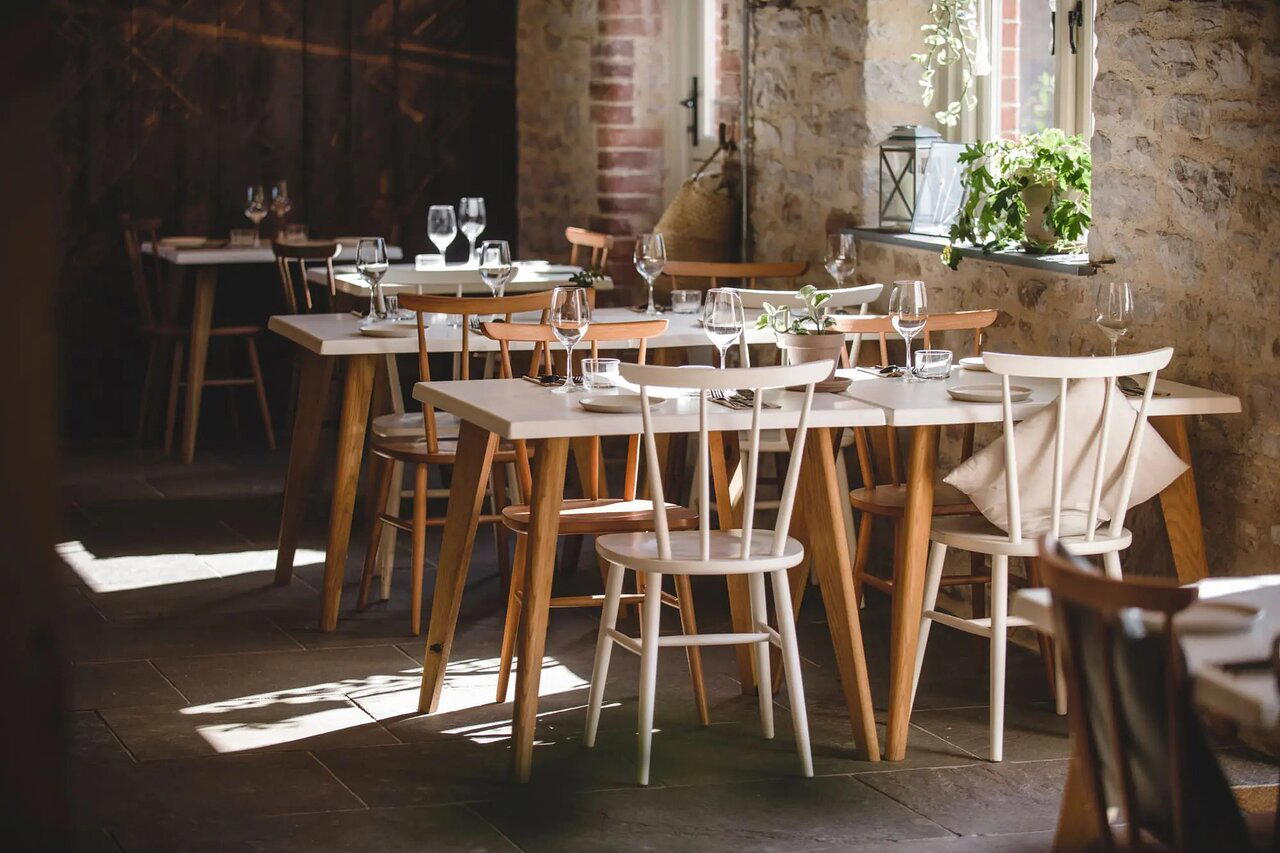
The dining room reads as deliberate understatement: pale timber, good light, and the kind of atmosphere that keeps the focus on the table rather than the interior. Through the kitchen hatch, Harrison Brockington is visible at work, which sets the tone. This is cooking that wants to be watched, or at least acknowledged, rather than hidden behind a polished front-of-house performance. That transparency extends to what arrives at the table.
The Larder as Argument
The sourcing here is not decorative. Devon foraging anchors the menu structurally, most noticeably during mushroom season when foraged fungi move from garnish to centrepiece. The kitchen takes wild ingredients seriously enough that the tasting format, referred to as 'tasters', includes a dedicated vegetable version, which is unusual at this level outside larger cities.
That vegetable menu might bring hedgerow tortellini in velouté, or a wild spring vegetable tartlet with a poached egg and béarnaise. These are not simple preparations dressed up with countryside vocabulary. The béarnaise on that tartlet signals classical training applied to local material, which is precisely the register Gather operates in. The wider British dining scene has been working through a version of this argument for some years: that technique developed in formal kitchens has more interesting things to do when applied to hyperlocal ingredients than when applied to conventional luxury produce. Kitchens like L'Enclume in Cartmel and Moor Hall in Aughton have made that case at a different scale and price tier. Gather makes a quieter version of the same argument from a Devon market town.
The cider broth of St Austell mussels with wild sea herbs is the dish that leading demonstrates the kitchen's approach. St Austell mussels have a specific provenance, the wild sea herbs signal foraging knowledge, and cider as a braising medium is a Southwest tradition with genuine regional depth. The result, according to critical attention the restaurant has attracted, is brought off with notable polish. Restraint is the style, but it is tenacious restraint rather than timid restraint, the difference matters.
How the Menu Moves
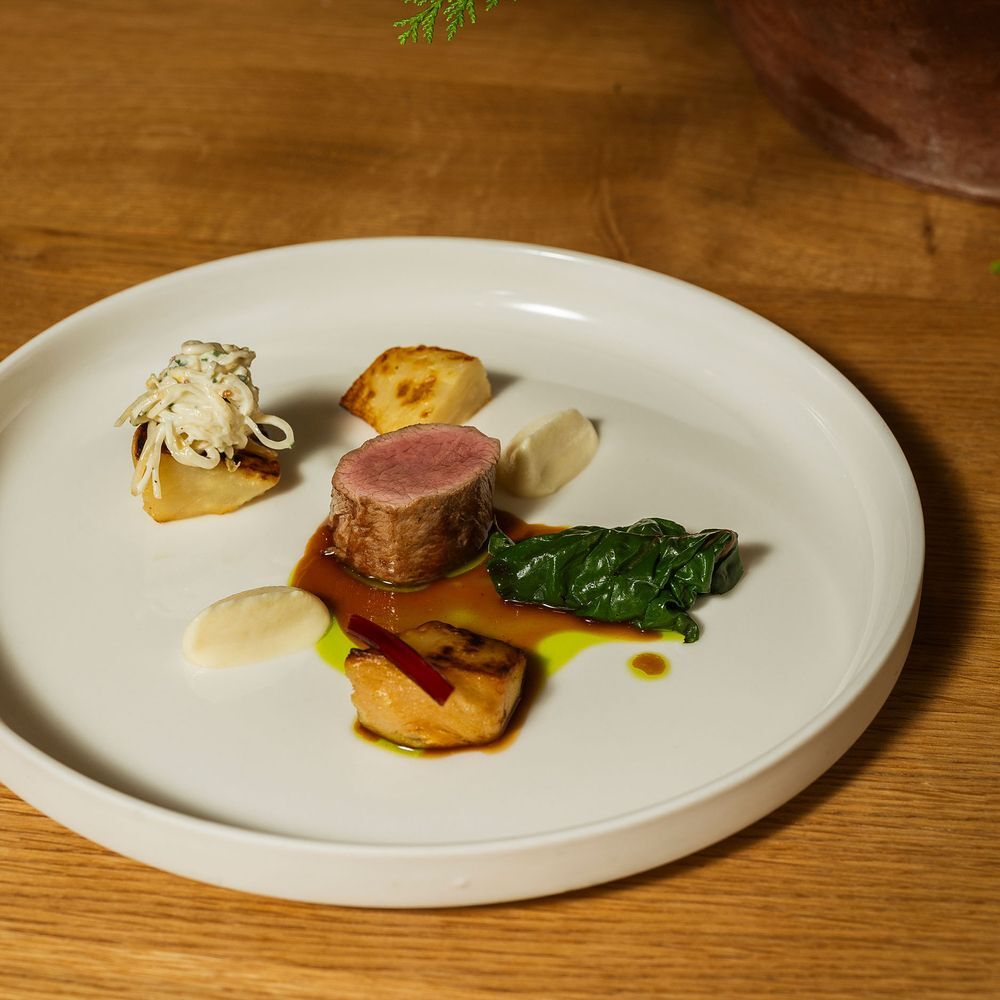
Main courses maintain the Devon framing without becoming monotonous about it. Locally farmed duck on petits pois à la française places a French bistro preparation inside a Devon-sourced main, which is a more considered pairing than it might first appear. Gurnard in crab bisque with asparagus works similar ground, gurnard is an underused Southwest fish, common in local waters but rarely given serious kitchen treatment.
The cheese course illustrates the same editorial sensibility: Ragstone goat's cheese paired with a brioche-encased fig roll is a structured course rather than a board, which signals that the kitchen considers cheese a moment of cooking rather than a shortcut to the end of the meal. Dessert, which might take the form of rhubarb vacherin in its own consommé with whipped Chantilly cream, shows similar technical range. The wine list is short and serves the food competently, though it is not the primary reason to visit.
For context on where Devon fits in the broader picture of British destination dining, Gidleigh Park in Chagford remains the county's long-established formal reference point. Gather occupies a different register: lower in formality, more focused on foraged and farmed local ingredients as the driving idea, and more accessible in format. Elsewhere in contemporary British cooking, hide and fox in Saltwood draws similar comparisons as a smaller, technically precise kitchen working outside a metropolitan context. The pattern matters: serious cooking is no longer confined to cities or country house hotels.
The Totnes Context
Totnes has enough character that a meal at Gather fits naturally into a broader day. Circa Totnes offers an alternative angle on the town's Modern British ambitions. The town's bars, markets, and independent shops reward time before or after eating. For those planning a stay, our full Totnes hotels guide covers accommodation options at various price points, while our Totnes bars guide, wineries guide, and experiences guide map the broader offer. The full picture of where to eat is in our Totnes restaurants guide.
The comparison is not one of equivalence but of ambition type: kitchens that use their geography as content rather than background. Those looking at international comparisons for ingredient-led, technique-anchored formats might note that Le Bernardin in New York City and Opheem in Birmingham represent different national traditions pursuing the same underlying logic.
Planning a Visit
Gather sits at 50 Fore Street, at the lower end of Totnes's main commercial stretch, which makes it walkable from the town centre and the train station. Given the attention the kitchen has received and the relatively small scale of the room, booking ahead is advisable, particularly on weekends and during the autumn mushroom season when the foraged menu is at its most complete. The format suits an evening with time to move through the tasting options rather than a quick lunch stop.
Frequently asked questions
Does Gather work for a family meal?
The room at 50 Fore Street is described as welcoming and lit by natural wood tones, which sets a relaxed rather than formal tone. The menu, however, runs toward composed contemporary dishes, hedgerow tortellini, gurnard in crab bisque, rhubarb vacherin, that sit more comfortably with adults interested in seasonal cooking than with younger children. Families with older teenagers would find it a good fit; those with young kids may find the tasting format less practical.
What is the atmosphere like at Gather?
Light wood throughout the room and an open kitchen hatch make the space feel immediate and unfussy, you can watch Harrison Brockington working while you eat. The overall register is contemporary but not austere: the word used to describe the welcome is 'voluble', which suggests a room that talks rather than performs silence. It reads as a neighbourhood restaurant that happens to cook at a high level.
What distinctions does Gather have?
Gather has received recognition including: There is more to Totnes than twee teas and pub lunches if you scout around – although you need look no further than Gather, which takes its place near the bottom end of Fore Street in a room that's all light wood and voluble welcome. Harris….
What do people recommend at Gather?
The foraged taster menus draw the most attention, particularly during mushroom season when Devon fungi anchor the vegetable-led courses. Specific dishes cited in editorial coverage include St Austell mussels in cider broth with wild sea herbs, locally farmed duck on petits pois à la française, and a rhubarb vacherin with whipped Chantilly cream. The cheese course, Ragstone goat's cheese paired with a brioche-encased fig roll, is also noted as a distinct moment before dessert.
What's the address for Gather?
Gather is located at 50 Fore St, Totnes TQ9 5RP, United Kingdom, Totnes.
Do I need a reservation for Gather?
Gather is not a large or casual drop-in venue: the menu format and kitchen scale suggest covers are limited. Booking ahead is the practical approach, particularly during mushroom season when forage-led menus draw specific demand. Contact details are not listed here, so check directly with the restaurant at 50 Fore Street, Totnes TQ9 5RP.
What has Gather built its reputation on?
Devon foraging is the structural argument behind the menu, not a marketing footnote, hedgerow, wild herbs, and seasonal fungi shape what Harrison Brockington actually cooks. Editorial recognition describes the style as 'tenacious simplicity brought off with a high degree of polish', which positions Gather as one of the more technically serious addresses on Totnes's Fore Street. That combination of local sourcing rigour and kitchen discipline is what distinguishes it from the town's wider independent food scene.
At-a-Glance Comparison
Comparable venues nearby, for context on price, style, and recognition.
| Venue | Cuisine | Price | Awards | Notes |
|---|---|---|---|---|
| GatherThis venue (the venue you are viewing) | Foraged Devon Fine Dining | Not listed | The Good Food Guide GFG Good | Not listed |
| Circa Totnes | Modern British Small Plates | Not listed | Michelin Plate | High Street |
| Canteen | British Cafe with Local Seasonal Fare | $10–20 | Not listed | Fore Street |
| Bread Street Kitchen & Bar | Modern British restaurant & bar by Gordon Ramsay | $50–100 | Not listed | City of London |
| Glencoe Gathering | Scottish Highland Pub and Seafood | $20–30 | Not listed | Glencoe Village |
Recognition history
Dated appearances from independent guides and award organizations, with the underlying list record or original source where available.
The Good Food Guide GFG Good
The Good Food Guide
Continue exploring
More in Totnes
Restaurants in Totnes
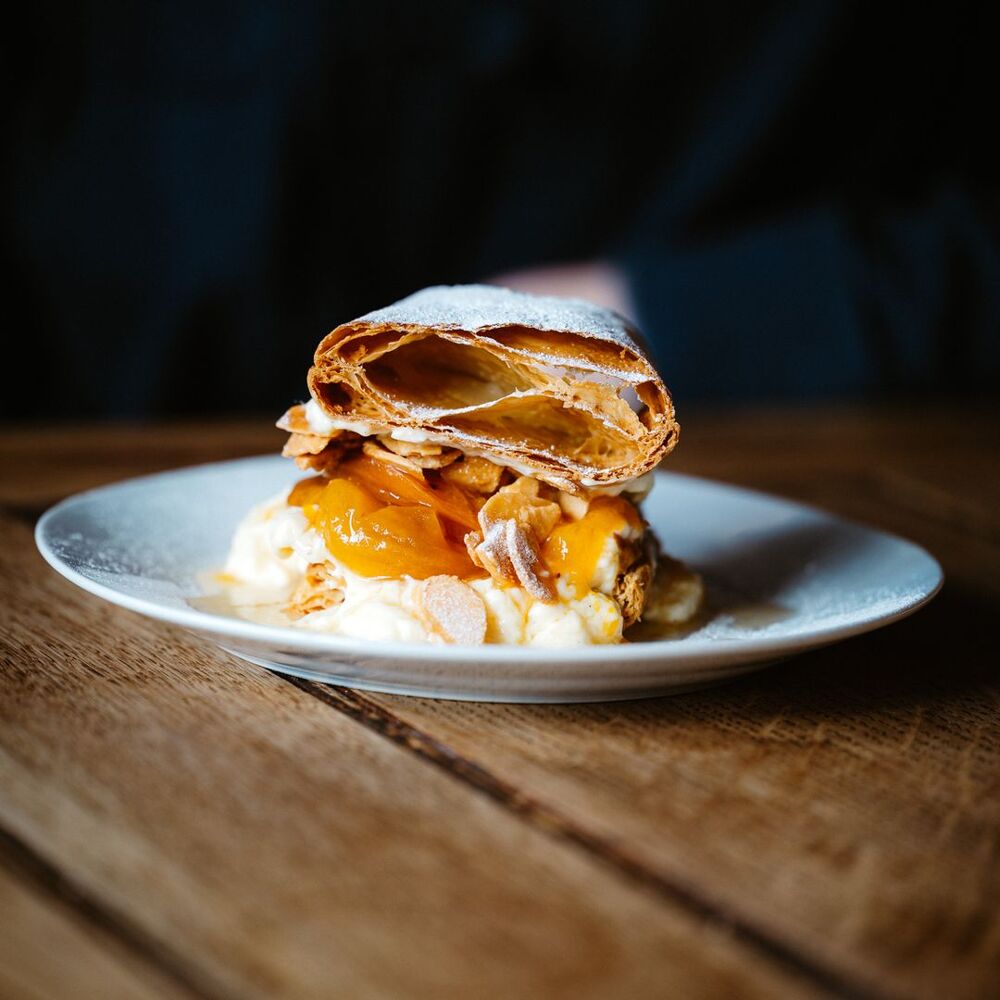
All restaurants in Totnes →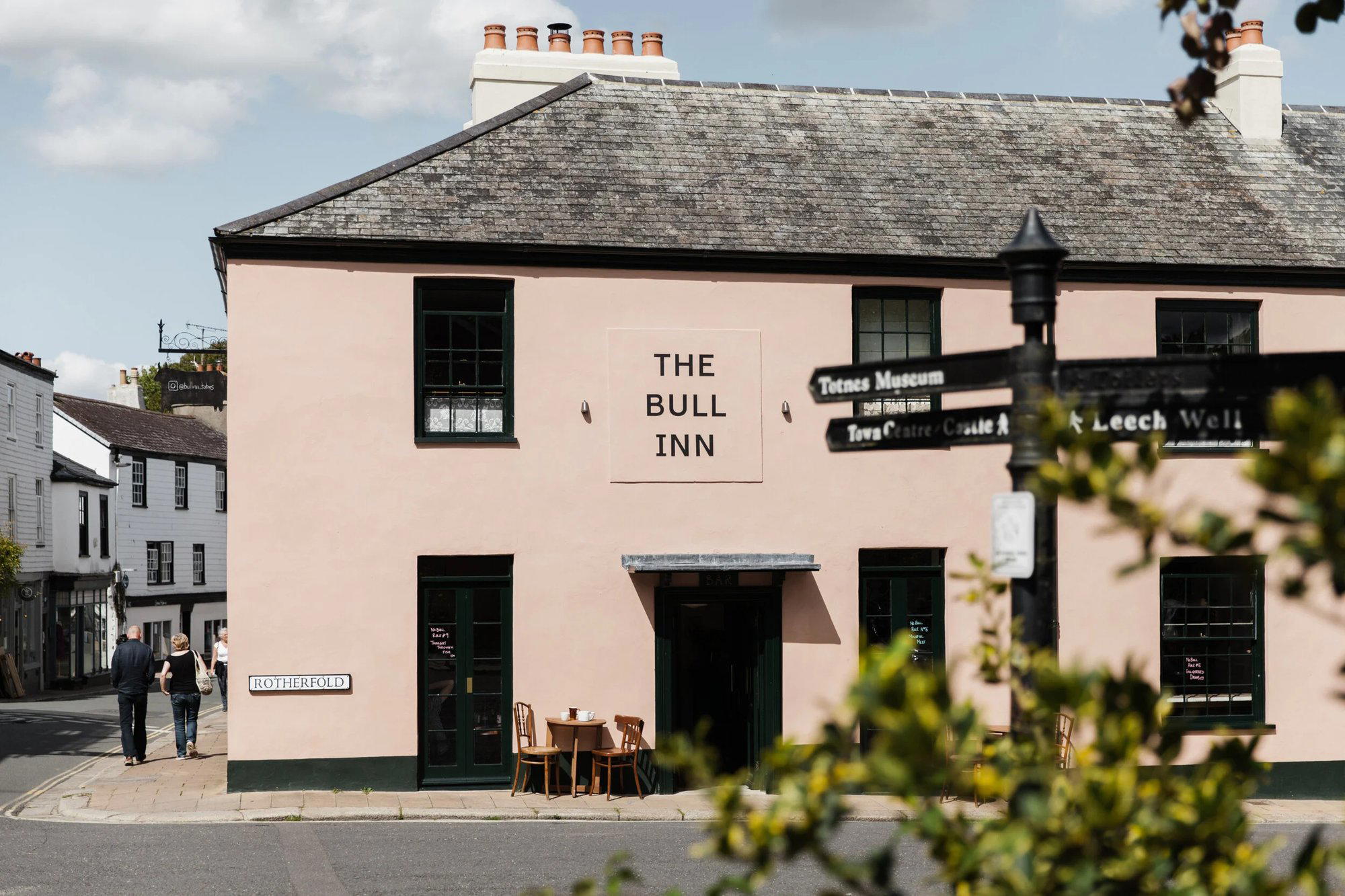
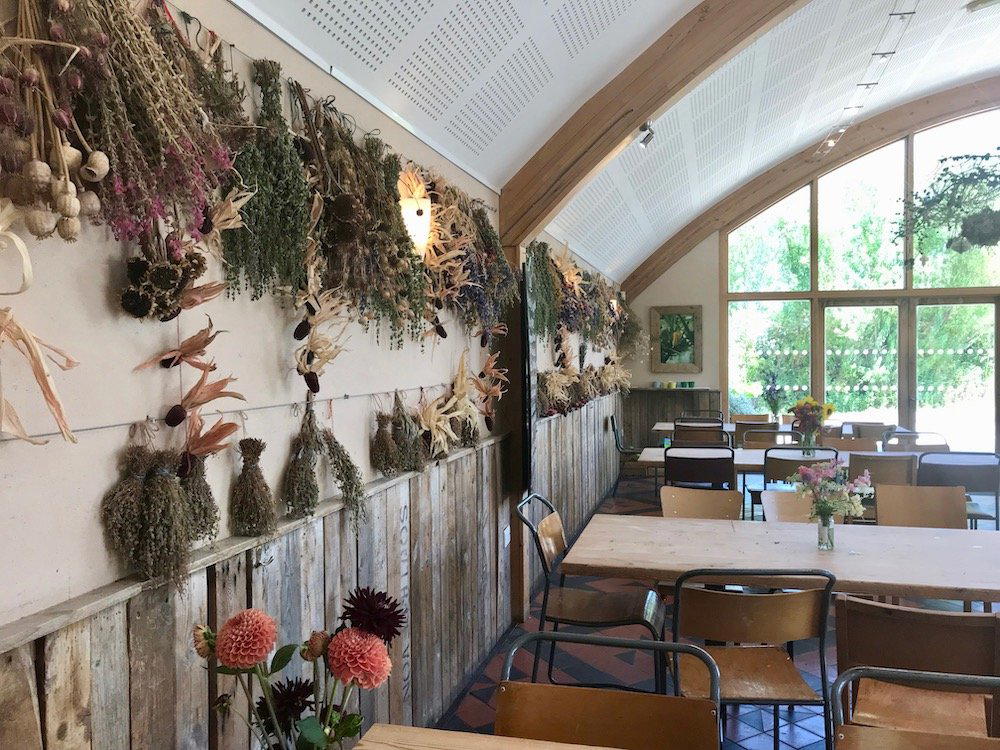
Bars in Totnes
All bars in Totnes →

Details
- Cozy
- Intimate
- Rustic
- Date Night
- Special Occasion
- Open Kitchen
- Extensive Wine List
- Farm To Table
- Local Sourcing
- Tasting Menu
- Small Plates
- Vegetarian Friendly
Current opening hours
- Monday
- Closed
- Tuesday
- 6–8 PM
- Wednesday
- 12–2 PM, 6–8 PM
- Thursday
- 12–2 PM, 6–8 PM
- Friday
- 12–2 PM, 6–8 PM
- Saturday
- 12–2 PM, 6–8 PM
- Sunday
- Closed
Hours can change for holidays and private events. Hours as of .
Light wood interior with a warm, voluble welcome and relaxed, friendly atmosphere.