Fung's Kitchen
Fung's Kitchen at 7320 Southwest Freeway has anchored Houston's Cantonese dining tradition for decades, drawing families and serious eaters alike to its sprawling dining room in the Sharpstown corridor. The kitchen operates within a style of Chinese banquet cooking that Houston does better than almost any other American city, with dim sum service and whole-dish preparations that reward group dining and repeat visits.
Pearl is the En Primeur Club membership app — saves, bookings, and concierge access live there. Same editors, same standards.
- Address
- 7320 Southwest Fwy #115, Houston, TX 77074
- Phone
- +1 713 779 2288
- Website
- fungskitchen.com
- Directions
- Get directions
 Saves & bookings on Pearl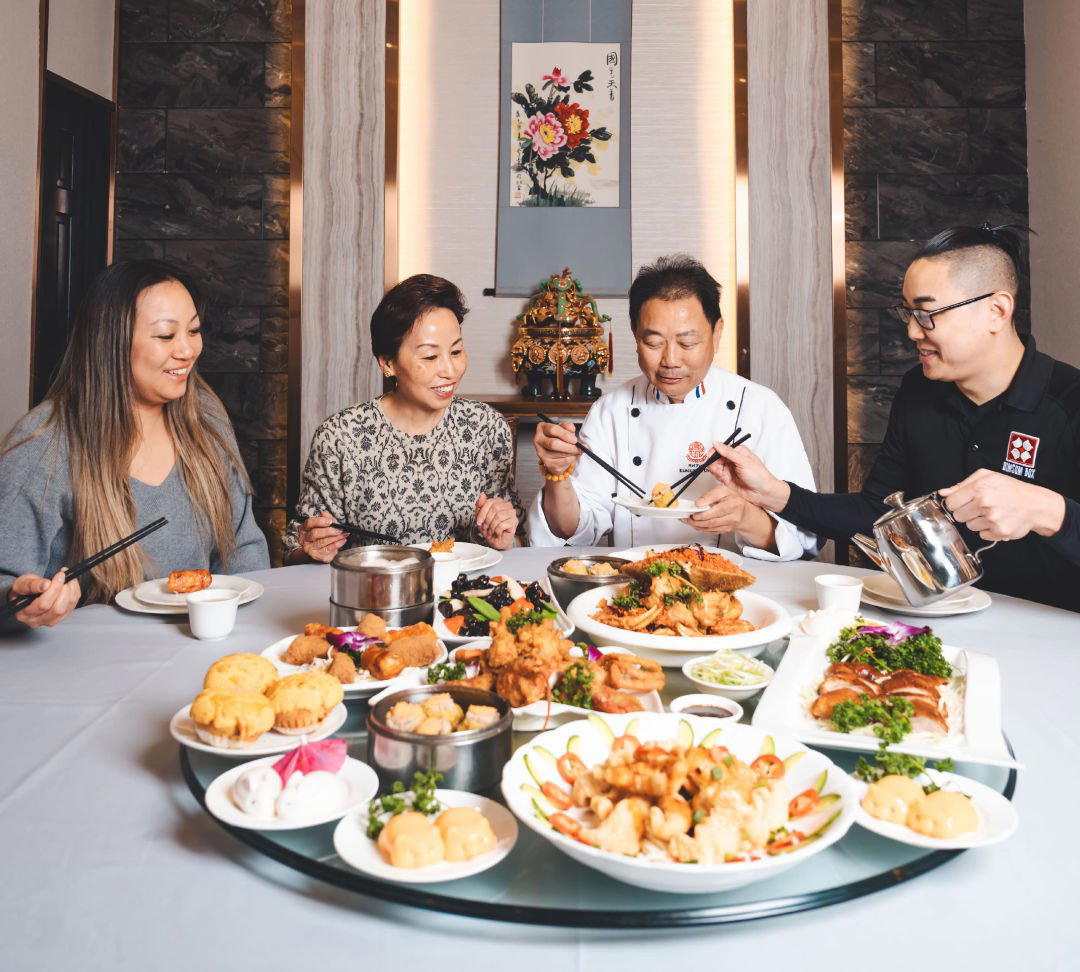
The Room Before the Food
There is a particular quality to a well-worn Cantonese banquet hall that no amount of renovation can manufacture: the accumulated hum of dozens of simultaneous conversations, the percussion of bamboo steamers against metal carts, the efficient choreography of service staff moving between round tables set for eight or ten. Fung's Kitchen, on the Southwest Freeway in Houston's Sharpstown corridor, operates inside that tradition without apology. The space is large, the lighting is bright in the way that serious Chinese dining rooms prefer it, and the room fills with the kind of purposeful noise that signals a kitchen working at volume. This is not a setting built around mood or minimalism. It is built around the food and the table, which is the correct order of priorities for this style of cooking.
Houston's Southwest corridor has functioned as the gravitational center of the city's Chinese community for generations, and the dining culture along this stretch of the Southwest Freeway reflects that density. Within that context, Fung's Kitchen occupies a position that has less to do with novelty and more to do with continuity: it has held a place in the community long enough that the room itself carries social meaning beyond any single meal.
Cantonese Banquet Cooking in an American City
The banquet tradition that Fung's Kitchen represents is a specific and demanding culinary format. Cantonese cooking at this scale involves technical precision across a range of preparations: whole roasted proteins, live seafood cooked to order, layered braised dishes, and the delicate timing required for proper dim sum service. A kitchen operating in this register must manage dozens of dishes simultaneously, many of which require different heat levels, cooking times, and finishing techniques. The logistics alone separate serious banquet operators from the broader field of Chinese restaurants.
Dim sum service, in particular, functions as a daily audit of kitchen quality. The har gow wrapper that tears, the turnip cake that lacks textural definition, the cheung fun that arrives cold: these are failures that regular customers notice and remember. Conversely, a kitchen that executes dim sum with consistency builds a kind of institutional trust that is difficult to dislodge. This is the register at which Fung's Kitchen has operated within Houston's dining culture, and it explains the loyalty the restaurant commands among diners who have been eating there for years or decades.
For diners more familiar with the tasting-menu format that defines much of America's premium dining conversation, places like March or Le Jardinier Houston represent one end of Houston's dining spectrum. Fung's Kitchen represents something entirely different in structure: the shared table, the rotating cart, the communal dish at the center rather than the individual plate. That difference is not a hierarchy. It is a distinction between two valid and technically demanding approaches to feeding a room of people well.
What the Room Tells You
The sensory experience of a Cantonese banquet hall communicates information if you know how to read it. A cart that moves briskly between tables during peak dim sum hours signals high turnover and fresh preparation. A dining room that fills completely by mid-morning on weekends signals community trust accumulated over time. The smell of roasted duck skin, the steam rising from a bamboo basket, the sound of Cantonese spoken at volume across multiple tables: these are not atmospheric details. They are evidence of a kitchen and a room in their proper element.
Sharpstown and the surrounding Mahatma Gandhi District have positioned Houston as a city where the full range of pan-Asian cooking traditions are available at serious quality levels. That breadth is what makes Houston interesting as a dining city. The fine-dining end of that spectrum includes restaurants like Musaafer for refined Indian cooking and Tatemó for masa-focused Mexican. The banquet tradition that Fung's Kitchen represents is a different but equally serious part of that picture.
For comparison, consider how cities like New York and San Francisco anchor their reputations partly on access to serious Chinese cooking at scale. In New York, Flushing's banquet operators sit in a different competitive set from the tasting-menu rooms like Atomix. In California, the concentration of Chinese restaurants in the San Gabriel Valley operates independently of the fine-dining circuit that includes The French Laundry or Lazy Bear. Houston's equivalent dynamic plays out along the Southwest Freeway, where Fung's Kitchen and its peer operators function as a distinct and self-sustaining dining culture.
Group Dining and the Logic of the Round Table
The round table with its lazy Susan is the fundamental unit of Cantonese banquet dining, and Fung's Kitchen is designed around it. The format rewards groups: more people at the table means access to a wider range of dishes, which means a fuller picture of what the kitchen can do. A party of two at a Cantonese banquet hall is functional but incomplete. A party of eight or ten, working through a selection of roasted proteins, whole fish, braised preparations, and steamed dishes, is the format for which this type of cooking was developed.
This is worth stating plainly for diners accustomed to Western restaurant formats, where the individual plate is the unit of composition and the menu is navigated solo. At Fung's Kitchen, the group makes the meal. The social structure of the table is inseparable from the food structure of the menu. Families who have been eating here across generations understand this intuitively. First-time visitors who arrive in larger groups will find the experience considerably richer than those who arrive as couples expecting a Western dining rhythm.
Planning Your Visit
Fung's Kitchen sits at 7320 Southwest Freeway, Suite 115, in Houston's Sharpstown area, a neighborhood where parking is generally available and the surrounding blocks operate as a concentrated node of pan-Asian commerce. The Southwest Freeway location places it within easy reach of much of Houston's sprawling west side, though the city's car-dependent geography means driving or rideshare is the practical access mode for most visitors. Weekend mornings are the highest-demand period for dim sum service at restaurants of this type across Houston's Chinese dining corridor, and arriving early in that window typically means a fuller cart selection and shorter waits for larger tables.
For visitors building a broader Houston itinerary, the restaurant fits naturally alongside a meal at BCN Taste & Tradition for Spanish cooking or a visit to the Houston dining circuit documented in our full Houston restaurants guide. The city's dining culture rewards exploration across its distinct geographic and cultural corridors, and the Southwest Freeway strip is among the most rewarding for diners willing to move beyond the usual Midtown and Montrose recommendations.
Credentials Lens
| Venue | Cuisine | Price | Awards |
|---|---|---|---|
| Fung's KitchenThis venue — the venue you are viewing | Not listed | Not listed | This venue |
| Musaafer | Indian | $$$$ | Michelin 1 Star |
| March | Venetian | $$$$ | Michelin 1 Star |
| Nancy's Hustle | New American, Contemporary | $$ | New American, Contemporary |
| Theodore Rex | New American, Contemporary | $$$ | New American, Contemporary |
| Hidden Omakase | Sushi | $$$$ | Sushi |
Continue exploring
More in Houston
Restaurants in Houston
Browse all →
Bars in Houston
Browse all →
Hotels in Houston
Browse all →
At a Glance
- Lively
- Classic
- Group Dining
- Family
- Brunch
- Open Kitchen
Current opening hours
- Monday
- Closed
- Tuesday
- 10:30 AM–9 PM
- Wednesday
- 10:30 AM–9 PM
- Thursday
- 10:30 AM–9 PM
- Friday
- 10:30 AM–9 PM
- Saturday
- 10:30 AM–9 PM
- Sunday
- 10:30 AM–9 PM
Hours can change for holidays and private events. Last verified .
Humming, urgent atmosphere in a massive dining room with traditional banquet-style tables and live seafood aquariums.
Know Before You Go
- Getting there
- 7320 Southwest Fwy #115, Houston, TX 77074