Fox and Anchor
A Victorian pub on Charterhouse Street in Smithfield, Fox and Anchor has served London's early-rising meat market workers since the nineteenth century and earned the right to open its doors at 7am. The pub sits at the intersection of old-trade Smithfield and the expanding EC1 dining scene, making it a useful anchor point for understanding how London's historic market pubs have adapted, or refused to, over the past century.
Pearl is the En Primeur Club membership app — saves, bookings, and concierge access live there. Same editors, same standards.
- Address
- 115 Charterhouse St, Barbican, London EC1M 6AA, United Kingdom
- Phone
- +44 20 7250 1300
- Website
- foxandanchor.com
- Directions
- Get directions
 Saves & bookings on Pearl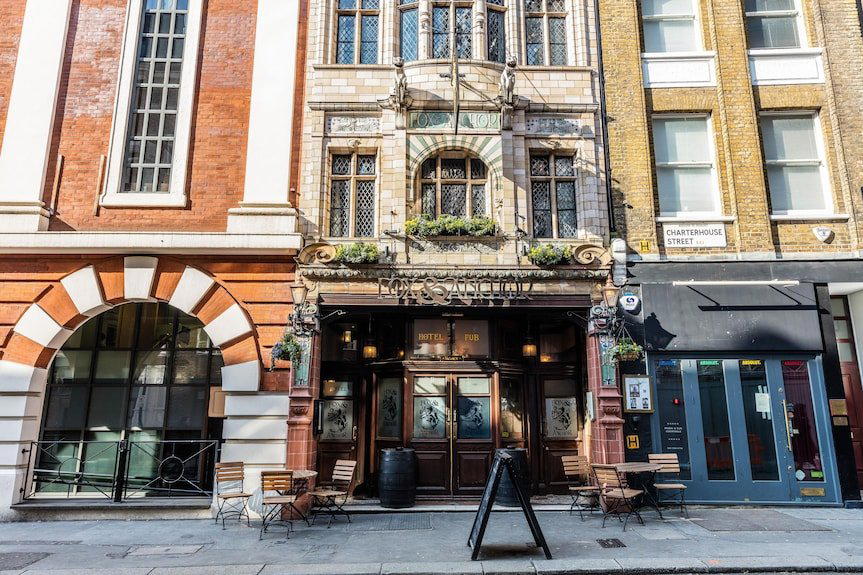
Smithfield's Long Opening Hours and the Pub That Predates Them
London's relationship with its historic market pubs follows a logic that most cities have abandoned. The Smithfield meat market, which has operated on or near its current EC1 site since the tenth century, created a workforce that needed feeding and drinking at hours the rest of the city was still asleep. The legislation that permitted these pubs to open as early as 7am, a dispensation historically tied to market trade, shaped a small cluster of establishments along Charterhouse Street that still carry that early-morning character, even as the market itself has contracted and the surrounding neighbourhood has transformed into one of London's more densely populated dining and bar corridors. Fox and Anchor, at 115 Charterhouse Street, is a British gastropub in London's Barbican area.
This matters in a city where the line between preservation and themed restoration can be difficult to locate. The pub sits roughly halfway between Farringdon station and Barbican, which places it in the gravitational pull of two distinct neighbourhoods: the old financial and legal corridors to the south and the cultural infrastructure around the Barbican Centre to the north.
What the Drinks List Signals About a Market Pub in 2024
Smithfield and the broader EC1 corridor now contain wine bars, natural wine shops, and serious cocktail programmes within a short walk. The Hand and Flowers model, a pub-format venue that builds a serious cellar and wins awards accordingly, has demonstrated that the pub category is not incompatible with genuine wine ambition. Fox and Anchor operates on a different register, where the drinks offer is tied to the market pub tradition rather than to the fine-dining adjacency that has reshaped some of its peers.
That distinction matters when comparing EC1's pub stock to what London's upper-tier restaurants now offer on their wine lists. Venues such as CORE by Clare Smyth, The Ledbury, and Sketch, The Lecture Room and Library, all holding three Michelin stars, have built cellar programmes that function as independent editorial statements, with dedicated sommeliers and lists that run to hundreds of bins. Fox and Anchor makes no claim to that territory. Its value proposition sits elsewhere: in the continuity of a format that fits its pub setting and a price point around $55 per person.
The Breakfast and the Full English as a London Institution
If the drinks list connects the restaurant to its neighbourhood context, the food offer connects it to a specific chapter of London food history. The full English breakfast served here fits the venue's early-opening rhythm and market-pub identity. The full English in a market pub is an argument about time, place, and continuity. The restaurant makes no such intellectual claim; it simply occupies the original site, which is a different kind of authority.
Those venues have redefined what British produce-led cooking can achieve in a fine-dining register. The restaurant sits at the opposite end of the same axis: a format that predates the contemporary farm-to-table vocabulary and has no particular need to adopt it. Both ends of that axis are worth knowing.
EC1 in the Wider London Context
Smithfield's position in the broader London restaurant and bar scene has shifted considerably since the early 2000s. The neighbourhood now contains serious competition for the food and drink visitor's attention, and the restaurant exists within that competitive environment while drawing its identity from a period that preceded it. For visitors who want to understand the full range of what EC1 offers, the area can be explored alongside nearby restaurants, bars, and experiences. Farringdon and Barbican stations both provide direct access to the area, and the walk between them along Charterhouse Street covers most of the relevant venues in a single pass.
For those extending beyond EC1, Restaurant Gordon Ramsay in Chelsea and hide and fox in Saltwood represent different points on the spectrum of British fine dining. Further afield, Gidleigh Park in Chagford and The Fat Duck in Bray anchor the country-house and destination-dining end of the same conversation. For international comparison, Le Bernardin in New York City and Atomix in New York City show how different cities have constructed their own hierarchies of formal dining, against which the London market pub tradition looks even more specifically local.
Know Before You Go
- Address: 115 Charterhouse St, Barbican, London EC1M 6AA
- Nearest stations: Farringdon (Elizabeth, Circle, Metropolitan, Hammersmith & City lines) and Barbican (Circle, Metropolitan, Hammersmith & City lines)
- Opening hours: Early morning openings historically tied to Smithfield market trade; verify current hours directly before visiting
- Ideal time to visit: Morning visits align most closely with the pub's historic market-trade identity; weekend mornings can be busy with neighbourhood visitors
Peers You’d Cross-Shop
Comparable venues nearby, for context on price, style, and recognition.
| Venue | Cuisine | Price | Notes |
|---|---|---|---|
| Fox and AnchorThis venue — the venue you are viewing | British Gastropub | $$$ | Not listed |
| Boundary | Modern British Brasserie | $$$ | Bethnal Green |
| Restaurant Michael Nadra | Modern European Brasserie | $$$ | Primrose Hill |
| Eastway | British Brasserie | $$$ | Broadgate |
| The Clermont Restaurant and Bar | Classic British Hotel Dining | $$$ | Embankment |
| Browns | British Brasserie | $$$ | Covent Garden |
Continue exploring
More in London
Restaurants in London
Browse all →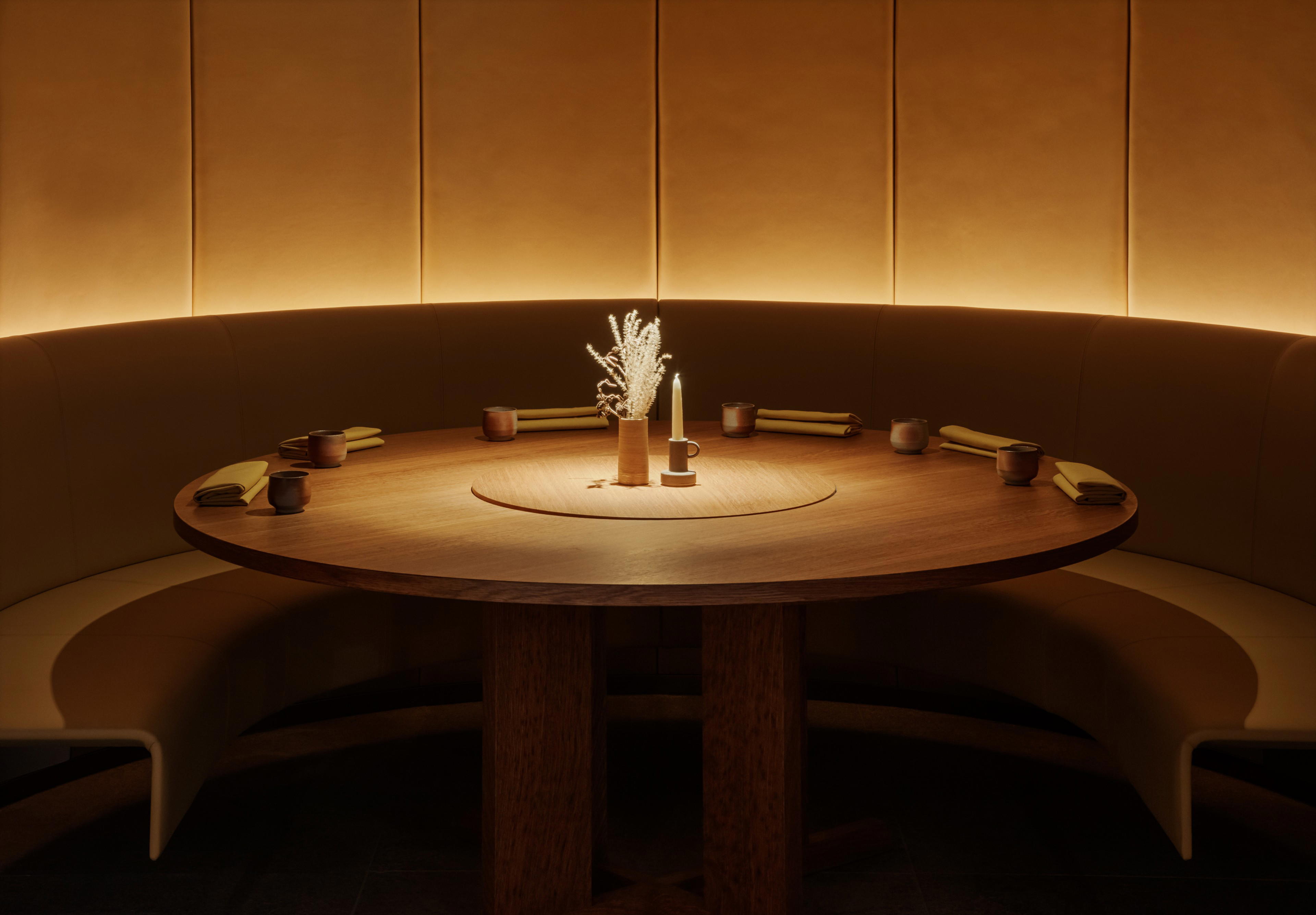
Bars in London
Browse all →
Hotels in London
Browse all →

At a Glance
- Classic
- Cozy
- Well Known
- Rustic
- Casual Hangout
- Business Dinner
- Group Dining
- After Work
- Historic Building
- Private Dining
- Standalone
- Beer Program
- Local Sourcing
Current opening hours
- Monday
- 7 AM–11 PM
- Tuesday
- 7 AM–11 PM
- Wednesday
- 7 AM–11 PM
- Thursday
- 7 AM–11 PM
- Friday
- 7 AM–11 PM
- Saturday
- 8:30 AM–11 PM
- Sunday
- 8:30 AM–10 PM
Hours can change for holidays and private events. Last verified .
Warm, traditional pub atmosphere with historic character, art-deco design elements, cosy dining rooms with private booths, and period charm throughout.