Flour
Flour occupies a quiet stretch of Chagrin Boulevard in Moreland Hills, Ohio, bringing ingredient-driven cooking to one of Cleveland's more residential suburban dining corridors. The kitchen's name signals a commitment to craft from the ground up, positioning it within a growing tier of suburban fine-casual restaurants where sourcing and technique carry the argument rather than spectacle or celebrity.
Pearl is the En Primeur Club membership app — saves, bookings, and concierge access live there. Same editors, same standards.
- Address
- 34205 Chagrin Blvd, Moreland Hills, OH 44022
- Phone
- +12164643700
- Website
- flourrestaurant.com
- Directions
- Get directions
 Saves & bookings on Pearl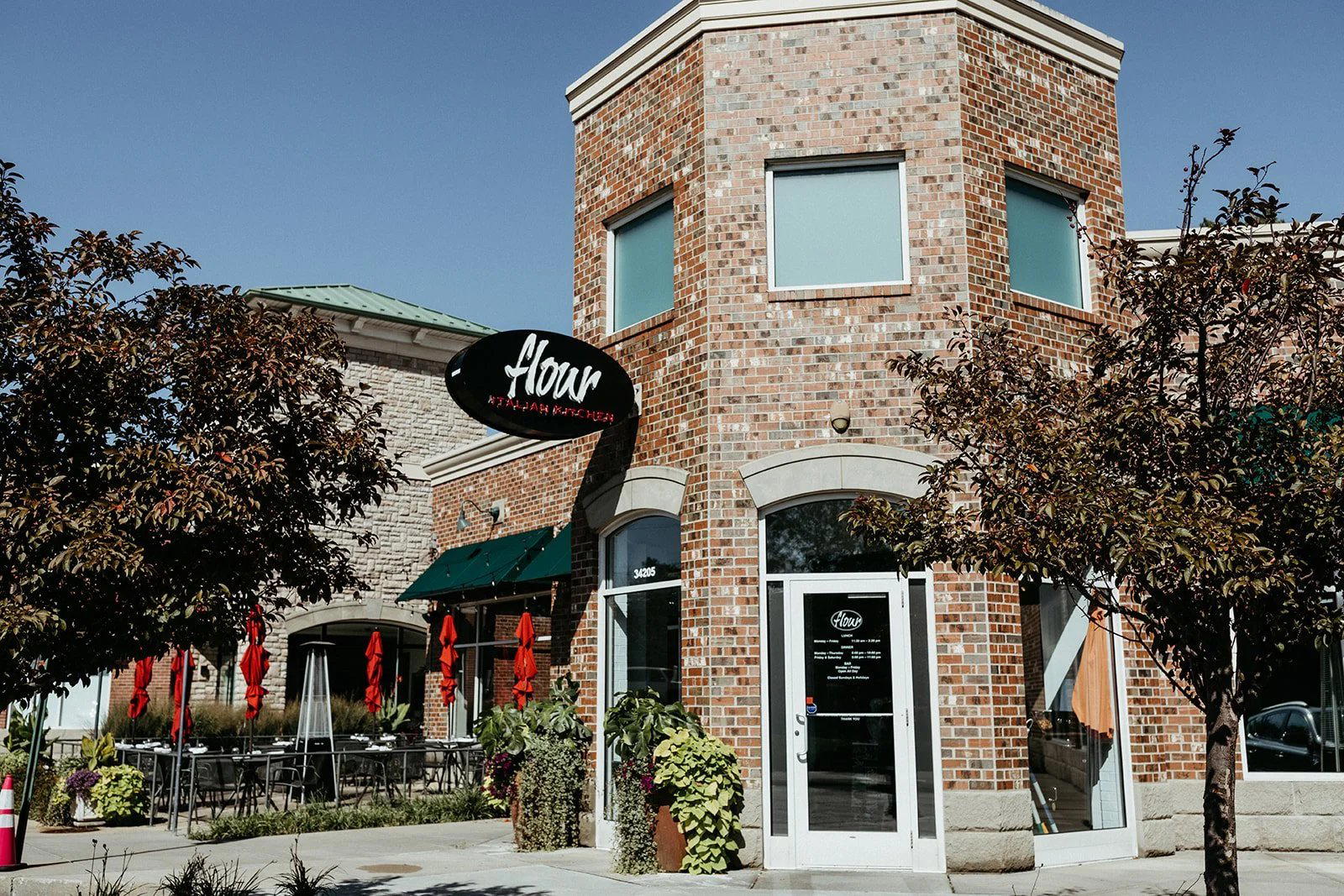
Where Moreland Hills Meets the Plate
Chagrin Boulevard runs east out of Cleveland through a sequence of low-density suburbs that most food writers skip in favor of the city's inner-ring neighborhoods. Moreland Hills sits at the quieter end of that corridor, and Flour at 34205 Chagrin Blvd is the kind of address that rewards the detour. The approach is residential in scale: no marquee signage, no valet queue spilling onto the street. What you encounter instead is a room that asks the food to do the talking, which in the context of suburban Ohio is itself an editorial statement about what this stretch of the county wants from its dining.
That positioning matters more than it might first appear. Across the United States, a clear split has opened between destination restaurants that draw on the full apparatus of urban fine dining and a smaller, quieter tier of independently operated rooms in suburban or small-town settings that make their argument through sourcing and craft. Blue Hill at Stone Barns in Tarrytown represents the high-visibility end of that model, where the farm connection is the brand. Single Thread Farm in Healdsburg builds the same logic into a luxury inn format. Flour operates in a different register entirely: no attached farm, no national press infrastructure, but a name that anchors the kitchen's identity to something foundational rather than decorative.
The Sourcing Argument in a Midwest Context
The name Flour is not incidental. In kitchens where the name references an ingredient or a process rather than a place or a person, there is usually a deliberate signal about where attention is directed. Flour as a word points toward the base of cooking: the mill, the grain, the fermentation that begins before anything reaches the stove. In the broader American fine-casual movement, this kind of nomenclature has tracked alongside a genuine shift in how kitchens present their sourcing credentials. Where a decade ago ingredient provenance appeared as a footnote on menus, it now frequently organizes the menu's entire structure.
The Midwest has particular credibility in this conversation. Ohio sits within a regional agricultural band that produces grain, dairy, pork, and produce at a scale and variety that coastal restaurants have increasingly imported. Kitchens in the greater Cleveland area that commit to regional sourcing are drawing on a supply chain that has been underutilized by fine dining for much of the past century. That context gives a name like Flour additional weight: it reads not just as branding but as a claim about where the kitchen's attention begins.
Comparable ingredient-led commitments in other American cities carry significant recognition. Smyth in Chicago has built a nationally recognized program around hyper-local sourcing in the urban Midwest. The Wolf's Tailor in Denver frames fermentation and grain sourcing as the kitchen's primary language. Frasca Food and Wine in Boulder takes a regionalism argument in a different direction, anchoring itself to a specific Italian wine zone as an organizing principle. What each of these shares is a conviction that where ingredients come from shapes what the food can say, a conviction that a kitchen called Flour in suburban Ohio is implicitly making as well.
Moreland Hills as a Dining Destination
Moreland Hills does not have the density of restaurant options found in Cleveland's Ohio City or Tremont neighborhoods, and that scarcity changes the calculus for any serious kitchen operating here. A restaurant that opens in a low-competition suburban corridor is making a different kind of bet than one that opens in a saturated urban market. It is betting that its food is strong enough to function as a reason to travel rather than a default option for the immediate neighborhood. Flour sits in that position on Chagrin Boulevard, alongside Cru Uncorked and ML Tavern, which together give the corridor more dining ambition per square mile than its residential character might suggest.
For diners making a specific trip to Moreland Hills, the village's eastern Cuyahoga County location places it roughly twenty miles from downtown Cleveland, accessible via Chagrin Boulevard directly. It is not a walk-in neighborhood; arriving with intent is the operating assumption. That dynamic tends to produce a room with a higher floor of engagement from guests, which in turn gives kitchens in this kind of setting permission to push further on technique and sourcing without worrying about alienating casual foot traffic.
Where Flour Sits in the American Fine-Casual Tier
The American restaurant that prizes sourcing and technique over spectacle has expanded significantly since 2015. At the formal end of that spectrum, places like The French Laundry in Napa, Le Bernardin in New York City, and Addison in San Diego operate with full tasting-menu infrastructure and price points to match. At the opposite end, accessible neighborhood bistros make sourcing claims that are harder to substantiate. The middle tier, ingredient-focused, independently operated, neither maximally formal nor dismissible as casual, is where most of the interesting decisions in American dining are currently being made. Lazy Bear in San Francisco, Providence in Los Angeles, and ITAMAE in Miami each represent a version of this tier in major markets. Flour represents it in Moreland Hills, which is both a more modest claim and, in its own way, a more difficult one to sustain without the infrastructure of a major city's dining ecosystem behind it.
The international frame is worth noting too. Ingredient-first cooking organized around regional or alpine sourcing has found its clearest expression in European contexts. Atelier Moessmer Norbert Niederkofler in Brunico is among the more discussed examples of a kitchen that has made sourcing geography the primary structural argument of its menu. American kitchens referencing that tradition, from Emeril's in New Orleans in an earlier generation to Atomix in New York City in the current one, have each adapted the logic to their own regional supply. Flour, operating in northeast Ohio, has access to a regional agricultural context that is genuinely its own rather than an approximation of somewhere else. That is the argument the name makes, and the question the kitchen has to answer.
Planning Your Visit
Flour is located at 34205 Chagrin Blvd, Moreland Hills, OH 44022.
How It Stacks Up
Comparable venues nearby, for context on price, style, and recognition.
| Venue | Cuisine | Price | Notes |
|---|---|---|---|
| FlourThis venue — the venue you are viewing | Contemporary Italian Bistro | $$ | Not listed |
| ML Tavern | Steakhouse and Seafood | $$$ | Moreland Hills |
| Cru Uncorked | Modern French New American | $$$ | Moreland Hills |
| Pizzazz | Traditional Italian Pizza & Pasta | $$ | University Heights |
| Arrabiata's | Traditional Italian Trattoria | $$ | Mayfield Heights |
| Piccolo Italian Restaurant | Authentic Sicilian Italian | $$ | Mayfield Heights |
Continue exploring
More in Moreland Hills
Restaurants in Moreland Hills
Browse all →
Bars in Moreland Hills
Browse all →
At a Glance
- Cozy
- Modern
- Date Night
- Family
- Casual Hangout
- Celebration
- Open Kitchen
- Extensive Wine List
- Local Sourcing
Current opening hours
- Monday
- 11:30 AM–10 PM
- Tuesday
- 11:30 AM–10 PM
- Wednesday
- 11:30 AM–10 PM
- Thursday
- 11:30 AM–10 PM
- Friday
- 11:30 AM–10:30 PM
- Saturday
- 5–10:30 PM
- Sunday
- Closed
Hours can change for holidays and private events. Last verified .
Warm, comfortable neighborhood atmosphere well-suited for family dinners and casual gatherings.