Famous 4th Street Delicatessen

Operating from the corner of 4th and Bainbridge Streets in Queen Village since 1923, Famous 4th Street Delicatessen is one of Philadelphia's most enduring Jewish deli institutions. The menu runs from towering corned beef and pastrami sandwiches to smoked fish, traditional dinners, and a full breakfast spread, with portions scaled to the deli's century-old reputation for generosity.
Pearl is the En Primeur Club membership app — saves, bookings, and concierge access live there. Same editors, same standards.
- Address
- 700 S 4th St, Philadelphia, PA 19147
- Phone
- (215) 922-3274
- Directions
- Get directions
 Saves & bookings on Pearl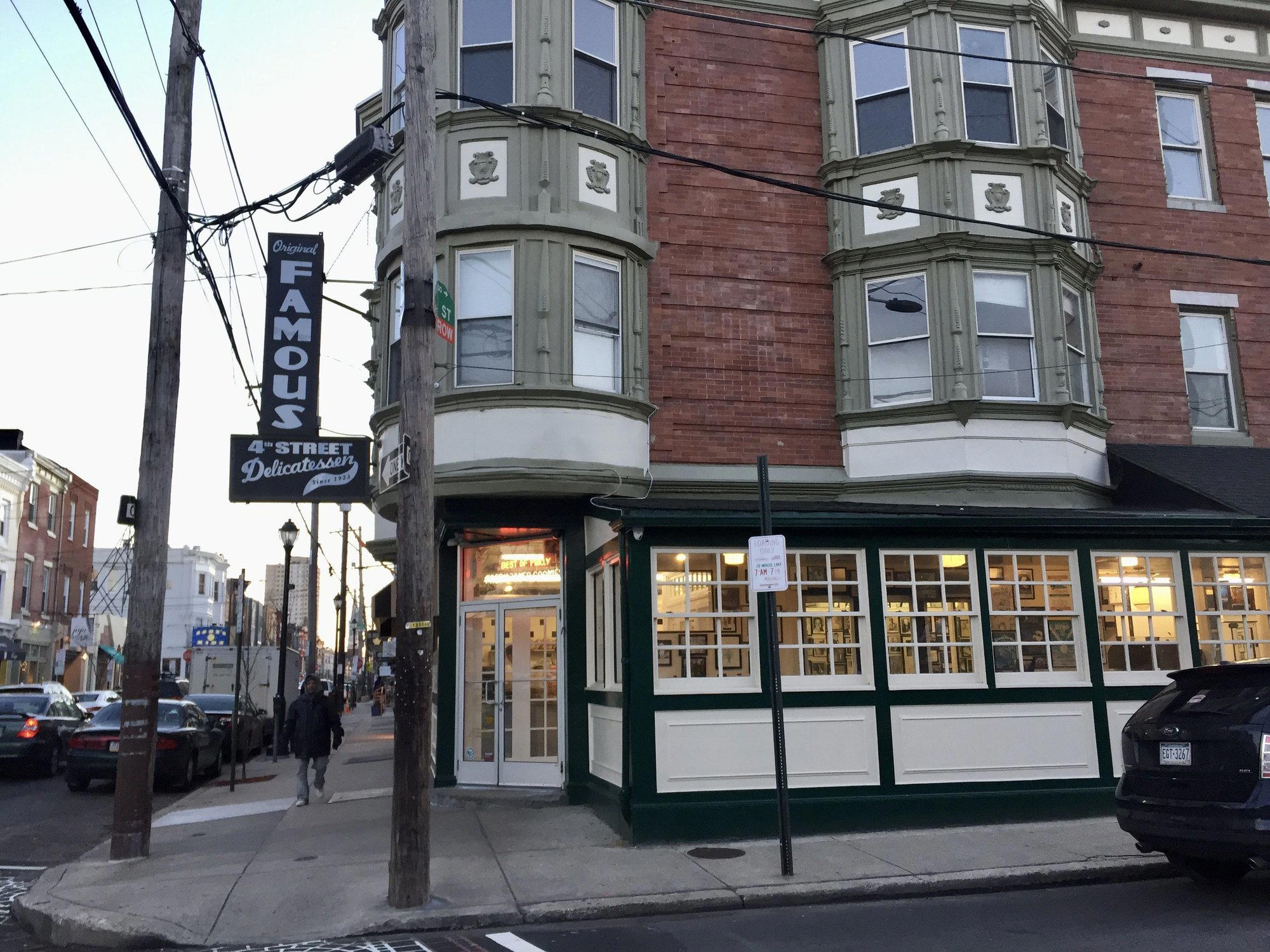
A Century of the Same Corner
Queen Village is one of Philadelphia's older residential neighbourhoods, a grid of Federal-era rowhouses and tree-lined streets that sits between South Street and the Delaware River waterfront. It has absorbed decades of demographic change, waves of gentrification, and the arrival and departure of countless restaurants. The Famous 4th Street Delicatessen, at the corner of 4th and Bainbridge Streets, has watched all of it from the same address since 1923. That kind of continuity is not common in American dining, and it is not accidental. The deli persists because it serves a specific, understood purpose in a specific community.
Jewish delicatessens as a category have contracted sharply across American cities over the past five decades. Where New York once had thousands and Philadelphia had a substantial constellation of its own, the count has fallen to a handful of operating institutions in each city. The reasons are structural: the food is labour-intensive, the proteins are expensive. What remains tends to be either a recent revival built on nostalgia branding or a genuine operating survivor. Famous 4th Street falls into the second category. Its longevity is a data point about durability, not just sentiment.
The Menu as a Document
The menu at Famous 4th Street reads as a near-complete survey of the mid-Atlantic Jewish deli tradition. Sandwiches anchor the offer: corned beef, pastrami, roast beef, and Reubens, served in portions that reflect a pre-portion-control era and accompanied by sides including potato salad, chips, and potato pancake. The sandwich build here is not a reimagined version or a chef-driven edit. It is the format that defined the category: generous meat, properly seasoned, stacked with care rather than architectural intention.
Beyond sandwiches, the menu extends into appetizers, soups, salads, smoked fish, traditional dinners, cheesesteaks, and a full breakfast spread. This breadth is itself a statement of purpose. The deli occupies a role that no single-category restaurant can replicate: it is a neighbourhood institution where a table of four might order from entirely different sections of the menu and each receive something coherent with the whole. The smoked fish counter, in particular, represents a part of the deli tradition that has largely disappeared from newer operations. Its presence here is a signal of the kitchen's commitment to the full register of the form.
Sourcing and the Deli's Implicit Ethics
Delicatessens rarely appear in that discussion, but the traditional deli model contains its own embedded logic of minimal waste and whole-animal use that predates the modern farm-to-table framework by generations. Corned beef and pastrami are both derived from the brisket, a cut that requires slow cooking and skilled preparation to achieve the tenderness and seasoning the format demands. They are not premium cuts repurposed for fashion; they are workhorse cuts treated with care, a practice that aligns with contemporary thinking about whole-animal cookery even if it long predates the terminology.
The broad menu at Famous 4th Street, which includes soups, traditional dinners, and appetizers alongside sandwiches, reflects a similar logic. A kitchen operating across this many categories uses its inventory across more preparations, reducing waste through volume and variety rather than through a formal waste-reduction program. That the model happens to align with contemporary sustainability thinking is worth noting, even if the deli itself predates the conversation by a century.
Where This Fits in Philadelphia's Dining Map
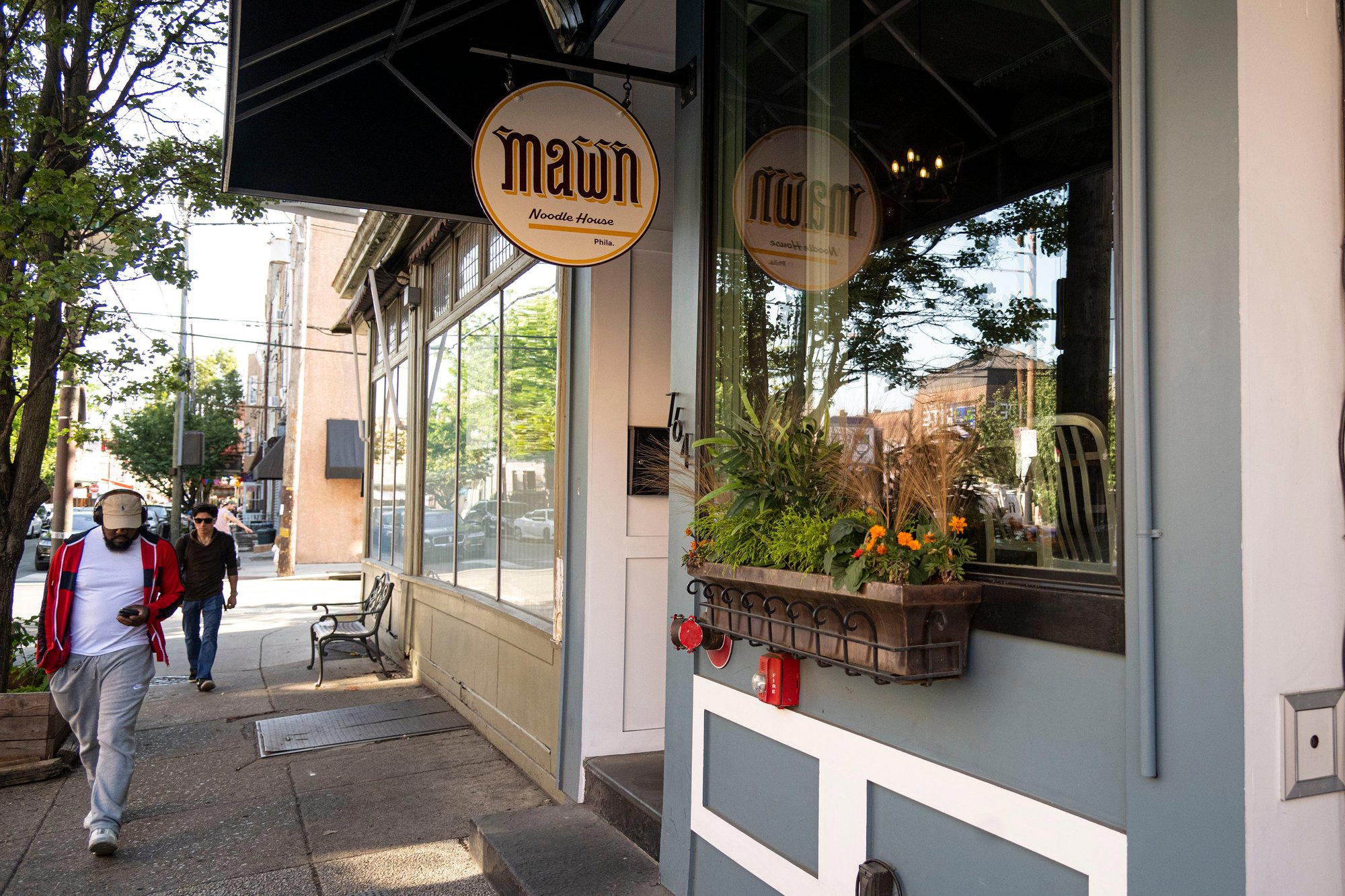
Philadelphia's restaurant scene has developed considerable range over the past two decades. New American cooking at places like Fork and Friday Saturday Sunday has earned national recognition. Cambodian and Pan-Asian cooking at Mawn, French-influenced work at My Loup, and the taqueria model at South Philly Barbacoa represent the city's current breadth. None of these sit in the same category as Famous 4th Street, and the comparison is not instructive. The deli occupies a different tier of civic function: it is an institution rather than a destination restaurant, and it serves a different kind of need.
For visitors planning a Philadelphia itinerary, the deli works well as a mid-day stop in Queen Village, before or after time in the surrounding streets. It is not the kind of restaurant that benefits from a dinner reservation framing. The breakfast and lunch hours are when the format operates at its natural rhythm, and the corned beef or pastrami sandwich at noon is a particularly direct entry point into what the place does.
Famous 4th Street's significance is not comparative in that direction. Its significance is longitudinal: a single address operating a coherent, traditional format for over a century in a city that has changed substantially around it.
Planning Your Visit
Famous 4th Street Delicatessen sits at 700 South 4th Street in Queen Village, a walkable neighbourhood accessible from Center City on foot or by the Broad Street Line with a short walk east. The deli operates as a walk-in format; the booking dynamics here are the opposite of the city's tasting-menu restaurants, where reservations at Friday Saturday Sunday or Fork require advance planning. Weekend mornings draw the heaviest traffic, particularly for the breakfast service, so a weekday visit or an early arrival on weekends reduces wait time.
A Credentials Check
Comparable venues nearby, for context on price, style, and recognition.
| Venue | Cuisine | Price | Awards | Notes |
|---|---|---|---|---|
| Famous 4th Street DelicatessenThis venue — the venue you are viewing | Traditional Jewish Deli | $$ | Bib Gourmand | Not listed |
| El Chingon | Pueblan Mexican | $$ | Bib Gourmand | Passyunk Square |
| Morning Glory Diner | American Breakfast & Brunch Diner | $$ | Not listed | Hawthorne |
| Down Home Diner | Classic American Diner | $$ | Not listed | Center City East |
| 13 | Contemporary American | $$ | Not listed | Market East |
| Flannel | Southern Comfort American | $$ | Not listed | East Passyunk Crossing |
Recognition history
Dated appearances from independent guides and award organizations, with the underlying list record or original source where available.
Michelin Bib Gourmand
Michelin
Continue exploring
More in Philadelphia
Restaurants in Philadelphia
Browse all →
Bars in Philadelphia
Browse all →


At a Glance
- Classic
- Well Known
- Lively
- Family
- Casual Hangout
- Brunch
- Historic Building
Current opening hours
- Monday
- 9 AM–8 PM
- Tuesday
- 9 AM–8 PM
- Wednesday
- 9 AM–8 PM
- Thursday
- 9 AM–8 PM
- Friday
- 9 AM–8 PM
- Saturday
- 9 AM–8 PM
- Sunday
- 9 AM–8 PM
Hours can change for holidays and private events. Last verified .
Fluorescent lighting over black-and-white tiled floors with chaotic weekend crowds, display cases of meats and desserts, and walls lined with celebrity photos.