Fairouz Cafe & Gallery
Fairouz Cafe & Gallery occupies a strip-mall address on Midway Drive that San Diego's Middle Eastern dining crowd has quietly claimed as its own. The dual identity, part cafe, part gallery, signals a format common across the Levantine diaspora, where eating and cultural gathering have rarely been separate acts. For readers tracing the city's less-documented food corridors, it belongs on the itinerary alongside the more celebrated rooms.
Pearl is the En Primeur Club membership app — saves, bookings, and concierge access live there. Same editors, same standards.
- Address
- 3166 Midway Dr #102, San Diego, CA 92110
- Phone
- +16192250308
- Website
- fairouzcafeandgallery.com
- Directions
- Get directions
 Saves & bookings on Pearl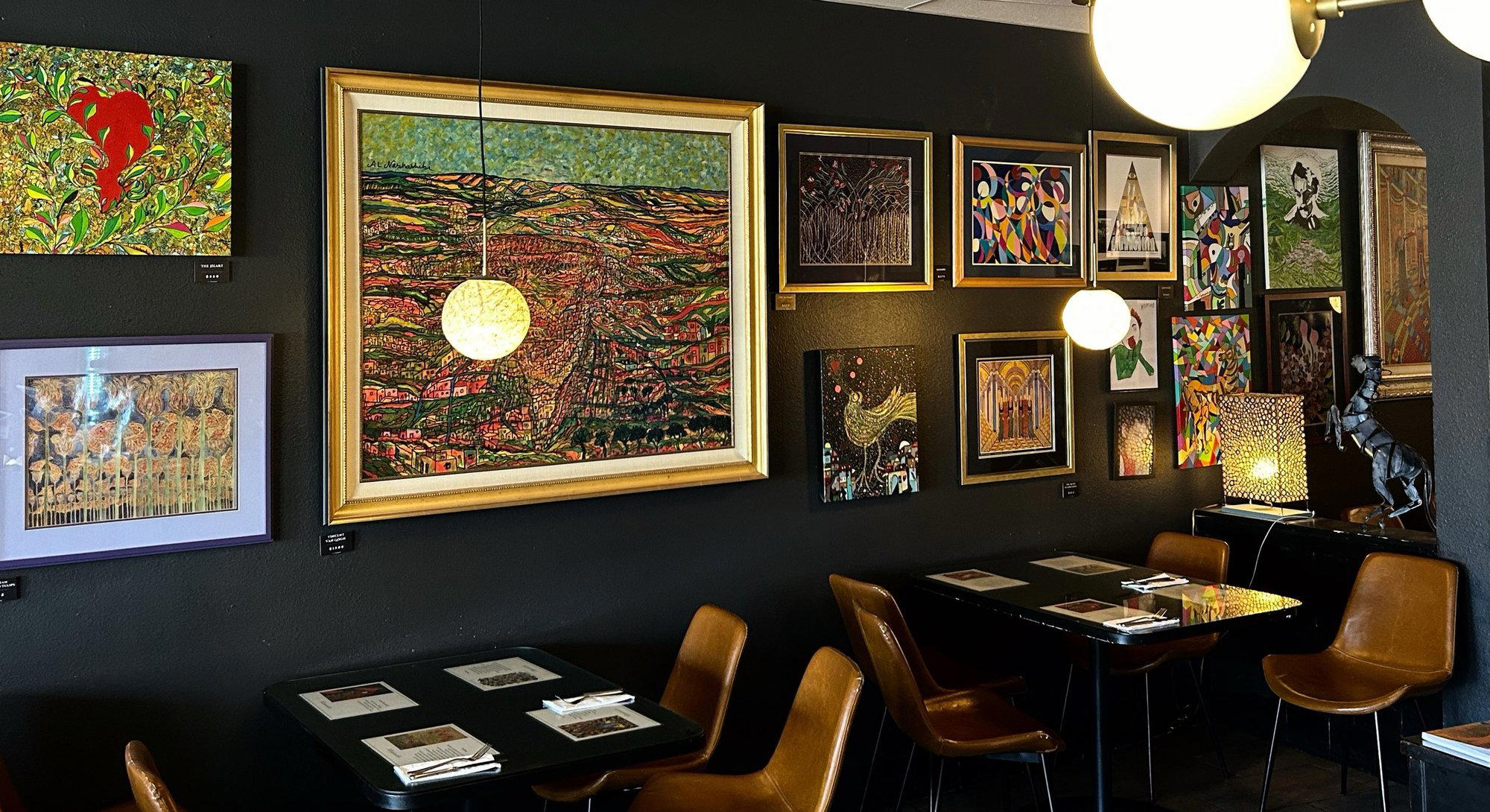
Where the Meal Is the Medium
San Diego's dining conversation tends to compress around a handful of zip codes: the tasting-menu rooms of Del Mar and downtown, the Japanese counters of Hillcrest and Kearny Mesa, the coastal spots running up to La Jolla. Midway Drive sits outside that circuit, a commercial strip without the foot traffic or editorial coverage of the neighborhoods that attract most out-of-town attention. That geographic remove is precisely why places like Fairouz Cafe & Gallery have developed a following on their own terms, without needing to compete on the same register as, say, Addison or Soichi.
Middle Eastern cafes with gallery functions are not an American invention. Across Beirut, Amman, and their diaspora extensions in cities like Dearborn, Detroit, and Los Angeles, the format has long served a dual purpose: food as nourishment and food as social adhesive, with art on the walls functioning as the third pillar of cultural continuity. When that model arrives in a city like San Diego, which has a smaller but established Levantine community, the result is a room that reads differently depending on who is reading it. For regulars, it is a known quantity, a place with rituals already in place. For first-timers, it requires a different kind of attention than a conventional restaurant visit.
The Ritual Logic of a Levantine Table
Levantine dining customs do not map cleanly onto the American restaurant rhythm of appetizer, entree, dessert, check. The tradition is built around shared plates arriving without strict sequence, tea that materializes at no particular moment and stays through conversation, and a pacing that treats the table as a destination rather than a throughput station. This is the dining ritual that Middle Eastern cafes in the American diaspora either preserve, adapt, or abandon depending on their audience and ambition.
At the format level, Fairouz Cafe & Gallery occupies a position common among community-anchored cafes: the kitchen draws on a canon of dishes that are familiar within the tradition but relatively unrepresented in San Diego's broader dining coverage. That canon typically includes items from the meze repertoire, spreads, salads, and smaller plates designed for sharing, alongside heartier preparations that anchor a longer sitting. The gallery component suggests a physical environment shaped by visual culture as much as by hospitality, which places this format closer to cultural center than to conventional dining room. That distinction matters for how a visitor should approach the meal.
For context on how San Diego's dining range extends at the formal end, 1450 El Prado and 777 G St represent the city's more produced event-dining tier, while 94th Aero Squadron illustrates the city's long-standing comfort with experience-driven, theme-adjacent formats. Fairouz Cafe & Gallery operates at a remove from all of these, belonging instead to the category of places where the dining ritual itself is the experience, and where the room's dual identity as cafe and gallery sets the pace before a single dish arrives.
What the Gallery Wall Changes
The cafe-gallery format has a specific effect on the atmosphere of eating. When art is present not as decoration but as program, the pacing of a meal slows. Diners tend to linger between courses, conversation moves laterally, and the social function of the meal becomes more explicit. This is not a format that rewards the thirty-minute lunch or the fast-turnaround dinner. It rewards the visitor who arrives without a hard stop.
Across the broader American dining scene, the integration of visual arts and hospitality has become more common at the high end, tasting menu rooms like Smyth in Chicago and Lazy Bear in San Francisco have used commissioning and curation to shape the atmosphere of eating. At the other end of the investment scale, community cafes and cultural spaces have done the same thing for decades, without the Michelin scaffolding. Fairouz Cafe & Gallery sits in the latter tradition, where the art on the wall connects to a specific cultural identity rather than to a broader design statement.
That distinction matters editorially. The dining rooms that draw international attention, Le Bernardin in New York, The French Laundry in Napa, Blue Hill at Stone Barns in Tarrytown, are defined by formal architecture and elaborate ritual. But many of particularly instructive meals happen in rooms that are not trying to impress on that scale. The instructive quality comes instead from specificity: a kitchen cooking from a particular tradition for a particular community, in a space that reflects that community's relationship with food as more than nutrition.
San Diego's Middle Eastern Dining Context
San Diego's Middle Eastern food scene is smaller and less documented than those of Los Angeles or the San Francisco Bay Area, which means fewer points of comparison and less critical infrastructure around venues operating in this tradition. That is partly a function of population distribution and partly a function of where food media has historically directed its attention in Southern California. The result is that cafes like Fairouz Cafe & Gallery operate in a space with relatively little competition for coverage, which cuts both ways: less editorial noise, but also less of the peer-set pressure that pushes kitchens toward consistency and refinement.
The middle tier, where community-rooted kitchens and dual-purpose cultural spaces operate, is where more modest dining finds its rhythm.
Planning Your Visit
Fairouz Cafe & Gallery is located at 3166 Midway Dr, Suite 102, San Diego, CA 92110. The strip-mall setting is standard for this part of the city and should not calibrate expectations downward.
Style and Standing
Comparable venues nearby, for context on price, style, and recognition.
| Venue | Cuisine | Price | Notes |
|---|---|---|---|
| Fairouz Cafe & GalleryThis venue — the venue you are viewing | Lebanese & Mediterranean | $$ | Not listed |
| Cellar Hand | Hyper-Local Coastal California & Mediterranean | $$ | Uptown |
| Rama | Dining | Not listed | San Diego |
| RustiCucina | Rustic Sicilian-Inspired Italian | $$ | North Park |
| Ranchos Cocina | Vegan-Friendly Mexican | $$ | North Park |
| Lorna's Italian Kitchen | Classic Homemade Italian | $$ | University |
Continue exploring
More in San Diego
Restaurants in San Diego
Browse all →
Bars in San Diego
Browse all →
At a Glance
- Cozy
- Casual Hangout
- Family
Current opening hours
- Monday
- 11 AM–8 PM
- Tuesday
- 11 AM–8 PM
- Wednesday
- 11 AM–8 PM
- Thursday
- 11 AM–8 PM
- Friday
- 11 AM–8 PM
- Saturday
- 11 AM–8 PM
- Sunday
- 11 AM–8 PM
Hours can change for holidays and private events. Last verified .
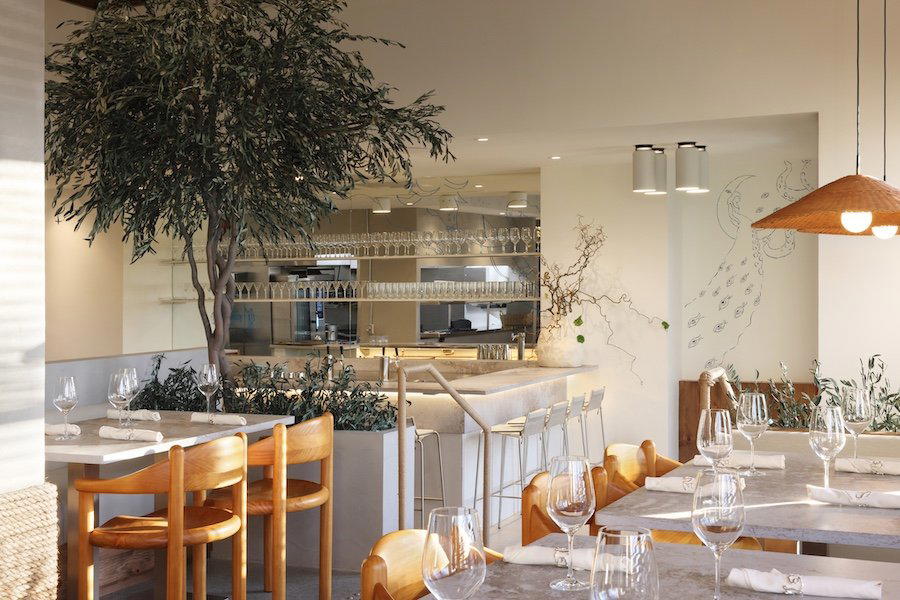
Cozy space with lively artwork and poems on the walls, fostering an inviting and warm dining environment.