Fabian's Italian Bistro
Our verdict
Fabian's Italian Bistro on Fair Oaks Boulevard sits in Sacramento's quieter northeastern suburbs, where Italian-American cooking operates on a more personal scale than the city's downtown dining corridor. The bistro format, common to this part of California, trades formal ceremony for direct, ingredient-led plates and a neighbourhood familiarity that larger venues rarely sustain.

Pearl is the En Primeur Club membership app, where members save venues, book tables and use the concierge.
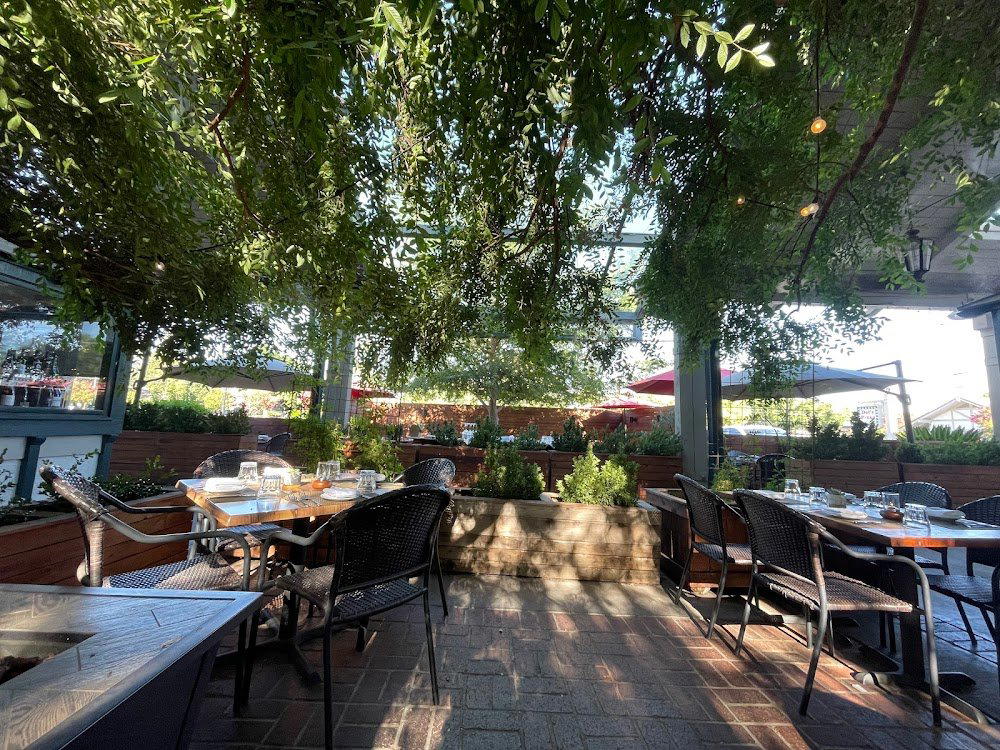
The menu
What to order
- Braised Short Rib
- Chicken Piccata
- Ravioli con Spinachi
Italian Cooking in the Sacramento Suburbs: What the Bistro Format Means Here
Fair Oaks Boulevard runs through one of Sacramento's more settled residential corridors, a stretch where dining culture has long favoured the reliable and the personal over the theatrical. In that context, the Italian bistro format has particular resonance. Italian-American cooking in suburban California tends to split between two poles: the red-sauce institution that trades on nostalgia, and the more restrained trattoria-influenced room that looks to regional Italian tradition for its vocabulary. Fabian's Italian Bistro, at 11755 Fair Oaks Blvd, sits in the latter category of the Fair Oaks dining scene, a neighbourhood where the competition is modest and the expectation is consistency over spectacle.
That suburban setting matters for understanding what Italian cooking at this level is actually doing. The great tradition of Italian regional cuisine, from the butter-rich kitchens of Lombardy to the tomato-forward tables of Campania, has always been rooted in place. Its emigration to California brought adaptation: local produce, American portion scales, and a clientele that often came to Italian food first through Italian-American households rather than through travel. The bistro format, smaller and less ceremonious than a full ristorante, tries to hold some of that domestic intimacy while operating as a commercial kitchen. When it works, it produces the kind of cooking that regulars return to not for occasion dining but for Tuesday evenings.
Where Fair Oaks Sits in the Broader California Italian Dining Picture
California's relationship with Italian cooking is long and layered. At the formal end, places like Frasca Food & Wine in Boulder have made a sustained case for Italian regional cuisine as serious fine dining, with wine programs built around northern Italian appellations and menus that cite specific provinces. Further down the coast, the conversation around Italian food in California's major cities has grown more sophisticated, with sommeliers stocking Etna Rosso and kitchens sourcing 00 flour for fresh pasta programs. For context on how different that register is from the suburban bistro tier, consider that The French Laundry in Napa or Providence in Los Angeles operate in a different competitive universe entirely, where tasting menus run to three figures and the booking window extends months ahead.
Fair Oaks, by contrast, is a community dining market. The Italian restaurants here compete on value, familiarity, and the specific comfort of a room where the staff know what you usually order. That is not a lesser category; it is a different one, with its own standards and its own failure modes. The risk at this tier is formula: pasta from a bag, sauce from a can, a menu that hasn't changed because no one has pressured it to. The better neighbourhood Italian places in California avoid that by maintaining genuine sourcing discipline even at accessible price points. Whether Fabian's Italian Bistro holds that line is something regulars will know better than a passing visitor.
For a sense of the Fair Oaks Italian dining options available in the same neighbourhood, Caffe Italiano Ristorante operates on a comparable scale and offers a point of local comparison. Fair Oaks rounds out the immediate neighbourhood dining picture for those weighing options in the area. Our full Fair Oaks restaurants guide maps the wider scene if you are making a longer evening of it.
The Cultural Weight of Italian Cooking in California
Italian cuisine carries a particular cultural freight in California that is worth naming directly. The state's Italian immigrant history, concentrated in the late nineteenth and early twentieth centuries, produced the first generation of Italian-American restaurants that shaped how most Californians encountered the cuisine. That history is embedded in the menu structures still common at the bistro level: antipasto, pasta, secondi, a short dolci list. The form is Italian; the execution is Californian in ways that have nothing to do with farm-to-table branding and everything to do with a century of local adaptation.
The more interesting Italian restaurants in California today are working with that tension explicitly, using California's extraordinary produce to interpret Italian technique rather than simply replicating it. A Sonoma-grown heirloom tomato in a sugo is not the same dish as one made with San Marzano imports; both are legitimate, but they represent different arguments about what Italian cooking in California should be. At the bistro tier, those arguments tend to be implicit rather than stated on a menu. The cooking either reflects genuine engagement with seasonal ingredients or it defaults to a static formula. Restaurants like Single Thread Farm in Healdsburg or Lazy Bear in San Francisco are working at a completely different scale and price point, but they represent a direction of travel that has influenced even neighbourhood kitchens in terms of ingredient expectation.
What to Expect From the Format
The Italian bistro format, at its functional leading, delivers a short menu that changes with some regularity, a wine list weighted toward Italian or Italian-influenced California producers, and a room that seats a manageable number of covers without the noise and pressure of a larger operation. The service model is typically less hierarchical than a formal ristorante: one or two people covering the floor, a kitchen that is close enough that you can sometimes hear it. That proximity has its own appeal, particularly for diners who find the performative distance of fine dining exhausting.
For practical planning: Fabian's Italian Bistro is located at 11755 Fair Oaks Blvd, Fair Oaks, CA 95628, accessible by car from central Sacramento in roughly twenty minutes depending on traffic. Given the bistro scale common to this market tier, reservations during Friday and Saturday evenings are advisable, as smaller rooms fill faster than they appear to.
Travellers whose Italian dining reference points are the white-tablecloth rooms of New York or the Michelin-recognised coastal Italian restaurants in cities like San Francisco should recalibrate expectations accordingly. The Fair Oaks bistro context is a neighbourhood register, not a destination dining tier. Approached on its own terms, that register has genuine merit: the cooking tends to be direct, the rooms are accessible, and the price-to-satisfaction ratio at well-run examples is among the more dependable in California dining.
For a wider frame of reference on where Italian cooking sits within American fine dining more broadly, the work being done at Le Bernardin in New York City, Smyth in Chicago, or Addison in San Diego illustrates the upper boundary of what American dining rooms are producing right now. Blue Hill at Stone Barns in Tarrytown represents a different argument about ingredient-led cooking that has influenced the California bistro scene more than its East Coast address might suggest. The Inn at Little Washington, Emeril's in New Orleans, ITAMAE in Miami, Atomix in New York City, The Wolf's Tailor in Denver, and Atelier Moessmer Norbert Niederkofler in Brunico each represent distinct reference points for how a serious dining room defines itself within its regional and cultural context. None of them are competing in the same tier as a Fair Oaks bistro, but understanding that range is useful for calibrating where any local neighbourhood restaurant sits in the larger picture.
Frequently asked questions
What part of town is Fabian's Italian Bistro in?
Fabian's Italian Bistro is located at 11755 Fair Oaks Blvd, Fair Oaks, CA 95628, Fair Oaks.
How does Fabian's Italian Bistro fit into the Fair Oaks dining scene compared to Sacramento proper?
Fair Oaks sits on Sacramento's northeastern residential edge, where the dining culture historically favours approachable, repeatable neighbourhood spots over the high-concept rooms clustering downtown. Fabian's Italian Bistro, positioned on Fair Oaks Blvd in the 95628 zip code, occupies exactly that gap: Italian cooking at a scale and register suited to the suburb rather than the city centre. For residents of the corridor, that proximity and consistency matter more than any awards distinction.
What dish is Fabian's Italian Bistro famous for?
In the bistro format common to this corridor, pasta and house-made sauces typically anchor the menu. For current dish highlights, checking directly with the restaurant is the most reliable approach.
How hard is it to get a table at Fabian's Italian Bistro?
Fair Oaks Blvd's dining scene skews toward neighbourhood regulars rather than destination-driven crowds, which generally makes walk-in availability more feasible than at Sacramento's downtown hot spots.
What's the standout thing about Fabian's Italian Bistro?
Located at 11755 Fair Oaks Blvd in one of Sacramento's more settled residential corridors, Fabian's occupies a format, the neighbourhood Italian bistro, that prioritises consistency and familiarity over spectacle. In a suburb where that reliability is genuinely in demand, the positioning carries its own weight.
Is Fabian's Italian Bistro good for vegetarians?
Italian cooking by tradition offers substantial common ground for vegetarians, pasta, risotto, and vegetable-forward antipasti are staples of the bistro format.
Budget and Context
| Venue | Cuisine | Price | Awards | Notes |
|---|---|---|---|---|
| Fabian's Italian BistroThis venue (the venue you are viewing) | Farm-to-Fork Italian Bistro | $30–50 | Not listed | Not listed |
| Le Bernardin | French Seafood Fine Dining | $300–500 | 3 Michelin Stars · World's 50 Best #13 | French, Seafood |
| Lazy Bear | Modern American Tasting Menu | Not listed | 2 Michelin Stars · World's 50 Best #25 | Progressive American, Contemporary |
| Atomix | Modern Korean Tasting Menu | $300–500 | 2 Michelin Stars · World's 50 Best #7 | Modern Korean, Korean |
| Per Se | French Fine Dining Tasting Menu | $300–500 | 3 Michelin Stars · World's 50 Best #40 | French, Contemporary |
| Masa | Traditional Japanese Omakase | $500+ | 2 Michelin Stars · World's 50 Best #27 | Sushi, Japanese |
Continue exploring
More in Fair Oaks
Restaurants in Fair Oaks
All restaurants in Fair Oaks →
Bars in Fair Oaks
Browse all →
Hotels in Fair Oaks
Browse all →

Details
- Cozy
- Elegant
- Classic
- Date Night
- Special Occasion
- Brunch
- Craft Cocktails
- Farm To Table
- Local Sourcing
- A La Carte
- Vegetarian Friendly
- Vegan Options
- Gluten Free Options
Current opening hours
- Monday
- Closed
- Tuesday
- Closed
- Wednesday
- 11:30 AM–2 PM, 5–8:30 PM
- Thursday
- 11:30 AM–2 PM, 5–8:30 PM
- Friday
- 11:30 AM–2 PM, 5–9 PM
- Saturday
- 10 AM–2 PM, 5–9 PM
- Sunday
- 10 AM–2 PM, 5–8 PM
Hours can change for holidays and private events. Hours as of .
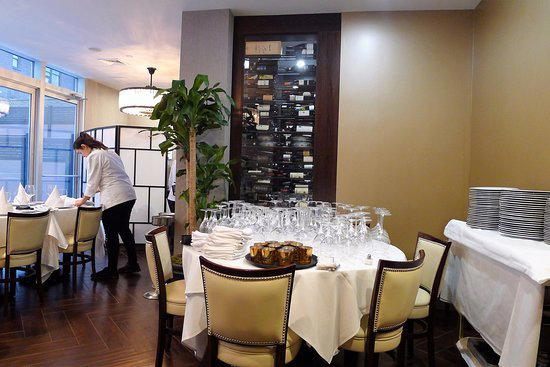
Moderate noise level with cozy and elegant atmosphere appreciated for classic Italian dining.