Our verdict
On the first floor of Swords' Main Street, Everest Kitchen brings Himalayan and South Asian cooking to north County Dublin, a part of the city where this kind of regional specificity is scarce. The cooking draws on ingredient traditions with deep roots in Nepal and the Indian subcontinent, positioning it apart from the broader South Asian dining field in the Dublin commuter belt.

Pearl is the En Primeur Club membership app — saves, bookings, and concierge access live there. Same editors, same standards.
- Address
- 4 Main Street First Floor, Swords, Co. Dublin, K67 E9V4, Ireland
- Phone
- +35318084633
- Hours
- Mon–Thu 5–10:30 PMFri–Sat 4–11 PMSun 2–10:30 PM
- Website
- everestkitchen.ie
- Directions
- Get directions
- Booking
- Book on OpenTable
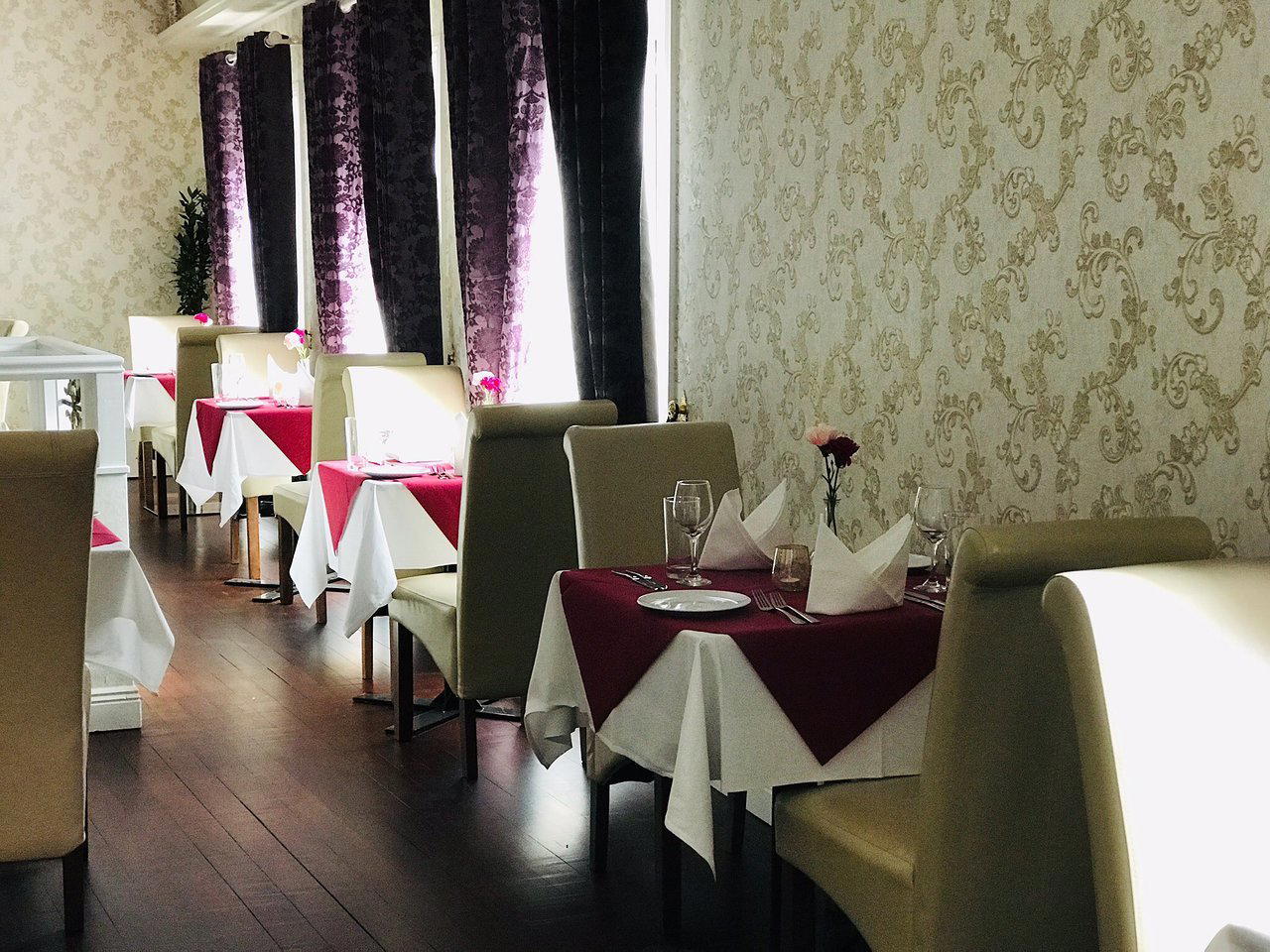
First Floor, Main Street: What Himalayan Cooking Looks Like in North Dublin
Swords sits roughly twelve kilometres north of Dublin city centre, close enough to the airport that its Main Street catches a transient crowd, yet distinct enough to have developed its own dining identity over the past decade. The first floor address on Main Street places Everest Kitchen slightly apart from street level — a physical remove that mirrors the culinary one. South Asian restaurants are not rare in the Dublin commuter belt, but kitchens that draw specifically on Himalayan cooking traditions rather than the broader subcontinental mainstream represent a narrower category, and that distinction matters when you are trying to understand what this place actually offers.
The Himalayan culinary tradition spans Nepal, the Tibetan plateau, and the mountain corridors connecting South and Central Asia. Its ingredient logic is shaped by altitude and trade routes: fermented pickles, slow-braised meats, lentil preparations that build flavour across long cooking times, and spice profiles that overlap with but diverge meaningfully from the North Indian restaurant conventions that dominate Irish high streets. In a county Dublin context, where most South Asian dining defaults to curry house formats built around Punjabi and Bangladeshi frameworks, a kitchen emphasising Himalayan sourcing and technique occupies genuine editorial interest.
The Ingredient Question: Where the Food Comes From and Why It Matters
Himalayan cooking is inseparable from its ingredient geography. Dal bhat, momos, and slow-cooked meat preparations rely on dried spices, fermented condiments, and grain varieties that carry provenance in a way that generic restaurant supply chains tend to flatten. For any kitchen in Ireland claiming Himalayan roots, the credibility question is whether the sourcing holds: whether Szechuan pepper, fenugreek leaves, and black cardamom are sourced specifically rather than approximated, and whether the fermented elements — the gundruk, the achar, reflect actual production traditions or are replicated from pantry shortcuts.
This is not a question unique to Everest Kitchen. It applies to every diasporic kitchen operating in a country where specialist ingredients require either dedicated importers or community supply networks. Dublin's South Asian population has grown considerably since the early 2000s, and with it, the infrastructure for sourcing specialist ingredients has deepened. Shops supplying the Nepalese and Tibetan communities in greater Dublin now carry items that were difficult to source even a decade ago, which materially raises the ceiling for what a kitchen like this can do with authenticity. The address in Swords, with its proximity to a diverse north Dublin population, suggests access to that supply network.
Comparing this to how sourcing shapes identity elsewhere in Irish dining is useful. Kitchens like Aniar in Galway or Liath in Blackrock have built critical reputations precisely on ingredient sourcing as a philosophical commitment, not a marketing position. At the fine dining tier, Chapter One by Mickael Viljanen in Dublin and Terre in Castlemartyr treat provenance as the editorial headline. Everest Kitchen operates in a different price tier and format, but the underlying question, does the kitchen honour what the ingredients are supposed to be? applies at every level.
Swords' Dining Context and Where This Fits
The Main Street dining strip in Swords has diversified considerably from its pub-and-chipper origins. Musashi Swords covers the Japanese end of the spectrum, Smokin Bones Swords anchors the American barbecue niche, and Indie Spice Grill represents another angle on South Asian cooking in the town. That plurality is worth noting: Swords is not a dining monoculture, and a Himalayan-focused kitchen enters a street that already has some appetite for specificity. The question is whether customers in the area have enough information about what differentiates Himalayan cooking from broader South Asian categories to seek it out deliberately, or whether Everest Kitchen draws its crowd on price, proximity, and reputation rather than on cuisine-specific interest.
For comparison, Irish towns with airport proximity tend to develop international dining faster than their populations would otherwise support, because the commuter and traveller flow creates demand for flavour diversity. Swords benefits from that effect. It is also worth looking at how similar format restaurants have established themselves in Irish towns outside the capital: Bastion in Kinsale, Homestead Cottage in Doolin, and Campagne in Kilkenny all demonstrate that non-capital venues can carry genuine culinary ambition. The frame scales down the price tier considerably, but the editorial logic holds: location outside Dublin does not preclude cooking with a defined point of view.
For a broader view of where Everest Kitchen sits relative to Swords' full dining options, the full Swords restaurants guide maps the category across price points and cuisines.
Planning Your Visit
Everest Kitchen is on the first floor at 4 Main Street, Swords, Co. Dublin, K67 E9V4, accessible from the main retail strip and walkable from the town's bus connections. The first-floor format generally signals a slightly more settled dining experience than ground-floor takeaway or counter operations, which is worth factoring into how you approach the visit.
For reference on how Himalayan and South Asian kitchens at this tier compare internationally, kitchens like dede in Baltimore and internationally regarded precision operations like Le Bernardin in New York City or Lazy Bear in San Francisco represent different tiers and traditions, but they share a common principle: the leading diasporic and specialist kitchens are defined by how closely their sourcing and technique align with the tradition they claim. That test applies here too. Further afield in Ireland, The Morrison Room in Maynooth, The Oak Room in Adare, Chestnut in Ballydehob, and House in Ardmore each show how regional Irish dining has developed its own rigour, a shift that has raised expectations across the board, including in towns like Swords.
Frequently asked questions
Does Everest Kitchen work for a family meal?
The first-floor setting at 4 Main Street, Swords suits family groups reasonably well. Himalayan menus typically span a range of heat levels and include rice-based dishes like dal bhat that translate across age groups, making the format more accessible than, say, an omakase counter or a tasting menu format.
Is Everest Kitchen better for a quiet night or a lively one?
A first-floor dining room on Swords Main Street tends to sit apart from the street-level noise, which generally lends itself to a calmer atmosphere than the ground-floor pubs along the same strip. If you are looking for a low-key midweek dinner in North Dublin rather than a loud weekend crowd, this format fits that expectation better.
Is Everest Kitchen in Swords one of the few places in North Dublin to serve authentic Nepalese food?
Himalayan and Nepalese restaurants remain sparse across North County Dublin — the dining strip in Swords has diversified into Japanese and other cuisines, but Everest Kitchen at 4 Main Street represents one of the few venues in the area specifically focused on high-altitude Himalayan cooking traditions. For residents near Dublin Airport or commuters through Swords, that scarcity alone shapes where this restaurant sits in the local dining picture.
What's the signature dish at Everest Kitchen?
These are the dishes to orient your order around when visiting the Swords location.
How do I find Everest Kitchen?
Everest Kitchen is located at î4 Main Street First Floor, Swords, Co. Dublin, K67 E9V4, Ireland, Swords.
What's the best way to book Everest Kitchen?
Dublin. Walking in or contacting the restaurant directly via the Main Street premises is the most reliable approach until booking channels are confirmed.
| Venue | Cuisine | Price |
|---|---|---|
| Everest KitchenThis venue — the venue you are viewing | Authentic Nepalese and Indian | $20–30 |
| Indie Spice Grill | Contemporary Indian Fusion | $20–30 |
| Musashi Swords | Authentic Japanese Sushi | $20–30 |
| Smokin Bones Swords | American BBQ | $30–50 |
Continue exploring
More in Swords
Restaurants in Swords
Browse all →
Bars in Swords
Browse all →
Hotels in Swords
Browse all →
Wineries in Swords
Browse all →
Details
- Cozy
- Family
- Group Dining
- Casual Hangout
- Open Kitchen
- A La Carte
- Vegetarian Friendly
- Vegan Options
Current opening hours
- Monday
- 5–10:30 PM
- Tuesday
- 5–10:30 PM
- Wednesday
- 5–10:30 PM
- Thursday
- 5–10:30 PM
- Friday
- 4–11 PM
- Saturday
- 4–11 PM
- Sunday
- 2–10:30 PM
Hours can change for holidays and private events. Last verified .
Casual and friendly with pleasant atmosphere, clean setting, and warm service as noted in guest reviews.