



1 Michelin Star · Star Wine List · Wine Spectator Best of Award of Excellence
Our verdict
Inside the Ritz Paris on Place Vendôme, Espadon holds a Michelin star under chef Eugénie Béziat and a White Star recognition from Star Wine List. The kitchen works within the French gastronomic tradition, placing it in a tier occupied by hotel dining rooms that treat their restaurant as a serious culinary address rather than an amenity.2 across 57 reviews suggests a focused, selective clientele rather than high-volume throughput.

Pearl is the En Primeur Club membership app — saves, bookings, and concierge access live there. Same editors, same standards.
- Address
- 15 Pl. Vendôme, 75001 Paris, France
- Phone
- +33 1 43 16 33 74
- Hours
- Mon ClosedTue–Sat 6:30–9:30 PMSun Closed
- Website
- ritzparis.com
- Directions
- Get directions
- Booking
- Book on the venue's website
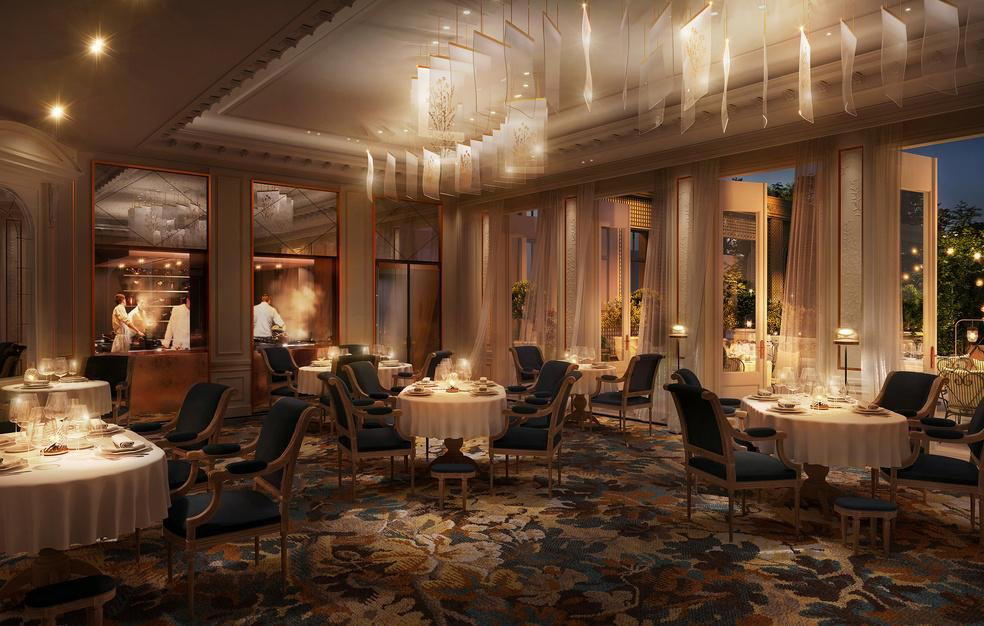
The menu
What to order
- Chicken_yassa
- Barbecued_lobster
- Veal_sweetbreads
Place Vendôme and the Weight of the Address
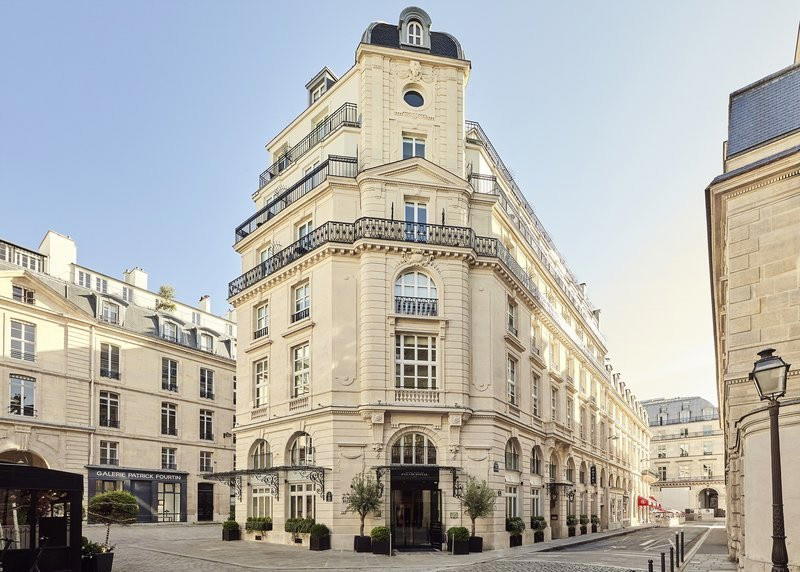
There are dining rooms in Paris where the architecture does much of the talking before the first course arrives, and Place Vendôme — an octagonal square designed under Louis XIV, ringed by jewellers and couture houses — places an extraordinary amount of pressure on anyone operating within it. The Ritz Paris, at number 15, has been part of the square's fabric since 1898. The restaurant operating inside it, Espadon, carries that address as both an asset and a constraint: expectations arrive at the table before the guest does.
Hotel dining in Paris occupies a complicated position. At the lower end of the spectrum, a hotel restaurant is a convenience for guests who don't want to go out. At the leading, where Le Cinq at the Four Seasons Hôtel George V holds three Michelin stars and competes directly with standalone addresses, the hotel context becomes largely irrelevant. Espadon sits closer to that second category. A Michelin star held in both 2024 and 2025, combined with a White Star distinction from Star Wine List published in January 2025, positions the room as a serious dining destination that happens to be inside one of the world's most recognised hotels, rather than a hotel restaurant that happens to serve good food.
The Sustainability Argument in Gastronomic Kitchens
French haute cuisine has not always been the most obvious home for environmental thinking. The traditions of the grande cuisine, long-cooked stocks, protein-forward menus, rich dairy, were built around abundance rather than restraint. But over the past decade, the conversation has shifted materially. Restaurants like Arpège, where Alain Passard moved toward a vegetable-driven kitchen in the early 2000s, and Bras in Laguiole, with its deep attention to the range of the Aubrac plateau and its ingredients, established that ecological seriousness and Michelin recognition could coexist at the highest level. The question for any gastronomic kitchen operating today is not whether to engage with these concerns but how credibly.
For a hotel-anchored restaurant at the level of Espadon, the sourcing context matters in a specific way. Large luxury hotel operations have supply chains of considerable scale, and the gap between a kitchen's stated values and what actually arrives at the loading dock is often wider than the menu language suggests. The White Star from Star Wine List, a designation focused on the wine program rather than the food, signals at minimum that attention is being paid to provenance at the cellar level, which in the leading cases correlates with similar rigour in the kitchen. Ethical sourcing in French gastronomic kitchens increasingly means direct relationships with named producers, seasonally rotating menus that reflect actual availability rather than a fixed luxury formula, and a willingness to build dishes around less prestigious cuts or ingredients when those happen to be what's at their leading. Whether Espadon's kitchen under chef Eugénie Béziat takes that path is for the diner to assess in the room, but the star retention across consecutive years suggests the kitchen is not coasting.
Chef Eugénie Béziat and the Broader Context
The French gastronomic tradition has historically been slow to place women in the kitchens of its most decorated addresses. That is changing, but unevenly: the number of female chefs holding stars in France remains disproportionately low relative to the culinary workforce. In that context, Béziat's position at a starred hotel restaurant on Place Vendôme is worth noting as a signal about how institutional kitchens are evolving, even if the editorial focus here is properly on what reaches the plate rather than who is holding the pan.
Peer comparisons at the one-star level in Paris's first arrondissement and the adjacent 8th arrondissement include a dense concentration of serious addresses. Kei, with three stars and a Franco-Japanese sensibility, and Alléno Paris au Pavillon Ledoyen, also at three stars with a research-driven approach to French terroir, represent the ceiling of what Paris's right-bank gastronomic scene offers. Espadon operates in the tier below that ceiling but above the entry-level starred bistro format that has proliferated in Paris over the same period.
The Wine Program as a Measure of Seriousness
The White Star recognition from Star Wine List is a specific credential worth understanding. The designation, published in January 2025, places Espadon within a peer group of Paris addresses where the wine list is considered a distinct attraction rather than a supporting element. In practice, this means breadth of selection, depth in key French appellations, and the presence of either a skilled sommelier or a clearly thought-through by-the-glass program. For a restaurant operating inside the Ritz Paris, the cellar benefits from the hotel's long institutional memory around wine, an advantage that standalone restaurants on tighter cash flows cannot replicate.
The broader French wine world that feeds these lists runs from the classic production houses to smaller-scale producers whose practices align more closely with contemporary sustainability thinking. Increasingly, starred Paris restaurants are building their lists to include natural and biodynamic producers alongside the expected Burgundy and Bordeaux canon. For reference on what rigorous wine-forward thinking looks like at different French addresses, Flocons de Sel in Megève and Mirazur in Menton offer useful comparison points on how regional terroir-awareness shapes both the plate and the glass.
Espadon in the Longer Arc of French Dining
To understand what Espadon represents in 2025, it helps to map it against the longer history of French gastronomic dining. The houses that built the French tradition, addresses like Auberge de l'Ill in Alsace, Troisgros in Ouches, and Paul Bocuse's Auberge du Pont de Collonges, established a model in which fine dining and a sense of place were inseparable. The challenge for a Parisian hotel restaurant is that "place" is simultaneously everywhere and nowhere: Place Vendôme is one of the most recognisable addresses in Europe, but it is not a farm, a vineyard, or a coastal fishing port. Grounding a tasting menu in genuine terroir from inside the Ritz requires a deliberate sourcing strategy rather than a natural one.
That challenge is not unique to Espadon. L'Ambroisie on Place des Vosges, with three stars and a classic French sensibility, navigates the same tension between urban grandeur and ingredient provenance. The difference is that L'Ambroisie has been at that address for decades and has earned the kind of institutional authority that removes the question from the room. Espadon, with consecutive star retention and a recognised wine program, is building toward that kind of settled authority, but it is still in the earlier chapters of that process. For diners who want to track French gastronomic kitchens at comparable scales and approaches, Le Verbois in Saint-Maximin and La Maison d'Uzès offer regional French gastronomic counterpoints to the Parisian hotel-dining model.
Know Before You Go
Address: 15 Place Vendôme, 75001 Paris
Cuisine: French | Gastronomic
Price range: €€€€
Chef: Eugénie Béziat
Awards: Michelin 1 Star (2024, 2025); White Star, Star Wine List (January 2025)
Booking: Reservations are strongly advised given the format and price tier; contact the Ritz Paris directly
Getting there: Métro Opéra (lines 3, 7, 8) is the closest major hub; Tuileries (line 1) places you on the eastern edge of the square
For a broader view of Paris dining across price tiers and neighbourhood contexts, see our full Paris restaurants guide. For where to stay, drink, and explore beyond the table, the Paris hotels guide, Paris bars guide, Paris wineries guide, and Paris experiences guide cover the wider picture.
Frequently asked questions
What dish is Espadon famous for?
No specific signature dish is confirmed in publicly available data, and generating one would be speculation. What is confirmed is that Espadon operates within the French gastronomic tradition at the €€€€ price tier, under chef Eugénie Béziat, with a Michelin star retained across both 2024 and 2025 and a White Star from Star Wine List. At this level in Paris, the kitchen typically works with a tasting menu format built around seasonal French produce, but the specific dishes and their composition are leading verified directly with the restaurant before booking.
Recognition, Side-by-Side
A small set of peers for context, based on recorded venue fields.
| Venue | Cuisine | Price | Awards | Notes |
|---|---|---|---|---|
| EspadonThis venue — the venue you are viewing | Modern French Fine Dining with African Influences | $300–500 | 1 Michelin Star · Star Wine List | Not listed |
| Alléno Paris au Pavillon Ledoyen | Modern French Fine Dining | $150–200 | 3 Michelin Stars · World's 50 Best #79 | Creative |
| Kei | Modern French with Japanese Influences | $300–500 | 3 Michelin Stars · World's 50 Best #93 | Contemporary French, Modern Cuisine |
| L'Ambroisie | Classic French Haute Cuisine | $300–500 | 2 Michelin Stars · World's 50 Best #23 | French, Classic Cuisine |
| Le Cinq - Four Seasons Hôtel George V | French, Modern Cuisine | Not listed | Michelin 3 Star | Not listed |
| Plénitude | Modern French Sauce-Led Fine Dining | $300–500 | 3 Michelin Stars · World's 50 Best #14 | Contemporary French |
Recognition history
Dated appearances from independent guides and award organizations, with the underlying list record or original source where available.
Michelin 1 Star
Michelin
Star Wine List
Star Wine List
Wine Spectator Best of Award of Excellence
Wine Spectator
Gault & Millau Remarkable Restaurant
Gault & Millau
Full recognition history (6 entries)
Michelin 1 Star
Michelin
Michelin 1 Star
Michelin
Continue exploring
More in Paris
Restaurants in Paris
Browse all →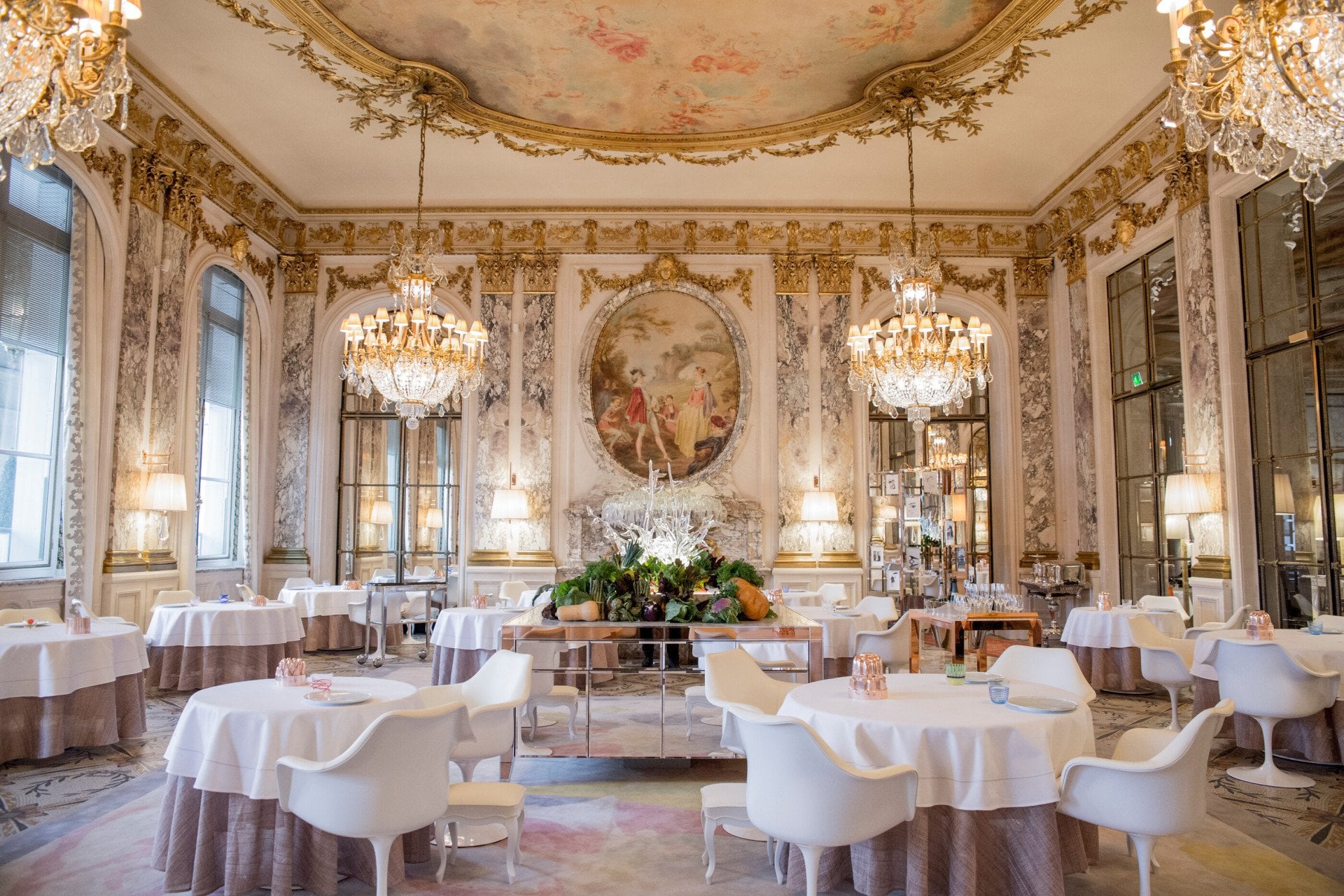
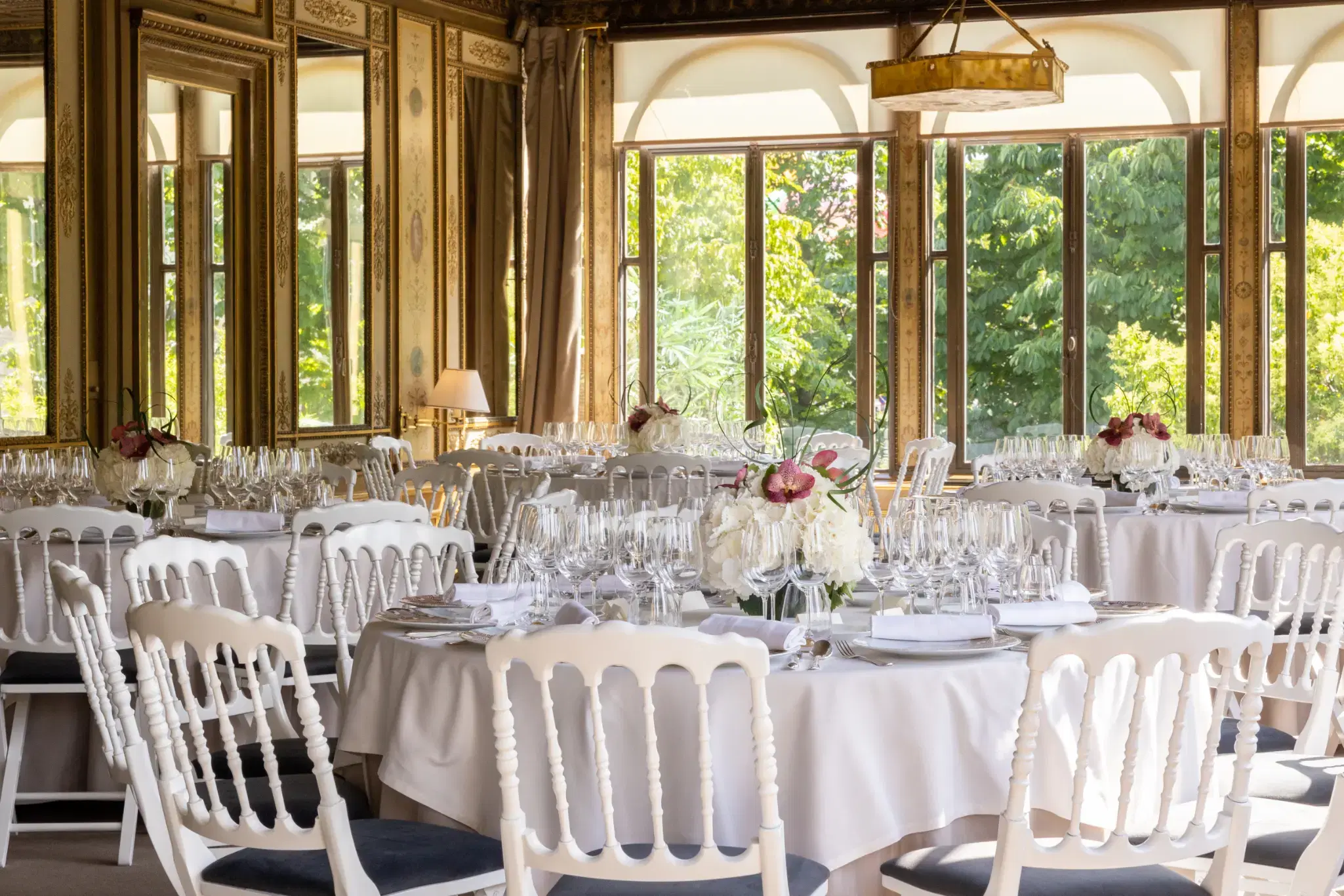
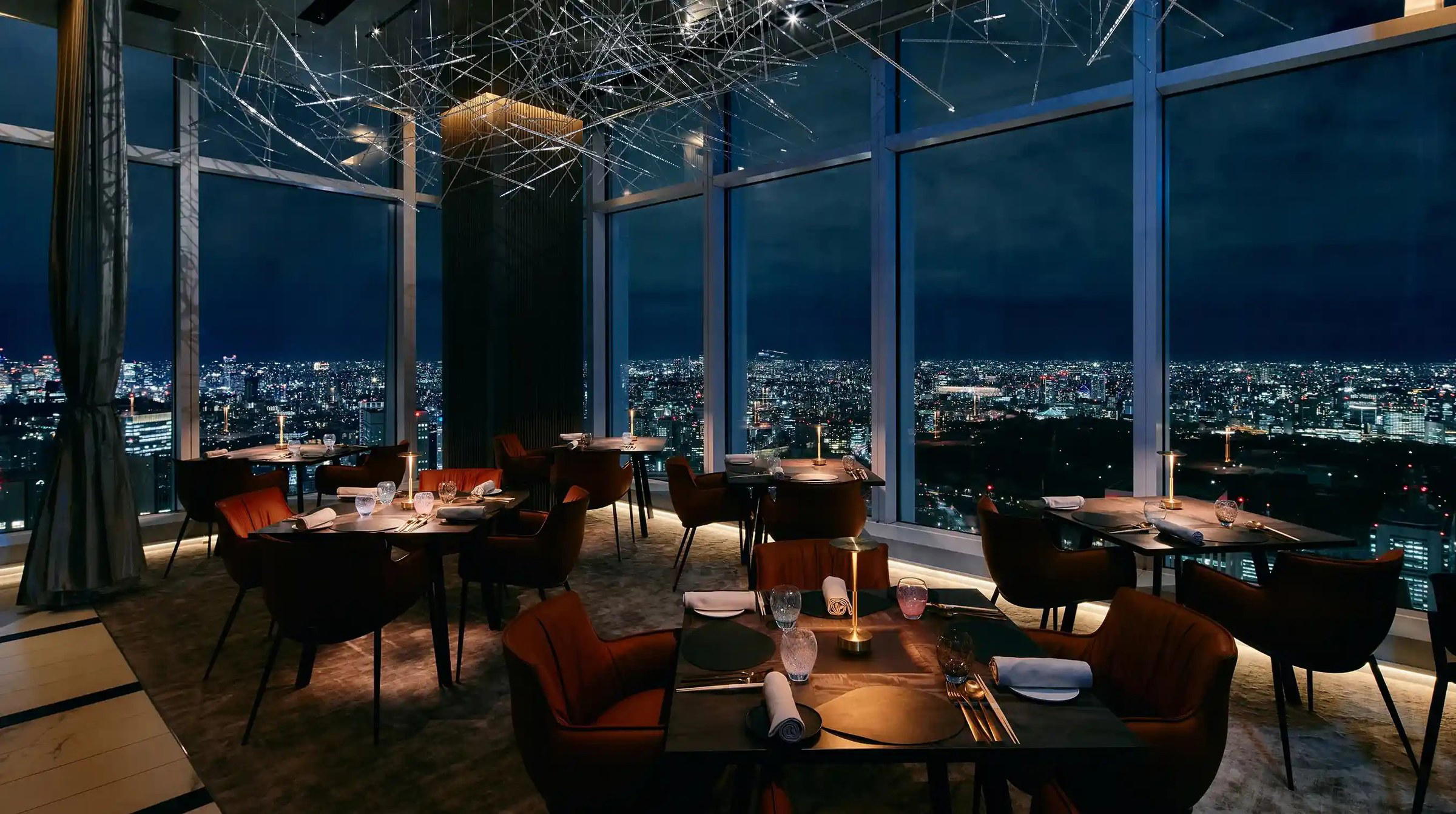
Bars in Paris
Browse all →
Hotels in Paris
Browse all →




Details
- Elegant
- Sophisticated
- Intimate
- Classic
- Ornate
- Date Night
- Special Occasion
- Celebration
- Hotel Restaurant
- Extensive Wine List
- Sommelier Led
- Tasting Menu
- A La Carte
Current opening hours
- Monday
- Closed
- Tuesday
- 6:30–9:30 PM
- Wednesday
- 6:30–9:30 PM
- Thursday
- 6:30–9:30 PM
- Friday
- 6:30–9:30 PM
- Saturday
- 6:30–9:30 PM
- Sunday
- Closed
Hours can change for holidays and private events. Last verified .
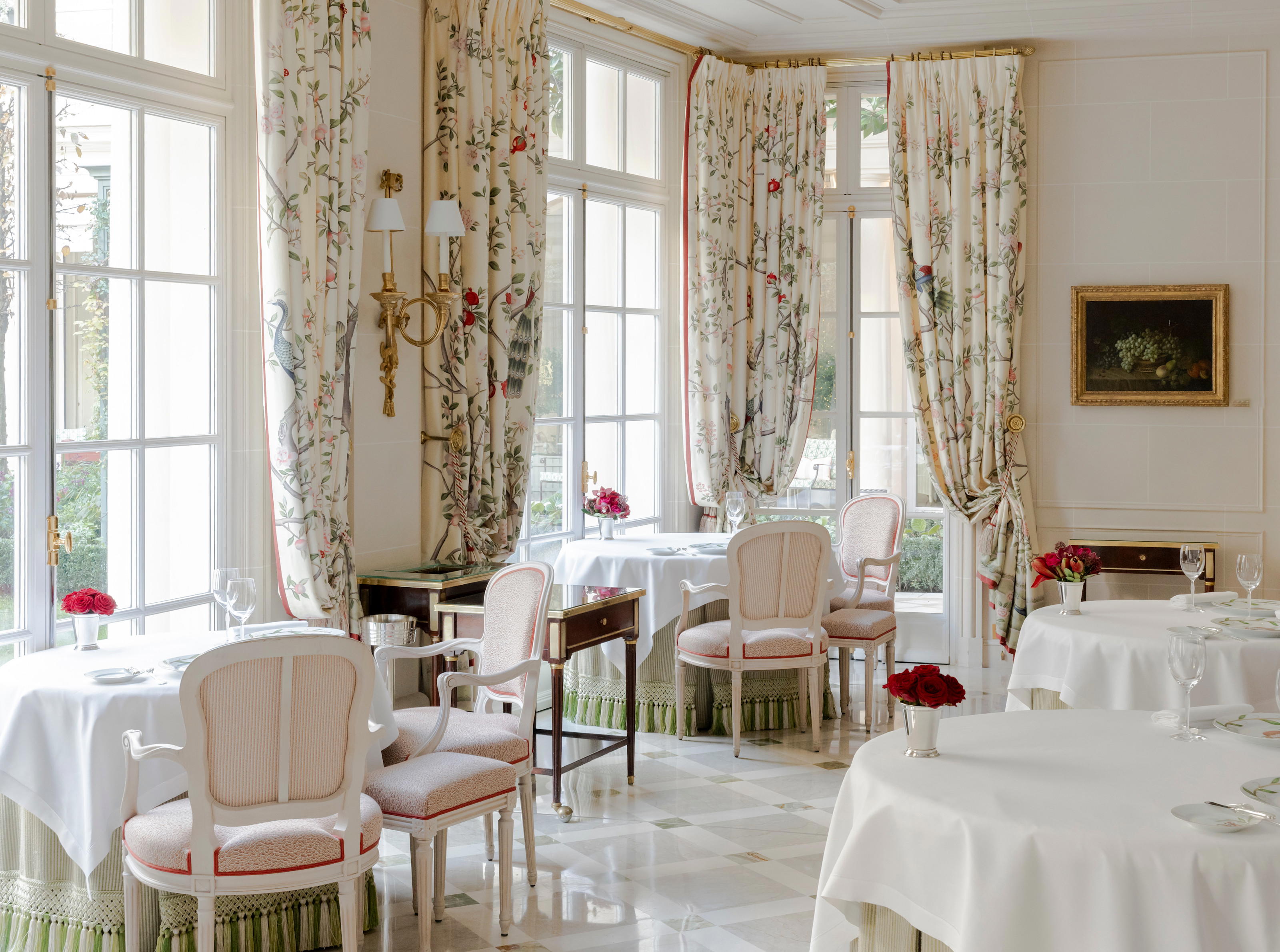
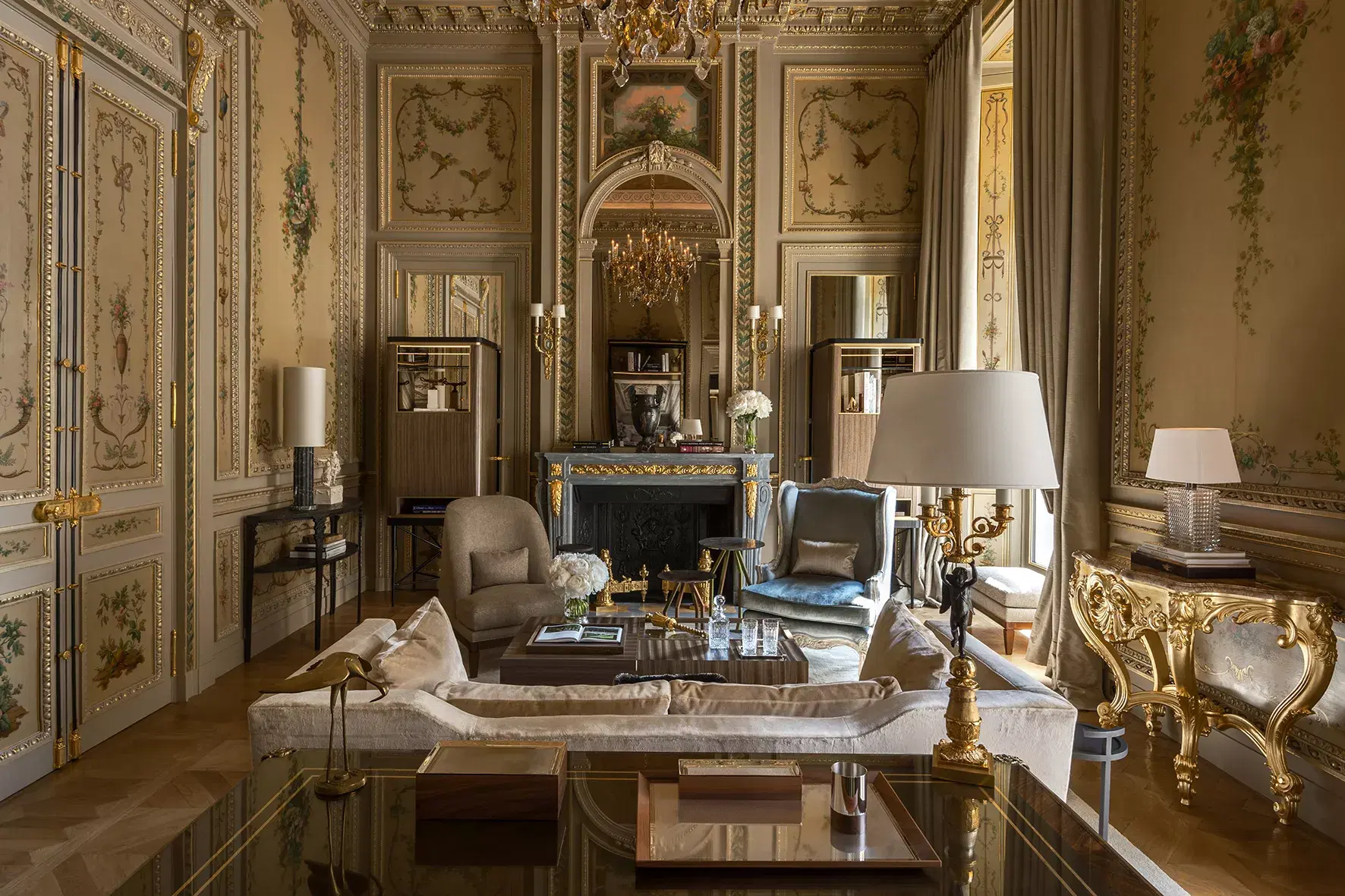
Elegant and timeless with gentle refinement, intimate atmosphere, spacious seating for normal conversations, and a luscious room featuring professional yet warm service.