
Housed within the Nassauer Hof grand hotel on Wiesbaden's Wilhelmstraße, Ente is one of the Rhineland's most formally anchored fine-dining addresses, offering two structured tasting menus built around meticulously sourced ingredients and classical technique. The two-level dining room, with its wrought-iron staircase and gallery seating, sets a tone that the kitchen, under Chef Michael Kammermeier, consistently matches.
Pearl is the En Primeur Club membership app — saves, bookings, and concierge access live there. Same editors, same standards.
- Address
- Wilhelmstraße 54, 65183 Wiesbaden, Germany
- Phone
- +49 611 133666
- Website
- hommage-hotels.com
- Directions
- Get directions
 Saves & bookings on Pearl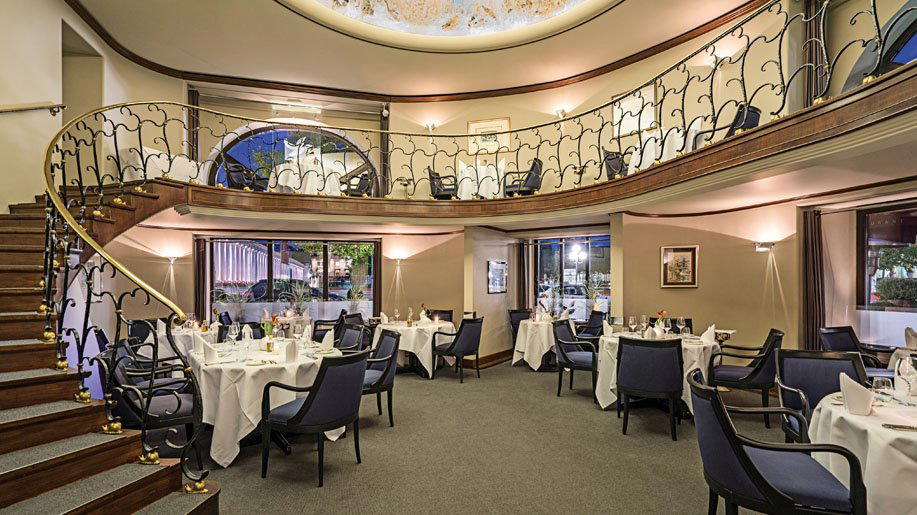
Grand Hotel Dining in the Rhine-Main Region
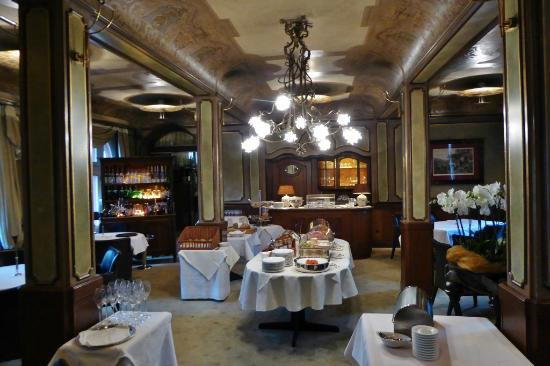
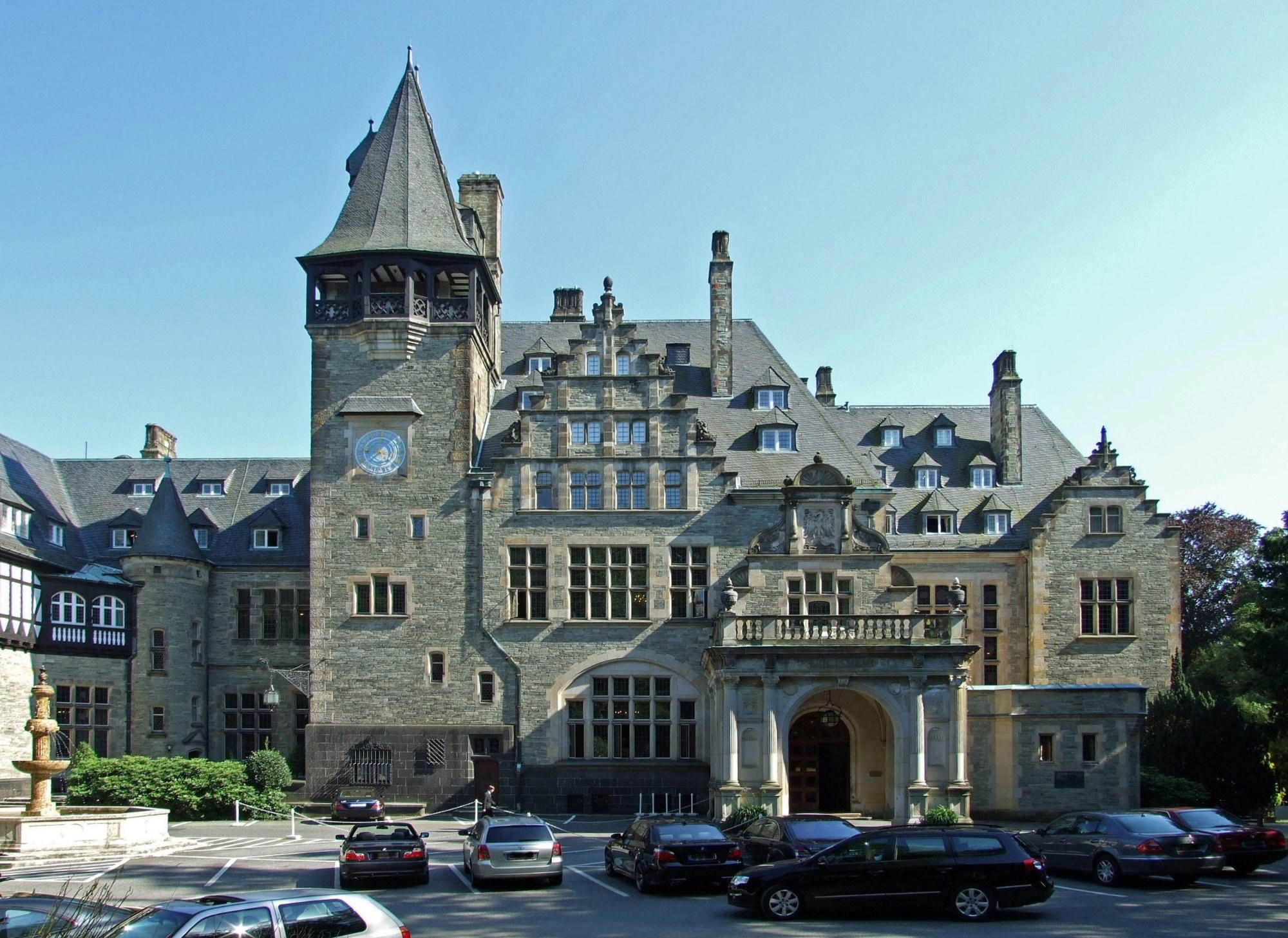
Germany's fine-dining infrastructure has long organised itself around hotel restaurants in a way that France and the UK rarely replicate at the same density. The grand hotel kitchen carries an institutional weight: the brigade is larger, the cellar deeper, and the expectation of formality more explicit than in freestanding restaurants. Ente, positioned within the Nassauer Hof on Wilhelmstraße 54 in central Wiesbaden, operates squarely within that tradition. The hotel itself dates to 1813, and the dining room reflects that history: two levels of table service, a curved staircase fitted with wrought-iron bannisters connecting the ground floor to the gallery above, and a setting calibrated for formal occasions.
Wiesbaden sits in the Rhine-Main corridor, roughly equidistant between Frankfurt's urban restaurant density and the vineyards of Rheingau. That geography matters for sourcing. The region's agricultural and viticultural depth gives kitchens at this level access to produce networks, game, root vegetables, dairy, riverine fish, that are less readily assembled in large cities where supply chains run through wholesalers rather than direct producer relationships. Ente's menu structure, built around two set menus rather than à la carte flexibility, signals confidence in that sourcing logic: the kitchen decides what is in season and in form, and the diner follows.
Two Menus, One Sourcing Philosophy
The approach of anchoring a fine-dining program to set menus rather than a broad carte is now the dominant format among Germany's decorated restaurants. At addresses like Aqua in Wolfsburg or JAN in Munich, the tasting menu functions as a daily argument about what the kitchen believes is worth eating. Ente structures this through two distinct routes: the "Küchenrunde" and the "Querbeet". These are not merely different lengths of the same experience; the naming implies different editorial stances, a kitchen-led tour versus a cross-sectional sweep of the larder. Which menu fits depends on how much creative latitude a diner wants to hand to the kitchen.
The sourcing logic extends to the duck menu, available as a pre-ordered three-course format for two. Ente's name translates directly as "duck" in German, a naming choice that telegraphs the kitchen's historical relationship with the bird as a central ingredient rather than a rotating feature. Pre-ordering requirements for this format reflect a supply-side reality: whole birds, properly aged and sourced from trusted farms, cannot be held in large quantities for spontaneous orders. This is how ingredient-led restaurants handle the tension between a fixed menu structure and the perishability of premium proteins. The advance booking requirement is a sourcing signal, not a booking inconvenience.
Context of ingredient standards at this price tier in Germany is worth stating plainly. At the €€€€ bracket, the expectation is that primary ingredients are sourced to specification, not merely purchased from a premium supplier but selected with attention to breed, feed, growing method, or aging protocol. Germany's restaurant scene at the decorated end, from Schwarzwaldstube in Baiersbronn to Schanz in Piesport, has moved steadily toward direct-producer relationships over the past decade. Ente's position within a hotel with a long institutional history in the region suggests those relationships have had time to deepen.
The Room and the Service Architecture
In formal European hotel dining, the room's physical architecture communicates something about service expectations before a single dish arrives. The two-level layout at Ente, with gallery seating accessible via the wrought-iron staircase, creates natural hierarchy within the dining space. Gallery seats offer a degree of privacy and elevation; ground-floor tables sit closer to the operational centre. Neither is inferior, but they produce different experiences of the same meal. This is the kind of spatial intelligence that appears in the design of comparable rooms at Restaurant Haerlin in Hamburg or Vendôme in Bergisch Gladbach, rooms where the architecture is itself a service element.
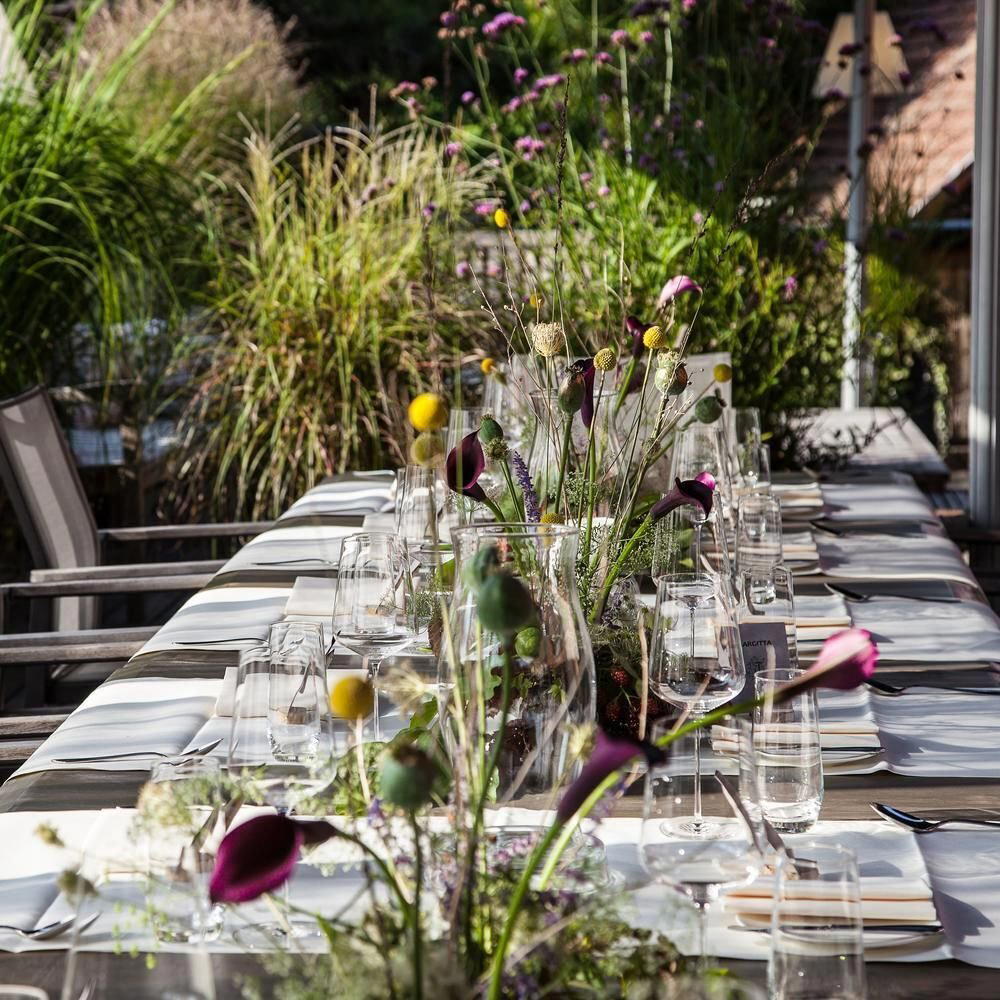
The front-of-house program is led by Jimmy Ledemazel. At this level, the maître d's role is not simply to coordinate covers but to pace a multi-course meal, manage wine pairing dialogue, and read the room well enough to shift register between occasions, a business dinner and a wedding anniversary require different handling of the same menu. The attentiveness described in the Michelin record points to a brigade trained to stay present without becoming intrusive, a balance that separates polished service from theatrical or mechanical delivery. The terrace to the front of the building offers an alternative setting when conditions permit, extending the room's footprint into Wilhelmstraße's tree-lined boulevard character.
Positioning Within Wiesbaden's Dining Scene
Wiesbaden's restaurant scene operates at a different register than Frankfurt's, which runs broader and louder across more categories. The city's dining character skews toward the formal end: Kurhaus culture, spa traditions, and the Nassauer Hof's presence as a civic anchor have maintained a preference for composed, service-led experiences. Ente sits at the summit of that register. Below it, addresses like Ente-Bistro (Classic French, €€€) occupy the mid-formal tier, while DAS GOLDSTEIN BY GOLLNER'S and martino KITCHEN (both seasonal, €€) represent the city's more casual, ingredient-driven offer.
For readers building a wider picture of Germany's creative fine dining, the comparison set extends well beyond the city. ES:SENZ in Grassau and CODA Dessert Dining in Berlin represent the more experimental end of the spectrum; internationally, Alléno Paris au Pavillon Ledoyen and Arpège in Paris sit in the tradition of grand-address fine dining that Ente draws from more directly than it does from Berlin's avant-garde. The classical influence is not a constraint here; it defines the comparable set.
Planning a Visit
Ente is located at Wilhelmstraße 54, within the Nassauer Hof hotel, in central Wiesbaden. The terrace is weather-dependent and worth requesting when booking if the season allows.
Pricing, Compared
Comparable venues nearby, for context on price, style, and recognition.
| Venue | Cuisine | Price | Awards | Notes |
|---|---|---|---|---|
| EnteThis venue — the venue you are viewing | Mitte, Modern European Fine Dining | $$$$ | Michelin 1 Star | Not listed |
| DAS GOLDSTEIN BY GOLLNER'S | Not listed | $$$ | Michelin Plate | Goldsteintal, Modern Austrian Fine Dining |
| Ente-Bistro | Not listed | $$$$ | Michelin Plate | Kaiser-Friedrich-Platz, Modern Classic European Fine Dining |
| Yozora-17 Fusion Sushi - Wiesbaden | Rheinstraße, Fusion Sushi | $$$ | Not listed | Not listed |
| martino KITCHEN | Not listed | $$$ | Michelin Plate | Marktplatz (town centre), Mediterranean Fine Dining |
| I-Punkt | Wilhelmstraße, Modern German & European | $$ | Not listed | Not listed |
Recognition history
Dated appearances from independent guides and award organizations, with the underlying list record or original source where available.
Michelin 1 Star
Michelin
Michelin 1 Star
Michelin
Continue exploring
More in Wiesbaden
Restaurants in Wiesbaden
Browse all →
Bars in Wiesbaden
Browse all →

Hotels in Wiesbaden
Browse all →
At a Glance
- Elegant
- Sophisticated
- Intimate
- Classic
- Date Night
- Special Occasion
- Business Dinner
- Hotel Restaurant
- Terrace
- Extensive Wine List
- Sommelier Led
- Local Sourcing
Elegant high-ceilinged dining room with sophisticated, warm, and welcoming atmosphere over two levels connected by a curved staircase.