.png)
Em Sherif brings the Lebanese household-name dining format to Al Maha Island in Doha, with a menu built around shareable dishes — fattet barek, fassoulia, muttabbal — and a covered terrace that opens toward the city skyline. The format rewards groups rather than solo visits, with portions scaled for the table and a kitchen emphasis on layered, authentic flavour over modernist reinterpretation.
 Discover on Pearl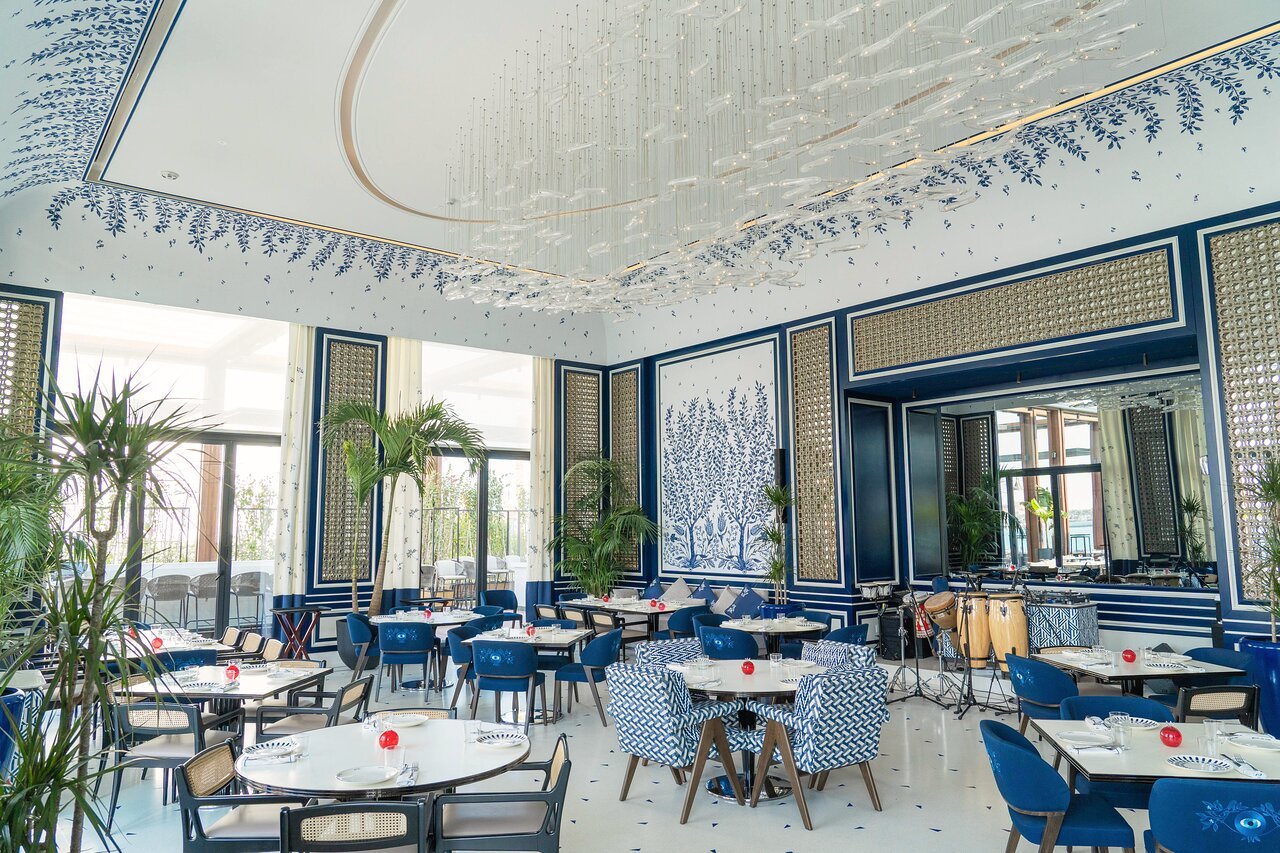
Lebanese Dining at Scale: What Em Sherif Represents in Doha
Doha's restaurant scene has expanded rapidly through formats imported from Beirut, Dubai, and the wider Arab world, and Lebanese dining sits near the centre of that story. The cuisine — built on shared cold and hot mezze, slow-cooked legumes, charcoal meats, and bread baked to order — translates well to the Gulf's hospitality culture, where large-table, communal eating remains the norm rather than the exception. Em Sherif, a brand that has grown into one of the most recognised Lebanese names across the region, represents the higher end of that format: generous in portion, considered in sourcing, and designed explicitly around the experience of eating together rather than alone.
In a city where the dining tier splits between high-volume hotel restaurants, international franchise outposts, and a smaller number of independently-credentialed regional kitchens, Em Sherif occupies a position that aligns it with the latter. It sits on Al Maha Island, one of Doha's more active dining and leisure corridors, and draws a crowd that spans Lebanese and Arab diaspora regulars alongside visitors seeking a reliable anchor point for regional cuisine. For broader context on where it fits within the city's full dining offer, our full Doha restaurants guide maps the competitive set across cuisines and price points.
The shortlist, unlocked.
Hard-to-book tables, cellar releases, and concierge-planned trips.
Get Exclusive Access →The Room and the Terrace
The interior reads as occasion dining , cosy seating arranged to encourage conversation, a fit-out that leans toward warmth and textured comfort rather than the minimal cool that has defined many of Doha's newer openings. The covered terrace, however, is the seat worth securing. City views frame the meal without the distraction of direct sun or Gulf heat, and the terrace format suits the shared-plate rhythm of Lebanese service, where dishes arrive continuously and the table benefits from space to accommodate them. Arriving earlier in the evening, before the kitchen reaches full pace, tends to produce more attentive service and easier terrace access.
The Menu as a Study in Lebanese Mezze Tradition
Lebanese cuisine is one of the Arab world's most codified dining traditions, and the mezze format , cold dishes first, hot dishes following, meats arriving last , has its own internal logic that rewards patience. Em Sherif's kitchen works within that structure rather than against it. The fattet barek, a layered dish combining bread, yoghurt, and spiced filling, represents a style of cooking that requires timing and technique to execute well at scale. Fassoulia , slow-cooked white beans with tomato and lamb , sits in the comfort-food register that defines home-style Lebanese cooking. Muttabbal, the smokier, richer cousin of hummus made from charred aubergine, appears on virtually every serious Lebanese menu in the region, but quality varies widely depending on the char applied to the aubergine and the ratio of tahini used.
The bread programme matters here. Puffy, oven-fresh flatbreads are the vehicle for much of what the kitchen produces, and the difference between bread baked on the premises and bread sourced externally is immediately legible on the plate. Em Sherif's reputation across its locations rests in part on bread quality, and that holds at the Doha outpost.
For a comparative read on Moroccan cooking in Doha , another North African and Arab tradition that shares some ingredient overlap with Lebanese cuisine , Argan offers a useful counterpoint. Those exploring Middle Eastern dining more broadly in the city should also consider Baron and Bayt Sharq, both of which approach the regional format with different emphases.
Drinks and the Question of Wine at a Lebanese Table
Lebanese restaurants occupy a particular position in discussions about wine service in the Gulf. Lebanon itself has a wine culture , the Bekaa Valley produces internationally recognised bottles from estates that have operated for over a century , and the pairing of Lebanese food with Lebanese wine is a natural one that many of the country's leading dining rooms in Beirut have formalised. In Doha, where alcohol licensing is restricted to hotels and certain licensed venues, the drinks offer at any restaurant is shaped first by regulatory context. Where wine is available at Al Maha Island venues, the question for a Lebanese table becomes whether the list is curated to support the cuisine's profile: high-acid whites and lighter reds that work against the fat of tahini dishes and the char of grilled meats, rather than heavy oak-driven international bottles that tend to overwhelm the table.
Em Sherif's format, with its emphasis on sharing and family-style service, aligns well with the kind of wine consumption that centres on a single bottle or two for the table rather than individual pairings. Guests with a specific interest in wine service and cellar depth in Doha's fine-dining tier should note that IDAM by Alain Ducasse (one Michelin star) operates with a more formal sommelier programme, and Alba approaches the Italian-wine pairing tradition with its own list curation. For regional Lebanese dining, the drinks conversation is secondary to the food architecture, and rightly so.
Group Dining and Format Discipline
Em Sherif is constructed around the assumption that guests arrive in groups. The shareable format means that a table of two will still encounter dishes sized for four, and the full range of the menu only becomes legible when multiple people are ordering across cold mezze, hot mezze, and mains simultaneously. Solo or couple visits are possible, but they require deliberate selection to avoid either over-ordering or leaving significant sections of the menu unexplored. A table of four to six is the format that most closely matches the kitchen's output and the room's energy.
This positions Em Sherif differently from Doha's more formal tasting-menu operations. Restaurants like Lazy Bear in San Francisco or Alinea in Chicago build around a single curated sequence; Em Sherif inverts that model, placing editorial control in the hands of the table. The comparison to global fine dining is instructive precisely because the formats are so different , not better or worse, but calibrated for opposite experiences. Lebanese mezze is an argument for abundance and conversation; tasting menus are an argument for sequence and focus.
Planning Your Visit
Em Sherif sits on Al Maha Island, accessible from central Doha. The covered terrace is the preferred seating option, and requesting it at booking is advisable given its popularity, particularly during cooler months when outdoor dining in Qatar is at its most comfortable , broadly October through April. The kitchen format suits evening dining over lunch. Given the sharing structure, budget planning works better per table than per head, and the format rewards guests who arrive without a fixed idea of what they will order and instead work through the cold mezze section before committing to hot dishes and bread. For hotels near Al Maha Island and the broader waterfront area, our full Doha hotels guide covers the relevant options. Those building a broader Doha itinerary can also reference our Doha bars guide, our Doha experiences guide, and our Doha wineries guide for a complete picture of what the city offers across categories.
The shortlist, unlocked.
Hard-to-book tables, cellar releases, and concierge-planned trips.
Get Exclusive Access →Frequently Asked Questions
Cost and Credentials
Comparable venues for orientation, based on our database fields.
| Venue | Price | Awards | Notes |
|---|---|---|---|
| Em Sherif | This fast-growing Lebanese household name is ideally located on the bustling Al… | This venue | |
| IDAM by Alain Ducasse | ﷼﷼﷼﷼ | Michelin 1 Star | French, French Contemporary, ﷼﷼﷼﷼ |
| Argan | ﷼ | Moroccan, ﷼ | |
| Hakkasan | ﷼﷼﷼﷼ | Chinese, ﷼﷼﷼﷼ | |
| Jiwan | ﷼﷼ | Middle Eastern, ﷼﷼ | |
| Morimoto | ﷼﷼﷼ | Japanese, Sushi, Japanese Contemporary, ﷼﷼﷼ |
Need a table?
Our members enjoy priority alerts and concierge-led booking support for the world's most difficult tables.
Get Exclusive AccessThe shortlist, unlocked.
Hard-to-book tables, cellar releases, and concierge-planned trips.
Get Exclusive Access →