Elegant Inn

A Michelin Plate recipient for 2024 and 2025, Elegant Inn has anchored Hong Kong-style Cantonese cooking in Kuala Lumpur's city centre since 2008. Operating from the second floor of Menara Hap Seng, the restaurant draws a steady following for its dim sum lunches and precise Cantonese classics, positioned at the mid-price tier among the city's Chinese dining options.
Pearl is the En Primeur Club membership app — saves, bookings, and concierge access live there. Same editors, same standards.
- Address
- 2nd Floor, Podium Block, Menara Hap Seng, Jalan Tengah, Kuala Lumpur, 50450 Kuala Lumpur, Federal Territory of Kuala Lumpur, Malaysia
- Phone
- +60 3-2070 9399
- Website
- facebook.com
- Directions
- Get directions
 Saves & bookings on Pearl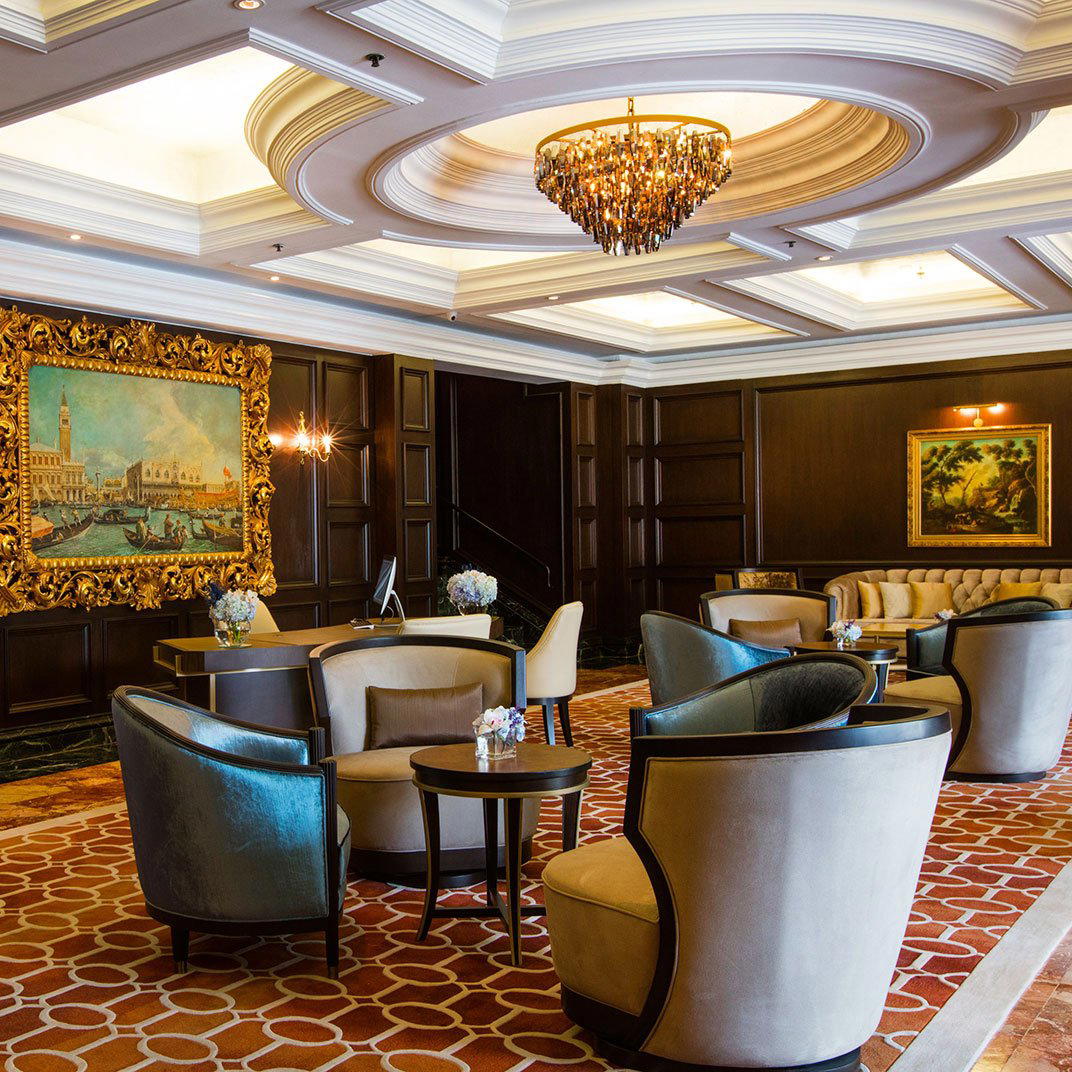
Where Kuala Lumpur's Cantonese Tradition Holds Its Ground
Elegant Inn is a Hong Kong Cantonese restaurant in Kuala Lumpur on the second floor of Menara Hap Seng, with a price point around $40 per person. The second floor of Menara Hap Seng, on Jalan Tengah, is not the address that announces itself loudly. The building is a commercial tower in the city centre, the kind of address that filters out casual foot traffic and draws in those who already know where they are going. Step past the elevator lobby and into Elegant Inn's dining room, and the register shifts: dark timber panelling, traditional detailing, and a room that clearly understands itself as a continuation of Hong Kong dining culture transplanted into Malaysian soil. There is a balcony option for those who prefer open air, though the interior, with its wood-heavy composition, signals clearly what the kitchen considers its reference point.
This has been one of Kuala Lumpur's more durable addresses for Cantonese cooking in the classical mode. The city's Chinese restaurant scene has moved in multiple directions over that period, absorbing fusion experiments, hotel dining expansions, and the arrival of mainland Chinese capital. Elegant Inn has remained in its lane: Hong Kong-style technique, traditional formats, and a lunch service built around dim sum that continues to draw consistent crowds well into the mid-2020s.
The Cantonese Framework and Where It Sits in KL
Cantonese cooking occupies a particular position in Kuala Lumpur's restaurant ecosystem. The city's Chinese population has deep local roots, and Cantonese cooking occupies a distinct place within that broader landscape. But Hong Kong-style Cantonese, which prizes subtlety of seasoning, textural precision in dim sum, and the clarity of double-boiled soups and slow-cooked preparations, operates as a distinct sub-category within that broader landscape. It requires skilled kitchen coordination: pastry work for the dim sum cases, separate teams managing roasted and braised proteins, and the discipline of the soup station running through service without shortcuts.
At the mid-price tier, which the restaurant occupies with a two-dollar-sign positioning, this style of cooking represents real value when executed correctly. For comparison, Kuala Lumpur's Michelin-starred restaurant tier sits considerably higher in both price and format: Dewakan and DC. by Darren Chin operate at the four-dollar-sign bracket, while Beta holds three. The restaurant's two consecutive Michelin Plate recognitions in 2024 and 2025 place it in a credentialed tier without the tasting-menu pricing. The Plate designation, in Michelin's own framework, signals quality cooking worth knowing about. For the category and price point, that is a meaningful signal.
Peer Cantonese addresses in the city worth cross-referencing include Yun House, which operates at hotel-luxury scale, Li Yen, and Foong Lian. For longer-established Chinese cooking in the city, Sek Yuen and Restoran Pik Wah cover different regional traditions. Each occupies a different tier and format; mapping them against each other gives a useful picture of how diverse KL's Chinese dining offer genuinely is.
Service as Structural Discipline
The editorial angle of the Cantonese format is ultimately a team exercise. Unlike tasting-menu restaurants where a single chef's vision dominates every plate, traditional Cantonese houses run on division of labour that requires tight front-of-house coordination to hold together. Dim sum service, in particular, depends on timing between kitchen and floor: a basket of har gow that sits too long loses its defining textural quality, while a soup that arrives before a guest is ready loses its temperature precision.
This kind of operational consistency over more than fifteen years in a commercial building, without the support structure of a hotel group or a celebrity chef profile, is not incidental. It reflects a service culture that has been maintained through turnover, pandemic disruption, and shifting diner expectations in a city that has seen substantial new competition enter the market in the same period.
What the Menu Signals
The menu specifically names three preparations worth noting. The deep-fried taro pouch is a dim sum format that requires clean oil temperature management and good dough technique: too thick and the casing becomes stodgy, too thin and it collapses under the filling. The eight-treasure stuffed chicken wing, with shrimp and mushroom filling, is a technically demanding preparation in which the wing is deboned and stuffed before cooking to produce a crisp exterior around a layered interior. Double-boiled soups, the third recurring reference, are the clearest marker of a kitchen that takes Cantonese cooking seriously: the double-boiling process is slow, cannot be rushed, and produces a clarity of broth that shortcuts cannot replicate.
These are not decorative menu items chosen for visual appeal. They are the kind of preparations that experienced Cantonese diners use as reference points when assessing a kitchen's actual commitment to the tradition, as opposed to a kitchen that markets itself as Cantonese while running on convenience-led technique. These items are the relevant signal here.
For those building a comparative picture of Cantonese cooking across the region and beyond, EP Club also covers Forum in Hong Kong, Jade Dragon in Macau, Chef Tam's Seasons in Macau, 102 House in Shanghai, and Le Palais in Taipei. Each represents a different national context for the same culinary tradition.
Planning a Visit
The restaurant is located on the second floor of the Podium Block, Menara Hap Seng, Jalan Tengah, in central Kuala Lumpur. The address is a commercial tower rather than a standalone restaurant building, so the entrance requires a degree of deliberate navigation. Lunch is the higher-demand service, given the dim sum programme's central role in the kitchen's reputation; booking ahead for weekend lunch is the practical recommendation. The two-dollar-sign price positioning makes it accessible relative to the hotel Cantonese tier, and the Michelin Plate credentials provide a useful benchmark for quality expectations at that price level.
Price and Positioning
Comparable venues nearby, for context on price, style, and recognition.
| Venue | Cuisine | Price | Awards | Notes |
|---|---|---|---|---|
| Elegant InnThis venue — the venue you are viewing | Kampong Baharu, Hong Kong Cantonese | $$$ | Michelin Plate | Not listed |
| Shanghai Restaurant | Kampong Dollah, Authentic Shanghainese | $$$ | Michelin Plate | Not listed |
| Bōl | Not listed | $$$ | Michelin Plate | Bukit Bintang, Modern Nyonya & Peranakan with Malaysian Twists |
| Frangipaani | Not listed | $$$ | Michelin Plate | Bukit Damansara, Contemporary North Indian with Goan influences |
| La Suisse | Taman Tun Dr Ismail, Traditional Swiss | $$$ | Michelin Plate | Not listed |
| Li Yen | Not listed | $$$$ | Michelin Plate | Kampong Dollah, Classic Cantonese Fine Dining |
Recognition history
Dated appearances from independent guides and award organizations, with the underlying list record or original source where available.
Michelin Plate
Michelin
Michelin Plate
Michelin
Michelin Plate
Michelin
Continue exploring
More in Kuala Lumpur
Restaurants in Kuala Lumpur
Browse all →
Bars in Kuala Lumpur
Browse all →

At a Glance
- Elegant
- Sophisticated
- Classic
- Business Dinner
- Family
- Special Occasion
- Private Dining
- Street Scene
Current opening hours
- Monday
- 12–2:30 PM, 6–10:30 PM
- Tuesday
- 12–2:30 PM, 6–10:30 PM
- Wednesday
- 12–2:30 PM, 6–10:30 PM
- Thursday
- 12–2:30 PM, 6–10:30 PM
- Friday
- 12–2:30 PM, 6–10:30 PM
- Saturday
- 12–2:30 PM, 6–10:30 PM
- Sunday
- 10:30 AM–2:30 PM, 6–10:30 PM
Hours can change for holidays and private events. Last verified .
Traditionally decorated wood-rich interior with nice ambience, offering al fresco balcony dining.