El Cardenal occupies a historic address on Paseo Recaredo in Toledo, placing it within the city's layered dining tradition where Castilian cooking and centuries of cultural convergence share the same table. The restaurant draws visitors and locals alike to a setting shaped by Toledo's position as a former seat of Christian, Muslim, and Jewish civilisation. It belongs to a tier of Toledo restaurants where heritage and setting are as deliberate as the menu itself.
Pearl is the En Primeur Club membership app — saves, bookings, and concierge access live there. Same editors, same standards.
- Address
- P.º Recaredo, 24, 45004 Toledo, Spain
- Phone
- +34925220862
- Website
- restaurantedelcardenal.com
- Directions
- Get directions
 Saves & bookings on Pearl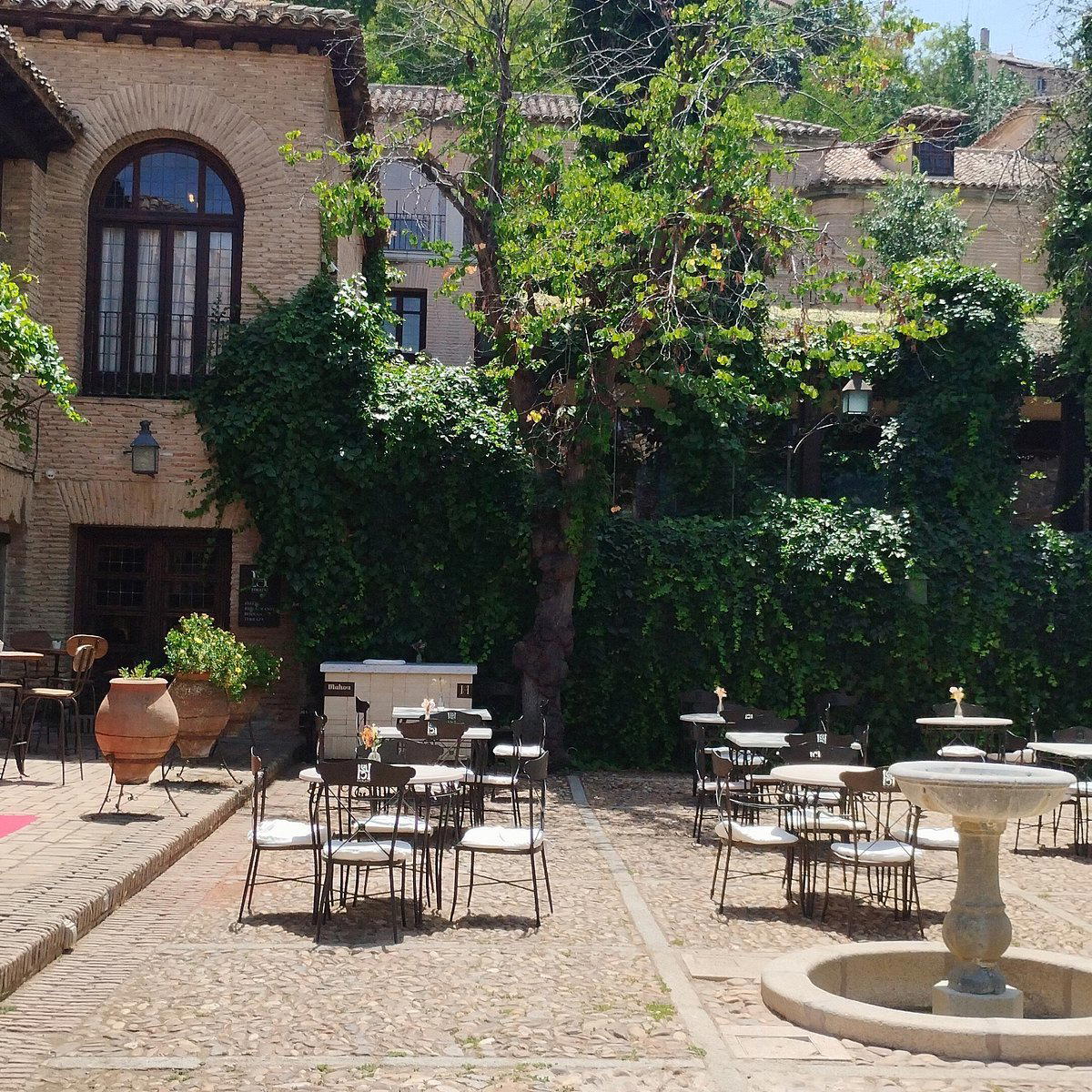
Toledo on a Plate: Why the City's Dining Tradition Runs Deeper Than the Monuments
There are cities where the food scene exists in spite of the tourism, and cities where it exists because of it. Toledo sits in a more complex third category: a place where the cooking carries genuine historical weight, shaped by the convergence of three civilisations over several centuries, and where the leading restaurants understand that the medieval backdrop is not merely decorative. El Cardenal is a traditional Castilian Spanish restaurant at P.º Recaredo, 24, 45004 Toledo, Spain, with. It occupies one of those positions where architecture and cuisine make a coherent argument together.
Approaching along the Paseo Recaredo, you're walking beside the Muralla Árabe, sections of Toledo's original Arab wall that have stood since the ninth century. The physical context matters here in a way it rarely does in dining: you are not entering a restaurant that has borrowed a historic setting for atmosphere. You are entering a building that has been absorbed into the physical history of the city, and that relationship sets the register for what follows inside.
Castilian Cooking and Its Place in Spain's Broader Culinary Order
To understand where El Cardenal sits in Spain's dining hierarchy, it helps to map the country's culinary geography first. Spain's most decorated restaurants, places like El Celler de Can Roca in Girona, Mugaritz in Errenteria, and Arzak in San Sebastián, cluster in the Basque Country and Catalonia, regions with strong culinary institutions and long histories of gastronomic culture. Castile-La Mancha operates differently. Its cooking tradition is rooted in land and necessity rather than institutional prestige, and its most respected restaurants tend to work within that tradition rather than against it.
Toledo's dining scene reflects that positioning. At the upper tier, Iván Cerdeño represents the city's most decorated modern address, while Adolfo occupies a middle ground between traditional roots and contemporary technique. Elsewhere, addresses like El Albero and La Cábala fill out the mid-range, and Choupana da Vila adds a cross-cultural note to the broader picture. El Cardenal occupies a position in this map defined by setting and culinary heritage rather than by innovation: it is a restaurant where Castilian tradition is the point, not a starting position for departure.
That orientation places it in a specific national context. Spain's tradition-led houses, the ones working within regional cooking rather than reinterpreting it through contemporary idiom, are a minority in the coverage that dominates international conversation. Most of the attention flows to the avant-garde and the Michelin-chasing cohort: DiverXO in Madrid, Aponiente in El Puerto de Santa María, Azurmendi in Larrabetzu, Quique Dacosta in Dénia. But the tradition-rooted end of the spectrum has its own value, particularly in a city like Toledo where the cooking is inseparable from the historical record of the place.
What Castilian Cooking Actually Means at the Table
Castilian cuisine is among Spain's least glamorised and most misunderstood regional traditions. Its repertoire is built on roasted meats, game, pulses, and bread-based preparations that predate Spain's encounter with the Americas and the ingredients that would later reshape its cooking. Cochinillo (suckling pig), perdiz (partridge), and carcamusas, a Toledo-specific pork and vegetable stew, are the markers of a tradition shaped by pastoral life, religious calendars, and the particular ecology of the Castilian meseta.
In Toledo specifically, that culinary tradition carries an additional layer of complexity: the city's history as a meeting point of Christian, Muslim, and Jewish communities between roughly the ninth and fifteenth centuries left traces in its cooking that are still legible today. Spicing patterns, the use of honey and almonds in both savoury and sweet preparations, and certain pastry traditions all carry that layered influence. A restaurant in this city that takes its culinary context seriously is engaging, whether explicitly or not, with a food history that runs far deeper than most European cities can claim.
Setting as Editorial Statement
The Paseo Recaredo address matters here. Spanish restaurants at this level of heritage positioning tend to operate in one of two modes: they use the setting as a backdrop for cooking that ignores it, or they treat the setting as part of the argument the restaurant is making. One coherent version of the latter approach means that the physical environment, the materials, the scale of the rooms, the views if they exist, are in dialogue with what arrives at the table.
For visitors arriving from Madrid, the journey from Atocha takes roughly thirty minutes by high-speed rail to Toledo station, from which the old city is accessible by taxi or the tourist bus route. Booking in advance is advisable, particularly across the Easter week processions in spring and the summer months when Toledo's day-trip traffic from Madrid peaks. The restaurant's position near the city walls means it is within reasonable walking distance of the main monuments, which has implications for timing: arriving at lunch rather than dinner allows a visit structured around the city's rhythm rather than against it.
For comparison across Spain's broader dining range, the kind of technically driven, internationally recognised cooking found at places like Cocina Hermanos Torres in Barcelona, Ricard Camarena in València, or internationally at Le Bernardin in New York City and Lazy Bear in San Francisco operates in a different register entirely. The restaurant does not compete in that conversation. Its value lies in something more specific to place and tradition, which is precisely what makes it relevant to a particular kind of traveller.
Planning Your Visit
The restaurant is located at Paseo Recaredo 24, within the old city's wall circuit in Toledo.
Price Lens
Comparable venues nearby, for context on price, style, and recognition.
| Venue | Cuisine | Price | Awards | Notes |
|---|---|---|---|---|
| El CardenalThis venue — the venue you are viewing | Not listed | $$$ | Not listed | Not listed |
| Clandestina De Las Tendillas | Not listed | $$$ | Not listed | Casco Histórico, Seasonal Manchego cuisine in a historic modernist house |
| La Cábala | Historic Center, Modern Spanish Tapas | $$$ | Michelin Plate | Not listed |
| Tobiko | Toledo, Creative Spanish Fusion | $$$ | Michelin Plate | Not listed |
| Víctor Sánchez-Beato | Not listed | $$$ | Michelin Plate | Alamillos del Tránsito, Modern Spanish Tasting Menu |
| Adolfo | Not listed | $$$$ | Michelin Plate | Historic Center, Modern Spanish Fine Dining |
Continue exploring
More in Toledo
Restaurants in Toledo
Browse all →
Bars in Toledo
Browse all →
Hotels in Toledo
Browse all →
Wineries in Toledo
Browse all →
At a Glance
- Classic
- Elegant
- Rustic
- Historic
- Scenic
- Special Occasion
- Family
- Celebration
- Historic Building
- Garden
- Terrace
- Local Sourcing
- Garden
Current opening hours
- Monday
- 1–4 PM
- Tuesday
- 1–4 PM
- Wednesday
- 1–4 PM, 8:30–11 PM
- Thursday
- 1–4 PM, 8:30–11 PM
- Friday
- 1–4 PM, 8:30–11 PM
- Saturday
- 1–4 PM, 8:30–11 PM
- Sunday
- 1–4 PM
Hours can change for holidays and private events. Last verified .
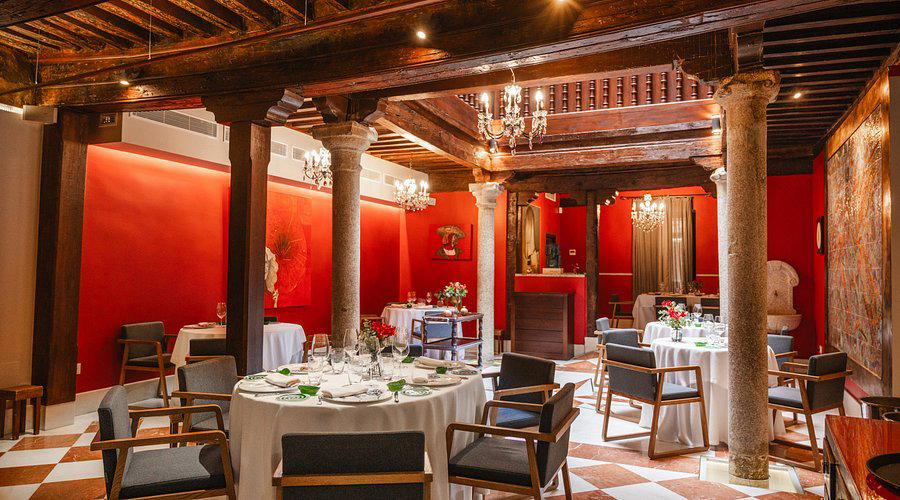
Elegant dining room with traditional tiles, wood paneling, coffered ceilings, and a gorgeous courtyard, offering a warm, historic atmosphere.