

The Madrid outpost of a Mexican hotel group with over fifty years in operation, El Bajío brings regional Mexican cooking to the Salamanca district with a Michelin Plate and a menu overseen by las mayoras, the custodian cooks who preserve traditional flavour across Mexico's states. Panuchos yucatecos, prawn molcajete, and sea bream with green pepián salsa anchor an à la carte calibrated for Spanish palates without conceding authenticity.
Pearl is the En Primeur Club membership app — saves, bookings, and concierge access live there. Same editors, same standards.
- Address
- Calle de Juan Bravo, 23, Salamanca, 28006 Madrid, Spain
- Phone
- +34 659 05 15 92
- Website
- elbajio.es
- Directions
- Get directions
 Saves & bookings on Pearl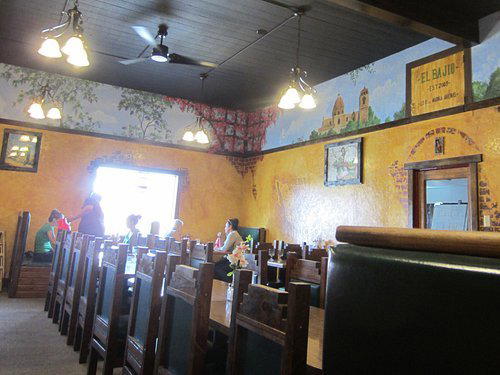
Where Regional Mexico Lands in Madrid's Most Polished Neighbourhood
Salamanca is Madrid's most formally dressed dining quarter, a grid of wide streets where expense-account lunches and well-heeled neighbourhood regulars keep restaurants at a certain register. Mexican food has found a confident foothold in the city, with Barracuda MX and Tepic representing the sharper, more contemporary end of the spectrum, and Ticuí operating in the mid-to-fine range. El Bajío, on Calle de Juan Bravo 23, sits in a different position from all of them: it is the European flagship of a Mexican hospitality group that has been running for more than half a century, and it carries institutional weight that newer arrivals cannot replicate.
The name itself is a geographic statement. El Bajío refers to the lowland plateau region in central Mexico that spans multiple states, Guanajuato, Querétaro, Michoacán, Jalisco in part, an area historically significant for agriculture, silver, and the dense layering of pre-Columbian and colonial food culture. Naming a restaurant after a region rather than a chef or concept signals an orientation toward breadth and tradition over personal expression, and the menu bears that out.
The Role of las Mayoras
In Mexican culinary tradition, the concept of las mayoras, senior women cooks who hold institutional memory of regional technique and flavour, functions as a quality-control mechanism that no recipe card can fully substitute. El Bajío explicitly invokes this tradition: the kitchen is overseen by these custodian figures, whose role is to ensure that the cooking does not drift toward the generic or the simplified. This matters in an export context, where Mexican food frequently gets compressed into a narrower register to suit local expectations. At El Bajío, the Michelin Plate recognition in 2025 suggests the inspectors found the kitchen meeting a standard of technical and authentic integrity, not just offering competent approximation.
For the broader Madrid dining scene, which already contains serious operators at the leading end, including DiverXO at three Michelin stars and Coque at two, a Michelin Plate is a signal of quality without the tasting-menu formality. The restaurant operates à la carte at a €€ price point, making it one of the more accessible Michelin-recognised addresses in the city.
Fire, Smoke, and the Architecture of Mexican Cooking
The editorial angle that most honestly frames the restaurant's menu is not fusion or adaptation, it is the underlying fire-and-smoke logic that runs through regional Mexican cuisine. Barbacoa, the slow-cooked technique that uses underground heat and steam wrapped in maguey leaves, is one expression. Al pastor, which arrived via Lebanese immigrants and transformed spit-roasting into a Mexican vernacular, is another. The molcajete, a volcanic stone mortar used both as a cooking vessel and a serving dish, often presented with ingredients still simmering from direct heat, is a third. These are not decorative references to tradition; they are structural cooking methods that require genuine skill and the right sourcing to execute.
The prawn molcajete on the restaurant's menu places that technique front and centre. The vessel arrives superheated, continuing to cook and concentrate the ingredients at the table, a format that requires timing and calibration, not just recipe adherence. The huarache, a thick oval of masa cooked on a comal until the exterior crisps and the interior remains soft, is another dish where technique determines quality. Get the heat wrong and the masa turns dense; get it right and the contrast is the point.
Reading the Menu Against Its Region
Panuchos yucatecos situate the kitchen in a specific Mexican geography. Panuchos are Yucatán's contribution to the broader tortilla tradition: corn tortillas filled with black bean paste and fried until they puff, then topped with ingredients like cochinita pibil or turkey. The fact that restaurant offers these alongside dishes rooted in central Mexican tradition reflects the restaurant's founding premise, the Bajío region as a node connecting multiple Mexican culinary lineages, not a single-state kitchen.
Sea bream with green pepián salsa is the menu item that most directly addresses Spanish palates. Pepián, a sauce built on ground seeds, typically pumpkin seeds, sometimes sesame, with chillies and herbs, has pre-Columbian roots and carries a nuttiness and body that reads differently from tomato-based salsas. Applying it to sea bream, a fish familiar to Spanish diners from their own cuisine, creates a bridge point without diluting either tradition. This is menu design, not compromise.
For those interested in how Mexican cooking translates across contexts, comparison with Pujol in Mexico City, Enrique Olvera's reference-point restaurant, and Alma Fonda Fina in Denver illustrates how the same culinary heritage lands differently depending on audience, ambition, and available ingredients. The restaurant's approach is institutional rather than avant-garde, which is appropriate for a group with fifty-plus years of operation behind it.
Salamanca as Context
The Salamanca district runs at a different rhythm from the tapas-bar density of La Latina or the late-night energy of Malasaña. Lunch here is unhurried and often long; the clientele tends toward professionals and residents rather than tourists. The restaurant at a €€ price point sits in the middle of the neighbourhood's restaurant range, well below the high-end Spanish creative kitchens but above the casual end. It functions as the kind of address where a two-hour lunch is neither unusual nor rushed.
Madrid's wider dining scene extends far beyond Mexican food. Across Spain, the Michelin tier that restaurant sits just beneath includes addresses like Aponiente in El Puerto de Santa María, Arzak in San Sebastián, Azurmendi in Larrabetzu, Cocina Hermanos Torres in Barcelona, El Celler de Can Roca in Girona, and Martin Berasategui in Lasarte-Oria, all operating at higher price tiers. The restaurant occupies a different register: recognised, affordable, and rooted in a culinary tradition that most of those kitchens do not touch.
Planning a Visit
The restaurant is on Calle de Juan Bravo 23 in the Salamanca district, a short walk from the Núñez de Balboa and Velázquez metro stations. At a €€ price point with an à la carte format, the bill for two with drinks sits comfortably below the tasting-menu spend of Madrid's starred addresses. Advance booking is advisable for weekend lunch, when Salamanca's dining rooms fill early.
Frequently Asked Questions
What should I eat at the restaurant?
The menu is built around dishes rooted in specific Mexican regional traditions. The prawn molcajete, served in a superheated volcanic stone vessel, is one direct expression of the kitchen's fire-and-technique approach. The panuchos yucatecos demonstrate the Yucatán strand of the kitchen's range, while the sea bream with green pepián salsa bridges Mexican technique and ingredients familiar to Spanish palates. The huarache rounds out the masa-based section. The 2025 Michelin Plate recognition and the oversight of las mayoras together indicate that these are executed with fidelity to their source traditions, not simplified for export.
Can I walk in to the restaurant?
The restaurant operates à la carte at a €€ price point, which places it below the booking pressure of Madrid's starred tasting-menu restaurants. That said, Salamanca's lunch trade is consistent and the restaurant's. For weekday lunch, walk-in may be feasible; for Saturday lunch or Friday evening, a reservation is the safer approach.
What has the restaurant built its reputation on?
The restaurant's reputation rests on two connected foundations: the institutional depth of the hotel group behind it, which has operated in Mexico for over fifty years, and the kitchen structure built around las mayoras, senior women cooks who maintain fidelity to traditional Mexican flavour. The restaurant's 2025 Michelin Plate confirms that this approach meets an externally verified standard of quality. In a Madrid market where Mexican restaurants range from casual to creative-contemporary, the restaurant occupies the position of the establishment address: broad in regional reference, consistent in execution, and oriented toward tradition over novelty.
The Essentials
Comparable venues nearby, for context on price, style, and recognition.
| Venue | Cuisine | Price | Notes |
|---|---|---|---|
| El BajíoThis venue — the venue you are viewing | Mexican | $$$ | Not listed |
| Barracuda MX | Jeronimos, Modern Pacific Mexican | $$$ | Not listed |
| Alcotán | Not listed | $$$ | Castellana, Traditional Spanish with Basque and Navarrese Influences |
| Lakasa | Not listed | $$$ | Rios Rosas, Modern Spanish Market Cuisine |
| BANCAL | Not listed | $$$ | El Viso, Modern Spanish Fire-Grilled Cuisine |
| Rocacho Plaza | Not listed | $$$ | Hispanoamerica, Spanish Grill & Mediterranean |
Recognition history
Dated appearances from independent guides and award organizations, with the underlying list record or original source where available.
Macarfi 7.5 Food Rating
Macarfi
Michelin Plate
Michelin
Michelin Plate
Michelin
Continue exploring
More in Madrid
Restaurants in Madrid
Browse all →
Bars in Madrid
Browse all →
Hotels in Madrid
Browse all →


At a Glance
- Elegant
- Cozy
- Modern
- Rustic
- Date Night
- Group Dining
- Special Occasion
- Open Kitchen
- Craft Cocktails
Current opening hours
- Monday
- 1–5 PM, 8 PM–12 AM
- Tuesday
- 1–5 PM, 8 PM–12 AM
- Wednesday
- 1–5 PM, 8 PM–12 AM
- Thursday
- 1 PM–1 AM
- Friday
- 1 PM–1 AM
- Saturday
- 1 PM–1 AM
- Sunday
- 1–5:30 PM
Hours can change for holidays and private events. Last verified .
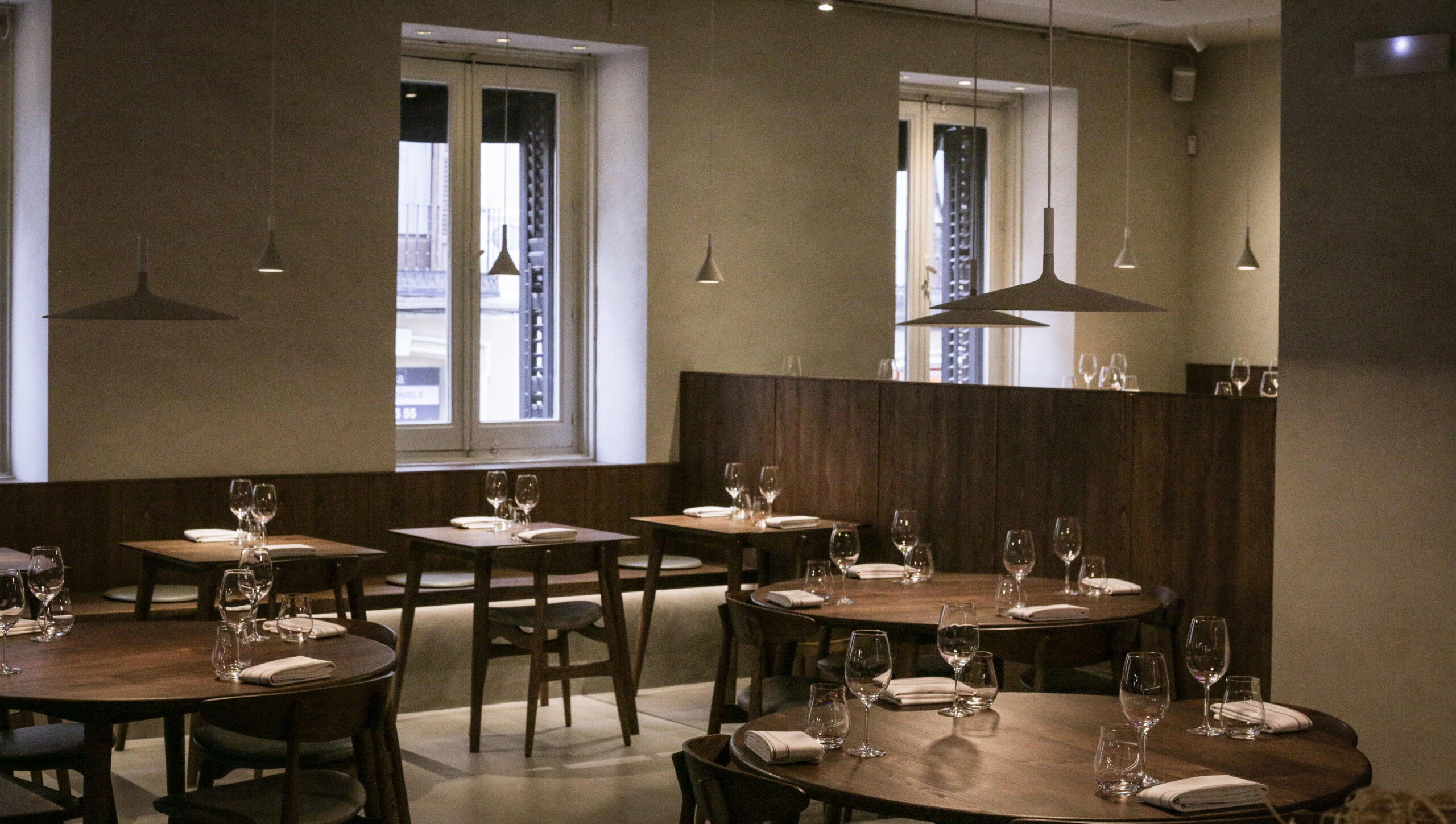
Elegant and spacious with modern wood decor in neutral tones, Aztec motifs, pleasant lighting that's somewhat dark creating privacy, full yet serene atmosphere.