El Adobe de Capistrano
Our verdict
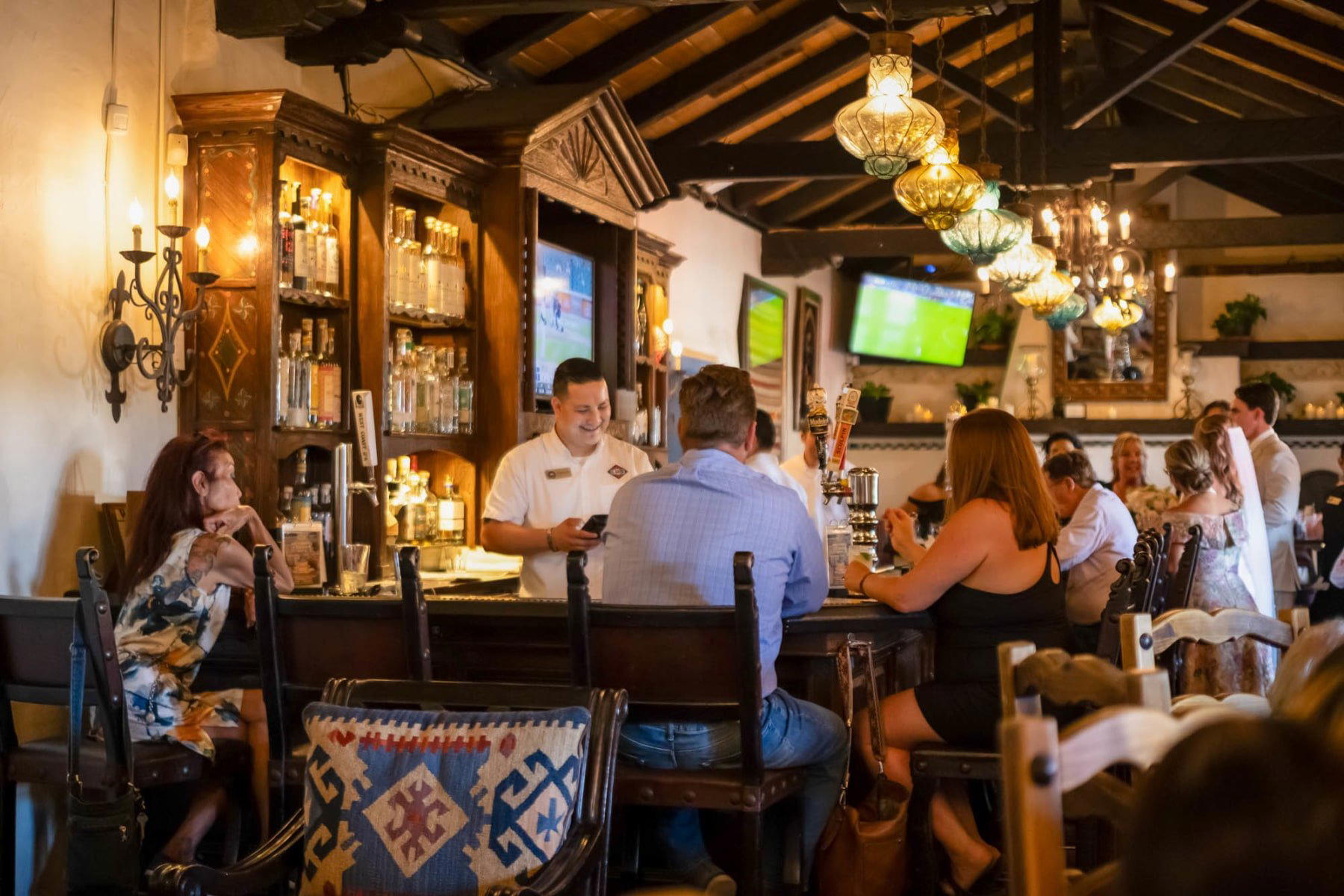
El Adobe de Capistrano sits on Camino Capistrano in San Juan Capistrano, occupying a historic adobe structure that anchors the town's culinary identity. The restaurant draws on Southern California's deep Mexican culinary tradition, serving a community that has gathered here across generations. For visitors exploring the Mission District, it functions as both a dining destination and an orientation point for the town itself.

Pearl is the En Primeur Club membership app, where members save venues, book tables and use the concierge.
The menu
What to order
- Lobster Tacos
- Crab Enchiladas
- El Adobe Molcajete
Where Mission History Meets the Dining Table
The stretch of Camino Capistrano running through San Juan Capistrano's historic core tells a story in buildings: Spanish Colonial adobe walls, tile roofwork, and courtyards that predate California statehood. El Adobe de Capistrano occupies one of the more recognizable structures along this corridor, a property whose physical fabric connects it to the region's pre-American past in ways that newer dining rooms cannot replicate. In a town where the Mission San Juan Capistrano draws visitors looking for historical grounding, the restaurant functions as a parallel anchor, not a museum piece, but a working dining room that carries the weight of its address.
Southern California's mission towns developed a particular relationship with Mexican cuisine that differs from what you encounter in Los Angeles or San Diego. The food here traces lines back to Alta California ranchos rather than to urban immigrant communities, producing a register that tends toward older preparations: slow-cooked meats, dried chiles rehydrated into sauces with depth, corn in forms that predate the flour tortilla's dominance along the border. This is the culinary tradition that properties like El Adobe de Capistrano have historically represented, and it remains the most direct argument for the restaurant's relevance in a town that now also has wine bars, farm-to-table cafes, and craft barbecue operations.
The Sourcing Context: Southern California's Agricultural Corridor
San Juan Capistrano sits inside one of California's most productive agricultural zones. Orange County's southern edge transitions into the farming communities of Camp Pendleton's periphery, while the Santa Ana Mountains to the east have historically supplied game and forage. The broader corridor connecting Capistrano to San Diego's agricultural hinterland means that restaurants operating here have access to the same supply chains that feed operations like Addison in San Diego and Providence in Los Angeles, though those kitchens deploy those inputs through a very different technical register.
The ingredient sourcing story in Mexican-lineage restaurants differs from what drives the editorial conversation at properties like Blue Hill at Stone Barns in Tarrytown or Single Thread Farm in Healdsburg, where the provenance of each ingredient is the explicit subject of the menu. In traditional California-Mexican cooking, sourcing has always mattered, but it matters in a different register: the quality of the dried chile, the fat content of the pork, the age and grind of the corn. These are not glamorous supply chain stories, but they are exacting ones. Restaurants that maintain standards in this category do so quietly, and the results show in sauce depth and protein texture rather than in menu annotation.
This context positions El Adobe de Capistrano within a specific subset of Southern California dining: establishments whose ingredient commitments operate below the visibility threshold of the farm-name-dropping menus that dominate the region's critical conversation, but whose outputs depend on those commitments just as heavily.
San Juan Capistrano's Dining Character
The town's restaurant scene has stratified meaningfully over the past decade. A visitor can now move between Ramos House Cafe, which operates as one of the more serious breakfast and brunch addresses in Orange County, Heritage Barbecue, which has built a following with a regionally-aware Texas-style program, and newer arrivals like Mayfield and Sundried Tomato Cafe that address different moments and registers. Five Vines Wine Bar has added a wine-focused layer to the evening options. Together, these form a dining ecosystem that can hold a visitor's attention across multiple meals without repetition.
Within this context, El Adobe de Capistrano occupies a distinct position: it is the restaurant most directly tied to the town's pre-tourism identity, the one that existed before San Juan Capistrano became a day-trip destination from Los Angeles and San Diego. That longevity carries its own form of authority, separate from the credentials being built by newer operators in the area.
Compared to the more technique-forward establishments that define critical conversation at the national level, operations like Smyth in Chicago, Lazy Bear in San Francisco, or Atomix in New York City, El Adobe operates in a completely different register. The comparison is not useful for evaluating what the restaurant does well. More instructive is to place it alongside California's regionally-anchored dining tradition, which at its serious end includes operations like The French Laundry in Napa and Atelier Moessmer Norbert Niederkofler in Brunico in how they connect food to place, though El Adobe makes that connection through history and continuity rather than through technical innovation.
Planning Your Visit
El Adobe de Capistrano is located at 31891 Camino Capistrano, placing it within walking distance of the Mission San Juan Capistrano and the Los Angeles to San Diego Amtrak corridor. The San Juan Capistrano train station, served by both Metrolink and Amtrak Pacific Surfliner, is a short walk from the restaurant, making it accessible from both Los Angeles and San Diego without a car. For visitors building a day around the Mission district, the restaurant sits naturally within the same pedestrian radius as the town's primary historic sites. Phone contact and current hours are best confirmed directly with the venue or via the address above, as operational details are subject to change. See our full San Juan Capistrano restaurants guide for broader context on the town's dining options.
Frequently asked questions
Is El Adobe de Capistrano suitable for children?
The setting at 31891 Camino Capistrano, within walking distance of Mission San Juan Capistrano, draws a broad cross-section of visitors including families touring the historic district. The adobe architecture and heritage context make it a natural stop for those already exploring the area with children.
Is El Adobe de Capistrano better for a quiet night or a lively one?
El Adobe de Capistrano sits on Camino Capistrano in San Juan Capistrano's historic core, a stretch that carries both tourist foot traffic and local regulars. The Spanish Colonial adobe structure tends to lend itself to a grounded, mid-tempo atmosphere rather than anything overtly high-energy.
How does El Adobe de Capistrano's location compare to other dining options near Mission San Juan Capistrano?
At 31891 Camino Capistrano, El Adobe de Capistrano is one of the few dining establishments positioned directly within the mission-adjacent historic district rather than the broader town. San Juan Capistrano's restaurant scene now includes operators like Ramos House Cafe working at a recognized culinary level, which means the local dining tier has genuinely stratified over the past decade. El Adobe's proximity to the Mission San Juan Capistrano and the Los Angeles to San Diego rail corridor makes it a practical anchor for visitors arriving without a car.
What's the must-try dish at El Adobe de Capistrano?
San Juan Capistrano sits within one of Southern California's most productive agricultural corridors, and restaurants along this stretch of Orange County's southern edge have historically drawn on that proximity. For the most current menu guidance, checking directly with the restaurant before your visit is the reliable approach.
Where is El Adobe de Capistrano located?
El Adobe de Capistrano is located at 31891 Camino Capistrano, San Juan Capistrano, CA 92675, San Juan Capistrano.
What's the best way to book El Adobe de Capistrano?
The venue is located at 31891 Camino Capistrano, San Juan Capistrano, CA 92675, and walk-in availability may be an option depending on the day and season. Third-party reservation platforms covering the Orange County dining market are worth checking as an alternative booking route.
What has El Adobe de Capistrano built its reputation on?
El Adobe de Capistrano has built its standing on location and setting as much as plate: it occupies a historic adobe structure on Camino Capistrano, placing it inside San Juan Capistrano's Spanish Colonial heritage corridor steps from one of California's most visited missions. That physical context, rare in Southern California dining, gives the restaurant a grounding most Orange County venues cannot replicate.
How It Stacks Up
| Venue | Cuisine | Price | Awards | Notes |
|---|---|---|---|---|
| El Adobe de CapistranoThis venue (the venue you are viewing) | Authentic Mexican | $20–30 | Not listed | Not listed |
| Heritage Barbecue | Texas-Style Barbecue | $20–30 | Michelin Bib Gourmand · James Beard Award Semi Finalist | Barbecue |
| Five Vines Wine Bar | American Wine Bar Small Plates | $30–50 | Star Wine List | Not listed |
| Mayfield | Modern Levantine-Californian | $50–100 | Star Wine List | Not listed |
| Ramos House Cafe | Contemporary American Cafe with Southern Brunch | $30–50 | Not listed | Not listed |
| Sundried Tomato Cafe | New American Bistro | $30–50 | Not listed | Not listed |
Continue exploring
More in San Juan Capistrano
Restaurants in San Juan Capistrano
All restaurants in San Juan Capistrano →
Bars in San Juan Capistrano
Browse all →
Hotels in San Juan Capistrano
Browse all →
Wineries in San Juan Capistrano
Browse all →
Details
- Historic
- Rustic
- Well Known
- Family
- Celebration
- Casual Hangout
- Historic Building
- Private Dining
- A La Carte
- Vegetarian Friendly
- Vegan Options
- Gluten Free Options
Current opening hours
- Monday
- 11 AM–9 PM
- Tuesday
- 11 AM–9 PM
- Wednesday
- 11 AM–9 PM
- Thursday
- 11 AM–9 PM
- Friday
- 11 AM–9 PM
- Saturday
- 11 AM–9 PM
- Sunday
- 10 AM–9 PM
Hours can change for holidays and private events. Hours as of .
Warm, rustic atmosphere in a historic adobe building with classic Mexican charm.