Eatsie Boys (Food Truck)
Our verdict
Houston's food truck scene has long operated as a proving ground for serious cooking, and Eatsie Boys at 2202 Dallas St sits within that tradition. The truck draws on a cross-cultural approach to street food that reflects Houston's broader culinary character: ambitious flavors, informal format, and a refusal to treat mobility as a limitation. For visitors mapping the city's dining range, it belongs on the itinerary alongside the fixed-address rooms.
The menu
What to order
- No Sleep Til Philly
- S.L.A.B. Fries
- Pork Snuggies
Street Level in a City That Takes Food Seriously
Houston's relationship with food trucks is not the same as other American cities. In Los Angeles, trucks tend to cluster around entertainment and tech corridors. In New York, they fill midtown lunch gaps. Eatsie Boys, operating from 2202 Dallas St in the EaDo district, belongs to that tradition. The truck arrived during a period when Houston's food culture was being taken seriously by national publications for the first time, and its location in a neighborhood that sits between downtown and the historically industrial east side places it squarely in the geography of that shift.
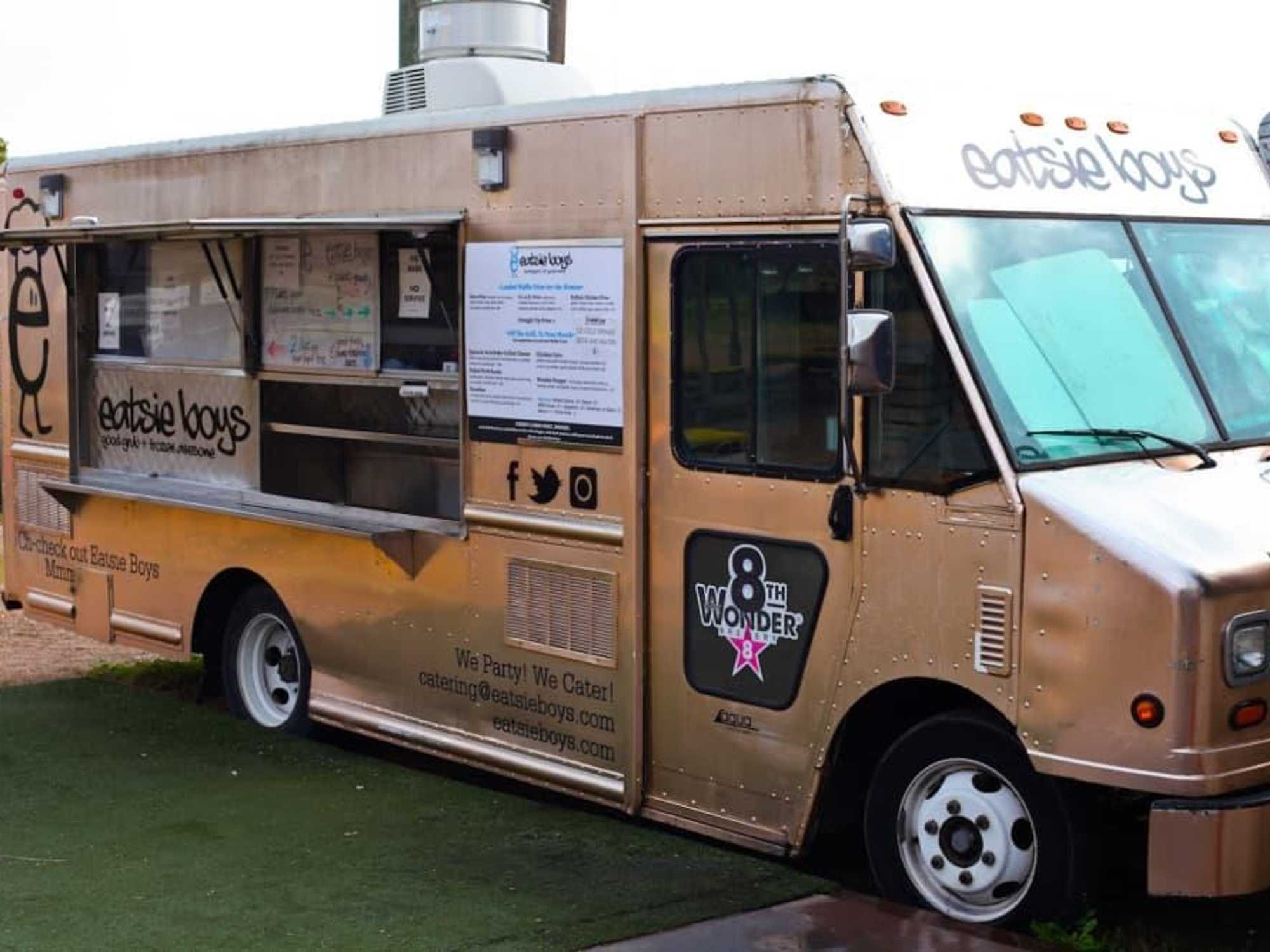
Approaching the truck, the experience is characteristically Houston: open sky, parking lot asphalt, the ambient hum of a city that does not perform urbanity for visitors. There is no maitre d', no reservation text, no choreographed arrival. What you find instead is a counter, a menu board, and cooking that situates itself somewhere between American diner comfort and the kind of cross-cultural flavor logic that defines Houston eating at its most honest. For context on where this sits within Houston's wider dining range, our full Houston restaurants guide maps both the street-level and fine-dining tiers across the city's neighborhoods.
The Cultural Logic of the Houston Food Truck
Houston is the most ethnically diverse large city in the United States, a fact that shapes what gets cooked here and how ingredients are combined. The food truck format, low barrier to entry and highly mobile, has historically allowed that diversity to express itself at street level in ways that fixed restaurants sometimes cannot. Vietnamese-Cajun crawfish, Korean-Mexican fusion, and West African-inflected Southern cooking have all found early footing in Houston's truck and pop-up circuit before moving into brick-and-mortar spaces. Eatsie Boys operates within this context, applying a fusion-oriented sensibility that is less a novelty act and more a logical response to the ingredient landscape and palate expectations of the city it serves.
That cross-cultural approach to street food has parallels across the American dining scene, but in Houston it carries specific weight. The city's food truck movement is not a gentrification accessory or a millennial lifestyle brand; it is a direct expression of a population that cooks from multiple traditions simultaneously. Comparing this to the more curated, event-circuit truck culture in cities like San Francisco, where venues like Lazy Bear began as a pop-up before hardening into a tasting menu institution, Houston's truck scene has tended to stay closer to its street-food roots rather than using mobility as a launchpad for formality.
EaDo and the Neighborhood That Shapes the Experience
EaDo, short for East Downtown, is one of Houston's most instructive neighborhoods for reading the city's current food moment. It sits at the intersection of older working-class Houston and newer creative-economy investment, which means the dining options range from long-standing taquerias to recently opened chef-driven rooms. The presence of a food truck like Eatsie Boys at this address is not accidental. The neighborhood's physical character, wide streets, converted warehouses, and an absence of the manicured streetscaping found in Montrose or the Heights, suits a format that depends on foot traffic, event proximity, and a customer base comfortable eating outdoors or perched on a tailgate.
This contrasts with the more formal dining rooms operating elsewhere in Houston. March, with its Venetian-influenced tasting menu, and Musaafer, which approaches Indian regional cooking at a high price point, occupy a completely different register of the city's dining spectrum. So does the Spanish-focused BCN Taste & Tradition, or the French precision of Le Jardinier Houston. The masa-driven Tatemó gestures closer to the informal end, but even it operates from a fixed address. Eatsie Boys represents the tier of Houston eating where ambition and accessibility coexist without apology.
What the Truck Format Demands of the Cooking
Food truck cooking imposes disciplines that restaurant cooking does not. The menu must be executable in a small space with limited equipment, which means fewer components, tighter mise en place, and a reliance on bold flavors that hold from window to first bite. This constraint tends to produce either lazy simplification or genuine refinement: dishes stripped to their essential elements because the format demands it. The leading truck cooking in American cities has always understood that constraint as a creative asset rather than a limitation. The same principle operates at different price points across the national dining scene, from the approachable end of the spectrum to Michelin-recognized rooms like Le Bernardin in New York City, The French Laundry in Napa, or Providence in Los Angeles, where constraint takes the form of seasonal sourcing or singular technique rather than physical space.
At the truck level, what matters most is consistency and identity. A truck that tries to be everything fails faster than a brick-and-mortar, because there is no atmosphere to compensate for an inconsistent plate. Eatsie Boys built its reputation on a voice that was recognizable: irreverent in name, considered in execution, and planted in Houston's cross-cultural food logic rather than any single tradition. That positioning has allowed it to maintain relevance in a city where new openings arrive constantly and the dining conversation moves fast.
Planning Your Visit
Food trucks in Houston are subject to event calendars, private bookings, and seasonal shifts in location that can affect availability. The 2202 Dallas St address in EaDo serves as the primary fixed point, but confirming the day's schedule before arrival is standard practice for this format across all American cities. There is no reservation system and no dress code; the format is first-come, counter-service. Parking in EaDo is generally available on surrounding streets and in surface lots, which is consistent with the neighborhood's lower density compared to Midtown or downtown proper.
For visitors building a broader Houston itinerary that moves across price tiers and neighborhood contexts, the city's dining range runs from truck and taqueria level through the mid-market rooms that have drawn national attention, such as the contemporary American cooking at Theodore Rex, up to the full tasting menu commitments at March or the kind of institution-grade cooking found at Emeril's in New Orleans or Smyth in Chicago as reference points for the region's fine dining tier. Placing Eatsie Boys on that map means recognizing it not as a footnote but as a distinct layer of what makes Houston's food culture worth taking seriously.
Frequently asked questions
What's Eatsie Boys (Food Truck)'s location?
Eatsie Boys (Food Truck) is located at 2202 Dallas St, Houston, TX 77003, Houston.
How does Eatsie Boys fit into Houston's broader food truck scene compared to traditional restaurants?
Houston's food truck culture differs from cities like Los Angeles or New York in that trucks here compete directly with a restaurant scene shaped by genuine culinary diversity, not trend cycles. Eatsie Boys, based in EaDo at 2202 Dallas St, sits within that competitive environment, which means the cooking has to hold up against the full range of what Houston produces at street level. The truck format forces a tighter, more repeatable menu than most restaurant kitchens operate, which is part of how street-level operators in this city build long-term credibility.
What's the must-try dish at Eatsie Boys (Food Truck)?
What is clear is that Eatsie Boys operates within Houston's EaDo district, a neighborhood where the city's ethnic diversity directly influences what gets cooked and how. Check the truck's current social channels for the live menu before visiting 2202 Dallas St.
Is Eatsie Boys (Food Truck) reservation-only?
Food trucks operate on a walk-up model by format, and Eatsie Boys at 2202 Dallas St follows that same structure. No advance booking is required or expected. Hours and current location should be confirmed through the truck's social media before making the trip to EaDo.
What has Eatsie Boys (Food Truck) built its reputation on?
Eatsie Boys has earned its standing in Houston's food truck circuit by operating in EaDo, one of the city's most culturally layered districts, where the cooking reflects Houston's status as the most ethnically diverse large city in the United States. The truck format itself demands menu discipline and consistency that many brick-and-mortar kitchens don't face. That combination of neighborhood context and format-imposed precision defines how the truck is regarded locally.
A Quick Peer Check
| Venue | Cuisine | Price | Awards | Notes |
|---|---|---|---|---|
| Eatsie Boys (Food Truck)This venue (the venue you are viewing) | Gourmet American Comfort Food | Not listed | Not listed | Not listed |
| Musaafer | Modern Indian Fine Dining | $100–150 | 1 Michelin Star | Indian |
| March | Modern Mediterranean Tasting | $200–300 | 1 Michelin Star · Star Wine List | Venetian |
| Nancy's Hustle | Modern American Bistro | $50–100 | Michelin Bib Gourmand | Not listed |
| Theodore Rex | Modern American Small Plates | $50–100 | Michelin Bib Gourmand · Resy Best of the Hit List | Not listed |
| Hidden Omakase | Modern Japanese Omakase | $150–200 | Michelin Plate | Not listed |