Dorangeville

Michelin Plate
Our verdict
A Michelin Plate recipient in 2024 and 2025, Dorangeville occupies a medieval address in Ainay-le-Château, bringing modern cuisine to one of the Allier's quieter market towns.

Pearl is the En Primeur Club membership app — saves, bookings, and concierge access live there. Same editors, same standards.
- Address
- 3 Rue du Vieux Château, 03360 Ainay-le-Château, France
- Phone
- +33 4 70 64 18 48
- Hours
- Mon–Tue 12–1:30 PMWed ClosedThu 12–1:30 PMFri–Sat 12–1:30 PM, 7–8:30 PMSun 12–1:30 PM
- Website
- dorangeville.fr
- Directions
- Get directions
- Booking
- Book on the venue's website
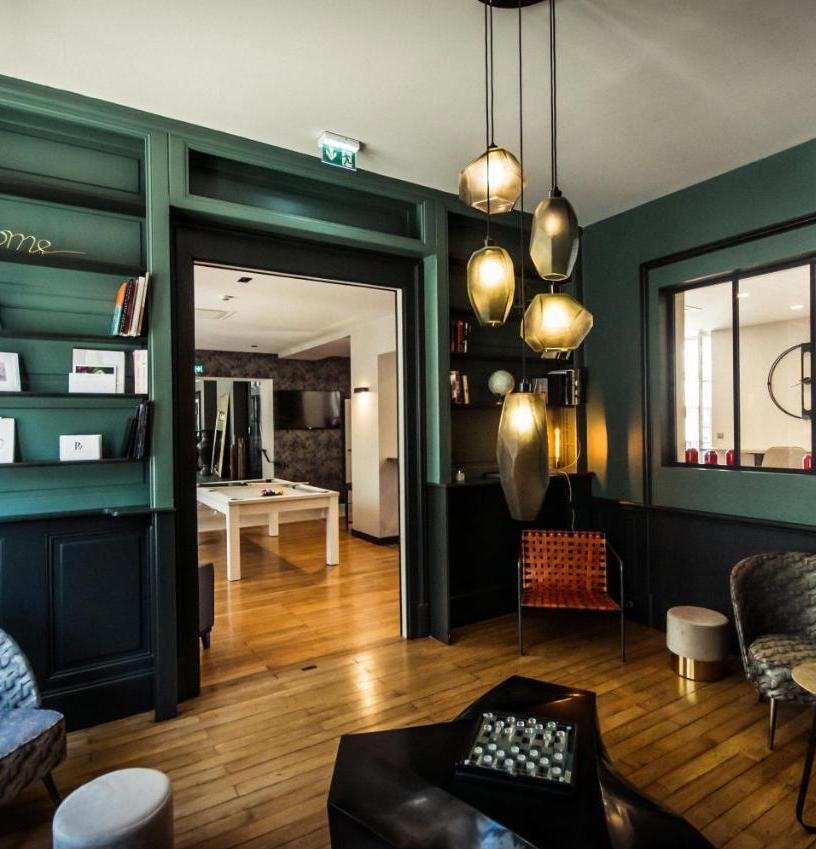
Dining in the Allier: Where Provenance Defines the Plate
France's restaurant geography has long operated on an understood hierarchy: the grandes tables cluster around Paris, Lyon, and a handful of destination villages, while the rural centre holds its own quieter tradition. The Allier department sits in that middle band, an area where farming, river culture, and a low-profile tourism economy have produced a food culture rooted in what the land actually yields rather than what a marketing brief demands. It is into this context that Dorangeville at 3 Rue du Vieux Château, Ainay-le-Château, earns its place as a genuine point of reference for the region's modern cuisine category.
The address says something before you open the door. Rue du Vieux Château runs alongside the remnants of Ainay-le-Château's medieval fortifications, a small town in the northern Allier whose compact centre has changed shape slowly over centuries. Arriving on a market day, you pass stalls selling local charcuterie and Bourbonnais cheeses before reaching the restaurant's frontage, which offers no theatrical contrast to its surroundings. The building is of the town, not imposed upon it. That calibration of setting matters when the food is framed around what the surrounding territory produces.
Modern Cuisine in a Regional Key
The modern cuisine category in France covers considerable ground. At one end sit the technically maximalist kitchens of Paris, where Alléno Paris au Pavillon Ledoyen works at a scale and investment level that effectively belongs to a different industry. At the other, destination-driven rural addresses like Bras in Laguiole or Auberge du Vieux Puits in Fontjoncouse have built international reputations on the logic that the most persuasive cooking comes from a precise and committed relationship with a specific territory. Dorangeville's Michelin Plate recognition in both 2024 and 2025 places it within the latter tradition: not the spectacle of Mirazur in Menton, but the quieter, territorially honest register that has always been France's most durable contribution to the way serious cooking is understood globally.
Michelin Plate is awarded for cooking of quality, a recognition that sits below the starred levels but signals that inspectors have found the food worth the detour. Two consecutive years of that recognition, in 2024 and 2025, confirms consistency rather than a single strong performance. In a town the size of Ainay-le-Château, that consistency is logistically notable: supply chains are shorter, the seasonal calendar is less forgiving, and the kitchen has fewer options to paper over a weak link in the sourcing. It is that constraint, in practice, that tends to produce the most ingredient-honest cooking. The regions around the Allier supply Charolais beef, freshwater fish from the Loire tributary system, and a strong tradition of artisan cheesemaking. A kitchen working at the Michelin Plate level in this geography is, by necessity, making decisions about provenance that a Paris restaurant can defer to its purchasing team.
Why Ingredient Sourcing Shapes This Address
Editorial angle that leading explains a restaurant like Dorangeville is not the chef's biography or the room's aesthetic. It is the relationship between a kitchen committed to modern technique and a supply base that is, by the standards of France's larger food cities, both narrow and high quality. The Bourbonnais plateau and the valley floors around Ainay-le-Château produce ingredients that rarely travel far in their leading form. Charolais cattle are raised within reach. The Cher and Allier rivers historically supported freshwater fishing cultures. Seasonal vegetables from small-scale producers in the area operate on different timelines than those supplying large urban markets.
Modern cuisine, when applied to this kind of regional pantry, produces something distinct from the same category label applied in a capital city. The techniques of contemporary French cooking, whether that involves controlled temperature preparations, reductive saucing, or the kind of textural contrast work seen at addresses like Flocons de Sel in Megève, operate here in a narrower seasonal window and with less margin for substitution. The result, when it works, is that the sourcing decisions are visible in the food in a way they rarely are when a kitchen has access to the full breadth of a wholesale market.
Placing Dorangeville in the Wider French Scene
France's provincial modern cuisine circuit has produced some of its most coherent restaurants outside the metropolitan centres. Troisgros in Ouches is the Allier's most internationally documented case, a restaurant that made a deliberate move from Roanne to a rural property and reconfigured its sourcing model around the new location. Auberge de l'Ill in Illhaeusern demonstrates how an Alsatian river setting can anchor a restaurant's identity across decades. Paul Bocuse's Auberge du Pont de Collonges remains the defining statement that French provincial cooking at its most committed requires no metropolitan validation.
Dorangeville does not operate in that tier of international recognition, and nothing about its current profile suggests it is positioning itself there. What it represents instead is the functioning middle of France's restaurant ecology: a kitchen doing serious work at the €€€ price point in a small town, holding Michelin attention across multiple years, and maintaining the kind of guest satisfaction scores that suggest the experience is being delivered reliably. For a traveller approaching the Allier from the north, on the way between the Loire châteaux and Lyon, or as a destination in itself for those covering the Bourbonnais, it is a meaningful stop that the broader circuit does not surface easily. That is its editorial value.
Planning Your Visit
Ainay-le-Château sits in the northern Allier, reachable by car from Moulins (approximately 50 kilometres to the south) or from Bourges to the northwest. The town itself is small enough that the restaurant at 3 Rue du Vieux Château is found quickly on foot from any point in the centre. At the €€€ price level, Dorangeville sits in the same bracket as confident regional restaurants across France, above the brasserie tier and below the destination-starred addresses like Assiette Champenoise in Reims or AM par Alexandre Mazzia in Marseille. No booking contact details are currently listed, so arriving with a reservation made in advance through local channels is advisable. Given the town's scale and the restaurant's consistent recognition, tables on weekend evenings fill earlier than the address's profile might suggest to first-time visitors.
For context on the broader Ainay-le-Château area, see our full Ainay-le-Château restaurants guide, our hotels guide, our bars guide, our wineries guide, and our experiences guide. For broader comparison within modern cuisine across France and Europe, Au Crocodile in Strasbourg and Frantzén in Stockholm offer useful reference points for how the category operates at different scales and ambitions, as does FZN by Björn Frantzén in Dubai for its export model of the same tradition.
Frequently asked questions
What's the price range at Dorangeville?
Pricing at Dorangeville is listed as €€€.
What's the address for Dorangeville?
Dorangeville is located at 3 Rue du Vieux Château, 03360 Ainay-le-Château, France, Ainay-le-Château.
Quick Comparison
| Venue | Cuisine | Awards |
|---|---|---|
| DorangevilleThis venue — the venue you are viewing | French Bistro | Michelin Plate |
| Alléno Paris au Pavillon Ledoyen | Creative | Michelin 3 Star |
| Kei | Contemporary French, Modern Cuisine | Michelin 3 Star |
| L'Ambroisie | French, Classic Cuisine | Michelin 3 Star |
| Le Cinq - Four Seasons Hôtel George V | French, Modern Cuisine | Michelin 3 Star |
| Plénitude | Contemporary French | Michelin 3 Star |
Recognition history
Dated appearances from independent guides and award organizations, with the underlying list record or original source where available.
Michelin Plate
Michelin
Full recognition history (3 entries)
Michelin Plate
Michelin
Michelin Plate
Michelin
Continue exploring
More in Ainay-le-Château
Restaurants in Ainay-le-Château
Browse all →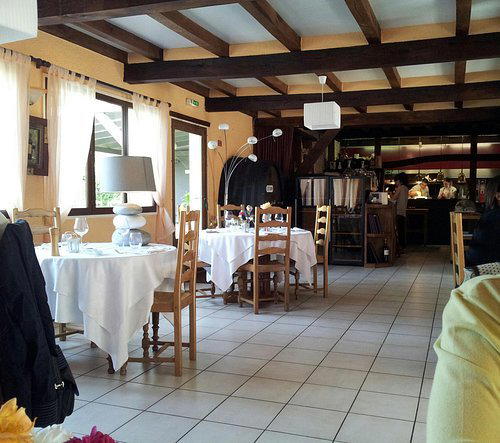
Hotels in Ainay-le-Château
Browse all →
Details
- Special Occasion
- A La Carte
Current opening hours
- Monday
- 12–1:30 PM
- Tuesday
- 12–1:30 PM
- Wednesday
- Closed
- Thursday
- 12–1:30 PM
- Friday
- 12–1:30 PM, 7–8:30 PM
- Saturday
- 12–1:30 PM, 7–8:30 PM
- Sunday
- 12–1:30 PM
Hours can change for holidays and private events. Last verified .