Donabe
Donabe sits on the South Bank at Belvedere Road, SE1, bringing the Japanese tradition of donabe clay-pot cooking to one of London's most-trafficked riverside stretches. The format positions it within a growing tier of London restaurants that foreground a single culinary technique rather than broad-menu eclecticism. Wine and drink pairing here follows the same focused logic as the kitchen.
 Discover on Pearl
Pearl is the En Primeur Club membership app — saves, bookings, and concierge access live there. Same editors, same standards.
- Address
- Southbank Riverside, Belvedere Rd, London SE1 7PB, United Kingdom
- Website
- hannahrestaurant.london
Clay-Pot Cooking and the South Bank's Shifting Dining Register
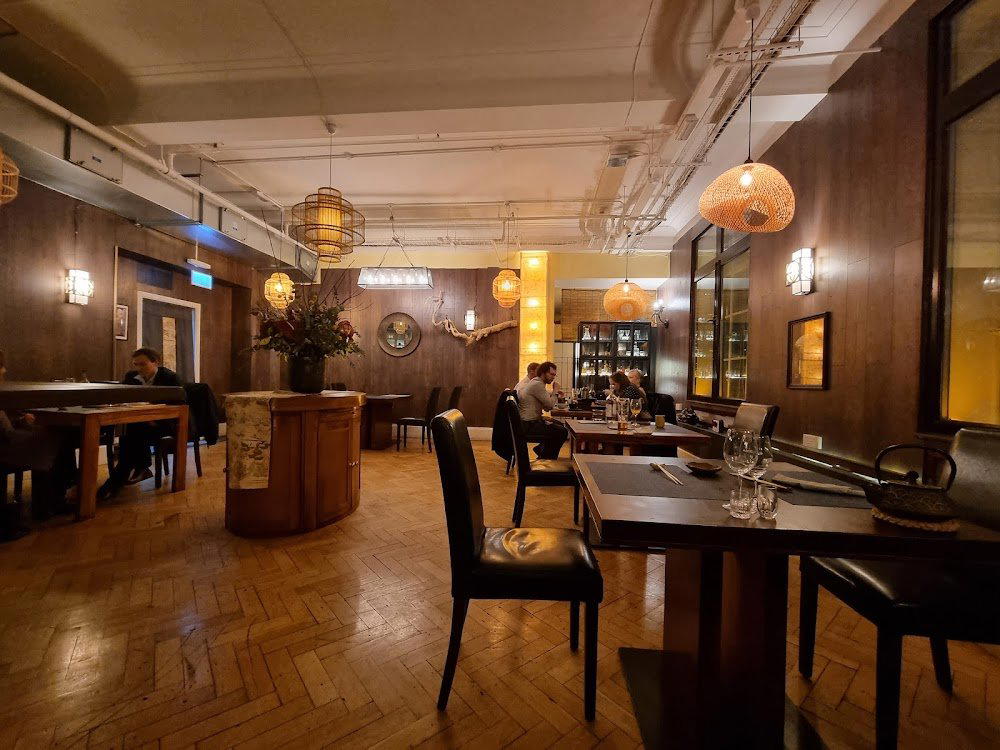
The South Bank has spent the better part of two decades cycling through the familiar phases of urban dining reinvention: chain dominance, pop-up colonisation, and eventually the arrival of concept-led independents willing to stake a permanent claim on a stretch of riverside that tourists see and Londoners often dismiss. Donabe is a restaurant in Southbank Riverside, London, serving Modern Japanese Donabe cuisine at about $75 per person. Donabe, addressed at Belvedere Road SE1, belongs to that later phase. The name refers directly to the earthenware clay pot used across Japanese households and restaurant kitchens for centuries, a vessel that conducts and retains heat differently from metal, producing a particular quality of steam and a crust at the base of rice known as okoge that has no Western equivalent and no shortcut.
In London's current restaurant moment, the donabe format sits in an interesting position. The city's high-end Japanese dining tier is anchored by omakase counters and kaiseki rooms, several of which carry Michelin recognition and price accordingly. Donabe cooking occupies a different register: it is domestic Japanese food raised to a point of technical focus, closer in spirit to the way a great French bistro treats cassoulet than the way a three-star kitchen treats a tasting menu. That distinction matters when you are deciding where Donabe fits relative to, say, the four Michelin-starred Modern British and European establishments that define London's £££+ tier, venues like CORE by Clare Smyth, Restaurant Gordon Ramsay, Sketch, The Lecture Room and Library, and The Ledbury. Donabe is not competing in that formal-occasion bracket; it is making a case for technique-led casualness, which in London is its own kind of ambition.
The Donabe Tradition: What the Vessel Actually Does
Japanese clay-pot cooking has a recorded history stretching back to the Jōmon period, and the modern donabe form used in restaurant kitchens is refined enough that specialist potteries in Iga, Mie Prefecture, produce pots rated for direct flame that carry waiting lists of their own. The heat dynamics are the point: a donabe brings ingredients to temperature slowly and evenly, then holds that temperature off the heat, allowing proteins and grains to finish cooking in residual steam. Rice cooked this way develops layers of texture from leading to bottom that a rice cooker cannot replicate. Dashi-braised ingredients absorb flavour differently inside a clay vessel than inside a metal one, because the porous walls release absorbed moisture back into the cooking environment throughout the process.
For a London diner whose reference points are kaiseki or the izakaya format, donabe cooking sits closer to the latter in terms of conviviality, but the ingredient sourcing and technique precision expected at a dedicated donabe restaurant places it in a different tier from casual Japanese dining. The comparison that travels leading might be to Korean ttukbaegi cooking or the Spanish cazuela tradition: a specific vessel that produces a specific result, and a restaurant format built around demonstrating that specificity night after night.
Drink Pairing at a Technique-Led Japanese Restaurant
The wine and drink question at a donabe-focused restaurant is genuinely interesting, because the flavour profile of clay-pot cooking does not map neatly onto European wine pairing convention. The dominant notes are umami-depth from dashi, sweetness from mirin, and the gentle char of okoge: a combination that responds well to wines with textural weight and low-to-moderate tannin, and badly to highly extracted, oak-forward bottles. Burgundy-trained sommeliers have historically navigated this pairing territory most fluently, because Pinot Noir's structure and Chardonnay's mid-palate weight both allow umami-rich food to breathe rather than fight.
Sake remains the most technically correct pairing for donabe food, and a focused sake list at a London restaurant in 2024 signals a level of programme seriousness that goes beyond novelty. Junmai daiginjō poured at the right temperature alongside a clay-pot rice with seasonal seafood is a pairing argument with centuries of precedent. The question for a London operation is whether the room is prepared to explain and advocate for that list to a diner whose reference points are European, and whether the by-the-glass range allows for genuine exploration rather than a single token selection. In London's current bar and beverage scene, the restaurants doing this most credibly are those that treat sake with the same structured curation they would apply to a Burgundy or a Barolo: producer notes, vintage context where relevant, and a sommelier capable of making the comparison legible to a non-specialist diner.
South Bank Location: The Case For and Against
Belvedere Road SE1 places Donabe inside the South Bank arts and cultural corridor, steps from the Royal Festival Hall and within the footfall zone that feeds the BFI, the National Theatre, and the Tate Modern. That location has a commercial logic: the pre-theatre and post-exhibition dinner market on the South Bank is large and relatively predictable. It also creates a specific challenge for a technique-led restaurant, because that same footfall includes a high proportion of visitors whose primary objective is a meal near a venue rather than the meal itself.
The restaurants that have built the most sustained reputations in similar positions, culturally anchored but tourism-adjacent, tend to be those where the format is distinct enough to generate return visits from Londoners who would have made the trip regardless of location. Donabe's clay-pot focus provides that kind of differentiation in a way that a generic modern-Asian menu would not. For London visitors building an itinerary that includes both dining and cultural programming, the South Bank location is a genuine asset. For diners travelling specifically for the restaurant, it is simply an address.
How Donabe Fits the London Japanese Dining Conversation
London's Japanese dining tier has expanded significantly over the past decade, but the growth has been concentrated at two ends: high-volume ramen and sushi chains on one side, premium omakase and kaiseki on the other. Format-specific cooking built around a single vessel or technique, the donabe, the robata, the teppan, occupies a middle ground that London has been slower to develop than Tokyo, New York, or even Sydney. Atomix in New York City demonstrates what happens when Korean fine dining commits fully to a single rigorous tasting format with matching beverage programme; the donabe format, applied with the same discipline, carries equivalent potential. For broader comparisons to the UK's most technique-committed kitchens, The Fat Duck in Bray, L'Enclume in Cartmel, and Moor Hall in Aughton all show what sustained focus on a defined culinary language produces over time. Regional destinations like Gidleigh Park in Chagford, Hand and Flowers in Marlow, and hide and fox in Saltwood further illustrate the depth of the UK's specialist dining tier beyond London. Across the Atlantic, Le Bernardin in New York City offers a long-standing model of what happens when a restaurant commits to a single ingredient category, seafood, and refuses to drift from it across decades. London's donabe format, if maintained with similar discipline, is building toward the same kind of category authority. Dinner by Heston Blumenthal offers a useful local comparison for what a technique-led format built around historical research looks like when it achieves sustained Michelin recognition, currently at two stars.
Planning Your Visit
Donabe is located at Southbank Riverside, Belvedere Road, London SE1 7PB. Waterloo station sits within a short walk, making the address accessible from most of central London without requiring a cab. Given the South Bank's consistent foot traffic, walk-in availability on quieter weekday lunches is more plausible than on weekend evenings, when the cultural corridor draws its largest volume. Specific booking method and pricing are not stated here; the restaurant is recommended for reservations and is open Mon to Fri 12 to 2 PM and 5:30 to 9 PM, Sat and Sun 12 to 9 PM.
Cuisine-First Comparison
Comparable venues nearby, for context on price, style, and recognition.
| Venue | Cuisine | Price | Awards |
|---|---|---|---|
| DonabeThis venue — the venue you are viewing | |||
| The Ledbury | Modern European, Modern Cuisine | ££££ | Michelin 3 Star |
| Sketch, The Lecture Room and Library | Modern French | ££££ | Michelin 3 Star |
| CORE by Clare Smyth | Modern British | ££££ | Michelin 3 Star |
| Restaurant Gordon Ramsay | Contemporary European, French | ££££ | Michelin 3 Star |
| Dinner by Heston Blumenthal | Modern British, Traditional British | ££££ | Michelin 2 Star |
Continue exploring
More in London
Restaurants in London
Browse all →
Bars in London
Browse all →
Hotels in London
Browse all →
At a Glance
- Cozy
- Modern
- Intimate
- Elegant
- Special Occasion
- Date Night
- Open Kitchen
- Sake Program
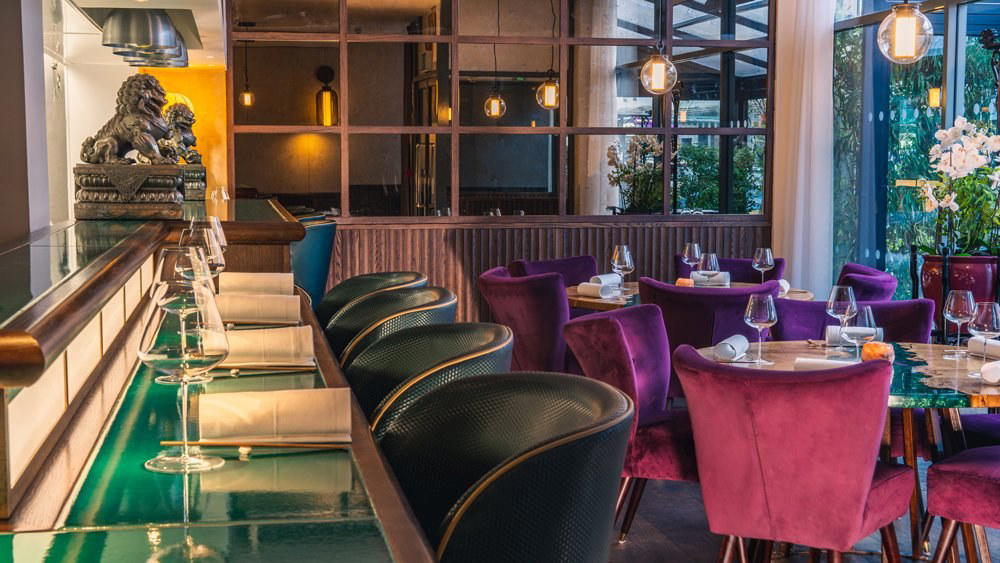
Relaxed and cozy atmosphere with beautiful decor featuring unique antiques, stylish and modern yet warm and inviting.