Divino Enoteca

Star Wine List
Our verdict
A third-generation Italian family operation occupying a vaulted Old Town address since 2010, Divino Enoteca brings traditional fine dining to Merchant Street with a wine-forward identity that sets it apart from Edinburgh's contemporary-leaning restaurant scene. The menu reads as a structured argument for classical Italian cooking at a time when the city's upper tier tilts heavily toward modern British and Nordic idioms.

Pearl is the En Primeur Club membership app, where members save venues, book tables and use the concierge.
The menu
What to order
- Guancia di Manzo al Merlot
- Rigatoni alla Norcina
- Orecchiette con Salsiccia e 'nduja
- Tortino Fondente con Gelato al Cocco
Stone Vaults and the Weight of Italian Tradition
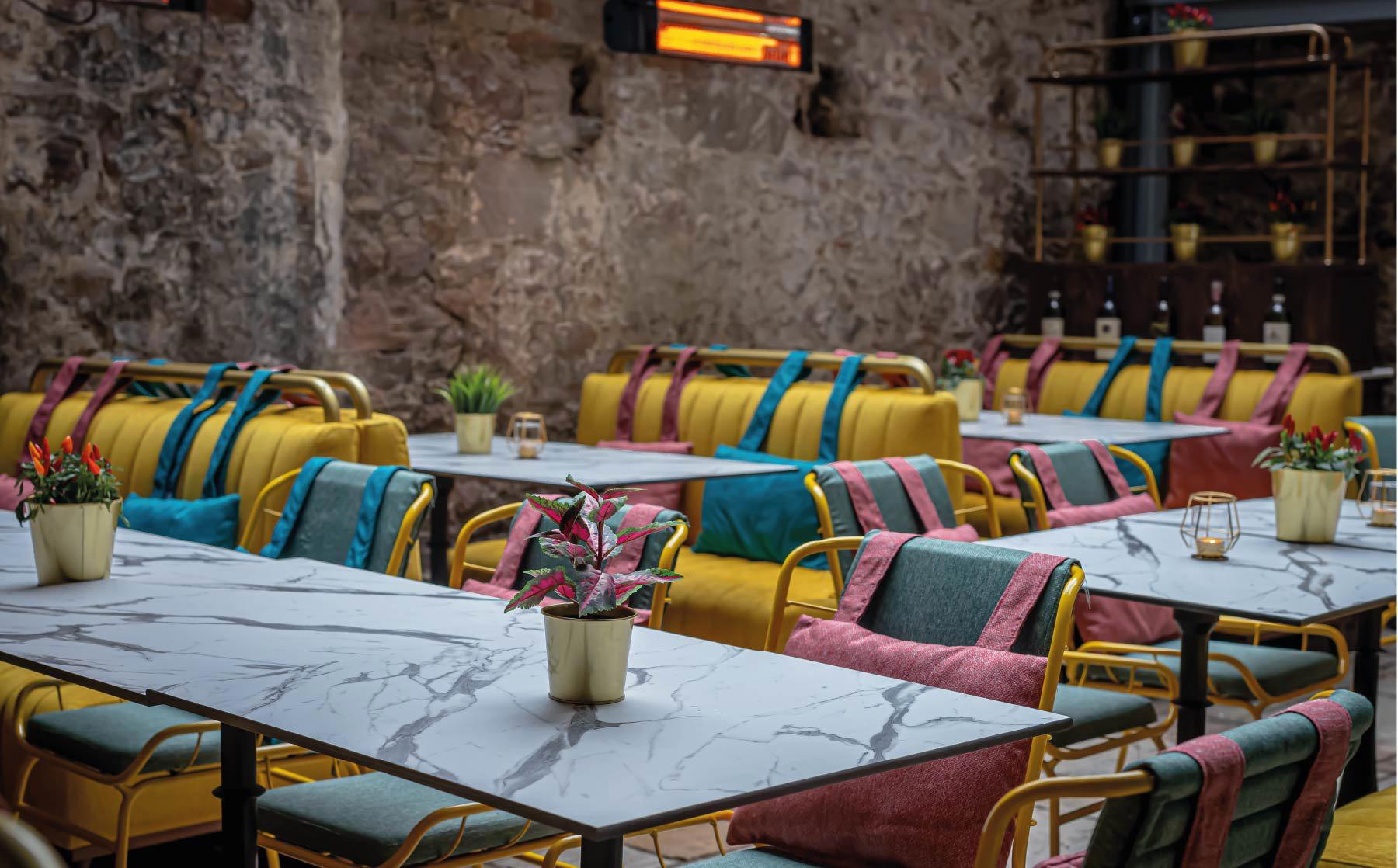
Merchant Street sits at the base of the Old Town's geological drama, where the city's medieval fabric layers over centuries of accumulated stone. It is the kind of address where architecture does half the work before a dish arrives: low ceilings, thick walls, the particular stillness that comes from rooms carved rather than built. Divino Enoteca has occupied this space since 2010, and the physical setting frames everything that follows, a dining room that announces, before a menu is opened, that this is not a venue chasing Edinburgh's contemporary moment.
That contemporary moment, for context, is well represented elsewhere. The Kitchin and Timberyard anchor the city's modern British axis. Martin Wishart and AVERY push toward European modernism, while Condita operates at the hyper-seasonal, low-intervention end of the spectrum. Divino Enoteca positions itself against none of these. It occupies a different competitive set entirely: the classical Italian fine dining house, a category that is rarer in Edinburgh than the city's appetite for Italian food might suggest.
What the Menu Reveals
Italian fine dining menus, at their most considered, function as arguments. The structure of antipasti, primi, secondi, and dolci is not merely organisational, it encodes a philosophy about pacing, about the primacy of pasta as a course in its own right rather than a precursor to protein, and about the expectation that a diner will commit time as well as appetite. This architecture distinguishes the category from Italian-casual and from the tasting-menu format that dominates the city's upper bracket.
Divino Enoteca operates within that classical framework. As a third-generation family business, the menu carries institutional memory: dishes refined across decades rather than rewritten each season in pursuit of critical novelty. This is a different kind of ambition from what drives Edinburgh's Michelin-tracked restaurants, and it is worth recognising as such rather than measuring the two against the same criteria. Where The Kitchin builds its identity around Scottish seasonal provenance and French technique, Divino Enoteca's identity is rooted in Italian regional tradition and continuity across generations.
The enoteca component, the wine shop and cellar that gives the venue its name, signals where the philosophy sits most clearly. Italian fine dining at this level treats the wine list as structural rather than supplementary. The progression through a meal is imagined in parallel with grape variety and region, not as an afterthought. An enoteca format implies depth in Italian producers: Barolo and Barbaresco alongside Brunello, but also the mid-tier appellations that reward the genuinely curious diner over the label-focused one. This is a different wine culture from the French-dominated lists that anchor comparators like The Ledbury in London or Waterside Inn in Bray, and it matters to how the meal is structured and priced.
Family Business, Edinburgh Context
Third-generation family restaurant businesses are uncommon in any city and nearly absent from the fine dining tier specifically. The operational reality of running a formal Italian restaurant across three generations implies a consistency of sourcing relationships, a kitchen trained in-house rather than assembled from the city's transient talent pool, and a regulars culture that sustains the operation between festival peaks. Edinburgh's food economy is strongly influenced by the Festival season and by high tourist volume through the Old Town corridor; venues that survive and maintain standards across that seasonal volatility tend to do so through a loyal local base rather than footfall alone.
The Merchant Street address sits within walking distance of the Royal Mile's tourist intensity but operates at a remove from it. The clientele skews toward residents who have made a booking rather than visitors who have turned off the main drag. That dynamic shapes service register and pacing in ways that distinguish the experience from the high-turnover Italian operations that dominate the Old Town's more trafficked streets.
Where It Sits in the Upper Tier
Edinburgh's fine dining tier has expanded considerably since 2010, the year Divino Enoteca opened. The city now holds Michelin-starred addresses with national profiles, drawing comparison to regional fine dining in England at venues like Moor Hall in Aughton and L'Enclume in Cartmel. Divino Enoteca does not compete in that starred bracket, nor does it present itself as doing so.
For a diner calibrated to international Italian fine dining, the kind of classical house that sits comfortably alongside Le Bernardin in New York City or Emeril's in New Orleans as a reference point for what formal, tradition-anchored dining looks like, Divino Enoteca represents a category genuinely scarce in Edinburgh's current scene. The city has excellent modern cooking. It has fewer venues committed to doing classical Italian at a formal register with the institutional depth that a three-generation operation implies.
Planning a Visit
Divino Enoteca is located at 5 Merchant Street, Edinburgh EH1 2QD, a short walk from the Grassmarket and the base of George IV Bridge. The Old Town setting means the approach is on foot or by taxi rather than by car. Given the venue's regulars culture and compact dining room format, advance booking is advisable, particularly on weekends and during the Festival period in August when Old Town restaurant demand peaks across the city. For full context on where Divino Enoteca sits within Edinburgh's wider restaurant scene, see our full Edinburgh restaurants guide. Those planning a broader stay should also consult our full Edinburgh hotels guide, our full Edinburgh bars guide, our full Edinburgh wineries guide, and our full Edinburgh experiences guide.
Frequently asked questions
What kind of recognition has Divino Enoteca received?
Divino Enoteca has received recognition including: Situated in the historic Old Town, Divino Enoteca is a third-generation Italian family-run business, which opened its doors in 2010. The food is traditional Italian ‘fine dining’, while the vibran....
Where exactly is Divino Enoteca?
Divino Enoteca is located at 5 Merchant St, Edinburgh EH1 2QD, United Kingdom, Edinburgh.
What do regulars order at Divino Enoteca?
The menu follows a traditional Italian structure, antipasti through to dolci, so regulars tend to commit to the full progression rather than ordering selectively. As a family-run operation with roots in three generations of Italian cooking, the kitchen's strengths lie in classical technique rather than trend-chasing.
Can I walk in to Divino Enoteca?
Walk-ins depend on availability, and Edinburgh's Old Town venues at the fine dining tier rarely carry much empty cover capacity on evenings. Divino Enoteca at 5 Merchant Street has been operating since 2010, giving it an established local following that fills tables consistently. Contacting the restaurant in advance is the more reliable approach, particularly for weekend evenings.
What do critics highlight about Divino Enoteca?
Coverage consistently returns to two points: the setting, stone vaults in Edinburgh's medieval Old Town, and the continuity of a third-generation Italian family running the kitchen and floor since 2010. That combination of physical context and operational heritage is rare in the city's fine dining tier, where most addresses are either younger or corporately backed. The traditional Italian fine dining format, rather than a modernist or fusion approach, is also frequently noted.
Can Divino Enoteca accommodate dietary restrictions?
Italian fine dining kitchens generally have the range to adjust across the antipasti-to-dolci structure, and family-run operations tend to handle requests with more flexibility than large-format venues.
Reputation Context
Comparable venues nearby, for context on price, style, and recognition.
| Venue | Cuisine | Price | Awards | Notes |
|---|---|---|---|---|
| Divino EnotecaThis venue (the venue you are viewing) | Contemporary Italian | $50–100 | Star Wine List | Not listed |
| Sambuca Italian Restaurant | Traditional Italian Trattoria | $20–30 | Not listed | Newington |
| Tempo Perso | Authentic Italian | $20–30 | Not listed | Bruntsfield |
| Patatino | Modern Italian Trattoria | $50–100 | Not listed | Haymarket, West End |
| Mia Italian Kitchen Dalry | Authentic Italian Trattoria | $20–30 | Not listed | Dalry |
| Fin & Grape | Scottish Seafood & Wine | $50–100 | Not listed | Church Hill |
Recognition history
Dated appearances from independent guides and award organizations, with the underlying list record or original source where available.
Star Wine List
Star Wine List
Continue exploring
More in Edinburgh
Restaurants in Edinburgh
All restaurants in Edinburgh →
Bars in Edinburgh
All bars in Edinburgh →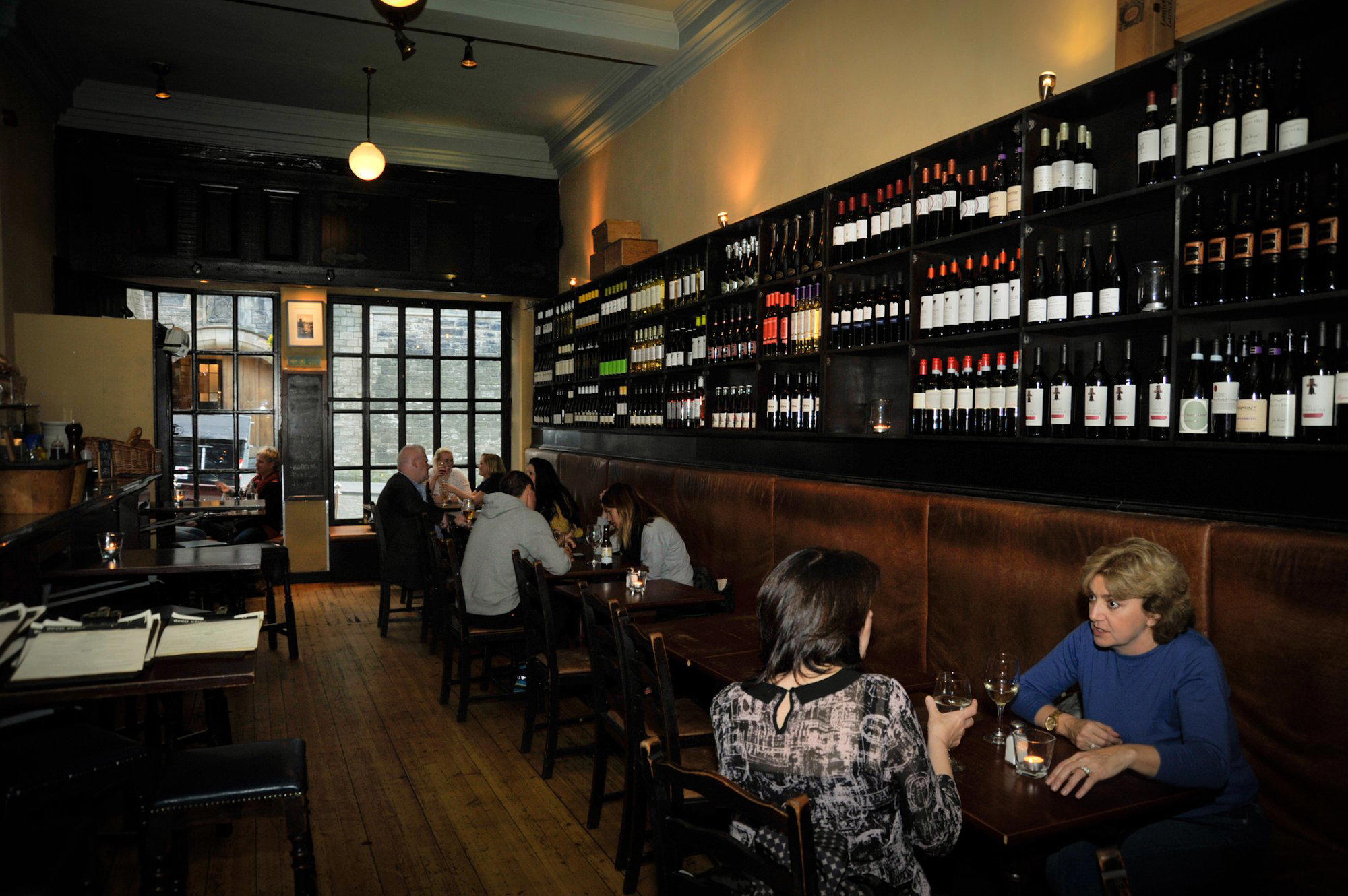
Divino Enoteca
The wine
- Wine program
- Deep wine list
- Extensive wine list
- Sommelier-led
- Craft cocktails
Details
- Romantic
- Elegant
- Cozy
- Intimate
- Classic
- Date Night
- Special Occasion
- Celebration
- Wine Cellar
- Open Kitchen
- Live Music
- Historic Building
- Standalone
- Extensive Wine List
- Craft Cocktails
- Sommelier Led
- Local Sourcing
- A La Carte
- Wine
- Cocktails
- Vegetarian Friendly
- Gluten Free Options
Current opening hours
- Monday
- 5–10 PM
- Tuesday
- 5–10 PM
- Wednesday
- 5–10 PM
- Thursday
- 5–10 PM
- Friday
- 5 PM–12 AM
- Saturday
- 12 PM–12 AM
- Sunday
- 5–10 PM
Hours can change for holidays and private events. Hours as of .
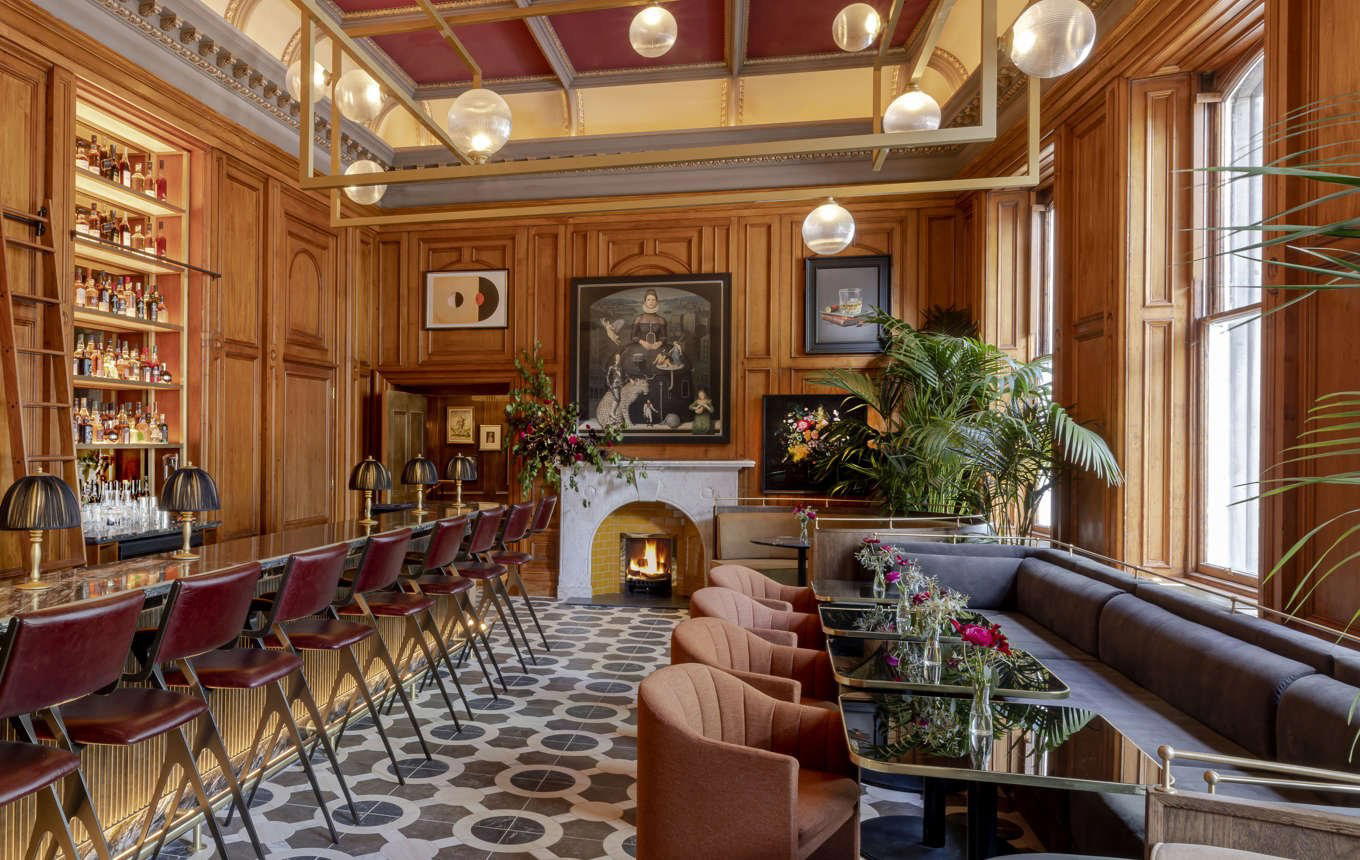
Soft lighting with exposed brick walls, comfortable leather chairs and banquettes, rich oak floors, eclectic artwork and lanterns creating a warm, intimate cellar atmosphere reminiscent of a historic Italian wine vault.