
Michelin Plate · Gambero Rosso 3 Forchette
Our verdict
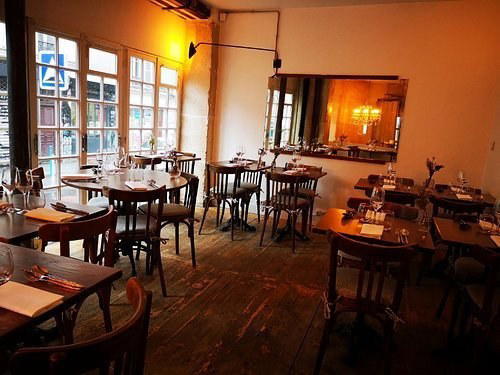
A Michelin Plate-recognised address in the 20th arrondissement, Dilia brings Tuscan cooking into a relaxed, country-house room opposite Notre-Dame-de-la-Croix. Chef Michele Farnese, with French kitchen experience at Saturne and Thoumieux, runs a concise menu where pasta and seasonal produce are the main event. The lunch menu offers strong value; the multi-course dinner pushes further into Italian-French territory.

Pearl is the En Primeur Club membership app, where members save venues, book tables and use the concierge.
The menu
What to order
- Beetroot gnocchi
- Pasta with bottarga
- Seaweed pasta with sea urchin
The 20th Arrondissement and the Quiet Case for Italian Cooking in Paris
Paris has long organised its serious restaurant culture around a handful of arrondissements: the 8th for grand institutional addresses like Alléno Paris au Pavillon Ledoyen and Le Meurice Alain Ducasse, the 7th for places like Arpège. The 20th has operated differently: a working-class residential quarter that gentrified slowly and selectively, with a food scene built more on neighbourhood loyalty than destination dining. In that context, the arrival and subsequent growth of Dilia at 1 Rue d'Eupatoria represents something worth paying attention to. This is Italian-rooted creative cooking, earned Michelin recognition included, dropped into a quarter that was not previously on the serious-restaurant circuit.
The broader pattern here is one that has accelerated across European cities over the past decade: chefs with strong institutional credentials leaving established restaurant corridors to open smaller, more personal formats in underserved neighbourhoods. The trade-off is clear enough. Foot traffic and tourist covers are lower; the regulars who find you tend to return often and with real investment in what you're doing.
What the Room Signals Before the Food Arrives
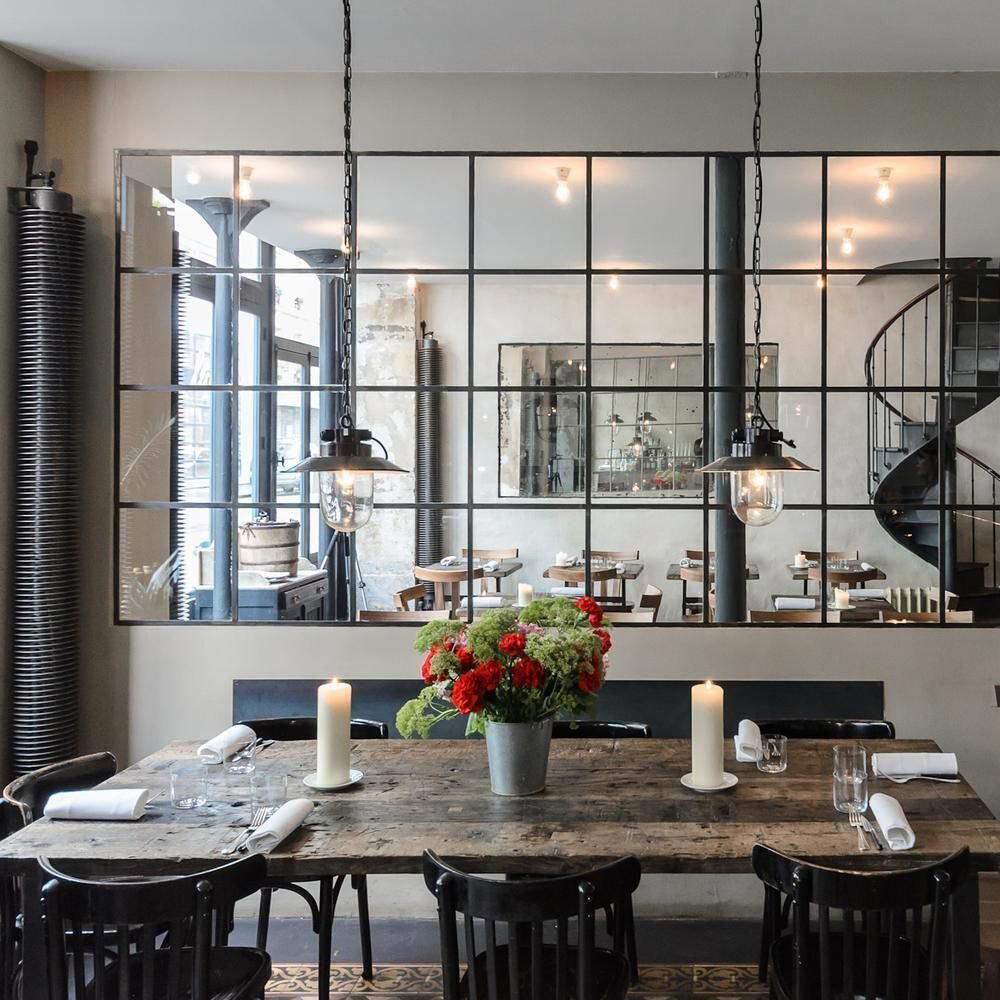
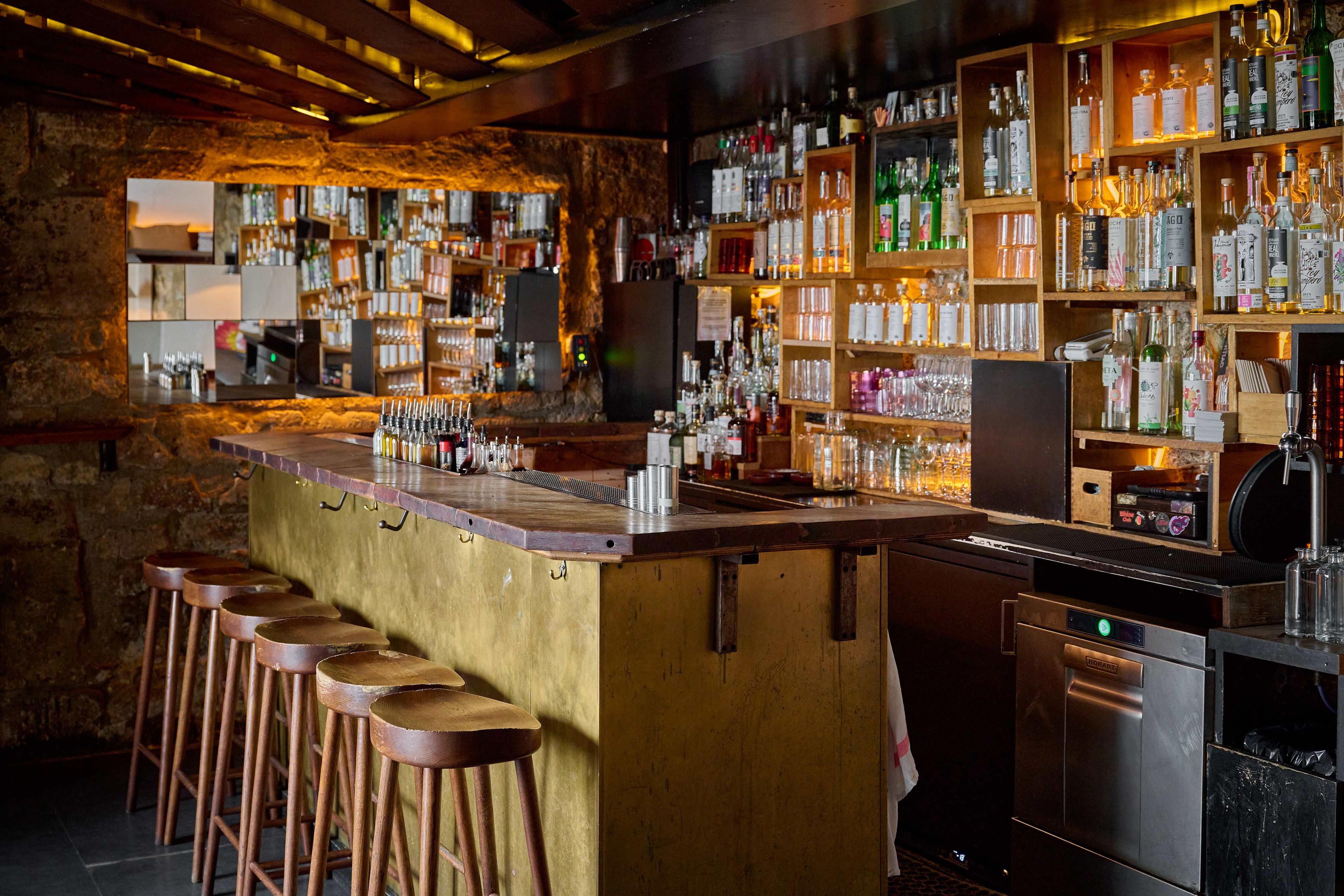
The description that follows Dilia in Michelin's own notes is instructive: a country house feel, charm, and a location opposite Notre-Dame-de-la-Croix. For a Paris restaurant, that framing is unusual. The capital's mid-to-high-end room vocabulary tends toward either polished bistro minimalism or formal elegance. A country house register, warm, slightly worn-in, domestic in scale, reads as a deliberate departure from both. It also signals the Italian lineage of the kitchen, where the osteria and agriturismo aesthetic has always allowed a restaurant to be serious about food while refusing to be formal about the room.
This is worth noting in the context of how the Paris dining scene has shifted. A generation ago, the assumption was that Michelin recognition required a certain visual seriousness: white linen, formal service architecture, a room that communicated its own ambition. That assumption has been steadily dismantled, and Dilia sits on the right side of that shift, a Michelin Plate in a room that does not perform its own importance.
The Kitchen's Double Inheritance
The cooking at Dilia sits at the intersection of two distinct professional traditions. On one side, the Tuscan sensibility that chef Michele Farnese brings as his culinary base: a kitchen culture that prioritises ingredient clarity, pasta technique, and the kind of seasoning confidence that comes from cooking with good olive oil and bottarga rather than reductive sauces. On the other, serious time inside French kitchens, Saturne, with its natural wine and market-produce credentials, and Thoumieux, which operates at a more formal register in the 7th. That combination is rarer than it sounds. French-trained Italian chefs often produce a kind of diplomatic cuisine that flatters both traditions without committing to either. The Michelin framing around Dilia, which references pillowy beetroot gnocchi, raw scallop shavings, sage, pasta with bottarga, and garlic bread, suggests something more decisive: Italian cooking with French technique in its muscles, not Italian-French fusion as a concept.
The evolution that matters here is not a dramatic pivot but a gradual sharpening of that position. The restaurant's name pays tribute to the chef's ancestors, Dino and Illia, and that rootedness in a specific Italian heritage is what gives the menu its organising logic. Pasta prepared in time-honoured tradition is the spine; seasonal French produce, the scallops, the beetroot, provides the regional inflection. It is a position that has become more, not less, coherent as the restaurant has settled into the neighbourhood.
Lunch, Dinner, and the Wine Angle
Format split between lunch and dinner matters practically and editorially. The lunch menu operates as a clear value proposition at the €€€ price tier, a point of access that is unusually generous for a Michelin-recognised address in Paris. Comparable creative restaurants at the same recognition level, including Le Gabriel at La Réserve Paris and Blanc, do not always offer the same accessibility gap between their lunch and dinner formats.
Multi-course dinner is where the kitchen extends its range, and the wine programme, built around both French and Italian bottles, is noted specifically by Michelin as an excellent selection. In a room of this size and character, a sommelier who manages both traditions without defaulting to the obvious choices on either side is a genuine asset. The service model, described as friendly and smiling, maps to the Italian service tradition more than the formal French brigade style, which reinforces the overall register of the room.
For context on how Dilia sits against the Paris creative tier more broadly: the top end of the creative category in Paris runs to three-star houses operating at €€€€.
France rewards patience at this level. Restaurants like Flocons de Sel in Megève or Mirazur in Menton built their current reputations over years in locations that were not obviously central to French gastronomic geography. Troisgros, Auberge de l'Ill, Bras, and Paul Bocuse all share the same quality of being precisely located somewhere that required a decision to visit. Dilia is already that kind of address within Paris itself.
For a wider view of Italian-rooted creative cooking at the starred level in other European cities, Cocina Hermanos Torres in Barcelona and Enrico Bartolini in Milan offer useful comparative points on how the creative category handles regional identity at higher recognition tiers.
Planning Your Visit
| Detail | Dilia | Comparable Creative Paris (€€€€ tier) |
|---|---|---|
| Price tier | €€€ | €€€€ |
| Michelin recognition | Plate (2025) | 1–3 Stars |
| Location | 20th arrondissement | 7th, 8th arrondissements primarily |
| Format | Lunch menu + multi-course dinner | Multi-course tasting menus |
| Room character | Country house, informal | Formal, design-led |
| Cuisine base | Italian-Creative, French-influenced | French-Creative or Contemporary French |
Dilia is at 1 Rue d'Eupatoria, 75020 Paris, opposite Notre-Dame-de-la-Croix in the 20th arrondissement. For the full picture of what Paris offers at every tier and neighbourhood, see our full Paris restaurants guide, and if you're building a wider itinerary, our Paris hotels guide, bars guide, wineries guide, and experiences guide cover the rest.
Frequently asked questions
Does Dilia have a Michelin star or similar recognition?
Dilia has received recognition including: Michelin Plate (2025); This small-format restaurant opposite Notre-Dame-de-la-Croix, in the heart of the 20th arrondissement, has buckets of charm and a country house feel. Tuscan chef Michele Farnese has good international credentials, as ….
Where is Dilia in Paris?
Dilia is located at 1 Rue d'Eupatoria, 75020 Paris, France, Paris.
What's the signature dish at Dilia?
The Michelin notes single out pillowy beetroot gnocchi with sage and pasta paired with bottarga and garlic bread as the dishes that define chef Michele Farnese's approach. These plates reflect his Tuscan roots filtered through French technique developed at Saturne and Thoumieux. Specific menu items rotate, so treat those as reference points rather than guarantees for your visit.
Is Dilia focused on a specific cuisine style?
What's the price range at Dilia?
Pricing at Dilia is listed as €€€.
Can I walk in to Dilia?
Dilia is a small-format restaurant in the 20th arrondissement, and Michelin describes it as a well-kept secret worth rediscovering with urgency, language that signals demand exceeds casual availability. A reservation is the practical choice, particularly for the multi-course dinner menu.
What's Dilia best at?
Dilia's clearest strength is the coherence between kitchen and room: Tuscan-rooted cooking with French institutional training behind it, served in a country-house setting opposite Notre-Dame-de-la-Croix in the 20th. The Michelin Plate (2025) recognises the kitchen's consistency, and the sommelier-led wine list spans both French and Italian producers. The lunch menu offers the most accessible entry point at the €€€ price level.
Budget Reality Check
| Venue | Cuisine | Price | Awards | Notes |
|---|---|---|---|---|
| DiliaThis venue (the venue you are viewing) | Modern Italian Bistro | $50–100 | Michelin Plate · Gambero Rosso 3 Forchette | Not listed |
| Alléno Paris au Pavillon Ledoyen | Modern French Fine Dining | $150–200 | 3 Michelin Stars · World's 50 Best #79 | Creative |
| Kei | Modern French with Japanese Influences | $300–500 | 3 Michelin Stars · World's 50 Best #93 | Contemporary French, Modern Cuisine |
| L'Ambroisie | Classic French Haute Cuisine | $300–500 | 2 Michelin Stars · World's 50 Best #23 | French, Classic Cuisine |
| Le Cinq - Four Seasons Hôtel George V | Modern French Fine Dining | $300–500 | 3 Michelin Stars · World's 50 Best #24 | French, Modern Cuisine |
| Plénitude | Modern French Sauce-Led Fine Dining | $300–500 | 3 Michelin Stars · World's 50 Best #14 | Contemporary French |
Recognition history
Dated appearances from independent guides and award organizations, with the underlying list record or original source where available.
Michelin Plate
Michelin
Gambero Rosso 3 Forchette
Gambero Rosso
Full recognition history (4 entries)
Michelin Plate
Michelin
Michelin Plate
Michelin