Daylesford

Daylesford's Notting Hill outpost translates the brand's Cotswolds organic farming operation into a neighbourhood café-restaurant on Westbourne Grove, where the supply chain is the editorial statement. Rare-breed meats, free-range poultry, and seasonal produce arrive directly from the group's own farms in Gloucestershire and Staffordshire, making traceability a structural feature of every plate rather than a marketing footnote.
Pearl is the En Primeur Club membership app — saves, bookings, and concierge access live there. Same editors, same standards.
- Address
- 208-212 Westbourne Grove, London W11 2RH, United Kingdom
- Phone
- +44 20 7313 8050
- Website
- daylesford.com
- Directions
- Get directions
 Saves & bookings on Pearl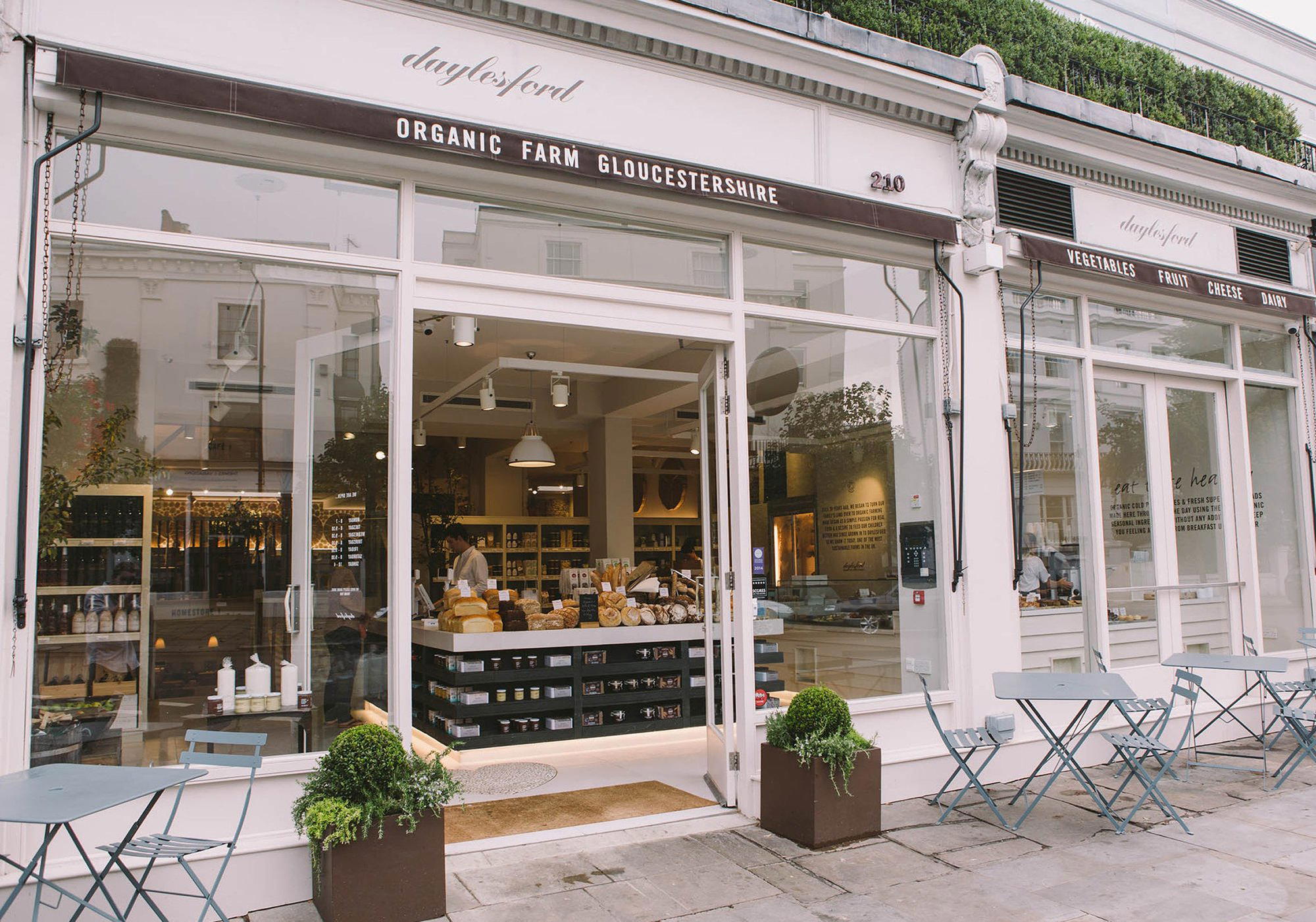
Westbourne Grove and the Farm-to-Table Tier That Actually Means It
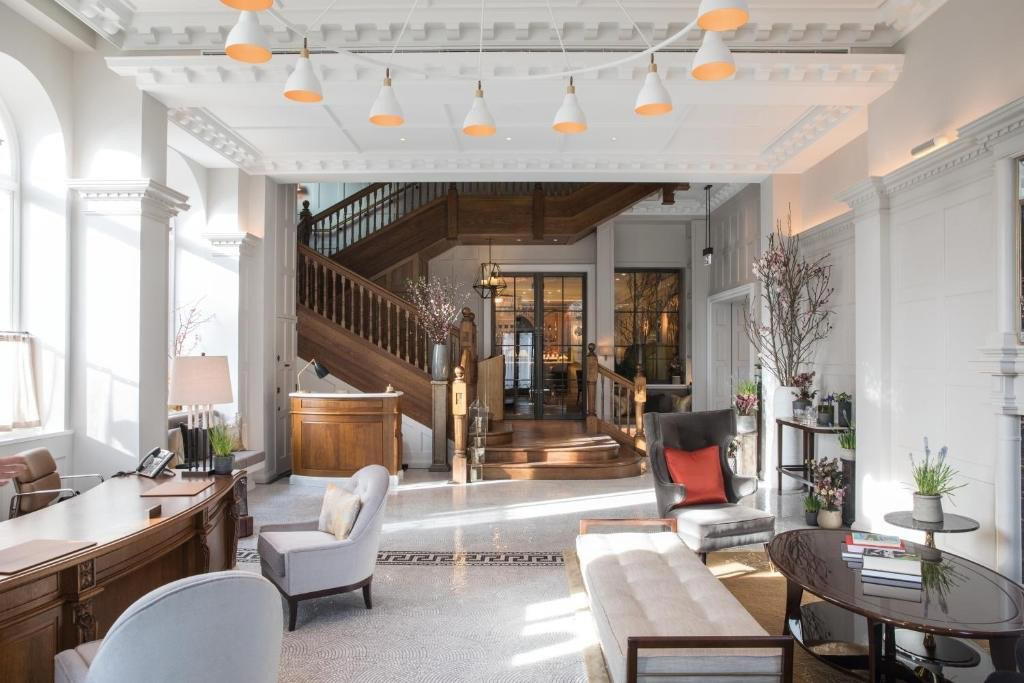
On Westbourne Grove, Notting Hill's retail character tends toward the curated and the considered, independent boutiques, art-leaning cafés, the kind of neighbourhood that takes provenance seriously without necessarily interrogating it. Daylesford fits that setting precisely. The ground-floor café spills into a well-lit space that reads more like a working larder than a formal dining room: shelves of branded produce, chilled counters displaying the day's preparations, a visible logic connecting what's on the plate to what's on the shelf beside you. The physical environment makes an argument before the menu does.
That argument is about supply chain. Most restaurants that invoke organic farming or seasonal sourcing are describing a procurement policy. Daylesford is describing a vertically integrated operation. The group runs organic farms in the Cotswolds (Gloucestershire) and Staffordshire, where rare and native breeds are raised, chickens are kept in genuine free-range conditions, and seasonal fruit and vegetables are grown to supply the kitchens directly. Homemade bread, ham, and cheese made from cow's milk round out the in-house production. The Notting Hill location is one of four in London, with a fifth at the source in Kingham, Gloucestershire, which, for context, places it closer in spirit to farm-estate restaurants like L'Enclume in Cartmel or Moor Hall in Aughton than to the high-toque brigade of central London.
Where Daylesford Sits in London's Dining Spectrum
London's premium dining tier is defined at its upper end by tasting-menu counters and destination kitchens: CORE by Clare Smyth on Kensington Park Road, The Ledbury a short walk away in Notting Hill itself, Ikoyi in St James's, or Alain Ducasse at The Dorchester in Mayfair. Daylesford operates in a different register entirely. It is not competing in the Michelin-starred tasting-menu category; it is competing in the organic café-restaurant category, where the credential being established is agricultural rather than culinary. That distinction matters for how you read the menu and how you read the price point.
The menu structure reflects this positioning. An extensive range of salads, fish preparations, meat dishes, and a considered selection of accompanying vegetables constitute the daily offering. The format favours flexibility over ceremony, you can drop in for a counter lunch or settle in for a more composed meal. This is, broadly, how the farm-to-table model has been institutionalised in several UK-wide operations, though few have done so with Daylesford's level of backward integration into the actual growing and rearing of ingredients. For a comparison in the destination-restaurant space where terroir and provenance drive the editorial logic, Gidleigh Park in Chagford or Waterside Inn in Bray operate within a similar countryside-sourcing philosophy, though through a much more formal dining format.
The Reputation That Precedes the Plate
The Daylesford name carries weight in a specific corner of the British food conversation, one that prizes certified organic production, traceable animal husbandry, and a retail dimension that allows customers to take the supply chain home. This is not the kind of reputation built through awards panels or critic scores; it is built through sustained institutional credibility in the organic food sector, where the group's farms and production methods have been recognised over decades. In a city where greenwashing is common in food marketing, the ability to point to owned farmland, named breeds, and in-house cheese production is a substantive credential, not a slogan.
For London diners whose reference point is the Clove Club-to-Alain Ducasse spectrum of fine dining, Daylesford sits outside that competitive set by design. Its comparable set is the organic delicatessen-restaurant category, farm shops with kitchens, estate cafés, and high-end health-food operations that have expanded into plated dining. Within that category, few UK operators match its scale or its depth of farm ownership. Internationally, the closest analogues might be found in Californian or Scandinavian models of farm-integrated restaurants, a positioning that, in London, remains relatively rare at this level of execution.
Restaurants where the supply chain is a genuine differentiator, rather than a checkbox, represent a growing segment of the London dining scene. Hide and Fox in Saltwood and Hand and Flowers in Marlow operate with similar countryside-sourcing commitments, though in more formal restaurant formats outside the capital. Daylesford's distinctiveness in London is partly structural: it is the only operator of this kind with multiple central London locations anchored to its own agricultural land.
Planning a Visit to the Notting Hill Location
The Westbourne Grove address, 208-212 Westbourne Grove, London W11 2RH, is well-positioned for the neighbourhood, within reach of Notting Hill Gate and Ladbroke Grove stations. The format leans toward accessibility rather than exclusivity: unlike the tasting-menu operations that populate London's upper price tier, Daylesford operates as a café-restaurant with a retail floor. The restaurant recommends reservations, though walk-ins may still be possible for lighter meals. All ingredients served in the restaurant are also available for purchase in the adjoining store, which extends the proposition from a single meal into a relationship with the supply chain itself. All ingredients served in the restaurant are also available for purchase in the adjoining store, which extends the proposition from a single meal into a relationship with the supply chain itself.
For travellers building a broader London itinerary, the full London restaurants guide covers the range from neighbourhood cafés to destination tasting menus. Those planning around the wider West London food circuit will find context in the London bars guide, the London hotels guide, and the London experiences guide. For those interested in the broader UK farm-to-table restaurant tradition, the London wineries guide and links to comparable countryside destinations provide additional context. Internationally, the farm-integrated dining model has strong precedents in American restaurants like Emeril's in New Orleans and at technical counter-service level in New York at Le Bernardin, though the production philosophies differ substantially.
At-a-Glance Comparison
Comparable venues nearby, for context on price, style, and recognition.
| Venue | Cuisine | Price | Notes |
|---|---|---|---|
| DaylesfordThis venue — the venue you are viewing | Organic British Farm-to-Table | $$$$ | Not listed |
| Brooklands by Claude Bosi | Modern British Fine Dining by Claude Bosi | $$$$ | Belgravia |
| Claridge's Restaurant | Contemporary British Fine Dining | $$$$ | Mayfair |
| 14 Hills | Modern British Brasserie with French Flair | $$$$ | Fenchurch |
| The Georgian at Harrods | Classic British Fine Dining | $$$$ | Brompton |
| Oxo Tower | Modern British Brasserie | $$$$ | Bankside |
Recognition history
Dated appearances from independent guides and award organizations, with the underlying list record or original source where available.
We're Smart World 4 Radishes
We're Smart World
Continue exploring
More in London
Restaurants in London
Browse all →
Bars in London
Browse all →
Hotels in London
Browse all →



At a Glance
- Cozy
- Elegant
- Modern
- Brunch
- Casual Hangout
- Open Kitchen
- Natural Wine
- Farm To Table
- Organic
Current opening hours
- Monday
- 8 AM–8 PM
- Tuesday
- 8 AM–8 PM
- Wednesday
- 8 AM–8 PM
- Thursday
- 8 AM–8 PM
- Friday
- 8 AM–8 PM
- Saturday
- 8 AM–8 PM
- Sunday
- 9 AM–6 PM
Hours can change for holidays and private events. Last verified .
Airy and light-filled with a pleasant, elegant atmosphere combining restaurant and organic farmshop.