Churrascaria Plataforma
Our verdict
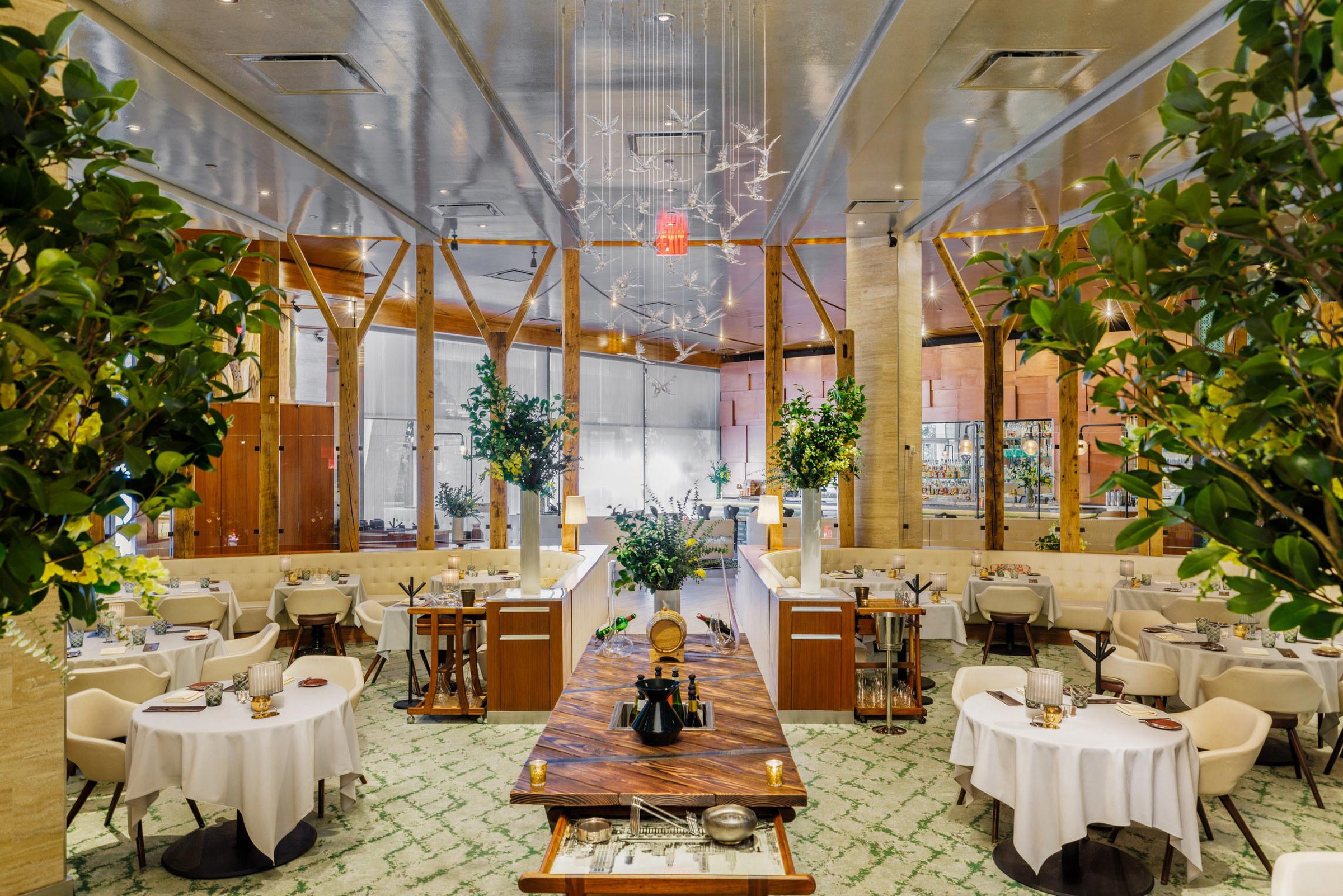
On West 49th Street in Midtown, Churrascaria Plataforma brings the Brazilian rodízio tradition to New York in full-scale form. Gauchos circulate the dining room with skewers of wood-fired meat, carving tableside in a format built for groups and return visits alike. It occupies a category of its own in a city whose premium dining tends toward tasting menus and à la carte precision.

Pearl is the En Primeur Club membership app — saves, bookings, and concierge access live there. Same editors, same standards.
- Address
- 316 W 49th St, New York, NY 10019
- Phone
- (212) 245-0505
- Hours
- Mon–Tue 4:30–9 PMWed–Thu 4:30–9:30 PMFri–Sat 12–10:30 PMSun 12–9 PM
- Website
- plataformaonline.com
- Directions
- Get directions
- Booking
- Book on the venue's website
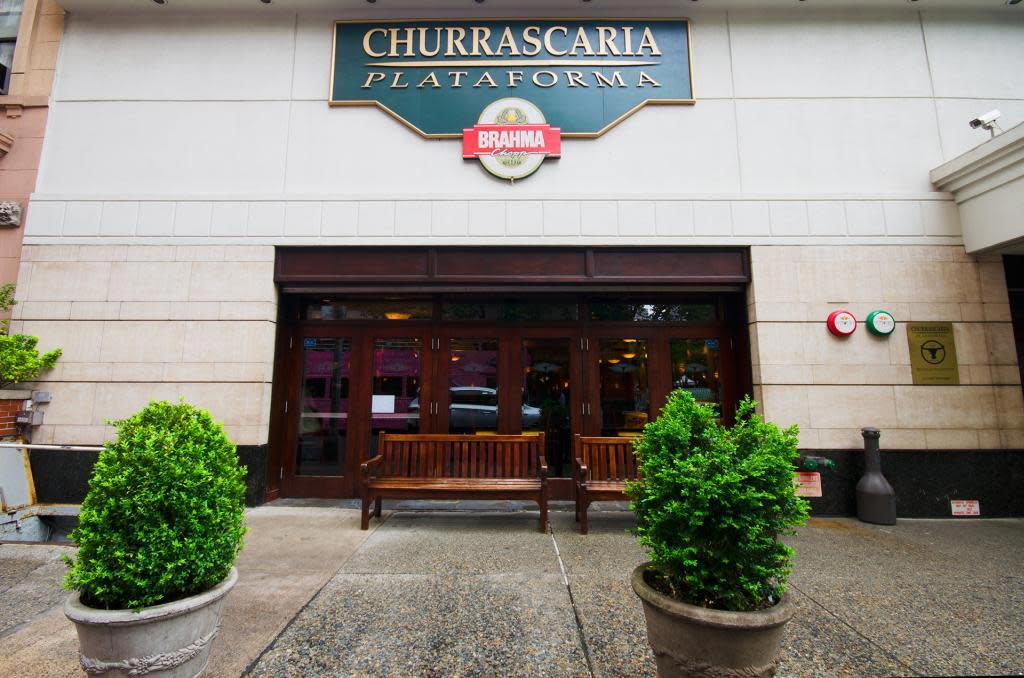
The Rodízio Format in a City That Runs on Tasting Menus
New York's premium dining tier has consolidated around a recognizable format: fixed-price, chef-driven, and increasingly spare. Counters like Masa and Atomix treat the meal as a sequence, each course a deliberate argument. Le Bernardin and Per Se operate on similar logic. Against that backdrop, the Brazilian rodízio sits in its own category entirely: abundance-first, communal by design, and measured not by the number of courses but by the volume of return passes the gauchos make to your table. Churrascaria Plataforma on West 49th Street is one of the few full-scale Brazilian steakhouses in Midtown to have sustained that format across decades, holding a position in a niche that Manhattan's dining scene has never prioritized but has never managed to displace.
The rodízio tradition originated in southern Brazil, where cattle ranchers developed a cooking method built around skewering whole cuts of meat and rotating them over open wood fires. The gaucho — the ranch hand who tended the cattle — became associated with the format, and the tableside carving ritual carried directly into the restaurant context. What distinguishes a serious rodízio house from a casual one is the range and quality of the cuts on offer, the discipline of the carving, and the condition of the salad bar, which in Brazil functions as a proper cold kitchen, not an afterthought.
What Keeps the Regulars Coming Back
The dining rooms that develop genuine regulars in New York tend to do so for one of two reasons: either the food is too precise to replicate elsewhere, or the format itself creates a kind of ritual that resists substitution. Churrascaria Plataforma falls into the second category. The rodízio circuit, gauchos moving through the room with skewers of picanha, fraldinha, chicken hearts, and various sausages, carving to order at the table, is a participatory format. You hold up a small disc, green side up when you want more, red side up when you need a pause. That control mechanism, simple as it sounds, turns the meal into something that regulars learn to work over time. First visits tend to result in over-ordering; return visits develop a rhythm.
For the Midtown crowd that has made Plataforma a reliable booking, the draw is also partly structural. The restaurant sits two blocks from the theater district, which means it handles groups, pre-show dinners, and corporate tables in a format that tasting-menu restaurants cannot. Eleven Madison Park is not where you take a table of twelve before a Broadway curtain. Plataforma is. That logistical fit has built a layer of loyalty that is distinct from culinary enthusiasm, it is the loyalty of a room that solves a specific problem reliably.
Among those who return regularly, the salad bar tends to be cited more often than casual visitors expect. Brazilian churrascaria salad bars operate differently from the North American concept: they include cooked dishes, hearts of palm, farofa, and prepared salads alongside fresh ingredients. At a full-scale operation, the cold side of the meal functions as a course in its own right, not as a holding pattern while meat arrives. Regulars who understand this treat the two sides of the meal as parallel tracks rather than a sequence.
Midtown West and the Logic of Scale
The theater district's restaurant economy runs on a different set of pressures than the tasting-menu tier. Volume, timing, and group capacity matter in ways they do not at Blue Hill at Stone Barns or The Inn at Little Washington. The restaurants that survive in this corridor for more than a decade tend to be the ones that have solved for scale without sacrificing a distinct identity. A generic steakhouse on 49th Street is functionally interchangeable with a dozen others. A full rodízio operation with a proper gaucho service structure and a salad bar that functions as a separate kitchen is not.
Plataforma's longevity in Midtown speaks to that distinction. The format has enough internal logic, and enough of a regular clientele who understand how to use it, to hold its position in a neighborhood where turnover is high and rents are punishing. Comparable full-service Brazilian rodízio operations in cities like San Francisco, New Orleans, and Chicago operate against similarly demanding real-estate pressures; the ones that survive tend to be the ones where the format has accumulated a committed base rather than relying on tourist traffic alone. See also: Lazy Bear in San Francisco, Emeril's in New Orleans, and Smyth in Chicago for how different American cities have built durable dining institutions in high-pressure markets.
How It Compares Across the US Steakhouse Spectrum
The North American steakhouse tradition has branched in several directions. On one end, precision-driven operations like Single Thread Farm in Healdsburg, Addison in San Diego, and Providence in Los Angeles treat sourcing and restraint as the defining values. On the other, volume-first operations prioritize tableside theater. The Brazilian rodízio sits at a third point on that triangle: it is theatrical in format, volume-oriented by design, but rooted in a specific regional tradition with its own internal standards. The picanha, the rump cap cut that anchors most serious rodízio programs, is not a North American steakhouse staple, and the way it is seasoned, skewered, and carved at the table is distinct from anything in the à la carte tradition. That specificity is part of what gives the format staying power, both in Brazil and in its international versions.
For readers tracking the broader arc of American dining institutions, the comparison to European counterparts is instructive. Restaurants like Frasca Food and Wine in Boulder, Atelier Moessmer Norbert Niederkofler in Brunico, and Dal Pescatore in Runate have built lasting reputations through tight regional identity and consistent format. The rodízio tradition, at its finest, operates on the same principle: a defined technique, a regional identity, and a format that creates return visits rather than one-off occasions. See our full New York City restaurants guide for how Plataforma fits into the broader picture of Manhattan dining across categories and price tiers. And for another angle on how American fine dining integrates land, sourcing, and format, The French Laundry in Napa remains the clearest reference point in the country.
Know Before You Go
Address: 316 W 49th St, New York, NY 10019
Neighbourhood: Midtown West / Theater District
Format: Brazilian rodízio (all-you-can-eat tableside carving)
Group dining: Well-suited to large parties; the format scales without service breakdown
Pre-theater timing: Two blocks from the Broadway corridor; confirm curtain time before booking
Reservations: Recommended for weekends and large groups; contact the restaurant directly
Frequently asked questions
Is Churrascaria Plataforma suitable for children?
The rodízio format at Churrascaria Plataforma works well for families: servers circulate continuously with grilled meats, so there is no fixed course structure and no pressure on timing. The Midtown West location at 316 W 49th St draws a broad mix of pre-theater diners and tourist groups, making the room generally family-tolerant. The tableside carving format tends to hold the attention of younger diners in a way that tasting-menu service does not.
What is the atmosphere like at Churrascaria Plataforma?
Plataforma operates at a scale that sets it apart from most New York dining rooms: the space accommodates large groups and moves at the pace of a high-volume theater-district operation. The energy is loud and communal rather than hushed, driven by the constant movement of passadores carrying skewers through the room. It is closer in feel to a Brazilian churrascaria in São Paulo than to the white-linen American steakhouse tradition on the same block.
How does Churrascaria Plataforma's rodízio format differ from a conventional steakhouse in New York City?
At a conventional New York steakhouse, you order by the cut and pay per plate; at Churrascaria Plataforma, the rodízio model means grilled meats are carved tableside and served continuously for a fixed price. That structure shifts the dining logic entirely: the kitchen's output is measured in throughput rather than individual plate composition. For groups eating at 316 W 49th St before a theater curtain, that format offers a speed and abundance that à la carte steakhouses in Midtown cannot match at the same table size.
What do regulars order at Churrascaria Plataforma?
In the rodízio format, the choice is structural rather than dish-specific: regulars tend to pace themselves at the salad bar early and signal the passadores more selectively once the picanha and lamb cuts arrive. The fixed-format service means knowing when to flip the table token from green to red is the real skill repeat visitors develop. That pacing knowledge, not a single signature plate, is what brings people back.
Accolades, Compared
A quick peer reference to anchor this venue in its category.
| Venue | Cuisine | Price | Awards | Notes |
|---|---|---|---|---|
| Churrascaria PlataformaThis venue — the venue you are viewing | Brazilian Rodízio Steakhouse | $50–100 | Not listed | Not listed |
| Le Bernardin | French Seafood Fine Dining | $300–500 | 3 Michelin Stars · World's 50 Best #13 | French, Seafood |
| Atomix | Modern Korean Tasting Menu | $300–500 | 2 Michelin Stars · World's 50 Best #7 | Modern Korean, Korean |
| Per Se | French Fine Dining Tasting Menu | $300–500 | 3 Michelin Stars · World's 50 Best #40 | French, Contemporary |
| Masa | Traditional Japanese Omakase | $500+ | 2 Michelin Stars · World's 50 Best #27 | Sushi, Japanese |
| Eleven Madison Park | Contemporary Plant-Based Fine Dining | $300–500 | 3 Michelin Stars · World's 50 Best #4 | French, Vegan |