Our verdict
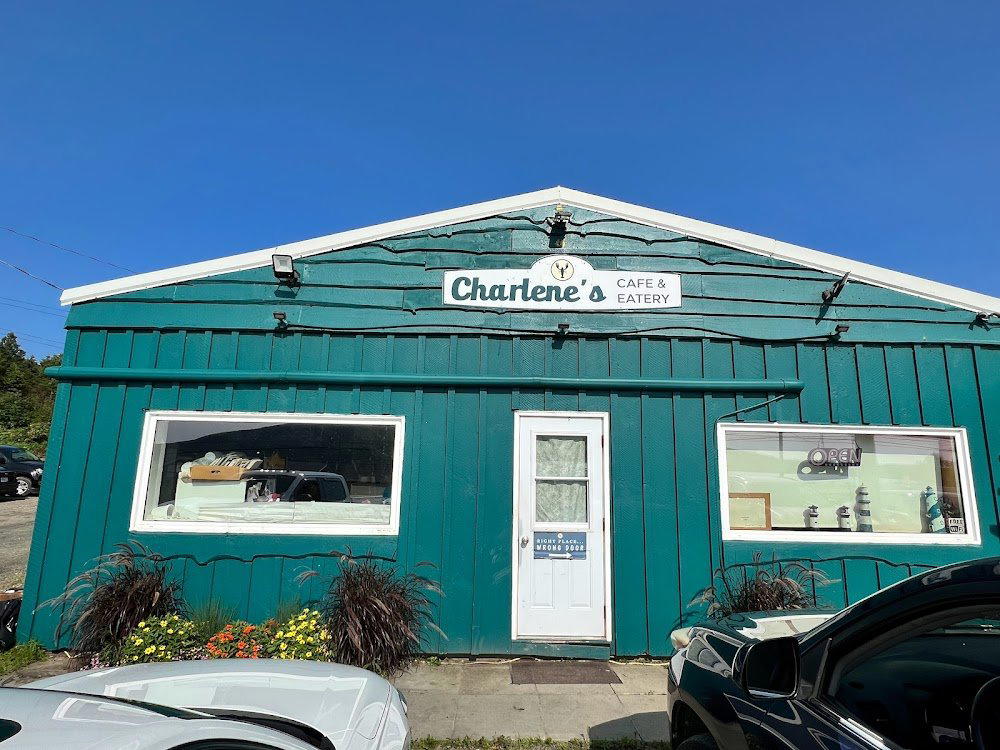
Charlene's Family Restaurant sits along the Trans-Canada Highway in Whycocomagh, Cape Breton, serving the kind of straightforward, community-anchored cooking that defines rural Nova Scotia dining. The setting is roadside and unfussy, the clientele local, and the cooking grounded in the agricultural and coastal produce that Cape Breton has long relied upon. For travellers passing through the Bras d'Or Lakes corridor, it functions as an honest, no-pretense stop.

Pearl is the En Primeur Club membership app — saves, bookings, and concierge access live there. Same editors, same standards.
- Address
- 9816 Trans-Canada Hwy #105, Whycocomagh, NS B0E 3M0, Canada
- Phone
- (902) 756-8004
- Hours
- Mon ClosedTue–Fri 11 AM–7 PMSat–Sun 8 AM–7 PM
- Directions
- Get directions
The menu
What to order
- Seafood Chowder
- Lobster Rolls
- Fish Cakes
- Chocolate Mousse Bucket
Where the Trans-Canada Meets Cape Breton's Table
The stretch of Highway 105 that runs through Whycocomagh, Nova Scotia, is not a dining destination in the way that Halifax's waterfront or Sydney's downtown might be. It is a working road through the interior of Cape Breton Island, skirting the brackish edges of the Bras d'Or Lakes, flanked by spruce and hardwood, and dotted with the kind of establishments that feed communities rather than court critics. Charlene's Family Restaurant occupies exactly this position on that road: a direct, community-facing restaurant at 9816 Trans-Canada Highway, serving the people who live in and around Whycocomagh rather than optimizing for the tourist trade.
That positioning matters, because it shapes everything about the experience. In an era when Canadian regional dining increasingly performs its local identity for an audience, places like Charlene's tend to simply practice it. Rural Cape Breton has a long-established food culture built around what the land and water produce: Bras d'Or Lakes fish, Cape Breton beef and lamb, root vegetables from the island's interior farms, and the kind of baking tradition that arrived with Gaelic settlers and never really left. A family restaurant on this highway, serving this community, is embedded in that supply chain whether it announces it or not.
Cape Breton's Ingredient Geography
Understanding what ends up on the plate at a restaurant like Charlene's requires understanding what Cape Breton's agricultural geography actually produces. The island sits in a position where Atlantic fisheries, freshwater aquaculture in the Bras d'Or Lakes system, and small-scale farming intersect. The Bras d'Or is a tidal saltwater lake, technically an inland sea, and it has historically supported significant shellfish and finfish populations. Mackerel, trout, and eel have been caught here for centuries; more recently, oyster cultivation has become a significant presence on the lake's quieter arms.
Inland, the Margaree Valley to the north of Whycocomagh is one of Nova Scotia's more productive agricultural corridors, with cattle, sheep, and market gardening all represented. The broader Inverness County area has seen modest growth in producers oriented toward local supply, a pattern consistent with rural Nova Scotia's slow but real shift toward shorter supply chains over the past two decades. Restaurants serving this geography, even informally, are plugged into an ingredient base that the Canadian restaurant establishment has spent considerable energy trying to replicate. Venues like Eigensinn Farm in Singhampton and Fogo Island Inn Dining Room in Joe Batt's Arm have built celebrated reputations around the same principle of proximity to source that a highway family restaurant in Cape Breton practices without ceremony.
The Family Restaurant Format in Rural Atlantic Canada
The family restaurant is a distinct format in rural Atlantic Canada, and it is worth treating it as such rather than mapping urban dining criteria onto it. These are not casual dining chains, and they are not aspirational farm-to-table projects. They are community infrastructure: open early, often open late, priced for working households, and structured around menus that reflect what the local population actually eats. In Nova Scotia's interior, that means breakfast plates, chowders, sandwiches, and dinner mains that draw on the same protein and vegetable base that the province has cooked with for generations.
This format has counterparts across Atlantic Canada. Catch22 Lobster Bar in Moncton operates in a more urban register but shares the same commitment to Atlantic seafood as a central organising principle. The difference is one of context and audience, not of fundamental philosophy. Rural family restaurants like Charlene's often serve as the most direct expression of a region's food culture precisely because they are not filtering it through the expectations of outside audiences.
For travellers accustomed to the tasting-menu format of places like Tanière³ in Quebec City or Alo in Toronto, the adjustment is significant. The editorial interest in a place like Charlene's is not about what it shares with those restaurants but about what it does not need to borrow from them. It sits in a different tier and serves a different function, and that function is legitimate on its own terms.
Whycocomagh as a Stopping Point
Whycocomagh itself sits roughly midway along the Ceilidh Trail, the western coastal route that connects Port Hastings at the Canso Causeway to the Cabot Trail junction near Margaree. For travellers doing a loop of Cape Breton, it falls at a natural pause point, roughly an hour from the causeway and an hour from Baddeck, the town most associated with the Bras d'Or Lakes visitor experience. The village has a small provincial park, a marina, and a heritage context rooted in Mi'kmaq settlement history; the Wagmatcook First Nation reserve sits adjacent to the community.
In practical terms, Charlene's functions as a reliable stop on a highway where the alternatives thin out considerably. Travellers on the Cabot Trail corridor who want to eat well at the formal end of the spectrum tend to gravitate toward Inverness town, where Saltwater and River House operate at a higher pitch, or toward Baddeck's small dining cluster. Charlene's occupies a different register entirely, and that is the point. See our full Inverness restaurants guide for a broader view of where Cape Breton's dining scene sits relative to the rest of Atlantic Canada.
Planning a Stop
Travellers covering the Ceilidh Trail or the broader Trans-Canada route through Inverness County should factor in that rural Cape Breton restaurants can keep shorter hours outside peak summer season, and that the window from late June through September represents the most reliable period for consistent service. The address at 9816 Trans-Canada Highway 105 is easy to locate en route; the restaurant is roadside rather than tucked into a side street, which simplifies the logistics considerably.
For context on the wider Canadian dining spectrum, the venues that anchor regional ingredient-led cooking in the country include Restaurant Pearl Morissette in Lincoln, AnnaLena in Vancouver, Cafe Brio in Victoria, Narval in Rimouski, and Jérôme Ferrer - Europea in Montreal. Charlene's does not compete with any of them, but it shares the same geography of supply that makes Atlantic and rural Canadian cooking worth paying attention to.
Frequently asked questions
Would Charlene's Family Restaurant be comfortable with kids?
The family restaurant format along Highway 105 corridors in rural Nova Scotia is built around exactly this kind of visit. Charlene's sits on the Trans-Canada at Whycocomagh, a practical stopping point for families driving the Ceilidh Trail, and the roadside, community-service nature of the place aligns closely with that demographic. Expect a low-formality setting where children are a normal part of the room, not an afterthought.
What's the vibe at Charlene's Family Restaurant?
Charlene's is a highway-facing, community-anchored spot on Trans-Canada Highway 105 in Whycocomagh, and the atmosphere reflects that function. Think practical comfort over atmosphere curation: a place where Cape Breton locals stop alongside road-trippers heading toward the Cabot Trail. The format sits firmly within the rural Atlantic Canadian family restaurant tradition, which prioritises generous portions and familiar execution over theatrical presentation.
Is Charlene's Family Restaurant a good stop when driving the Ceilidh Trail?
Charlene's sits at Whycocomagh, roughly at the midpoint of the Ceilidh Trail's western coastal route between Port Hastings and the Cabot Trail junction, which makes it a logistically sensible break on a day's drive. The Highway 105 address at 9816 Trans-Canada puts it directly on-route rather than requiring a detour. For travellers covering the full trail in a single day, the location alone gives it practical value as a meal stop.
What's the must-try dish at Charlene's Family Restaurant?
What Cape Breton's agricultural geography reliably produces includes seafood, lamb, and root vegetables, and family restaurants along this corridor tend to anchor their menus to those regional staples. Checking directly with the restaurant at 9816 Trans-Canada Hwy, Whycocomagh, before arrival is the most reliable approach.
A Quick Peer Check
Comparable venues nearby, for context on price, style, and recognition.
| Venue | Cuisine | Price | Notes |
|---|---|---|---|
| Charlene's Family RestaurantThis venue — the venue you are viewing | Comfort Food & Seafood | $20–30 | Not listed |
| Chez Christophe | French Patisserie & Café | $10–20 | West Vancouver |
| Raymonds | Modern Newfoundland Fine Dining | Not listed | downtown |
| Mosaic Bar & Grille | Creative West Coast | $30–50 | Downtown |
| Poppy Brasserie | French-Canadian Brasserie | Not listed | Lake Louise |
| The Mantle | Filipino/Asian/Canadian | $10–20 | downtown |
Continue exploring
More in Inverness
Restaurants in Inverness
Browse all →
Details
- Cozy
- Rustic
- Classic
- Family
- Casual Hangout
- Group Dining
- Standalone
- A La Carte
Current opening hours
- Monday
- Closed
- Tuesday
- 11 AM–7 PM
- Wednesday
- 11 AM–7 PM
- Thursday
- 11 AM–7 PM
- Friday
- 11 AM–7 PM
- Saturday
- 8 AM–7 PM
- Sunday
- 8 AM–7 PM
Hours can change for holidays and private events. Last verified .
Warm and welcoming family dining atmosphere with a focus on comfort and hospitality, designed to make guests feel at home.