.png)
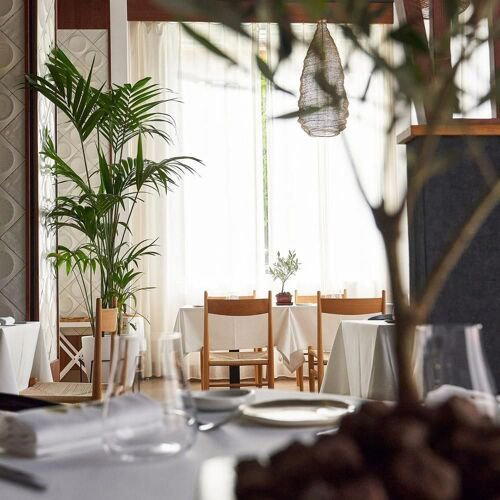
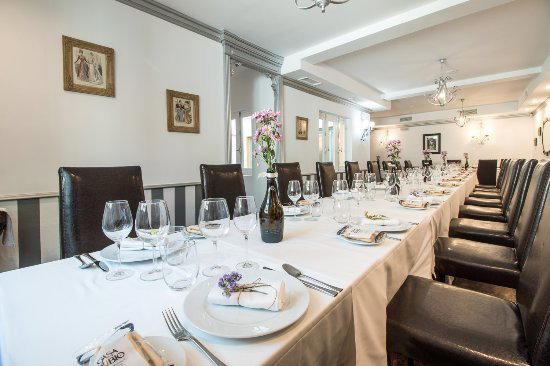
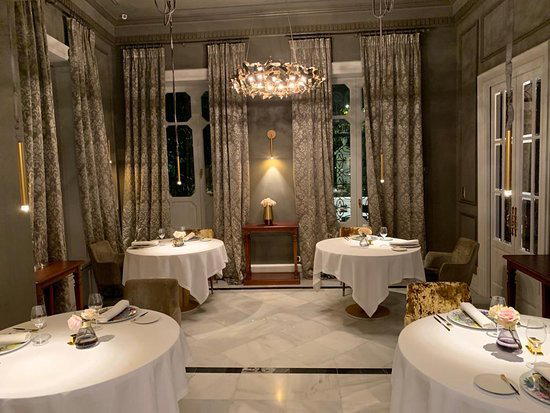
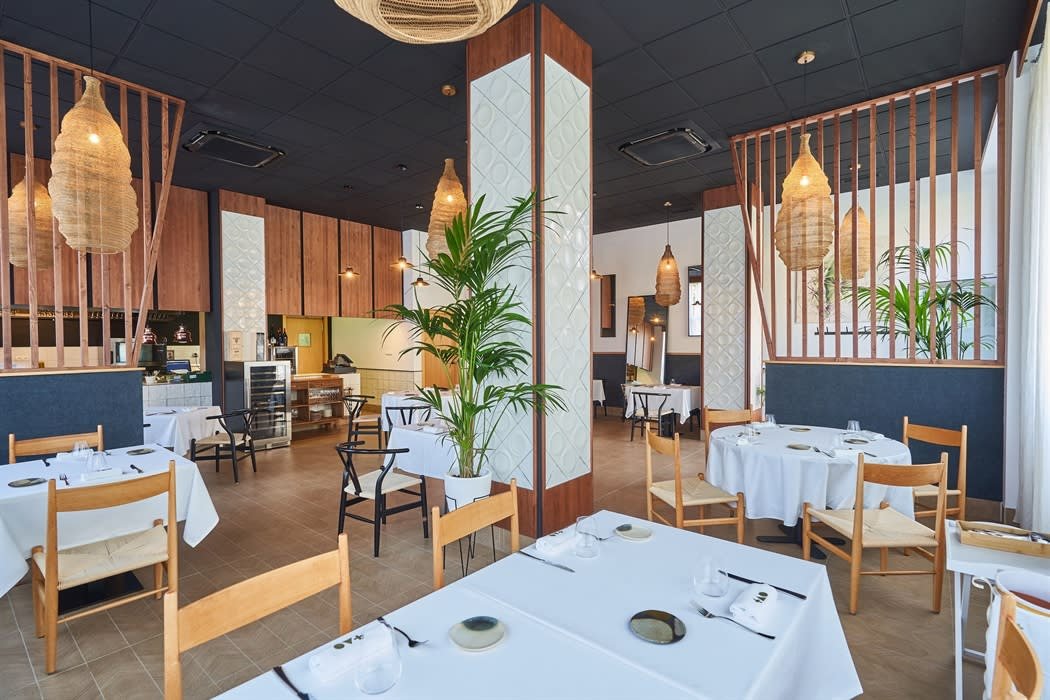
Celia Jiménez sits inside Andalucia's largest sports complex in Córdoba's Poniente Sur district, a location that signals the chef's deliberate distance from the city's historic dining centre. The kitchen applies contemporary technique to Andalucian ingredients and tradition, earning a Michelin Plate in 2025. At €€€, it occupies a middle tier between Córdoba's traditional taverns and its starred fine-dining rooms.

A Restaurant at the Edge of the Map
Córdoba's dining geography pulls most visitors toward the Judería and the streets radiating out from the Mezquita-Catedral, where restaurant terraces compete for the same foot traffic and the same tourist euro. The city's more interesting culinary moves have tended to happen elsewhere: Noor (Modern Spanish - Moorish, Modern Dutch, Creative), now holding three Michelin stars, operates from a dedicated space near the old city walls rather than inside the medieval quarter itself. Celia Jiménez goes further, placing itself inside the Complejo Deportivo Open Arena on Escriba Lubna in Poniente Sur — Andalucia's largest sports complex, a venue built for large-scale athletics rather than gastronomy. The address is a provocation of sorts: this is not a restaurant that trades on proximity to heritage monuments.
That distance from the centro histórico shapes the experience before you sit down. Poniente Sur is a modern residential and leisure district with little of the photogenic overlay that frames dining in the older quarters. The context is functional. Which makes the cooking, when it arrives, the entire reason for the journey — there is no atmospheric scaffolding borrowed from eight centuries of Moorish architecture to lean on.
What the Michelin Plate Signals Here
A Michelin Plate, awarded in 2025, sits below the star tier but carries specific meaning in the Spanish context. It indicates cooking that Michelin considers worth a visit on gastronomic grounds, without yet meeting the consistency or conceptual definition required for a star. In Córdoba, that places Celia Jiménez in a mid-tier alongside restaurants like Arbequina and El Envero, below the starred kitchens of Choco (Creative) and Noor, and above the traditional regional format of places like Casa Pepe de la Judería (Regional Cuisine).
The price point at €€€ reflects that positioning. It is a deliberate step up from the €€ bracket , where El Envero and casual Andalusian options operate , without entering the €€€€ tier occupied by Choco and Noor. For diners wanting contemporary Andalucian cooking with formal intent but without the full commitment of a tasting menu at the city's leading end, this is the relevant bracket.
Andalucian Cuisine Through a Contemporary Lens
The cooking at Celia Jiménez applies modern technique to Andalucian tradition , a direction that has become one of the defining movements in southern Spanish gastronomy over the past decade. The approach draws on the same regional larder that has underpinned Andalucian cooking for centuries: the olive oils of the Córdoba province, the salted fish traditions of the coast, the pulse and grain crops of the interior, and the slow-cooked meat preparations that form the backbone of local domestic cuisine. What changes is the method and the frame: classical preparations are reinterpreted through contemporary plating and precision cooking rather than served in the format a local grandmother would recognise.
This places Celia Jiménez in dialogue with a wider national conversation. Spain's modern fine-dining tier , from El Celler de Can Roca in Girona to Arzak in San Sebastián and Aponiente in El Puerto de Santa María , has consistently argued that regional identity and technical ambition are not opposing forces. Celia Jiménez makes that argument at a more accessible price point and in a city where the starred competition, particularly Noor's Moorish-Andalucian thesis, frames modern cooking through a specific historical lens. The cooking here does not appear to carry the same conceptual architecture; the direction is broader contemporary Andalucia rather than a singular idea about culinary archaeology.
At the international end of modern cuisine, restaurants such as Azurmendi in Larrabetzu, Cocina Hermanos Torres in Barcelona, DiverXO in Madrid, Frantzén in Stockholm, and FZN by Björn Frantzén in Dubai represent the ceiling of the format. Celia Jiménez does not operate at that register, nor is it trying to. Its reference point is regional depth rather than global ambition.
The Chef's Standing in the Field
The Michelin documentation describes the chef as widely respected in the world of gastronomy , a designation that carries weight when it comes from a source with Michelin's editorial restraint. The kitchen's commitment to bringing Andalucian cuisine up to date with contemporary cooking techniques and presentation is the consistent through-line across the restaurant's public identity. Specific biographical details and training lineage are not available in the public record, but the restaurant's location, pricing, and award recognition collectively suggest a chef operating with enough authority to build a project outside the city's established dining geography and attract national critical attention regardless.
Planning a Visit
Getting to Poniente Sur requires intent. The Complejo Deportivo Open Arena is not on a route most visitors walk between hotels and monuments, and the neighbourhood has none of the ambient restaurant culture that makes wandering the Judería productive. A taxi or rideshare from the historic centre takes roughly ten to fifteen minutes depending on traffic. The address , Escriba Lubna, 225 , sits at the edge of a large sports facility, so confirming the specific entrance for the restaurant before arrival is advisable.
At €€€, expect to spend materially more per head than at the city's tavern-format options but less than a full evening at Choco or Noor. Reservations are the expected format for a kitchen at this tier; booking ahead is the reliable approach, particularly on weekends. For context on the broader Córdoba scene before planning your itinerary, see our full Córdoba restaurants guide, alongside our full Córdoba hotels guide, our full Córdoba bars guide, our full Córdoba wineries guide, and our full Córdoba experiences guide.
Frequently Asked Questions
- What do regulars order at Celia Jiménez?
- Specific dish data is not available in the verified record, so naming individual plates would involve speculation. What the Michelin recognition confirms is that the kitchen's direction centres on Andalucian cuisine reframed through contemporary technique , so dishes built on the province's core ingredients (olive oil, preserved fish, local meats, pulses) treated with precision and modern presentation are the consistent thread. Regulars drawn to this kitchen are typically seeking that specific register: regional identity with technical rigour, at a price point below the city's starred rooms. For dish-level detail, the restaurant itself is the authoritative source.
Need a table?
Our members enjoy priority alerts and concierge-led booking support for the world's most difficult tables.
Access the Concierge