Cafe Slavia
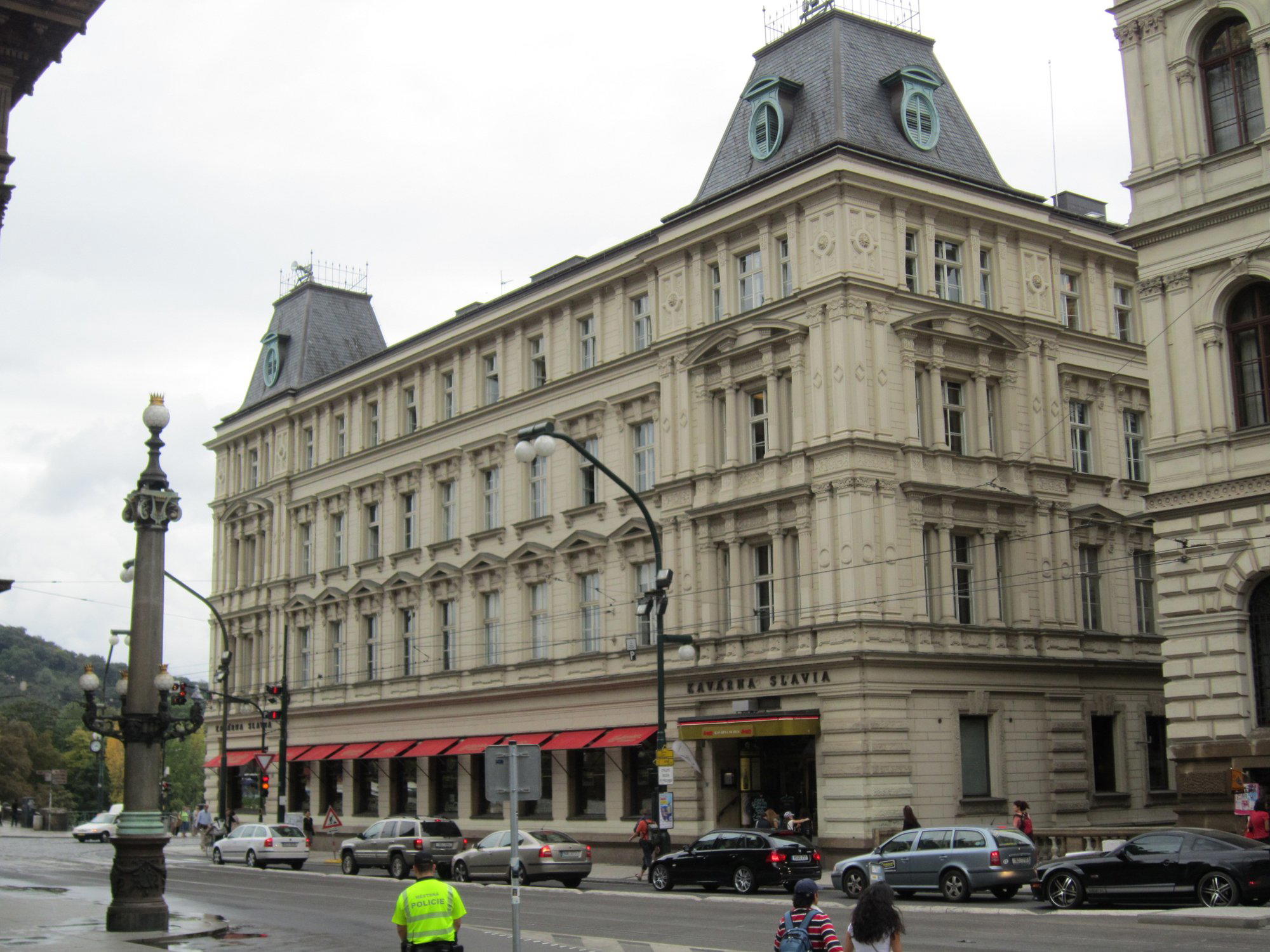
Café Slavia has occupied its corner position on Národní třída since 1884, making it one of the longest-running coffeehouses in Central Europe. The art deco interior and riverside outlook have drawn writers, dissidents, and heads of state across three political regimes. For visitors tracking Prague's intellectual and cultural history, it remains a primary reference point.
 Discover on Pearl
Pearl is the En Primeur Club membership app — saves, bookings, and concierge access live there. Same editors, same standards.
- Address
- Národní 1, 110 00 Staré Město, Czechia
- Phone
- +420777709145
- Website
- cafeslavia.cz
A Coffeehouse as Urban Chronicle
Prague's coffeehouse tradition belongs to the same Central European lineage as Vienna and Budapest: a civic institution where conversation, newspapers, and long afternoons of coffee constituted a kind of parallel public life. Café Slavia, at the junction of Národní třída and the Vltava embankment, has been part of that tradition since 1884, making it among the oldest continually operating coffeehouses in the Czech Republic. Where newer dining destinations in the city compete on tasting menus and natural wine lists, Slavia operates on a different register entirely, one defined by longevity, location, and a role in the political and literary record of the country.
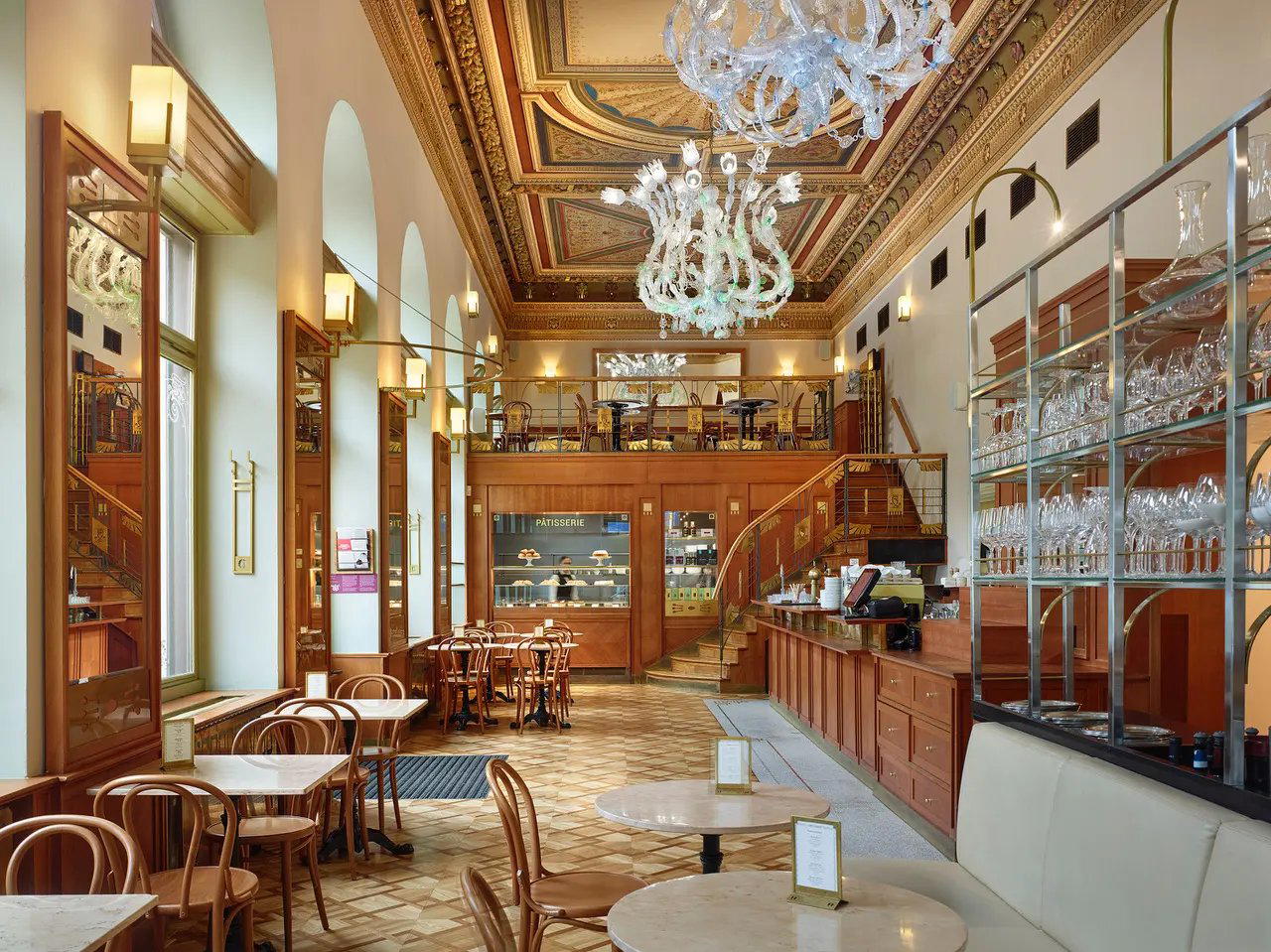
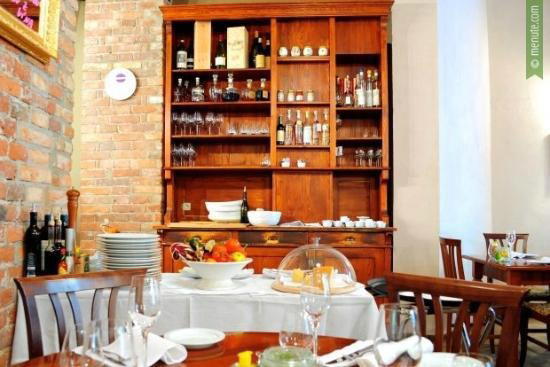
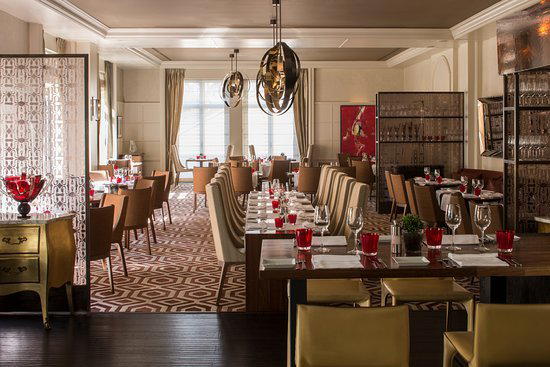
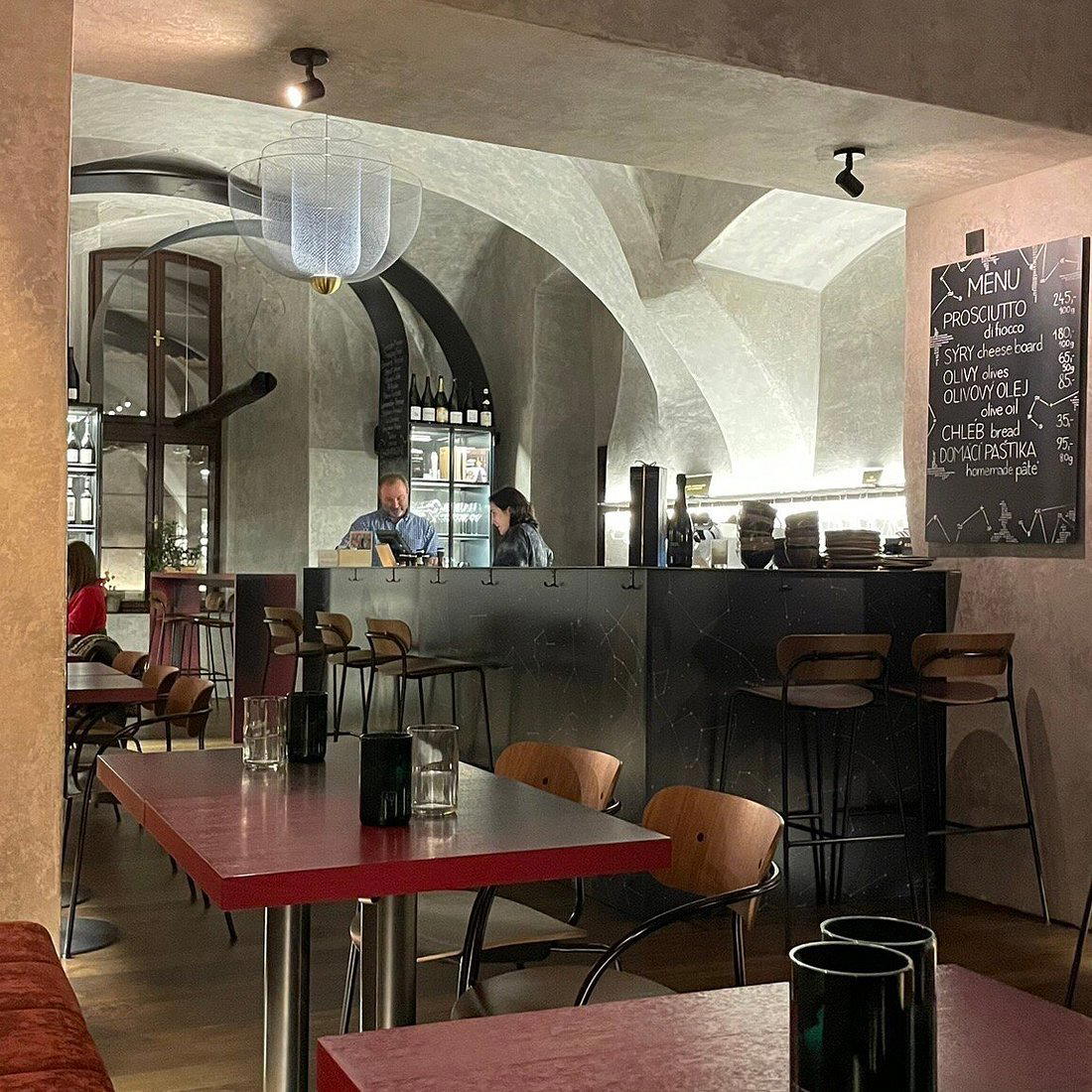
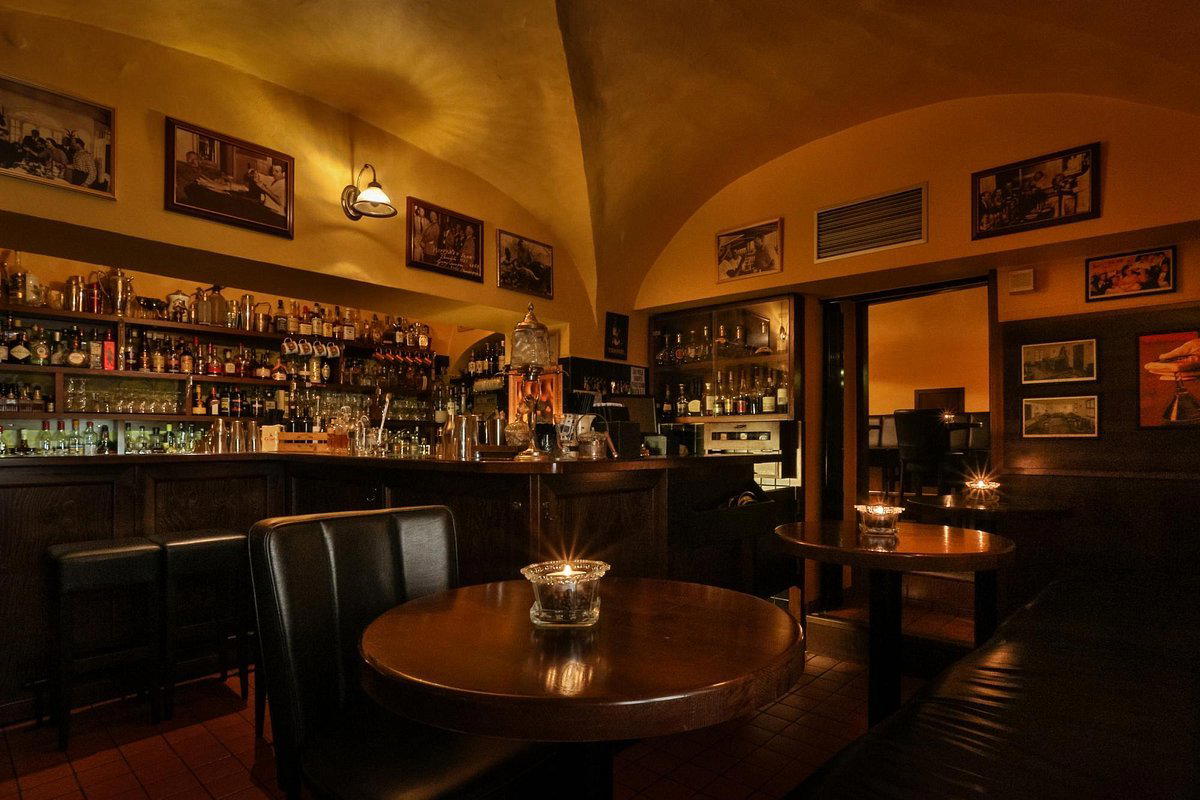
The building's art deco interior sets the scene before anything arrives at the table. The large windows face the National Theatre across a short stretch of pavement, and the light that enters in the late afternoon shifts the room from dim and amber to something considerably more open. The layout favours tables for two and four arranged without theatrical spacing, the kind of room where you are aware of adjacent conversations rather than insulated from them. This is not incidental. Coffeehouses of this type were designed for social density, not privacy.
Where Prague's Drinking Culture Anchors Itself
Understanding Café Slavia's place in Czech drinking culture requires separating it from the wine-forward, technically ambitious restaurants now attracting international attention in Prague. Venues like La Degustation Bohême Bourgeoise (French-Czech) and Alcron (Modern European) occupy the premium end of the city's contemporary dining map. Slavia operates as a different kind of institution: a coffeehouse in the Central European sense, where the drink of the house has historically been coffee prepared simply and served with minimal ceremony, and where the food menu has always been secondary to the act of being present.
Czech wine has developed considerably over the past two decades, with Moravia in particular producing Welschriesling, Müller-Thurgau, and Grüner Veltliner in styles that range from direct to technically considered. A coffeehouse of Slavia's age and category would traditionally hold a serviceable list oriented toward approachability rather than cellar depth. The editorial angle here is not sommelier expertise or curated allocation wine: it is the social function of the glass in a room where no one is in a hurry. That is the wine tradition of the coffeehouse, distinct from, and not competing with, the programme at destination restaurants.
For those seeking depth in the Czech wine and food scene beyond Prague, the country's regional dining has developed its own distinct voices. Pavillon Steak House in Brno and Cattaleya in Čeladná represent the serious end of regional cooking outside the capital. Na Spilce in Pilsen offers a completely different frame of reference, anchored in the brewing tradition that defines western Bohemia. The contrast with a Prague coffeehouse like Slavia is instructive: Czech hospitality runs across a wide register, from the historic urban institution to the technically ambitious regional table.
The Literary and Political Occupancy
The coffeehouse's role as a meeting point for Czech cultural and intellectual life across the twentieth century is part of the public record. The poet Jaroslav Seifert, who received the Nobel Prize in Literature in 1984, was among those associated with its tables. During the Communist period, the coffeehouse became a locus of unofficial cultural life, a role it shared with similar institutions across the Eastern Bloc. The fact that Slavia survived regime change, privatisation difficulties in the 1990s, and closure, before reopening, gives it a layered status that no newly opened venue can replicate.
For international visitors placing Café Slavia in a global frame, the comparison class is not fine dining, though Prague has strong entries in that category at Alma and Amano. The relevant comparable set is the historic European coffeehouse: Café Central in Vienna, Gerbeaud in Budapest, Gran Café Quadri in Venice. These are institutions measured by cultural durability and address, not by kitchen ambition. At that level, Slavia's position on the Vltava embankment opposite the National Theatre is, by any geographic metric, extraordinary.
Placing It on the Prague Map
The address, Národní 1, sits at the edge of Staré Město (Old Town), adjacent to Nové Město, and within a short walk of the Vltava riverside. The National Theatre is directly across the street. Wenceslas Square is reachable in under ten minutes on foot. For visitors structuring a day around central Prague's cultural geography, the coffeehouse functions as a natural anchor point: arrive before or after a theatre performance, use it as a transitional space between the Old Town's tourist density and the more residential character of Smíchov across the river.
Visitors interested in tracing Czech dining beyond the capital will find useful reference points in Long Story Short Eatery & Bakery in Olomouc, Chapelle in Písek, and Tlustá Kachna in Chrudim, each representing the spread of serious hospitality outside Prague. For the more adventurous, V Bezovém Údolí in Kryštofovo Údolí and Dvůr Perlová voda in Budyně nad Ohří show how Czech hospitality has extended into countryside settings with their own character.
The room accommodates a wide range of visitors simultaneously, from tourists oriented by its appearance in guidebooks to locals using it as a working afternoon. Peak hours correspond to the theatre schedule across the street, so pre-performance periods can see the room fill quickly. Arriving in the late morning or in the mid-afternoon typically means more settled conditions. For comparison, the more reservation-dependent end of Prague dining operates on a different planning logic entirely: at venues operating formal tasting programmes, advance booking of weeks or months is standard practice. Slavia requires neither, which is partly the point.
At-a-Glance Comparison
Comparable venues nearby, for context on price, style, and recognition.
| Venue | Cuisine | Price | Awards | Notes |
|---|---|---|---|---|
| Cafe SlaviaThis venue — the venue you are viewing | Traditional Czech Cafe | $$ | , | |
| THE FARM | Czech Urban Bistro with Farm-to-Table Focus | $$ | , | Pelc Tyrolka |
| Cernomorka | Casual seafood restaurant | $$ | , | Žižkov |
| Sisters Bistro v Dlouhé | Modern Czech Open-Faced Sandwiches | $ | , | Josefov |
| U Raka | Traditional Czech | $$ | , | Hradcany |
| Hosarowa | Korean BBQ & Shabu Shabu | $$ | , | Stare Mesto (Old Town) |
At a Glance
- Classic
- Iconic
- Elegant
- Brunch
- Casual Hangout
- Special Occasion
- Live Music
- Historic Building
- Terrace
- Beer Program
- Waterfront
- Street Scene
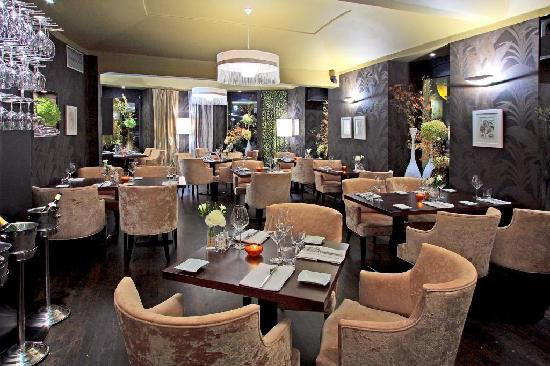
Art Deco interior with large windows offering breathtaking views, elegant atmosphere enhanced by professional live piano music daily.