Cafe Sabor
Cafe Sabor sits on West Center Street in Logan, Utah, where the Cache Valley's agricultural surroundings shape what ends up on the plate. The restaurant draws from a region defined by its farming heritage, placing it in a local dining scene that runs closer to the land than most mid-size American cities. For visitors moving through northern Utah, it represents a grounded alternative to chain dining along the main corridor.
Pearl is the En Primeur Club membership app — saves, bookings, and concierge access live there. Same editors, same standards.
- Address
- 600 W Center St, Logan, UT 84321
- Phone
- +14357528088
- Website
- cafesabor.com
- Directions
- Get directions
 Saves & bookings on Pearl
Logan's Dining Scene and Where Cafe Sabor Fits
Cache Valley is one of the more productive agricultural pockets in the Intermountain West. Hemmed in by the Wasatch Range to the east and the Bear River Mountains to the north, the valley floor supports dairy operations, grain farms, and market gardens that supply both local households and regional distributors. That agricultural density gives Logan's restaurant community a resource that most comparable-sized cities — those in the 50,000-person range without a direct farming hinterland — simply do not have access to at the same proximity. Cafe Sabor, at 600 W Center St, sits inside that context.
The address places it on the western stretch of Center Street, Logan's main commercial artery, within walking distance of Utah State University and the older residential blocks that surround it. That positioning matters in a city where dining tends to cluster either around the university or toward the commercial strips on the north end. The Center Street corridor carries a different energy: more neighborhood-facing, less transactional.
The Case for Ingredient Proximity in a Mountain West Context
Across American dining, the relationship between sourcing geography and menu character has become one of the defining editorial conversations of the past two decades. At the high end, places like Blue Hill at Stone Barns in Tarrytown and Single Thread Farm in Healdsburg have built entire operational models around controlling or closely partnering with their supply chains. Smyth in Chicago works within a similar framework, treating ingredient sourcing as the structuring logic of the menu rather than a marketing afterthought. At the other end of the price spectrum, the same instinct shows up in neighborhood restaurants that orient their menus around what is seasonally available within a short drive.
Cache Valley's dairy tradition is the most documented local supply story. The valley's cheese production has a regional reputation that extends well beyond Utah, and a restaurant on Center Street has shorter lines of supply to that product than almost any metropolitan kitchen in the country. Whether a given restaurant formalizes that sourcing into a stated program or simply benefits from the proximity as a matter of cost and logistics, the ingredient quality baseline in this valley is higher than the dining price points might suggest to first-time visitors.
This is the pattern that characterizes smaller agricultural cities across the West. Frasca Food and Wine in Boulder operates in a comparable city-size context, where proximity to Colorado's farming communities informs both the wine program and the kitchen's sourcing decisions. The Wolf's Tailor in Denver operates at a different price tier but reflects the same Mountain West pattern of chefs working with what the immediate region produces. Logan's version of that story is less formalized at most venues, but the raw material is there.
The Physical Experience on West Center Street
Approaching Cafe Sabor from the university side of Center Street, the block reads as a mix of older commercial buildings and converted residential storefronts. Logan's downtown has retained enough of its original building stock to feel distinct from the standardized retail corridors that define so many mid-size Western cities. The streetscape is walkable in a way that rewards arriving on foot rather than by car, and the concentration of independent businesses in this corridor gives it a character that the chain-heavy north end of the city does not replicate.
The interior register of a restaurant on this block tends to be informal without being careless. Dining in Logan operates at a generally casual pitch, driven partly by the university population and partly by the outdoor-activity orientation of the region's residents, who tend to prioritize comfort over formality at the table. That informality is a feature rather than a shortcoming for the type of meal that fits this setting.
Logan's restaurant scene is not competing with Le Bernardin in New York City or The French Laundry in Napa. That comparison is structurally irrelevant. Against that standard, a well-executed neighborhood restaurant with access to Cache Valley's dairy and farm production occupies a meaningful position.
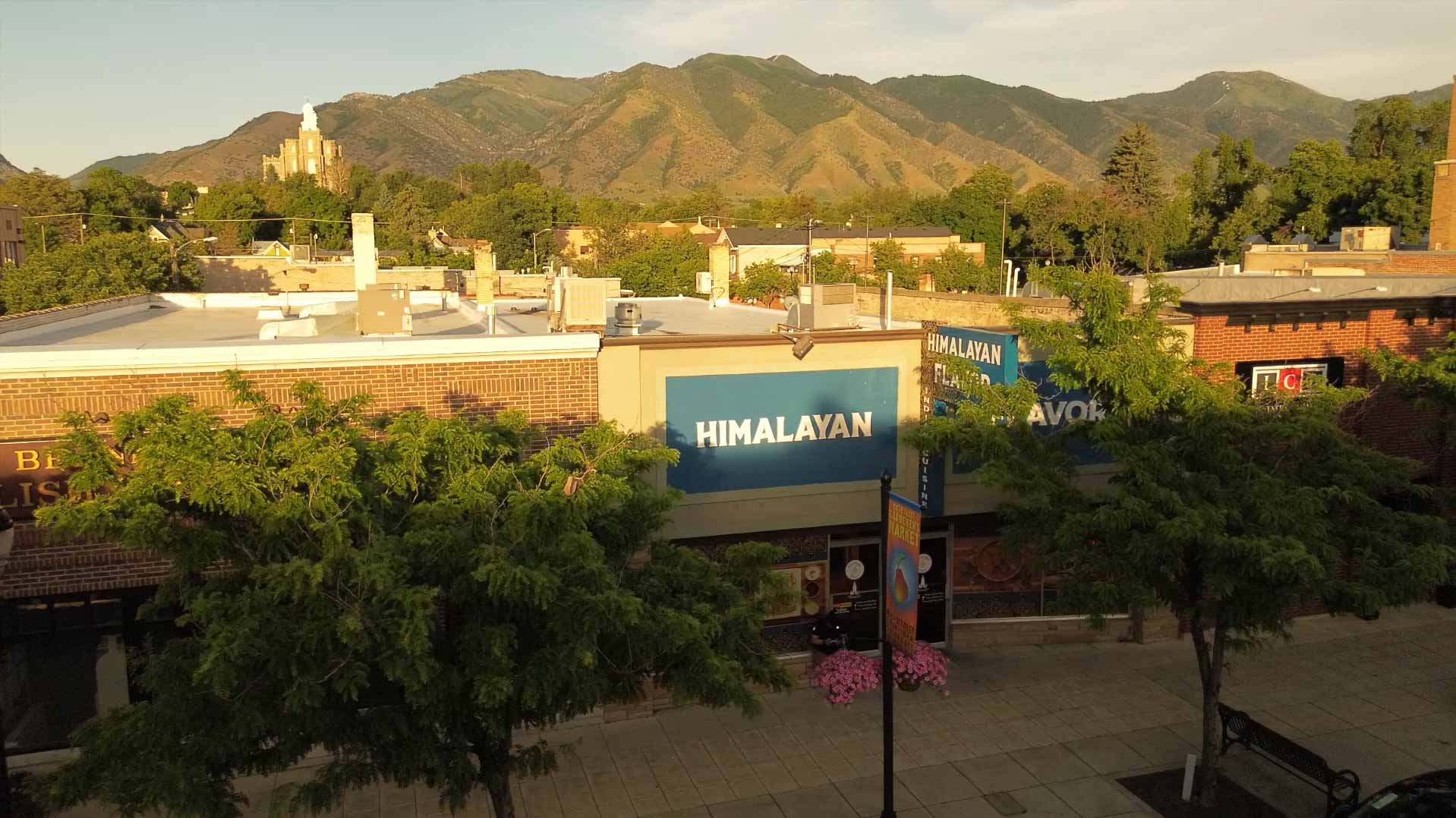
For visitors who have come to Logan for outdoor access, the Bear Lake corridor, the mountains above the valley, or the university's programming, the dining decision is usually between a handful of independent operators and the national chains that line U.S. 89. Himalayan Flavor in Logan represents one pole of that independent dining set, bringing a distinct culinary tradition to the valley. Cafe Sabor occupies a different position in that small but real ecosystem of independent dining.
For broader context on what the city offers across categories and price points, the EP Club full Logan restaurants guide maps the scene more comprehensively.
The Broader Ingredient-Sourcing Conversation
The restaurants that have built the strongest reputations around sourcing transparency in the United States tend to operate at price tiers well above what Logan's market sustains. Providence in Los Angeles, Addison in San Diego, and ITAMAE in Miami each build sourcing logic into their identities in ways that are legible to a national food media audience. Oyster Oyster in Washington, D.C. has made ingredient sourcing the central editorial point of its entire concept. At the fine dining ceiling, Atomix in New York City and Atelier Moessmer Norbert Niederkofler in Brunico operate within regionality frameworks where sourcing geography is the organizing principle of the menu.
The argument that sourcing proximity matters only at high price points is not supported by how food actually works. The same Cache Valley dairy that supplies specialty cheese producers is available to any restaurant in Logan that chooses to prioritize it. The difference between a restaurant that formalizes that sourcing and one that benefits from it quietly is one of communication rather than access. In a city this close to its agricultural base, that proximity is structural, not aspirational.
Similar dynamics appear in Lazy Bear in San Francisco and Emeril's in New Orleans, where regional ingredient identity shapes the menu's character even when the explicit sourcing narrative varies. The Inn at Little Washington in Virginia has built a multi-decade reputation on exactly this logic: a restaurant that draws from its immediate agricultural region as a point of distinction rather than as a constraint.
Planning a Visit
Cafe Sabor is located at 600 W Center St, Logan, UT 84321. Logan sits roughly 80 miles north of Salt Lake City along U.S. 89, making it accessible as a day trip from the Wasatch Front or as a stopover on routes toward Bear Lake and the Idaho border. The Center Street location is walkable from the Utah State University campus and from the historic downtown blocks. No booking contact or hours data is available in EP Club's current records, so confirming service times directly before visiting is advisable. Parking along Center Street is generally available, and the neighborhood is navigable on foot once you arrive.
Continue exploring
More in Logan

At a Glance
- Cozy
- Rustic
- Historic
- Family
- Casual Hangout
- Group Dining
- Historic Building
Current opening hours
- Monday
- 11 AM–9 PM
- Tuesday
- 11 AM–9 PM
- Wednesday
- 11 AM–9 PM
- Thursday
- 11 AM–10 PM
- Friday
- 11 AM–10 PM
- Saturday
- 11 AM–10 PM
- Sunday
- Closed
Hours can change for holidays and private events. Last verified .
Bright and colorful decorations blended with historic train station details creating a cozy and memorable atmosphere.
Know Before You Go
- Getting there
- 600 W Center St, Logan, UT 84321