Café Gandolfi

The Good Food Guide GFG Good
Our verdict
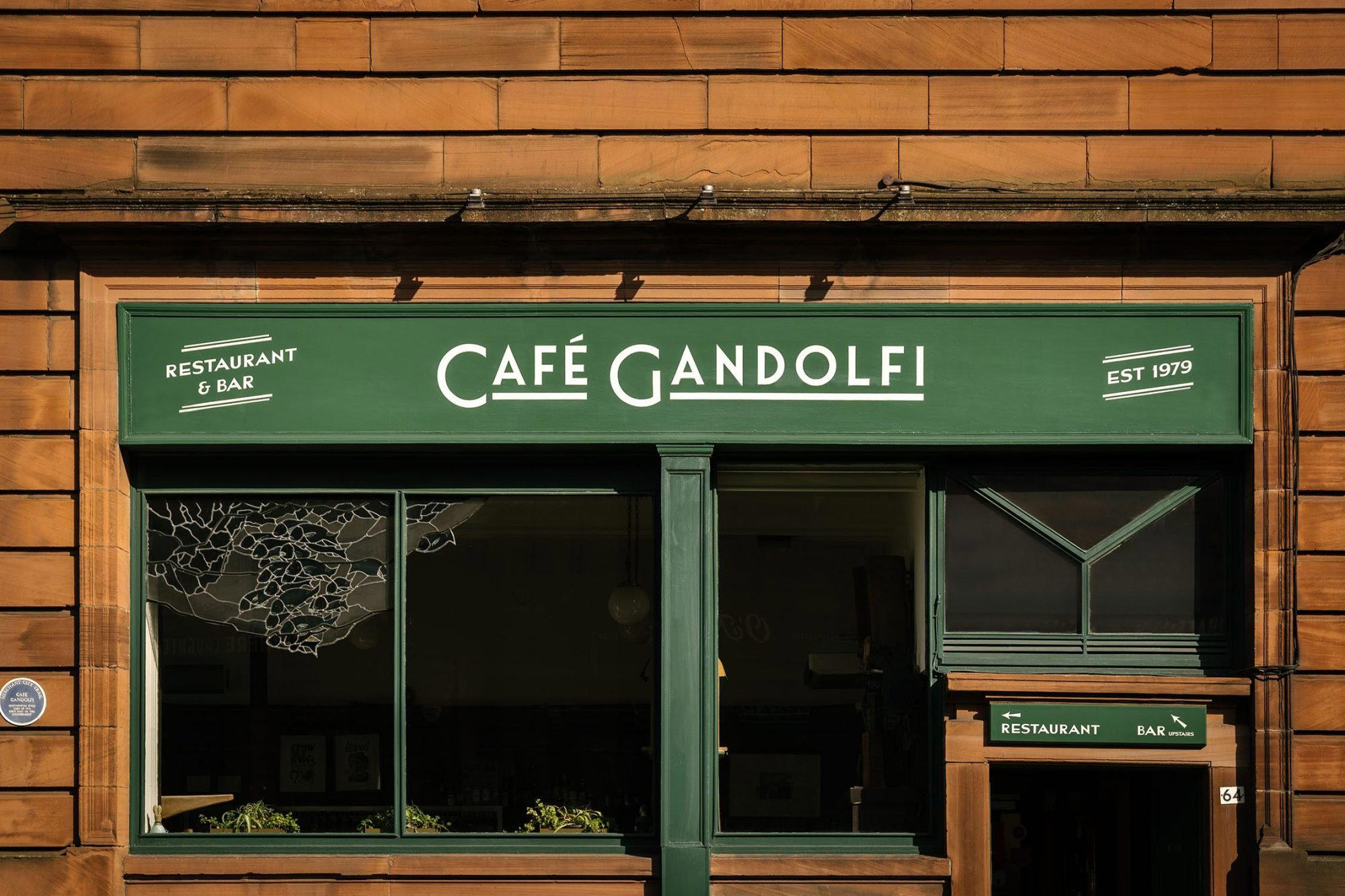
Open since 1979 and housed at 64 Albion St in Glasgow's Merchant City, Café Gandolfi is one of the city's oldest family-owned restaurants. Tim Stead's hand-carved furniture and stained glass set the scene for gutsy Scottish cooking that runs from exemplary Cullen skink to haggis with pickled walnut ketchup, alongside Mediterranean forays and a compact wine list mostly available by the glass.

Pearl is the En Primeur Club membership app, where members save venues, book tables and use the concierge.
The menu
What to order
- Cullen skink
- Haggis neeps and tatties
- Stornoway Black Pudding
A Merchant City Fixture That Has Earned Its Place
Glasgow's Merchant City has changed considerably since Café Gandolfi opened its doors on Albion Street in 1979. Warehouse conversions have become hotels, blank facades have filled with bars, and the area's dining scene now spans everything from £££ modern tasting menus at Cail Bruich and Unalome by Graeme Cheevers to affordable neighbourhood spots like Celentano's. Through all of it, Gandolfi has stayed put at number 64, accumulating four and a half decades of regulars, and something close to institutional status in the process.
That status is earned, not assumed. In a city that holds its institutions to genuine account, a restaurant described as "a place of pilgrimage for displaced Glaswegians" is carrying real weight. The phrase captures something specific: this is not the kind of place people visit because it appears on a shortlist, but because they keep returning to it across the years. One loyal regular has written of first visiting at 17 and still going back 40 years later. That kind of loyalty says more about a restaurant's position in its city than any single award.
What Tim Stead Built
The interior is the first thing to address, because it tells you something important about the category Gandolfi occupies. Scottish sculptor Tim Stead carved the furniture here, and the stained glass adds a quality of light that most restaurant designers would struggle to replicate with a larger budget. The pieces are not props installed to project character; they are actual works by a significant Scottish craftsman, and they give the room a density of presence that newer openings in the neighbourhood have not managed to match.
Forty-five years of service have left their marks. The decor carries what one reviewer has called the scuff marks of gustative generations, and that is not a criticism. The patina here is honest. Tables are set close together, the place runs busy most evenings, and the atmosphere has the cheery familiarity of a room that knows what it is. For visitors who have been circling Glasgow's newer, more architecturally curated openings, Gandolfi offers a different register entirely.
The Kitchen's Position in Glasgow's Scottish Cooking Tradition
The editorial angle on Gandolfi's food is cultural, not merely gastronomic. Scotland has a genuinely distinctive culinary vocabulary, and Glasgow's better casual restaurants have spent decades working out how to express it without falling back on tartan-shortbread clichés. Gandolfi has been doing this longer than most.
The Cullen skink on the current menu is cited as an exemplar of its kind: peaty, creamy, served with sourdough from Freedom Bakery, a Glasgow social enterprise. The choice of supplier is not incidental. It signals a kitchen that understands its city's food ecosystem, not just its own dishes. Haggis, neeps and tatties appears alongside a pickled walnut ketchup, which is the kind of small, well-considered move that rescues a national dish from nostalgia and puts it back on the table as actual food. The fact that removing it would, by general consensus, cause something close to a customer revolt tells you how well it has been calibrated.
Kitchen's range extends well beyond Scotland's borders. An 'nduja Scotch egg over aïoli, tagliatelle with Perthshire girolles and egg yolk, whole sea bream with sauce vierge and broad beans: these dishes bring confidence from the Mediterranean without abandoning the local sourcing logic. The Perthshire girolles in a pasta dish are a good example of how this balance works. The format is Italian, the produce is Scottish, and the result belongs to neither tradition exclusively. That kind of cooking is harder to execute than it looks, and Gandolfi has been doing it across menu iterations for decades.
Puddings are taken seriously. A Basque cheesecake described as properly cheesy and a self-described chocolate nemesis both play to the Glaswegian sweet tooth, and neither is offered apologetically. These are finishing dishes, not afterthoughts.
On the Wine List and What It Signals
The wine selection is compact and priced in the mid-£20 to mid-£50 range per bottle, with most available by the glass. For a restaurant at this price point and positioning, that is a sensible configuration. It covers enough ground to work with the range of the menu, does not require specialist knowledge to navigate, and keeps the per-head cost manageable. Beer and cocktails are equally popular, which reflects the mixed audience the room pulls in on any given evening, from pre-theatre walk-ins to regulars who have been coming for decades.
For context on where Gandolfi sits relative to Glasgow's broader options, the city's leading end is occupied by tasting menu restaurants charging £££ and above. The more accessible middle tier, where Gandolfi operates alongside places like Brett and Big Counter, is where the city does a lot of its leading everyday eating. Nationally, the conversation about long-running British restaurants that have maintained quality over decades runs through places like The Ledbury in London, Waterside Inn in Bray, Moor Hall in Aughton, L'Enclume in Cartmel, Gidleigh Park in Chagford, and Hand and Flowers in Marlow, each of which has earned its longevity through consistent execution rather than concept. Internationally, institutional restaurants that outlast trends include Le Bernardin in New York City and Emeril's in New Orleans. Gandolfi's particular achievement is doing this at a mid-market price point, without the protection that fine-dining margins provide.
Planning Your Visit
Café Gandolfi is at 64 Albion Street, G1 1NY, in the Merchant City. The room runs full most evenings, and the close-set tables mean that walk-ins during peak hours will need patience. Pre-theatre timing is busy given the proximity to venues in the city centre. Booking ahead is the sensible approach for dinner, though the restaurant does take walk-ins when space allows. The wine list, with most bottles available by the glass, makes it direct to keep costs controlled. For anyone building a wider Glasgow itinerary, the full picture is in our Glasgow restaurants guide, alongside our Glasgow hotels guide, our Glasgow bars guide, our Glasgow wineries guide, and our Glasgow experiences guide.
Frequently asked questions
Can I bring kids to Café Gandolfi?
Café Gandolfi has operated as a family-owned restaurant since 1979 and the close-set tables fill with a broad mix of walk-ins, regulars, and pre-theatre crowds. The room has a cheery, informal bustle rather than a hushed fine-dining atmosphere, which makes it a workable option for older children. The menu's Scottish comfort anchors, including haggis, neeps and tatties and Cullen skink, give younger diners something grounded to work with.
What's the vibe at Café Gandolfi?
The room is warm and lived-in: Tim Stead's hand-carved wooden furniture carries the scuff marks of decades of use, and the stained glass filters the light in a way that feels specific rather than designed. Tables are close-set and reliably full, with a mix of long-term regulars and visitors passing through Merchant City. It moves at pace during busy evenings but the familiarity of the place absorbs the occasional delay.
What distinctions does Café Gandolfi have?
Café Gandolfi has received recognition including: Opened in 1979, Gandolfi’s is one of the city's oldest family-owned restaurants and is something of an institution, considered 'a place of pilgrimage for displaced Glaswegians'. Its distinctive stained glass and robust hand-carved furniture….
What do people recommend at Café Gandolfi?
The Cullen skink, described in coverage of the restaurant as an exemplar of its kind, and the haggis, neeps and tatties with pickled walnut ketchup are the two dishes most closely associated with the kitchen. The 'nduja Scotch egg with aïoli and the Basque cheesecake are also noted as reliable choices. The wine list sits in the mid-£20 to mid-£50 range per bottle, with most available by the glass.
What's the address for Café Gandolfi?
Café Gandolfi is located at 64 Albion St, Glasgow G1 1NY, United Kingdom, Glasgow.
Is Café Gandolfi reservation-only?
Café Gandolfi takes walk-ins and is noted for attracting time-conscious diners heading to nearby theatres and concerts, so it is not strictly reservation-only. That said, the room runs full most evenings and the tables are close-set, so arriving without a booking during peak hours carries real risk. Booking ahead is the practical approach for a guaranteed seat, particularly on weekends.
Cost and Credentials
Comparable venues nearby, for context on price, style, and recognition.
| Venue | Cuisine | Price | Awards | Notes |
|---|---|---|---|---|
| Café GandolfiThis venue (the venue you are viewing) | Classic Scottish Gastropub | $20–30 | The Good Food Guide GFG Good | Not listed |
| Suissi Vegan Kitchen | Pan-Asian Vegan Fusion | $20–30 | The Good Food Guide GFG Good | Victoria Park, Pan-Asian Vegan Fusion |
| Corner Shop | Basque & Catalan Tapas | $30–50 | Not listed | Yorkhill/Finnieston, Basque & Catalan Tapas |
| Paesano Pizza | Authentic Neapolitan Pizza | $20–30 | Not listed | Hillhead, Authentic Neapolitan Pizza |
| Eighty Eight | Modern Scottish Small Plates | $30–50 | The Good Food Guide GFG Good | Partick East/Kelvindale, Modern Scottish Small Plates |
| Colbeh Restaurant | Authentic Persian | $20–30 | Not listed | Govan, Authentic Persian |
Recognition history
Dated appearances from independent guides and award organizations, with the underlying list record or original source where available.
The Good Food Guide GFG Good
The Good Food Guide
Continue exploring
More in Glasgow
Restaurants in Glasgow
All restaurants in Glasgow →
Bars in Glasgow
All bars in Glasgow →
Hotels in Glasgow
All hotels in Glasgow →
Wineries in Glasgow
Browse all →
Details
- Cozy
- Rustic
- Well Known
- Classic
- Brunch
- Casual Hangout
- Historic Building
- Extensive Wine List
- Local Sourcing
- A La Carte
- Small Plates
- Vegetarian Friendly
- Vegan Options
- Gluten Free Options
Current opening hours
- Monday
- 8 AM–4 PM
- Tuesday
- 8 AM–11 PM
- Wednesday
- 8 AM–11 PM
- Thursday
- 8 AM–11 PM
- Friday
- 8 AM–11 PM
- Saturday
- 8 AM–11 PM
- Sunday
- 9 AM–4 PM
Hours can change for holidays and private events. Hours as of .
Cozy and characterful with panelled walls, substantial hand-carved wooden furniture, stained glass, and a cheery, convivial bustle.