Cafe 209
On Munster Road in Fulham, Cafe 209 occupies a stretch of SW6 that sits comfortably outside London's Michelin circuit yet draws a neighbourhood crowd with enough conviction to make bookings advisable. Without the press apparatus of a destination restaurant, it operates on the terms that sustain most of London's genuinely local dining rooms: consistency, proximity, and a physical space that earns repeat visits on its own merits.
Pearl is the En Primeur Club membership app — saves, bookings, and concierge access live there. Same editors, same standards.
- Address
- 209 Munster Rd, London SW6 6BX, United Kingdom
- Phone
- +44 20 7385 3625
- Directions
- Get directions
 Saves & bookings on Pearl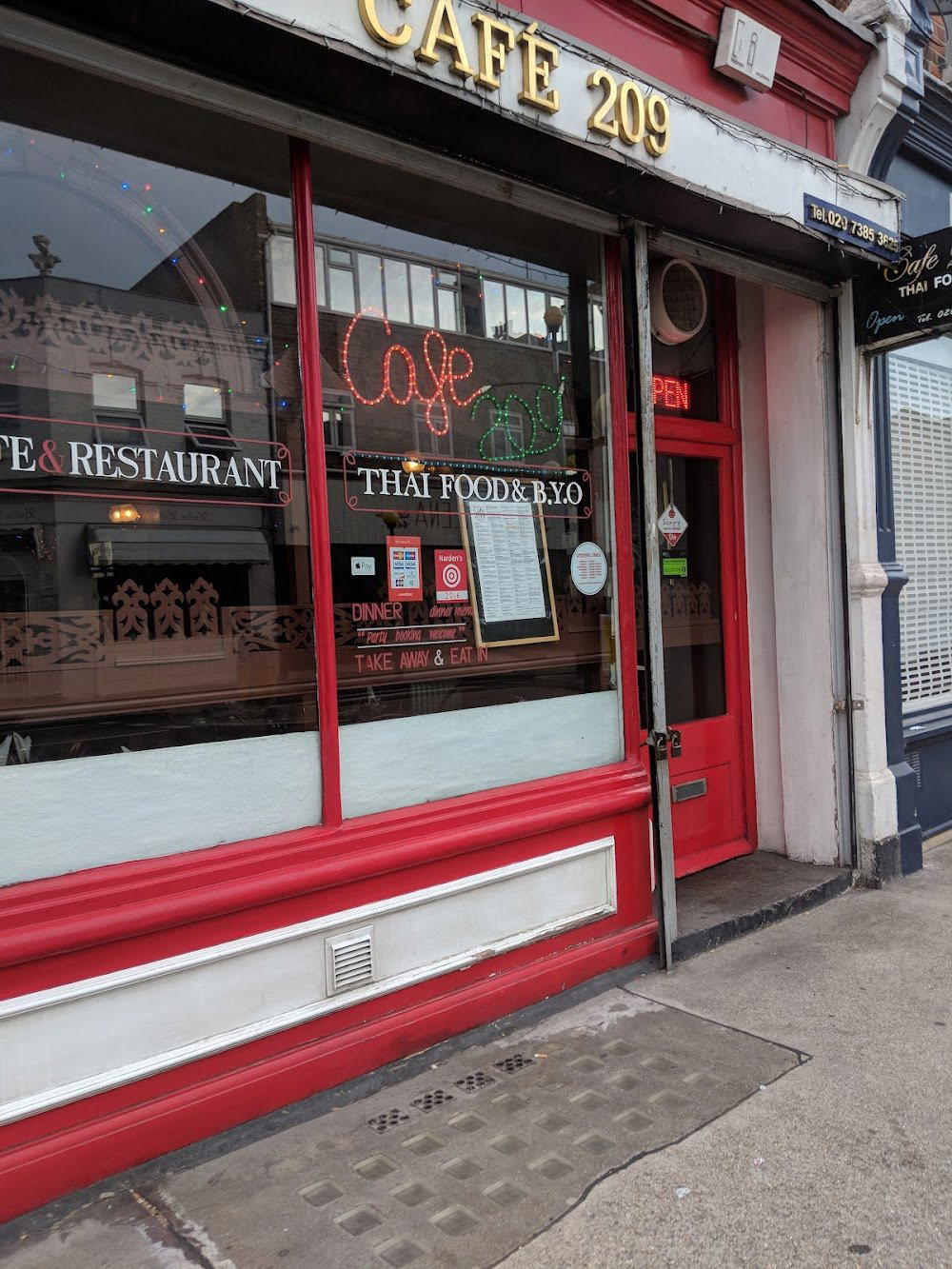
Fulham's Dining Room Logic
Munster Road runs through the residential core of Fulham, a stretch of SW6 where the dining vernacular is determinedly local. The three-Michelin-star addresses that define London's global reputation, CORE by Clare Smyth, Restaurant Gordon Ramsay, Sketch, The Lecture Room and Library, and The Ledbury, operate on a different axis entirely, drawing guests from across the city and beyond for tasting menus priced at the ££££ tier. Cafe 209 sits in a different register. It is the kind of address that earns its reputation through foot traffic, neighbourhood word-of-mouth, and a physical room that encourages return visits rather than pilgrimage.
That distinction matters when reading London's restaurant geography. The city's dining scene stratifies sharply: at one end, destination rooms where the reservation itself signals intent; at the other, the local cafe and neighbourhood bistro format that serves the daily rhythms of residents who live within walking distance. Cafe 209 at 209 Munster Road belongs to the latter category, and it is worth understanding what that category demands of a space before considering what the space delivers.
The Physical Container
In neighbourhood dining, the room does a disproportionate share of the work. Without the anchoring force of a celebrity kitchen or a press-fuelled reputation, the interior architecture and seating arrangement become primary signals, they communicate whether a place is worth stepping into on a Tuesday evening, and whether it is worth returning to on a Saturday. On Munster Road, cafe-format spaces tend toward compact floorplans, and the challenge is always the same: how to create warmth and density without crowding, how to seat enough covers to make the economics work without sacrificing the intimacy that draws the neighbourhood in the first place.
The design logic of London's most durable neighbourhood cafes and bistros typically involves a few consistent moves: natural light from a street-facing frontage, materials that soften over time rather than date badly, and a seating arrangement that allows tables to feel semi-private without isolating them from the room's ambient energy. These are not decorative choices, they are structural decisions that determine whether a space functions at breakfast, through a midday service, and into the evening, or whether it only performs at one of those shifts. For context, some of Britain's most highly regarded dining rooms outside London, including L'Enclume in Cartmel and Moor Hall in Aughton, have invested heavily in rooms that carry the experience independently of the plate. At the neighbourhood level, the principle is identical even if the budget and ambition differ.
Where Cafe 209 Sits in the SW6 Picture
Fulham's dining options cover a wide spread. The area has enough density of residents with disposable income to support a range of formats, from quick-service lunch spots to mid-range evening destinations. Within that spread, the cafe format occupies a specific niche: accessible price points, all-day or extended-hours service, and a room designed for lingering rather than table-turning. The competition in this niche is genuinely local, the addresses a resident might rotate between over the course of a week, rather than venues they are comparing against Dinner by Heston Blumenthal or planning a special occasion around.
In this context, Cafe 209's position on Munster Road at SW6 6BX places it within easy reach of the residential streets between Fulham Broadway and Parsons Green, a catchment area dense enough to sustain consistent footfall without requiring destination-level draw. That geography is not incidental. The neighbourhood cafe format lives or dies by catchment radius, and Munster Road sits in a part of Fulham where the residential density and income profile have historically supported this kind of operation.
For those whose frame of reference is London's broader dining circuit, the relevant comparison is less about cuisine tier and more about the role these spaces play in a city's food culture. While the headline addresses attract coverage, and for good reason, given the calibre of kitchens operating at venues like The Fat Duck in Bray or Gidleigh Park in Chagford, the neighbourhood cafe format carries a different kind of cultural weight. It is where most residents actually eat, most of the time, and the quality of these spaces is as accurate a measure of a city's food culture as any Michelin count.
The All-Day Format and What It Requires
Cafe-format spaces face a structural challenge that tasting-menu rooms do not: they need to perform across multiple service periods with a menu and physical setup that accommodates genuinely different occasions. Breakfast service demands speed and ease; lunch requires volume management; afternoon trade rewards a room that feels comfortable for solo visitors; evening service needs enough atmosphere to justify not cooking at home. The spaces that handle all four well tend to share certain physical characteristics: a counter or bar that activates the room without dominating it, seating arrangements that include both communal and private options, and lighting flexible enough to shift the mood between a bright morning service and a dimmer evening atmosphere.
London has produced a number of neighbourhood rooms that have sustained this format over years and even decades. The durability of those spaces is rarely about the menu alone, it is about the room's ability to hold different types of visit without feeling misaligned with any of them. That is the standard against which the restaurant would need to be measured, and it is a harder standard than it first appears.
Planning Your Visit
For those drawing international comparisons, the neighbourhood-anchored format has equivalents in New York, Atomix operates at a different price tier, but the principle of a room that earns loyalty through physical coherence as much as through cuisine applies across categories.
Additional British dining rooms worth considering alongside any Fulham visit include Hand and Flowers in Marlow and hide and fox in Saltwood, both of which represent the kind of destination-level quality outside London that frames what neighbourhood dining aspires to at its most ambitious. For those benchmarking against international fine dining, Le Bernardin in New York City represents the opposite end of the formality spectrum from a Fulham cafe, which is useful context for understanding where the restaurant sits in the wider picture.
Address: 209 Munster Rd, London SW6 6BX. Reservations: Walk-in friendly. Dress: Casual. Budget: About $12 per person.
Comparison Snapshot
Comparable venues nearby, for context on price, style, and recognition.
| Venue | Cuisine | Price | Notes |
|---|---|---|---|
| Cafe 209This venue — the venue you are viewing | Authentic Thai | $ | Not listed |
| Thai Taste | Genuine Thai | $$ | South Kensington |
| Janetira | Authentic Thai Street Food | $$ | Soho |
| Champor Champor | Thai-Malay Fusion | $$ | Borough |
| Addie's Thai | Authentic Thai Street Food | $$ | Earl's Court |
| Esarn Kheaw | Northeastern Thai (Isaan) | $$ | White City |
Continue exploring
More in London
Restaurants in London
Browse all →
Bars in London
Browse all →
Hotels in London
Browse all →



At a Glance
- Cozy
- Lively
- Whimsical
- Casual Hangout
- Group Dining
- After Work
- Standalone
- Byob
- Corkage Allowed