Bouchon Léa occupies a storied address on Place Antonin Gourju in Lyon's 2nd arrondissement, operating inside the tradition that made the city France's most serious eating destination outside Paris. The bouchon format here is anchored in the Lyonnais canon: offal-forward, wine-driven, and deeply local in its sourcing logic, placed at the intersection of working-class culinary heritage and the city's continuing appetite for technical precision.
Pearl is the En Primeur Club membership app — saves, bookings, and concierge access live there. Same editors, same standards.
- Address
- 11 Pl. Antonin Gourju, 69002 Lyon, France
- Phone
- +33478420313
- Website
- lecomptoirdelea.com
- Directions
- Get directions
 Saves & bookings on Pearl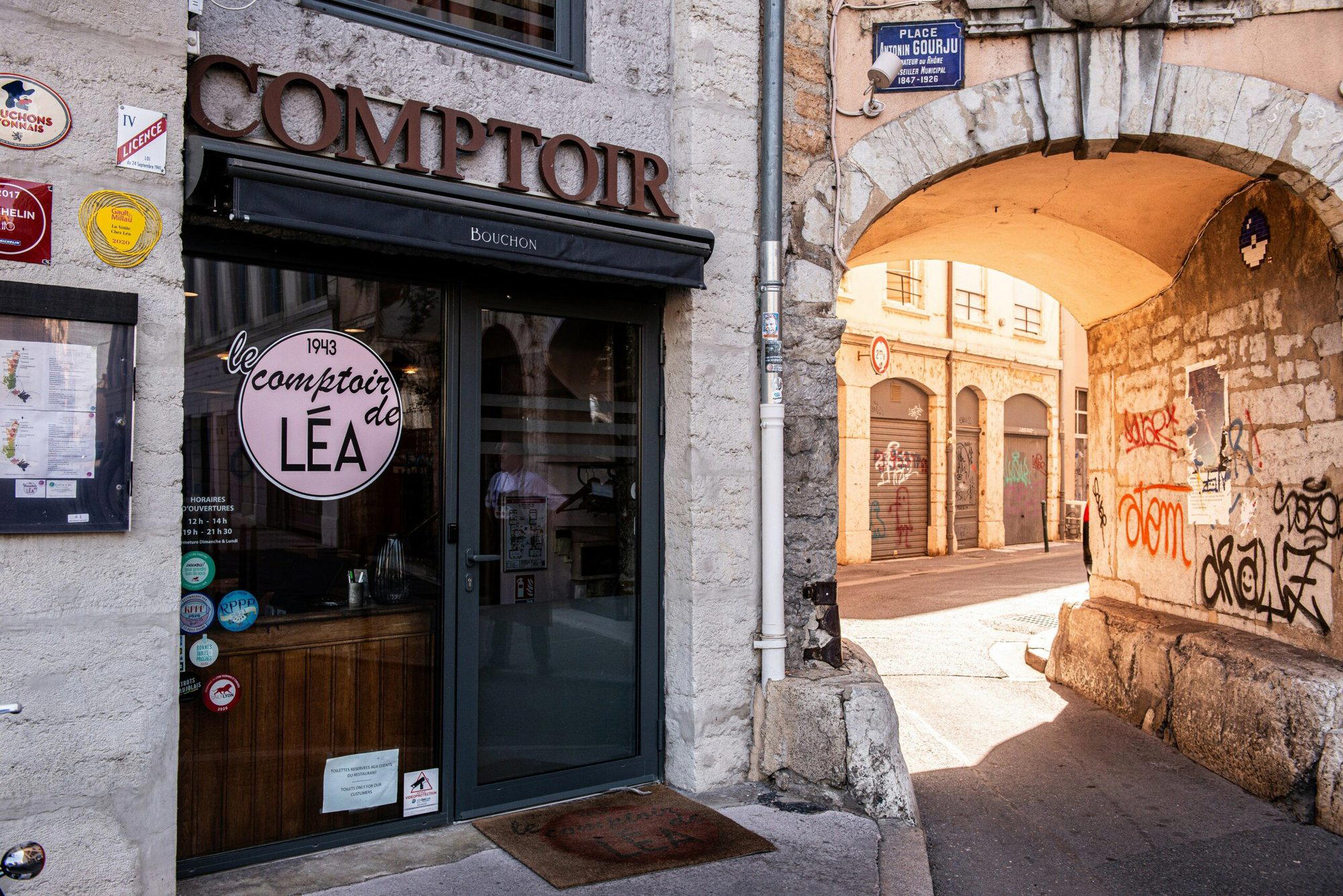
Where the Bouchon Tradition Holds Its Ground
Place Antonin Gourju sits in the dense commercial heart of Lyon's Presqu'île, the narrow peninsula between the Rhône and Saône rivers where the city's eating culture has been concentrated for well over a century. A bouchon on this square is not an accident of real estate. The Presqu'île has long been the district where Lyon's culinary identity is most legible: the covered markets of Les Halles a few minutes north, the old bouchon corridors of Rue Mercière close by, and a clientele that skews toward locals who have strong opinions about quenelles, saucisson, and the appropriate temperature of a pot of Beaujolais. Bouchon Léa sits inside that geography and inside that tradition.
The bouchon as a format has no real equivalent in French regional cooking. It emerged from the city's silk-weaving workforce and the women who fed them, the mères lyonnaises, a cohort of cooks whose authority over Lyonnais cuisine was absolute by the early twentieth century. The format they established was deliberately anti-grand: communal tables, zinc counters, papier-mâché menus written in chalk, and a kitchen philosophy organized around economy and offal. What Lyon did with pig intestine, calf's head, and chicken liver in the nineteenth century, the city's leading kitchens continue to reference today, whether at the formal register of La Mère Brazier or at the contemporary creative end represented by Le Neuvième Art and Takao Takano. Bouchon Léa operates at the traditional pole of that spectrum.
The Logic of Local Ingredients in a Bouchon Kitchen
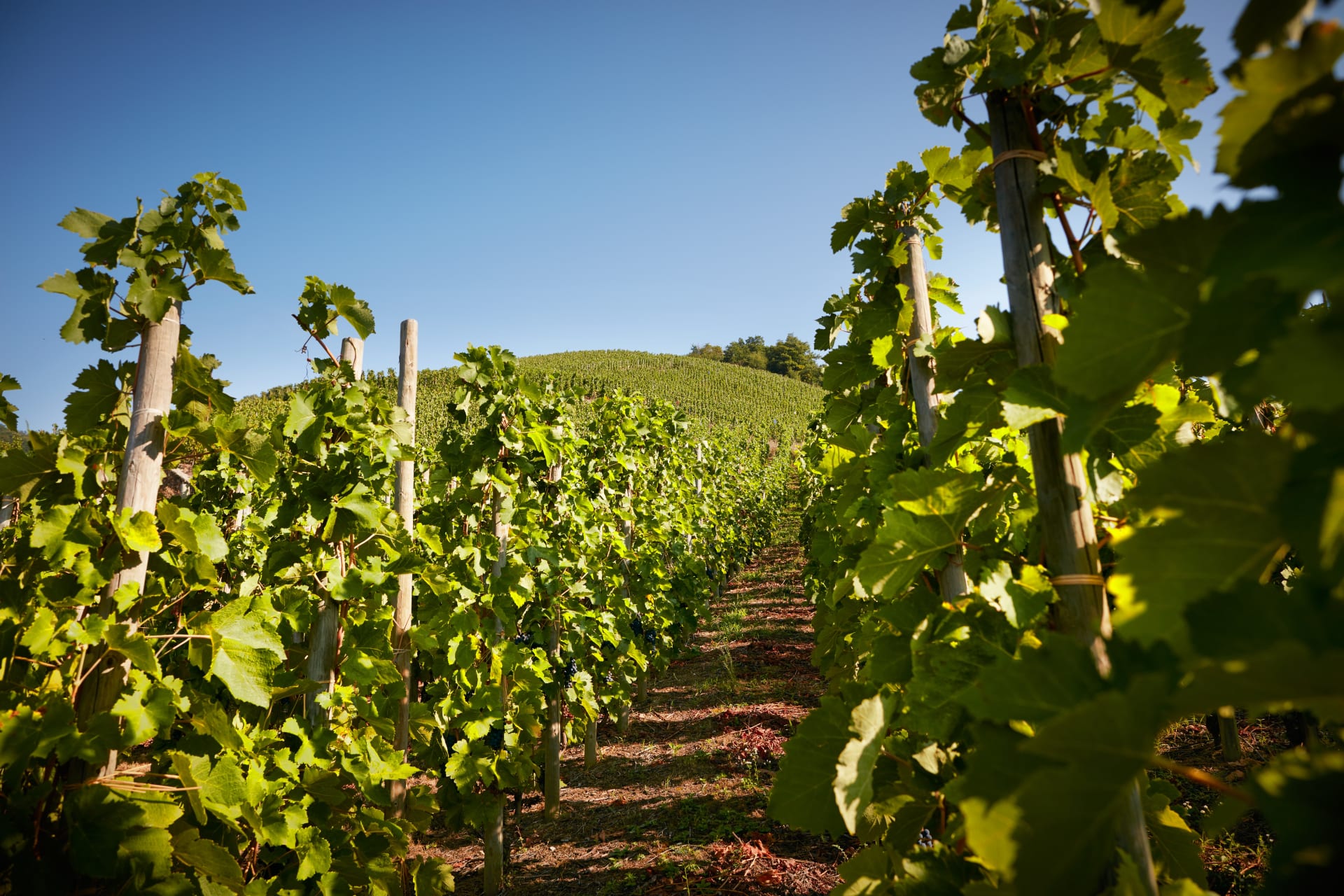
Understanding a bouchon's menu requires understanding the sourcing system it was built on. Lyonnais cuisine did not become France's most technically serious regional tradition by importing luxury product. It became serious by treating local material with unusual care. The chickens came from Bresse, forty kilometres east. The river fish came from the Dombes and the Saône. The charcuterie came from the traboules and courtyards of the Croix-Rousse, where charcutiers supplied the silk workers' tables directly. The wine came overwhelmingly from Beaujolais to the north and the northern Rhône corridor to the south, specifically the granitic crus of Morgon, Moulin-à-Vent, and Fleurie, and the Syrah-dominant appellations of Crozes-Hermitage and Saint-Joseph.
This sourcing logic is not nostalgia in a working bouchon. It is a discipline. The dishes that define the format, tablier de sapeur (breaded tripe), tête de veau, quenelle de brochet, gras double, cervelle de canut (the fresh cheese spread that closes most bouchon meals), are not items that reward substitution or fusion. They are calibrated to specific textures, specific fat contents, and specific acid levels in the accompanying wine. The technique is traditional, but it is not casual. Executing a quenelle de brochet that holds its shape through poaching while remaining airy enough to split under a spoon is not a simple kitchen task, even if it has been performed in Lyon's restaurants for two hundred years. It is closer in its demands to the kind of precision that contemporary fine dining kitchens like Au 14 Février or Burgundy by Matthieu apply to more obviously technical preparations.
Positioning Inside Lyon's Eating Scene
Lyon now supports a dining scene that spans every register from three-Michelin-starred kitchens to neo-bistros and a growing number of internationally trained chefs working the city's ingredients through Japanese, Scandinavian, and South American frameworks. In that context, the traditional bouchon occupies a specific and increasingly defended position. It is not competing with the menus at Le Neuvième Art or the internationally oriented ambition of Takao Takano. It is competing for a different kind of loyalty: from locals who want the specific pleasure of a pot of wine, a shared table, and a dish that has been on the menu in some form since before the Michelin Guide covered Lyon at all.
Bouchon Léa's address on Place Antonin Gourju places it in a part of the Presqu'île that has remained genuinely commercial rather than tourist-driven, which matters for a format that depends on regular custom. The distinction between a bouchon that feeds locals and one that feeds tourists is not subtle once you spend time in the city. It shows up in sourcing decisions, in how the wine list is assembled, and in whether the kitchen is calibrated to the preferences of people who will return next week or to the tolerance levels of visitors who won't know the difference. The traditional bouchon tier in Lyon functions more like a neighbourhood institution than a destination restaurant.
For broader context on where this sits in the French culinary canon, the lineage that runs through Lyon connects directly to the houses that define French gastronomic identity at the national level: Paul Bocuse just north of the city, Troisgros in Ouches, and the Alpine register of Flocons de Sel in Megève. At the international end, the precision-based French cooking exported globally shares a root system with what Lyon's bouchon tradition maintained at street level. Venues like Le Bernardin in New York and Mirazur in Menton represent how those technical foundations were eventually transformed. The bouchon represents what they were transformed from.
Planning a Visit
The restaurant is located at 11 Place Antonin Gourju in Lyon's 2nd arrondissement, reachable on foot from most of the Presqu'île's accommodation and from the Bellecour metro station in under ten minutes. Bouchons in Lyon generally operate at lunch and dinner on weekdays, with Saturday lunch a serious sitting and Sunday service variable. For a traditional bouchon at this address, arriving without a reservation on a weekday lunch is plausible; for weekend service, booking in advance removes any uncertainty. The meal format is typically fixed-price with two or three courses, wine ordered by the pot (a half-litre ceramic jug standard in Lyon), and a pace calibrated to an unhurried midday.
Reputation Context
Comparable venues nearby, for context on price, style, and recognition.
| Venue | Cuisine | Price | Notes |
|---|---|---|---|
| BOUCHON LÉAThis venue — the venue you are viewing | Traditional Lyonnais Bouchon | $$$ | Not listed |
| l'Âme Sœur | Modern French Seasonal Bistro | $$$ | Quartier Voltaire Part-Dieu |
| Bel Ami | Modern French Tapas | $$$ | Quartier Ouest des Pentes |
| Bistrot Compa | Modern French Bistro with Asian Influences | $$ | Quartier Bellecour Carnot |
| Carré Royal | French Bistronomique | $$$ | Quartier Bas des Pentes Presqu'île |
| Les Apothicaires | Modern French Bistro with Scandinavian & Brazilian Influences | $$$ | Quartier Saxe Roosevelt |
Continue exploring
More in Lyon
Restaurants in Lyon
Browse all →
Bars in Lyon
Browse all →
Hotels in Lyon
Browse all →

At a Glance
- Classic
- Cozy
- Intimate
- Date Night
- Special Occasion
- Historic Building
- Street Scene
Current opening hours
- Monday
- Closed
- Tuesday
- 12–2 PM, 7–9:30 PM
- Wednesday
- 12–2 PM, 7–9:30 PM
- Thursday
- 12–2 PM, 7–9:30 PM
- Friday
- 12–2 PM, 7–9:30 PM
- Saturday
- 12–2 PM, 7–9:30 PM
- Sunday
- Closed
Hours can change for holidays and private events. Last verified .
Historic and cozy with period counter, air-conditioned, offering sincerity and generosity in a convivial atmosphere.