Our verdict
Among Lyon's bouchons, Bât-d'Argent occupies a particular register: a room on Rue du Bât d'Argent in the 1st arrondissement where the format holds to the original template, tablecloths, fixed progression, regional wine, and cooking rooted in the Mères Lyonnaises tradition. It sits in the same neighbourhood tier as the city's classic canuts-era dining rooms, positioned well below the starred circuit but above the tourist-facing imitations.

Pearl is the En Primeur Club membership app, where members save venues, book tables and use the concierge.
The menu
What to order
- Quenelle de brochet sauce homardine
- Andouillette de veau
Where the Bouchon Format Holds Its Ground
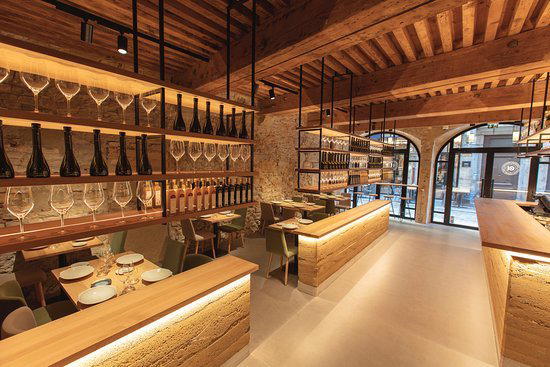
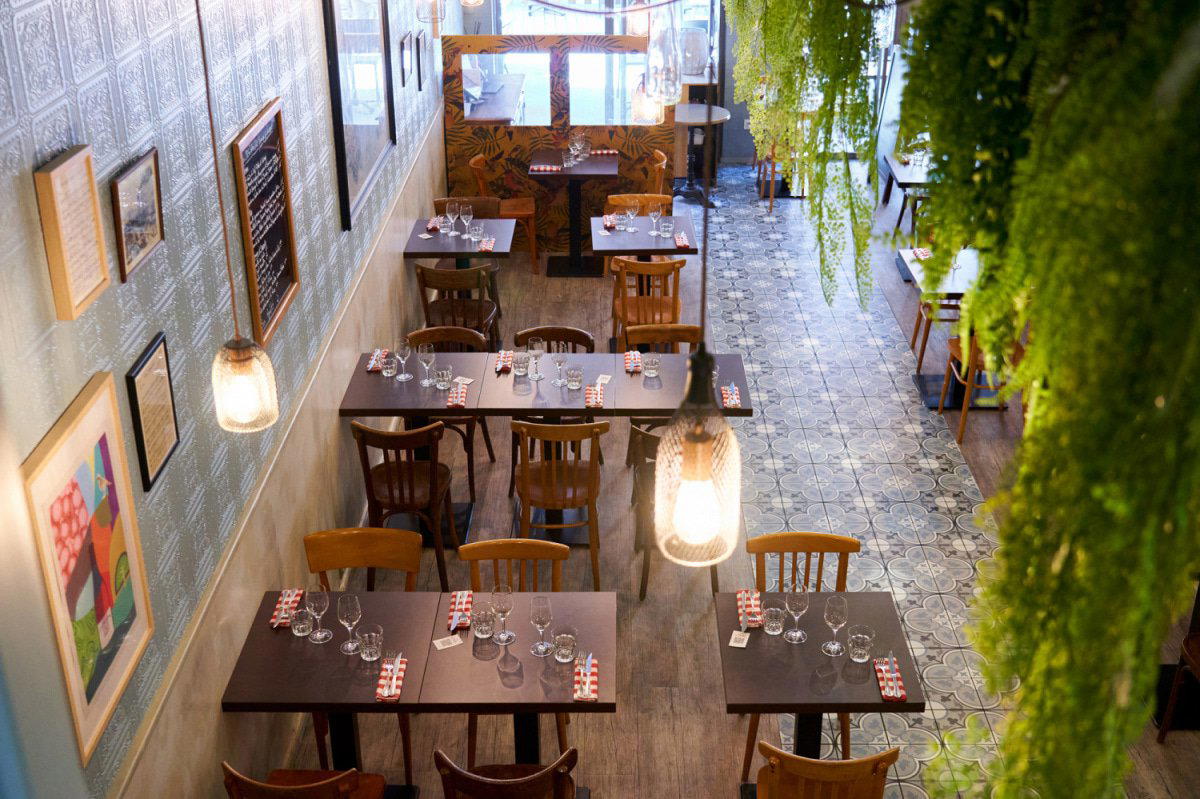
The street narrows before you reach the address. Rue du Bât d'Argent runs through Lyon's 1st arrondissement in the Presqu'île, the finger of land between the Rhône and the Saône that has concentrated the city's commercial and culinary life for centuries. The bouchon tradition belongs to this district as much as to any other part of Lyon, and it survives here not as a museum piece but as a functioning format with its own internal logic. Step inside and the room reads immediately: tight tables, the smell of rendered fat and simmered stock, a chalkboard or handwritten card rather than a bound menu. This is the environment the bouchon was always meant to produce.
The Tradition Behind the Format
To understand what a meal at Bouchon Bât-d'Argent represents, it helps to understand what the bouchon is arguing for. The format descends from the working-class eating houses that fed Lyon's silk weavers, the canuts, through the 18th and 19th centuries. The Mères Lyonnaises, the women cooks who shaped the city's bourgeois kitchen tradition, refined this cooking into something more precise without abandoning its economy of means: offal treated with respect, slow-cooked secondary cuts, dairy from the surrounding countryside, and wines from Beaujolais or the northern Rhône brought in without ceremony. The progression of dishes in a traditional bouchon reflects this logic, moving from lighter preparations through the heavier, fat-rich courses that were historically the point of the meal.
Lyon's position as the reference point for French regional cooking is not incidental. Geographically, it sits at a confluence of agricultural richness, Bresse poultry to the north, Dombes fish, Ardèche chestnut, Dauphiné cheeses, and that proximity has always fed directly onto the table. The bouchon format captures this better than any starred room in the city, because the starred circuit tends to abstract those ingredients through technique. Here, the sourcing is the technique.
The Meal as Sequence
The editorial angle that makes a traditional bouchon worth examining as a progression is the deliberate arc of the menu. A classic service moves through distinct stages, each with its own weight and role. A salade de lentilles or a slice of rosette de Lyon might open proceedings, cool, acidic, direct, before the kitchen shifts register toward the cooked courses. Grattons, rillettes, or a terrine of something pressed and jellied often occupy the middle distance. Then comes the course that defines the meal: tripes à la lyonnaise, quenelles de brochet in Nantua sauce, andouillette, or a tête de veau that has been long-simmered to a texture just short of dissolution. Dessert in this tradition is functional rather than ornamental, a tarte aux pralines in that specific Lyonnais shade of pink, or île flottante with enough cream to make the point.
That arc from cold and sharp to warm and rich to sweet and simple is not accidental. It is the shape of a meal designed to be eaten in the middle of the day after physical work, and it retains its coherence even when the physical work is no longer part of the context. What the progression teaches, course by course, is that the bouchon's cooking is built around texture and temperature management rather than flavour novelty. The andouillette is not on the menu because it is crowd-pleasing; it is there because it demonstrates a particular kind of commitment to the full animal and to a flavour register that most modern restaurant cooking has abandoned.
Lyon's Bouchon Tier and Where This Address Sits
Lyon's dining market has stratified significantly over the past two decades. The upper tier runs through Michelin-starred addresses: La Mere Brazier holds its place as the city's grand-bourgeois reference, while Le Neuvième Art, Takao Takano, and Au 14 Février operate in the creative contemporary bracket. Burgundy by Matthieu represents the modern bistronomy current at a lower price point. The bouchon sits outside all of these tiers, it is not competing with them and does not try to.
Within the bouchon category itself, there is a meaningful split between addresses that have drifted toward tourist accommodation and those that retain the original demographic and format discipline. The Presqu'île contains examples of both. Bouchon Bât-d'Argent, by address and by category positioning, belongs to the neighbourhood's working stock rather than its tourist-facing approximations. That positioning matters because it affects everything from the wine list (Morgon rather than polished Burgundy, Crozes-Hermitage rather than Côte-Rôtie) to the speed of service and the tolerance for lingering over a carafe.
For comparison, the starred French tradition in this region extends well beyond Lyon itself: Paul Bocuse - L'Auberge du Pont de Collonges just north of the city, Troisgros - Le Bois sans Feuilles in Ouches, and Georges Blanc in Vonnas anchor the haute cuisine lineage of this corridor. Further afield, Flocons de Sel in Megève, Mirazur in Menton, Bras in Laguiole, Auberge de l'Ill in Illhaeusern, Les Prés d'Eugénie in Eugénie-les-Bains, La Table du Castellet, and Alléno Paris au Pavillon Ledoyen define the upper register of French fine dining. None of that is what a bouchon is doing, and a reader who comes to Bouchon Bât-d'Argent expecting that register will misread what is on the plate. Internationally, chef-driven tasting formats like Le Bernardin in New York and communal-table progressive dinners like Lazy Bear in San Francisco represent entirely different approaches to the sequenced meal, technically sophisticated, capital-intensive, built for a different kind of occasion.
Planning a Visit
Bouchon Bât-d'Argent sits at 23 Rue du Bât d'Argent in Lyon's 1st arrondissement, within easy walking distance of the Hôtel de Ville metro station. The Presqu'île is navigable on foot, and this part of the 1st connects directly to the pedestrian grid of central Lyon. For anyone planning around a specific date, reaching out directly via the address is the lowest-risk approach. Lyon's broader restaurant scene, including the full range of bouchons, starred rooms, and contemporary addresses, is mapped in our full Lyon restaurants guide.
Frequently asked questions
Where exactly is Bouchon Bât-d'Argent?
Bouchon Bât-d'Argent is located at 23 Rue du Bât d'Argent, 69001 Lyon, France, Lyon.
How does Bouchon Bât-d'Argent compare to other traditional bouchons in Lyon's 1st arrondissement?
Lyon's 1st arrondissement holds several addresses operating within the bouchon format, ranging from certified members of the official Les Bouchons Lyonnais association to independent operators working the same tradition without the stamp. Bouchon Bât-d'Argent sits on Rue du Bât d'Argent, a street embedded in the Presqu'île rather than on a tourist corridor, which places it closer to the neighbourhood-facing end of the spectrum.
What do people recommend at Bouchon Bât-d'Argent?
A traditional bouchon service at this address in Lyon's 1st arrondissement follows the classic sequence: charcuterie and offal-based starters, slow-cooked meat dishes, and the kind of cheese course that treats it as a course rather than an afterthought. The kitchen works within the bouchon canon, which at addresses like this one on Rue du Bât d'Argent means pork-forward cooking, quenelles, and gratins rooted in Lyonnaise practice.
Do they take walk-ins at Bouchon Bât-d'Argent?
Traditional Lyon bouchons vary considerably: some keep a few unreserved seats at the bar or counter, others fill weeks ahead during festival periods or weekend service. Given the address is on Rue du Bât d'Argent in the 1st arrondissement, a short walk from Hôtel de Ville, foot traffic is higher than in quieter quartiers. Arriving early for lunch service or contacting the venue directly is the safer approach.
What makes Bouchon Bât-d'Argent worth seeking out?
The address puts it inside Lyon's Presqu'île, the historic core of a city that has defended its working-class canteen format against decades of gastronomic inflation. Bouchon Bât-d'Argent sits at 23 Rue du Bât d'Argent in the 1st arrondissement, a street that narrows into the neighbourhood rather than advertising itself. The bouchon format itself is the argument: a set progression of Lyonnaise cooking served without the tasting-menu theatrics that have moved upmarket addresses into different territory entirely.
Do they accommodate allergies at Bouchon Bât-d'Argent?
The traditional bouchon format is built around offal, pork fat, cream, and egg-based dishes, which means the kitchen's flexibility with allergens or exclusions may be limited compared to à la carte restaurants. Guests with serious allergies or strict dietary requirements should contact the venue at 23 Rue du Bât d'Argent, Lyon 69001, before booking.
A Tight Comparison
Comparable venues nearby, for context on price, style, and recognition.
| Venue | Cuisine | Price | Notes |
|---|---|---|---|
| Bouchon Bât-d'ArgentThis venue (the venue you are viewing) | Traditional Lyonnaise Bouchon | $30–50 | Not listed |
| Le comptoir | Lyonnaise Bistronomique | $30–50 | Quartier Quartiers Anciens, Lyonnaise Bistronomique |
| Plato | French Bistronomique | $50–100 | Quartier Croix-Rousse Centre, French Bistronomique |
| L'Art & la Manière | French Bistronomy | $30–50 | Quartier Guillotière, French Bistronomy |
| Brasserie de l'Ouest | French Brasserie with Island Influences | $50–100 | Quartier Vaise Rochecardon Industrie, French Brasserie with Island Influences |
| Le Moment | Modern French Market Bistro | Not listed | Quartier Vaise Rochecardon Industrie, Modern French Market Bistro |