Our verdict
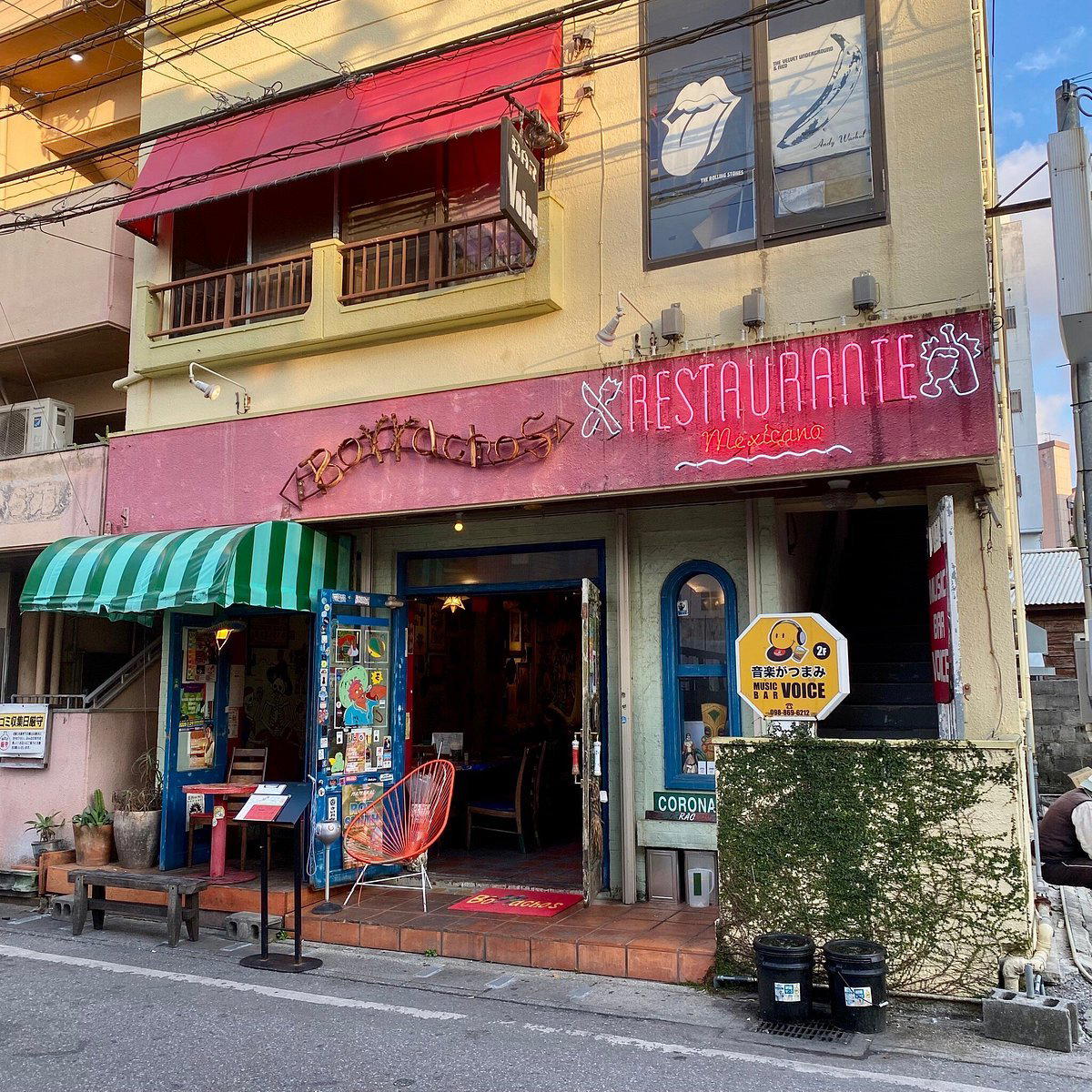
Borrachos (ボラーチョス) sits on Makishi's backstreet grid at 牧志1-3-31, a compact address in one of Naha's most layered neighbourhood dining corridors. The name — Spanish for 'drunks' — signals something deliberately counter to Okinawa's sanitised tourist circuit. Details on format and pricing are best confirmed directly with the venue before visiting.

Pearl is the En Primeur Club membership app — saves, bookings, and concierge access live there. Same editors, same standards.
The menu
What to order
- TACOS AL PASTOR
- TORTA
Makishi After Dark: Where Naha's Neighbourhood Bar Culture Gets Honest
The stretch of Makishi running south from the Heiwa-dori arcade is one of those rare urban corridors where the tourist circuit and the local one occupy the same block but rarely the same room. Street-level Naha here is izakayas with hand-written menus, counters lit by fluorescent tubes, and the occasional outlier that announces itself by name alone. Borrachos — Spanish for 'drunks', rendered in katakana as ボラーチョス — sits at 牧志1-3-31 in the Taihei Building's ground floor, a detail that says something about the neighbourhood before you even open the door. Ground-floor tenancies in that part of Makishi tend toward the functional and the local-facing rather than the curated and the tourist-ready.
Okinawa's drinking culture sits at an interesting intersection. The prefecture's long history of awamori, the distilled spirit made from long-grain indica rice, aged in clay pots, with roots tracing back to 15th-century trade routes with Southeast Asia, gives the islands a distinct drinking identity that separates them from mainland Japan's sake and shochu traditions. That cultural backdrop shapes what a bar means here. The name Borrachos doesn't invoke Japanese drinking culture; it invokes something more lateral, a self-aware wink that lands differently in a city where Spanish loanwords carry the faint echo of American base culture, Pacific crosscurrents, and a generation of Okinawans who built their nightlife vocabulary from more than one direction.
Reading Naha's Bar Scene Through Its Neighbourhood Layers
Naha's after-dark geography splits roughly into three registers. Kokusai-dori's immediate gravity pulls tourists toward the obvious; Matsuyama operates as the city's high-energy entertainment district; and the Makishi-to-Tsuboya corridor holds the bars that locals actually return to. The third category is where the interesting work happens, because it's where format and identity matter more than footfall. Bars in this tier survive on repeat custom, which means they develop a point of view over time rather than averaging toward a broad audience.
Borrachos occupies that third register by address alone. Whether it presents as a cocktail bar, a wine-forward neighbourhood bar, or something less categorisable is a question the venue's sparse public presence leaves deliberately open. That opacity is itself a signal in Naha's bar geography: the venues that rely on word of mouth and return visits rarely need to explain themselves in advance. For reference points in the city's dining and drinking scene, Jack's Steak House (ジャッキーステーキハウス) and サウザンステーキ represent Naha's longer-established, more legible institutions; 琉球料理 美栄 and 首里そば anchor the traditional end of the local dining spectrum. Borrachos reads as something distinct from all four: smaller, more deliberately named, and operating closer to the neighbourhood-bar register than the restaurant or heritage-dining one.
The Cultural Coordinates of the Name
Naming a bar in Naha after a Spanish word for intoxicated people is not a neutral act. Okinawa's linguistic and cultural history is unusually layered: the Ryukyuan language family, the influence of pre-war Japanese assimilation, decades of American administration after 1945, and the ongoing presence of US military installations have all left traces in how Okinawans build cultural references. Spanish, in this context, sits outside all of those primary layers, which may be precisely the point. Bars across Japan have long used European and Latin American references as a way of positioning outside the conventional izakaya or Japanese-style bar format without fully committing to a particular imported tradition. The move is knowing, and at its finest it creates a space with its own internal logic rather than a copy of something else.
Across Japan's more documented dining and drinking scenes, this kind of lateral positioning has become increasingly common in mid-tier cities and regional capitals. akordu in Nara represents one version of it in the restaurant register: a European framework applied with enough local grounding to feel specific to place. Goh in Fukuoka shows how a regional city can develop a distinctive dining identity that doesn't simply mirror Tokyo or Osaka. Borrachos, operating at a smaller scale and with fewer public-facing signals, is presumably doing something analogous in Naha's bar culture, though the specifics require a visit to confirm.
Planning a Visit: What the Address Tells You
The Taihei Building address in Makishi puts Borrachos within walking distance of the Makishi Monorail station, which sits on the Yui Rail line connecting Naha Airport to Shuri. The surrounding blocks are dense with food and drink options, which means the area rewards an evening of grazing across multiple stops rather than a single destination visit. For a more structured read of where to eat across the city, our full 那覇市 restaurants guide covers the range from Ryukyuan kaiseki to neighbourhood counters.
The most reliable method is checking recent posts on local Japanese social platforms, where small Naha bars with limited web presence tend to communicate operating schedules. Arriving without confirmation risks a closed door, particularly mid-week when smaller neighbourhood bars in Makishi frequently operate on irregular hours or by informal reservation.
For context on what Naha's bar and restaurant scene sits alongside at the national level: venues like Harutaka in Tokyo, Gion Sasaki in Kyoto, and HAJIME in Osaka represent Japan's upper tier of documented, award-tracked dining. Borrachos operates well outside that tracked tier, without awards data, ratings, or critical documentation in the public record. That absence is not a negative assessment; it simply places the venue in a category where experience depends on showing up rather than on advance research. Further afield, Le Bernardin in New York City and Atomix in New York City illustrate what full critical documentation looks like at the highest tier; Borrachos sits at the opposite end of that documentation spectrum, which is its own kind of information.
Frequently asked questions
Where is Borrachos (ボラーチョス) in 那覇市?
Borrachos (ボラーチョス) is located at 牧志1-3-31 (太平ビル 1F), 那覇市, 沖縄県, 900-0013, 那覇市.
Is Borrachos (ボラーチョス) in Makishi worth visiting if you're staying near Kokusai-dori?
The Taihei Building address at 牧志1-3-31 puts Borrachos within walking range of the Makishi Monorail stop on the Yui Rail line, which connects directly to the Kokusai-dori corridor. The ten-to-fifteen minute walk south from the main tourist strip is precisely what separates Makishi's bar culture from the more visitor-facing options further north. For anyone wanting to cross into the local register of Naha's drinking scene, that gap is the point.
What do regulars order at Borrachos (ボラーチョス)?
Given its Makishi address — a neighbourhood where local awamori and Orion draft dominate the bill of fare — expect those to anchor whatever is poured. Arriving without a fixed agenda tends to work in your favour here.
What's the best way to book Borrachos (ボラーチョス)?
No phone number or website is listed for Borrachos at the Taihei Building in Makishi, which suggests this is a walk-in venue rather than a reservation-driven operation. The Makishi corridor runs closest to Makishi Monorail station on the Yui Rail line, making it straightforward to reach and scout in person. Arriving early in the evening gives you the best read on capacity.
What's the standout thing about Borrachos (ボラーチョス)?
The name itself is the first signal: naming a bar in Naha after a Spanish word meaning 'drunkards' reflects Okinawa's layered cultural history, where American, Japanese, and broader Pacific influences have long intersected. Borrachos sits in Makishi — the stretch south of Heiwa-dori where local and tourist circuits rarely overlap — which positions it firmly in the neighbourhood rather than the visitor trade. That geography is a credential of its own in Naha's bar scene.
Can Borrachos (ボラーチョス) handle vegetarian requests?
No cuisine type or menu information is recorded for Borrachos at the 牧志1-3-31 address, so vegetarian suitability can change from available data. Makishi bars of this format typically skew drink-forward, with food playing a supporting role. Checking directly when you arrive is the practical approach. Check the venue's official channels for the latest details.
Is Borrachos (ボラーチョス) overpriced or worth every penny?
No price range is documented for Borrachos in Naha's venue records. Makishi sits in the mid-tier of Naha's after-dark geography — cheaper than the Matsuyama club district, less tourist-priced than Kokusai-dori — which generally keeps bar tabs in a neighbourhood-friendly range. That context is a reasonable baseline until confirmed pricing surfaces.
Price and Recognition
| Venue | Cuisine | Price |
|---|---|---|
| Borrachos (ボラーチョス)This venue (the venue you are viewing) | Authentic Mexican Taqueria | $20–30 |
| Jack's Steak House (ジャッキーステーキハウス) | Classic Okinawan Steakhouse | $20–30 |
| サウザンステーキ | Affordable Japanese Steakhouse | $10–20 |
| 琉球料理 美栄 | Ryukyuan Court Cuisine | $100–150 |
| 首里そば | Okinawan Soba | $1–10 |
Continue exploring
More in Naha
Restaurants in Naha
All restaurants in Naha →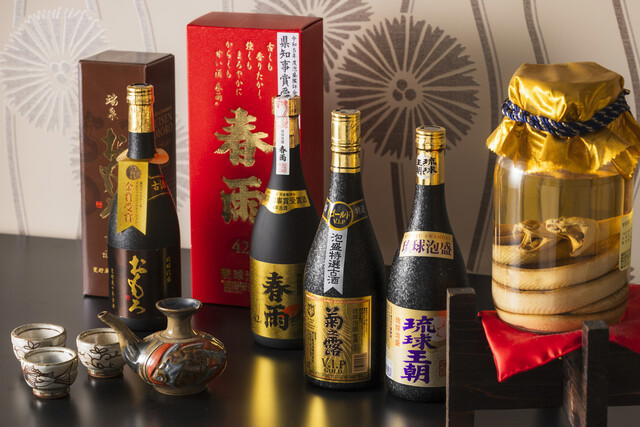
Details
- Lively
- Trendy
- Energetic
- Casual Hangout
- After Work
- Late Night
- Open Kitchen
- Craft Cocktails
- A La Carte
- Small Plates
Bright and lively with colorful Mexican folk art, skeletons, and upbeat Latin music creating a festive, boisterous mood.