
Michelin Plate
Our verdict
A two-time Michelin Plate recipient in Santa Cecília, Borgo Mooca brings Italian cooking to one of São Paulo's most texturally interesting dining neighbourhoods.

Pearl is the En Primeur Club membership app, where members save venues, book tables and use the concierge.
The menu
What to order
- Carbonara mille-feuille
- Beef Wellington
- Tiramisu
Santa Cecília and the Architecture of a São Paulo Italian Meal
Santa Cecília sits between the Higienópolis money and the Centro noise, which gives it a particular character: residential enough to feel unhurried, central enough to draw a serious dining crowd. The streets around Rua Barão de Tatuí carry that in-between quality, the pace of a neighbourhood, the ambition of a city. Borgo Mooca, addressed at number 302, occupies this context in a way that shapes the meal before a single dish arrives. The environment cues you toward a certain register: not the high-tension formality of a tasting-menu room, not the casual indifference of a trattoria that stopped caring. Something measured, with intentions.
São Paulo's Italian dining scene is more layered than most first-time visitors expect. At the leading sits Evvai, with two Michelin stars and a contemporary Italian format priced at $$$$. A tier down, Picchi holds a Michelin Plate and works within a more classical idiom. Alongside it, Bottega Bernacca and Marena Cucina each represent different inflections of the city's appetite for Italian cooking done with care.
How the Meal Tends to Build
Italian cooking in Brazil has deep structural roots. The state of São Paulo received one of the largest Italian immigrant populations in the Americas across the late nineteenth and early twentieth centuries, and the culinary inheritance is tangible in how the city eats: pasta as comfort, slow braises as weekend logic, antipasti as a social ritual rather than a course to rush through. A meal at a São Paulo Italian that honours this tradition tends to move in a particular rhythm. The opening is paced and convivial, charcuterie, olives, perhaps a bruschetta that tests the quality of both bread and tomato without demanding too much of either.
The middle of such a meal is where distinction either appears or doesn't. Pasta is the honest reckoning. In the broader São Paulo Italian scene, this is where kitchens separate themselves: the texture of fresh pasta, the restraint or excess of a sauce, whether the seasoning reads as considered or reflexive. That the Plate has been awarded in consecutive years matters, Michelin does not grant recognition on sentiment; it requires observed consistency across multiple visits from independent inspectors.
The later courses in a well-sequenced Italian meal should decelerate. A secondi that overreaches in richness after a substantial pasta course unravels the arc. The leading Italian kitchens in São Paulo, and across Brazil, from Lasai in Rio de Janeiro to regional operators like Manu in Curitiba, understand that pacing is as much a skill as cooking itself. The dessert, when earned by a meal that has built correctly, lands with weight rather than obligation.
For visitors mapping the full São Paulo dining picture, Italian cooking at this price tier functions as an entry point into the city's embedded immigrant culinary traditions rather than as a contemporary statement. That is not a criticism, it reflects a different and entirely legitimate ambition. Mondo and Casa Santo Antônio operate in adjacent registers, and comparing them sharpens what any individual Italian address in São Paulo is prioritising.
Globally, the benchmark for Italian cooking outside Italy has shifted toward one of two modes: the technically rigorous fine-dining format (see 8½ Otto e Mezzo Bombana in Hong Kong or cenci in Kyoto for how that plays out in Asia) and the trattoria-influenced neighbourhood model that prioritises repetition and comfort over novelty. Borgo Mooca's $$ positioning and its neighbourhood address suggest the latter mode. That is a harder category to execute well at scale, a restaurant that serves 1,829 reviewers and maintains a 4.3 average is solving a volume problem while keeping quality above a meaningful threshold.
By comparison, A Casa do Porco, also at $$ in São Paulo, operates in regional Brazilian territory and holds Michelin recognition in a separate competitive lane. The shared price point doesn't mean shared context. Italian at $$ in São Paulo means something distinct: a different source tradition, a different expectation from the diner, and a different set of execution challenges.
The Broader Brazilian Italian Dining Context
São Paulo's Italian restaurants draw on a lineage that has no real parallel outside Brazil. The concentration of Italian descendants in the state, estimated at tens of millions, means that "Italian food" here has developed its own local grammar over more than a century. Dishes that might read as approximations in another country carry genuine inheritance in São Paulo. A restaurant working in this tradition is not imitating Italy; it is cooking from a distinct branch of the same family tree. Understanding that distinction changes how you read a plate of pasta in this city.
This local-Italian register also explains why São Paulo diners evaluate restaurants like Borgo Mooca on a different emotional register than they might a Japanese or Peruvian address. The benchmarks are personal. Grandmothers are invoked. Childhood is a reference point. That kind of expectation is difficult to satisfy at scale, which makes the sustained Michelin recognition and the depth of the review base more legible as achievements.
For anyone planning further across Brazil's dining scene, the Italian thread is worth following: Manga in Salvador, Mina in Campos do Jordão, and Castelo Saint Andrews in Gramado each represent how Italian influence, and European influence more broadly, surfaces in different Brazilian regional contexts. Orixás in Itacaré offers a contrasting lens on how northern Brazilian culinary identity has developed along entirely separate lines.
Planning a Visit
Borgo Mooca is located at Rua Barão de Tatuí, 302 in Santa Cecília, a neighbourhood well connected by metro and accessible from most central São Paulo hotels. At $$ pricing, it fits comfortably into a city itinerary that also includes higher-tariff meals elsewhere without distorting a budget. For further itinerary context, see our full São Paulo restaurants guide, as well as our São Paulo hotels guide, bars guide, wineries guide, and experiences guide.
Frequently asked questions
What price level is Borgo Mooca?
Pricing at Borgo Mooca is listed as $$.
What distinctions does Borgo Mooca have?
Borgo Mooca has received recognition including: Michelin Plate (2025); Michelin Plate (2024).
What do people recommend at Borgo Mooca?
At the $$ price tier, the kitchen sits in São Paulo's mid-range Italian bracket, where pasta and traditional Italian-Brazilian preparations typically anchor the experience. The Michelin Plate recognition in both 2024 and 2025 signals a baseline of kitchen discipline rather than a single celebrated course.
Cuisine and Recognition
A short peer table to compare basics side-by-side.
| Venue | Cuisine | Price | Awards | Notes |
|---|---|---|---|---|
| Borgo MoocaThis venue (the venue you are viewing) | Modern Italian | $30–50 | Michelin Plate | Not listed |
| Evvai | Modern Italian-Brazilian Fusion | $200–300 | 3 Michelin Stars · World's 50 Best #95 | Contemporary Italian, Modern Cuisine |
| D.O.M. | Modern Brazilian Amazonian Fine Dining | $150–200 | 2 Michelin Stars · World's 50 Best #74 | Modern Brazilian, Creative |
| Maní | Modern Creative Brazilian | $50–100 | 1 Michelin Star · World's 50 Best #67 | Brazilian - International, Creative |
| Jun Sakamoto | Japanese Omakase | $100–150 | 1 Michelin Star · La Liste Top Restaurants | Sushi, Japanese |
| A Casa do Porco | Modern Brazilian Pork-Centric | $30–50 | Michelin Bib Gourmand · World's 50 Best #25 | Regional Brazilian, Brazilian |
Recognition history
Dated appearances from independent guides and award organizations, with the underlying list record or original source where available.
Michelin Plate
Michelin
Full recognition history (3 entries)
Michelin Plate
Michelin
Michelin Plate
Michelin
Continue exploring
More in São Paulo
Restaurants in São Paulo
All restaurants in São Paulo →
Bars in São Paulo
All bars in São Paulo →
Details
- Cozy
- Modern
- Rustic
- Date Night
- Special Occasion
- Open Kitchen
- Craft Cocktails
- Local Sourcing
- A La Carte
- Natural Wine
- Vegetarian Friendly
Current opening hours
- Monday
- Closed
- Tuesday
- Closed
- Wednesday
- 12–11 PM
- Thursday
- 12–11 PM
- Friday
- 12–11 PM
- Saturday
- 12–11 PM
- Sunday
- 12–5 PM
Hours can change for holidays and private events. Hours as of .
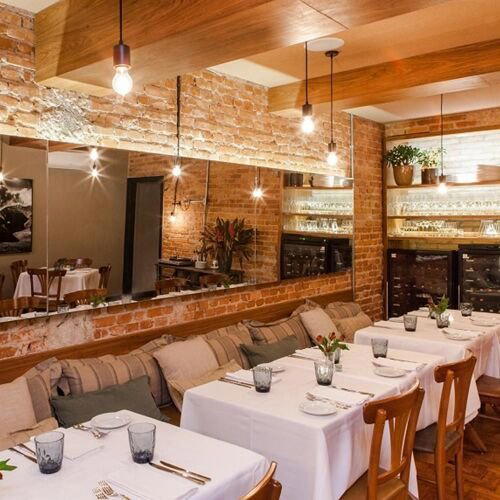
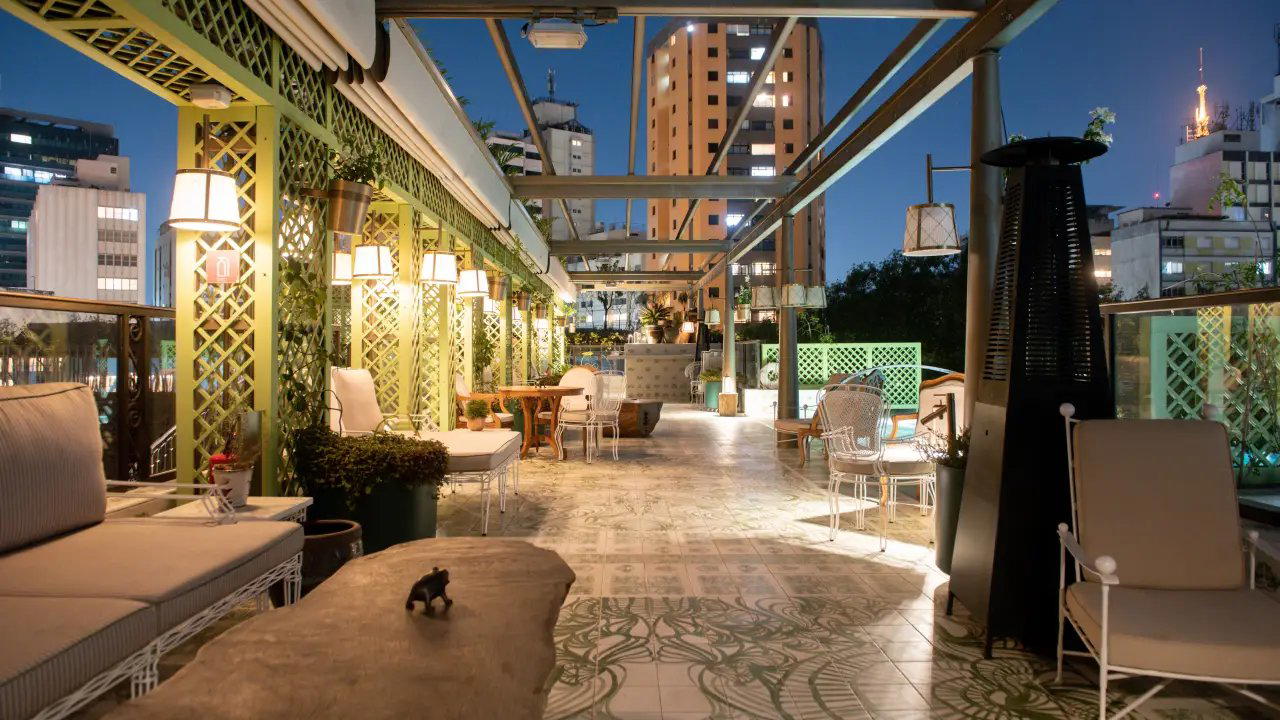
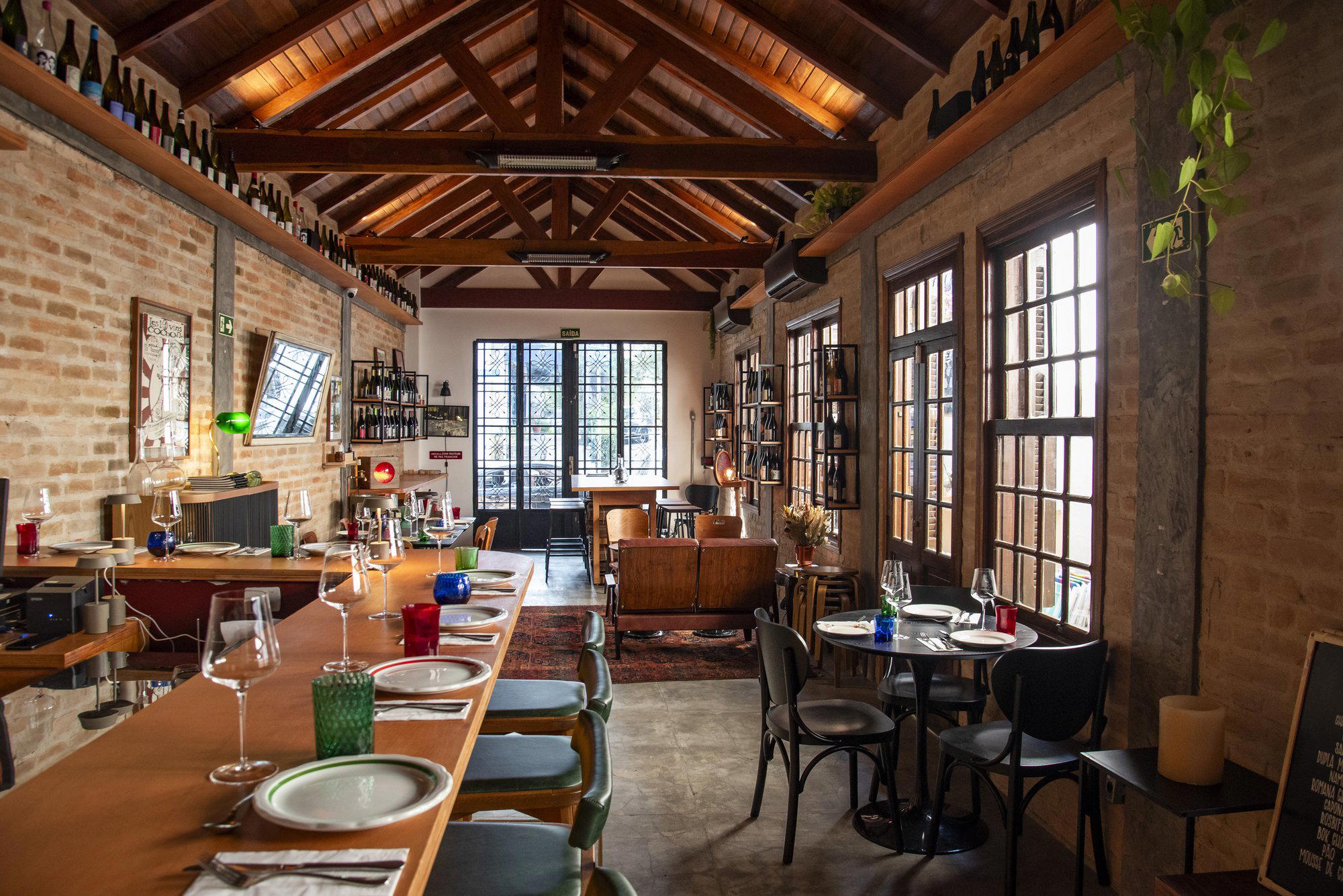
Modern-retro style with uncluttered atmosphere, nostalgic decor recalling its Mooca origins, kitchen counter, and detailed wall and ceiling elements.