Bocca Lupo
Bocca Lupo on Henry Street in Brooklyn's Cobble Hill has anchored the neighbourhood's Italian dining scene for years, offering a convivial room and a kitchen that draws from the regional traditions of Italy. It operates in a tier of Brooklyn trattorias defined by ingredient focus and a loyal local following, rather than tasting-menu formality or destination hype.
- Address
- 391 Henry St, Brooklyn, NY 11201
- Phone
- +17182432522
- Directions
- Get directions
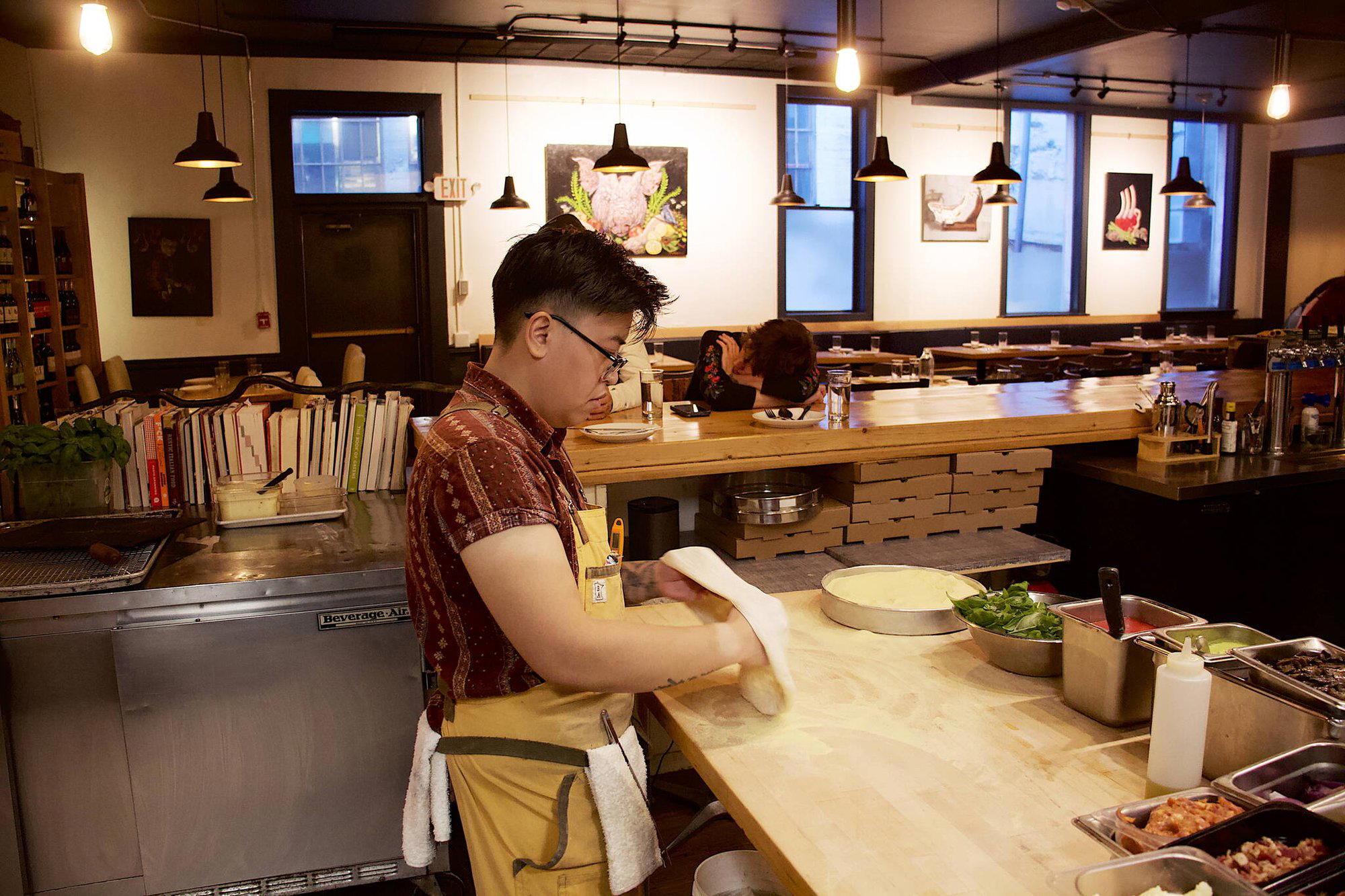
Cobble Hill's Italian Anchor on Henry Street
Brooklyn's Cobble Hill was serving serious Italian food long before the borough's dining reputation caught the attention of the wider food press. The neighbourhood's brownstone blocks and proximity to Carroll Gardens created a residential pocket with a genuine Italian-American heritage, and Henry Street became one of its quieter but more consistent dining corridors. Bocca Lupo is a permanently closed restaurant at 391 Henry Street, Brooklyn, serving Italian Regional Trattoria cooking. Bocca Lupo, at 391 Henry Street, sits inside that tradition rather than apart from it. This is not the kind of address that competes on the same axis as Manhattan's formal Italian rooms or the tasting-counter format that defines the higher price tiers in New York. It operates in a different register entirely: the neighbourhood trattoria, executed with enough seriousness to retain a local following over the long term.
Italian dining in New York spans an enormous range, from the cathedral-ceiling grandeur of mid-century red-sauce institutions to the spare, produce-led formats that have proliferated since the early 2000s. Cobble Hill has historically sat closer to the latter, with a dining culture shaped by residents who know the difference between a shortcut and a genuine kitchen. In that context, longevity on Henry Street is its own credential. Restaurants that survive in residential Brooklyn without the benefit of hotel foot traffic or tourist spillover do so on the strength of repeat customers, and repeat customers in a food-literate neighbourhood are not easily retained.
The Room and Its Register
The sensory character of a well-run Italian trattoria is not accidental. The warmth that reads as atmosphere in these rooms is usually the product of specific physical decisions: ceiling height that keeps sound intimate rather than cavernous, lighting that skews amber, a bar counter positioned so that walk-ins can settle without feeling relegated. Bocca Lupo's Henry Street address places it in a format that Brooklyn has refined over two decades of neighbourhood dining, where the room functions as an extension of the street rather than an escape from it.
Sound matters in this category. The difference between a trattoria that hums and one that shouts is often the difference between a room that fills steadily across a full evening and one that peaks early and empties. The Italian dining tradition that Bocca Lupo connects to is built around the idea of the table as a place to stay, not to turn. That rhythm shapes everything from the pacing of courses to the way the room sounds at 9pm compared to 7pm.
For comparison, the formal Italian experience in New York at the summit of the price tier, represented by restaurants that compete in the same bracket as Le Bernardin or Per Se, operates on an entirely different logic. Those rooms are engineered for silence and ceremony. A neighbourhood trattoria on Henry Street is engineered for conversation, and the physical room reflects that priority.
Italian Regional Tradition in a Brooklyn Frame
The Italian kitchen that most New York neighbourhood restaurants draw from is not a monolith. The country's regional food traditions, from the butter-and-rice conventions of Lombardy to the olive-oil and seafood focus of the southern coastline, produce dramatically different plates, and the serious end of the city's Italian trattoria segment has spent the past two decades moving away from a generic pan-Italian menu toward something more geographically anchored. That shift has been visible across the country, at addresses like Frasca Food and Wine in Boulder, which built its entire identity around Friuli, and at Italian-inflected fine dining operations in the vein of Atelier Moessmer Norbert Niederkofler in Brunico and Dal Pescatore in Runate, both of which represent the northern Italian kitchen at its most committed.
The restaurant operates at a different scale and price point than any of those references, but the broader context matters. The Italian trattoria format that has survived in Brooklyn is the one that maintained coherence in its kitchen approach while keeping the room accessible. That is a harder balance to strike than it appears from the outside. Casualness in the dining room does not require casualness in the kitchen, and the leading neighbourhood Italian restaurants in New York have understood that distinction for years.
Where Bocca Lupo Sits in New York's Italian Spectrum
New York's Italian dining scene functions as a loose hierarchy with little crossover between tiers. At the leading end, destination Italian operates on reservation windows of weeks and price points that position it alongside the city's French and Japanese fine dining. For reference, the Manhattan fine-dining tier that includes Eleven Madison Park, Atomix, and Masa operates in a register and at a price point that is structurally different from what a Cobble Hill trattoria offers. The restaurant does not compete in that tier and does not need to. Its competitive set is the cluster of neighbourhood Italian rooms in Cobble Hill, Carroll Gardens, and Park Slope that have built their followings on consistency and a room that feels genuinely local.
Nationally, the conversation about neighbourhood Italian has been shaped by the contrast between high-concept formats at addresses like Smyth in Chicago or Blue Hill at Stone Barns in Tarrytown and the more grounded, ingredient-forward trattoria tradition. The restaurant belongs to the latter current: a room where the food is the point but the evening is allowed to breathe around it. See our full New York City restaurants guide for broader context on where Italian dining fits within the city's overall scene.
Planning Your Visit
The restaurant is located at 391 Henry Street in Cobble Hill, Brooklyn, accessible via the F and G trains at Bergen Street or the 2 and 3 at Bergen Street on the eastern side of the neighbourhood. As with most neighbourhood restaurants that have built a loyal local following in Brooklyn, evening bookings on weekends fill ahead of time. Contacting the restaurant directly or booking in advance is the practical approach, particularly for groups larger than two. The Henry Street location places it within walking distance of several other Cobble Hill dining options, making it a reasonable anchor for an evening that starts or ends elsewhere in the neighbourhood.
For readers exploring the broader Italian dining conversation beyond New York, addresses worth tracking include Providence in Los Angeles, Lazy Bear in San Francisco, Emeril's in New Orleans, Addison in San Diego, The French Laundry in Napa, Single Thread Farm in Healdsburg, and The Inn at Little Washington, all of which represent different points on the American fine dining spectrum.
Quick reference: 391 Henry St, Brooklyn, NY 11201. Cobble Hill neighbourhood. Evening reservations advised for weekend dining.
Cost and Credentials
Comparable venues nearby, for context on price, style, and recognition.
| Venue | Cuisine | Price | Notes |
|---|---|---|---|
| Bocca LupoThis venue — the venue you are viewing | Not listed | $$ | Not listed |
| Rucola | Not listed | $$ | Downtown Brooklyn-DUMBO-Boerum Hill, Rustic Northern Italian |
| Regina's Grocery | Not listed | $$ | Chinatown-Two Bridges, Classic Italian-American Sandwiches |
| Da Gennaro | Not listed | $$ | SoHo-Little Italy-Hudson Square, Authentic Italian |
| Max Restaurant | Tribeca-Civic Center, Authentic Italian | $$ | Not listed |
| Novelli Cafe & Restaurant | Not listed | $$ | Crown Heights (South), Italian & Middle Eastern Fusion |
Continue exploring
More in New York City
Restaurants in New York City
Browse all →
Bars in New York City
Browse all →
Hotels in New York City
Browse all →






At a Glance
- Cozy
- Intimate
- Classic
- Rustic
- Casual Hangout
- Date Night
- Group Dining
- Standalone
- Craft Cocktails
- Local Sourcing
Exposed-brick setting with a cozy, intimate neighborhood atmosphere and a welcoming bar area.