
Michelin Plate
Our verdict
A Michelin Plate-recognised street kitchen on Hoàng Diệu, Bánh Xèo Bà Dưỡng is Da Nang's most-reviewed address for the city's signature sizzling rice-flour crêpe.

Pearl is the En Primeur Club membership app — saves, bookings, and concierge access live there. Same editors, same standards.
- Address
- 280/23 Hoàng Diệu, Phước Ninh, Hải Châu, Đà Nẵng 550000, Vietnam
- Phone
- +84 236 3873 168
- Hours
- Daily 9:30 AM–9:30 PM
- Directions
- Get directions
The menu
What to order
- Bánh Xèo
- Nem Lụi
- Bò Nướng Lá Lốt
The Alley, the Smoke, and the Sizzle
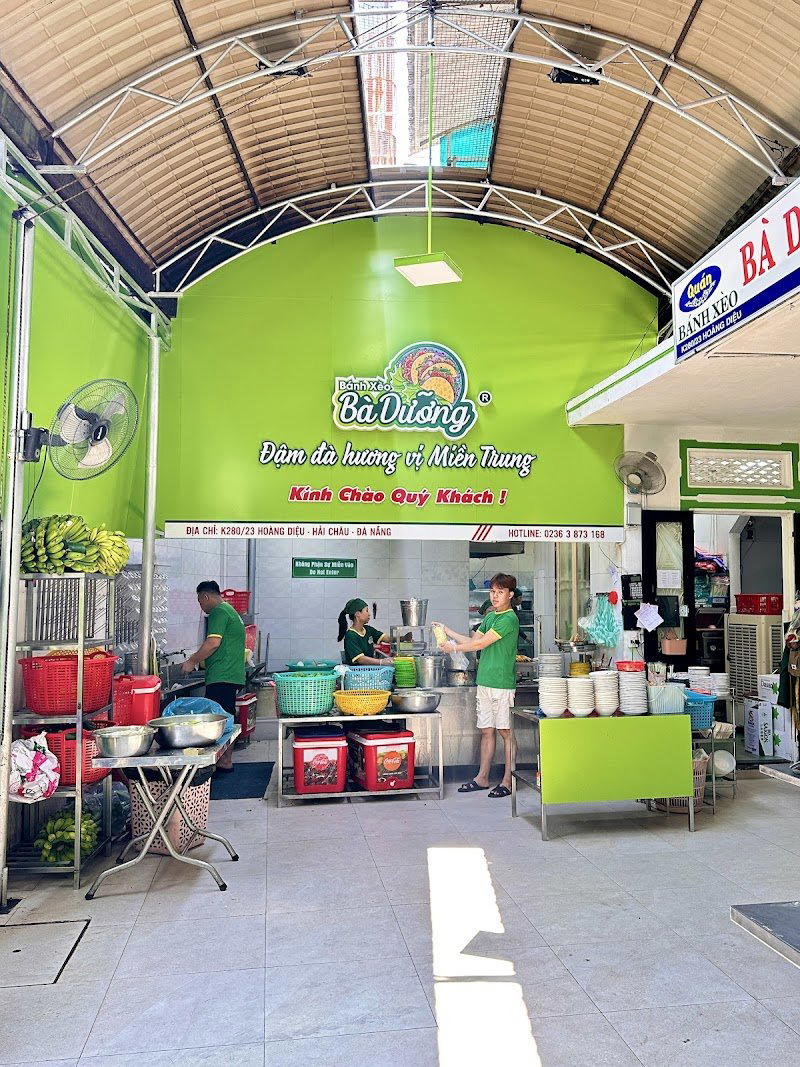
Hoàng Diệu runs through the Hải Châu district as one of Da Nang's more workaday thoroughfares — fruit carts, motorbike repair shops, the kind of street where nobody is performing for visitors. The address for Bánh Xèo Bà Dưỡng is 280/23, which means you turn off the main road into a narrower lane before you arrive. That approach matters. The setting frames what you find inside: a kitchen operating at full volume, the cast-iron pans sending up the thin plume of smoke that signals bánh xèo done properly, with pork fat and high heat rather than the cautious, tourist-adjusted version served closer to the beach resorts. The Michelin Plate awarded in both 2024 and 2025 is recognition that the guide's inspectors found the cooking here worth documenting — not a one-off, but a consistent standard across consecutive years.
What Bánh Xèo Actually Is, and Why Da Nang's Version Differs
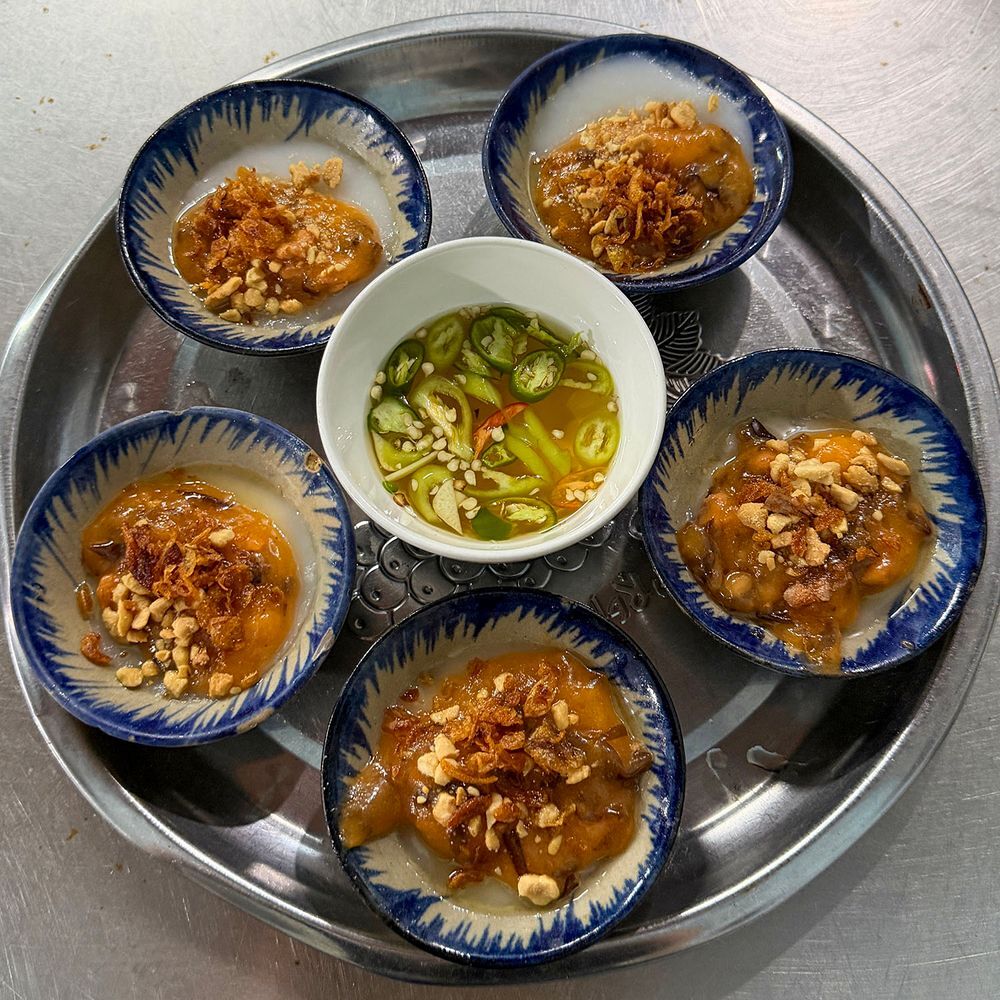
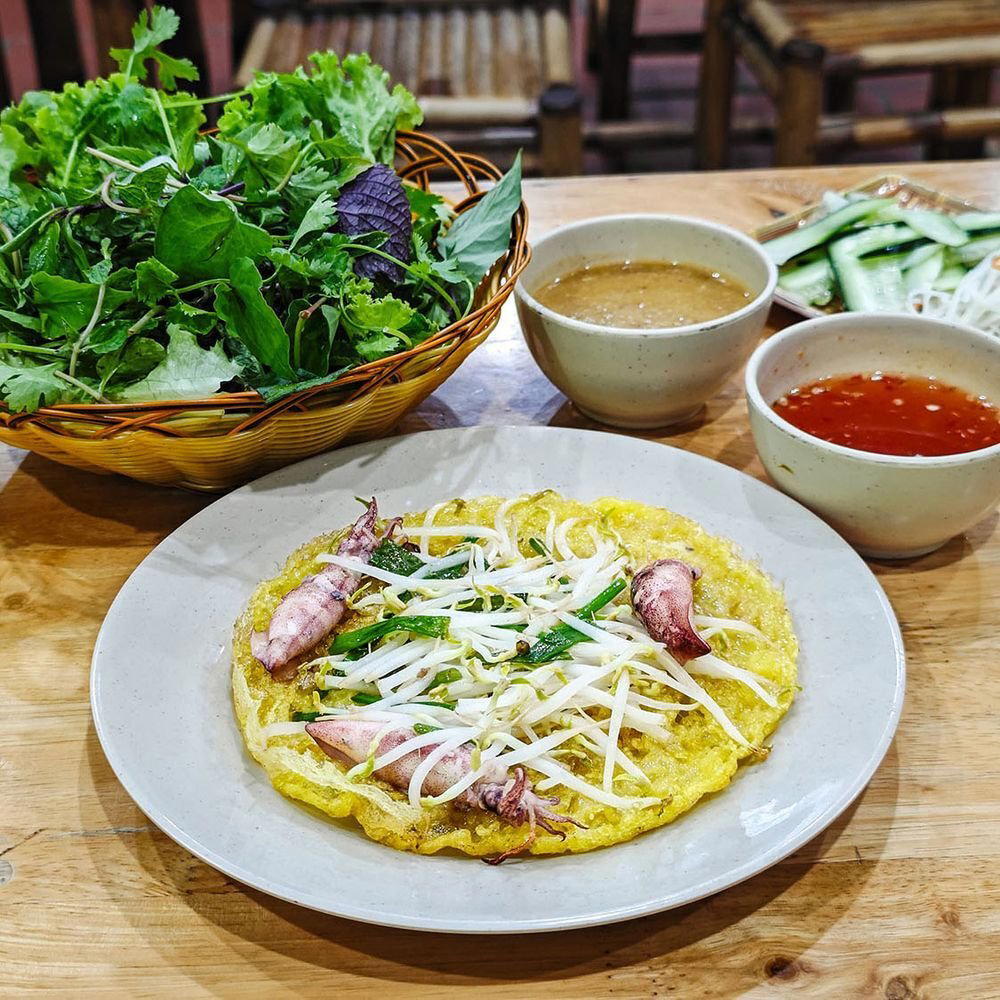
Bánh xèo translates loosely as 'sizzling cake,' the name drawn from the sound the batter makes when it hits a hot pan. The dish appears across southern and central Vietnam, but the central version, Da Nang's version, is smaller and crispier than the Saigon style, the rice-flour shell thinner and more brittle, the filling typically pared back to shrimp, pork, and bean sprouts. The result is less a crêpe in the French sense and more a structural delivery mechanism for what happens at the table afterward.
That afterward is the wrapping ritual. Da Nang's bánh xèo is not eaten fork-to-mouth. Sections of the crêpe are broken off and placed onto sheets of rice paper alongside leaves pulled from a herb plate, typically perilla, mustard greens, and various regional varieties that shift with the season and the market. The bundle is rolled, dipped into a nuoc cham-based sauce, and eaten in one or two bites. The ratio of crêpe to herb to wrapper is a matter of personal calibration, and it's adjusted with each roll. First-time visitors often underestimate how much herb the dish is designed to carry; the leaves are not garnish but structural, cutting the fat of the pork and the starch of the rice paper with green bitterness. This DIY wrapping format is common to a cluster of central Vietnamese dishes, linking bánh xèo to nem lụi, bò lá lốt, and other preparations where the table itself is the final kitchen.
For a broader look at where bánh xèo sits within Da Nang's Vietnamese dining scene, our full Da Nang restaurants guide maps the city's kitchens by district and price tier.
Michelin Recognition at Street-Food Pricing
The Michelin Plate sits one tier below a star in the guide's hierarchy, awarded to kitchens producing food of good quality. Its significance at Bánh Xèo Bà Dưỡng is partly about the category: street-food and single-dish specialists receiving Michelin attention in Vietnam reflects the guide's regional posture, which has been more willing than its European editions to engage with low-cost, high-craft cooking. Consecutive Plate recognition in 2024 and 2025 at a ₫-bracket kitchen confirms that the standard here is not a one-season anomaly.
Volume alone does not produce a 4.3 at that scale; the number implies steady repeat visits and a low proportion of disappointed first-timers. Bánh Xèo 76 and Bánh Xèo Tôm Nhảy Cô Ba are the nearest peer addresses in Da Nang for this specific dish, and comparing the three gives a useful read on how the same central Vietnamese format varies by kitchen and neighbourhood.
Where This Fits in Da Nang's Dining Spread
Da Nang's restaurant scene has sharpened considerably over the past decade, developing a clear split between beach-resort dining aimed at international visitors and the neighbourhood kitchens that operate on local logic and local pricing. Bánh Xèo Bà Dưỡng belongs firmly to the second category. The ₫ price point places it alongside the city's street-food and casual specialists, kitchens like Bếp Cuốn and Bếp Hên, rather than the mid-range or fine-dining tier where a Michelin credential might more predictably appear. Luk Lak represents the step up in format and price, useful context for readers calibrating their itinerary across multiple meals.
The contrast with Da Nang's Michelin-starred address, La Maison 1888, is instructive. Both carry Michelin recognition; the price gap between them is several orders of magnitude. That spread, from ₫ bánh xèo to ₫₫₫₫ French contemporary tasting menus, is one of the more compressed culinary ranges you'll find in any mid-sized Vietnamese city, and it reflects both the speed of Da Nang's development and the resilience of its street-food culture.
For readers who want to extend this kind of Vietnamese cooking across the country, Gia in Hanoi and Tầm Vị in Hanoi represent how the capital's kitchens are approaching regional Vietnamese traditions, while Akuna in Ho Chi Minh City shows how the south is doing the same. Beyond Vietnam, Berlu in Portland and Camille in Orlando are among the diaspora kitchens engaging seriously with these central Vietnamese formats. 1946 Cua Bac in Hanoi, A Bản Mountain Dew in Hanoi, and Agave in Ubon Ratchathani round out a wider regional picture of how Southeast Asian street traditions are being codified and preserved.
Planning Your Visit
The address, 280/23 Hoàng Diệu, Phước Ninh, Hải Châu, requires the short detour off the main road into the lane numbered 280. That navigational wrinkle catches some visitors; mapping apps occasionally drop the pin on the main street rather than the actual entrance. Arriving by motorbike or on foot is direct once you know to look for the lane marker. Prices remain in the ₫ bracket, meaning a full meal with drinks sits well below the threshold of any mid-range restaurant in the city. For accommodation context while planning a stay in Da Nang, our Da Nang hotels guide covers the full range. Those building a wider itinerary can also consult our guides for bars, wineries, and experiences across the city.
Frequently asked questions
What does dinner at Bánh Xèo Bà Dưỡng typically cost?
Pricing at Bánh Xèo Bà Dưỡng is listed as ₫.
What awards or recognition does Bánh Xèo Bà Dưỡng have?
Bánh Xèo Bà Dưỡng has received recognition including: Michelin Plate (2025); Michelin Plate (2024).
What's the best thing to order at Bánh Xèo Bà Dưỡng?
The kitchen is built around one dish: bánh xèo, the crispy central Vietnamese rice-flour crêpe filled with shrimp, pork, and bean sprouts. That singular focus is precisely what earned the restaurant back-to-back Michelin Plates in 2024 and 2025, and ordering anything else isn't really an option — there isn't anything else. Pricing sits at the ₫ tier, making it among the most affordable Michelin-recognised meals in Vietnam.
Nearby-ish Comparables
| Venue | Cuisine | Price | Awards | Notes |
|---|---|---|---|---|
| Bánh Xèo Bà DưỡngThis venue — the venue you are viewing | Central Vietnamese Bánh Xèo | $1–10 | Michelin Plate | Not listed |
| La Maison 1888 | Michelin-Starred French Contemporary | $150–200 | 1 Michelin Star · La Liste Top Restaurants | French Contemporary, ₫₫₫₫ |
| Ăn Thôi | Authentic Vietnamese | $10–20 | Michelin Bib Gourmand | Vietnamese, ₫ |
| Bé Ni 2 | Fresh Local Seafood | $10–20 | Michelin Bib Gourmand | Seafood, ₫₫ |
| Bún Bò Bà Rơi (Hai Chau) | Noodles | Not listed | Not listed | ₫ |
| Cô Chủ Nhỏ | Vietnamese Duck Street Food | $1–10 | Michelin Bib Gourmand | Street Food, ₫ |
Recognition history
Dated appearances from independent guides and award organizations, with the underlying list record or original source where available.
Michelin Plate
Michelin
Full recognition history (3 entries)
Michelin Plate
Michelin
Michelin Plate
Michelin
Details
- Rustic
- Cozy
- Casual Hangout
- Family
- Standalone
- A La Carte
Current opening hours
- Monday
- 9:30 AM–9:30 PM
- Tuesday
- 9:30 AM–9:30 PM
- Wednesday
- 9:30 AM–9:30 PM
- Thursday
- 9:30 AM–9:30 PM
- Friday
- 9:30 AM–9:30 PM
- Saturday
- 9:30 AM–9:30 PM
- Sunday
- 9:30 AM–9:30 PM
Hours can change for holidays and private events. Last verified .
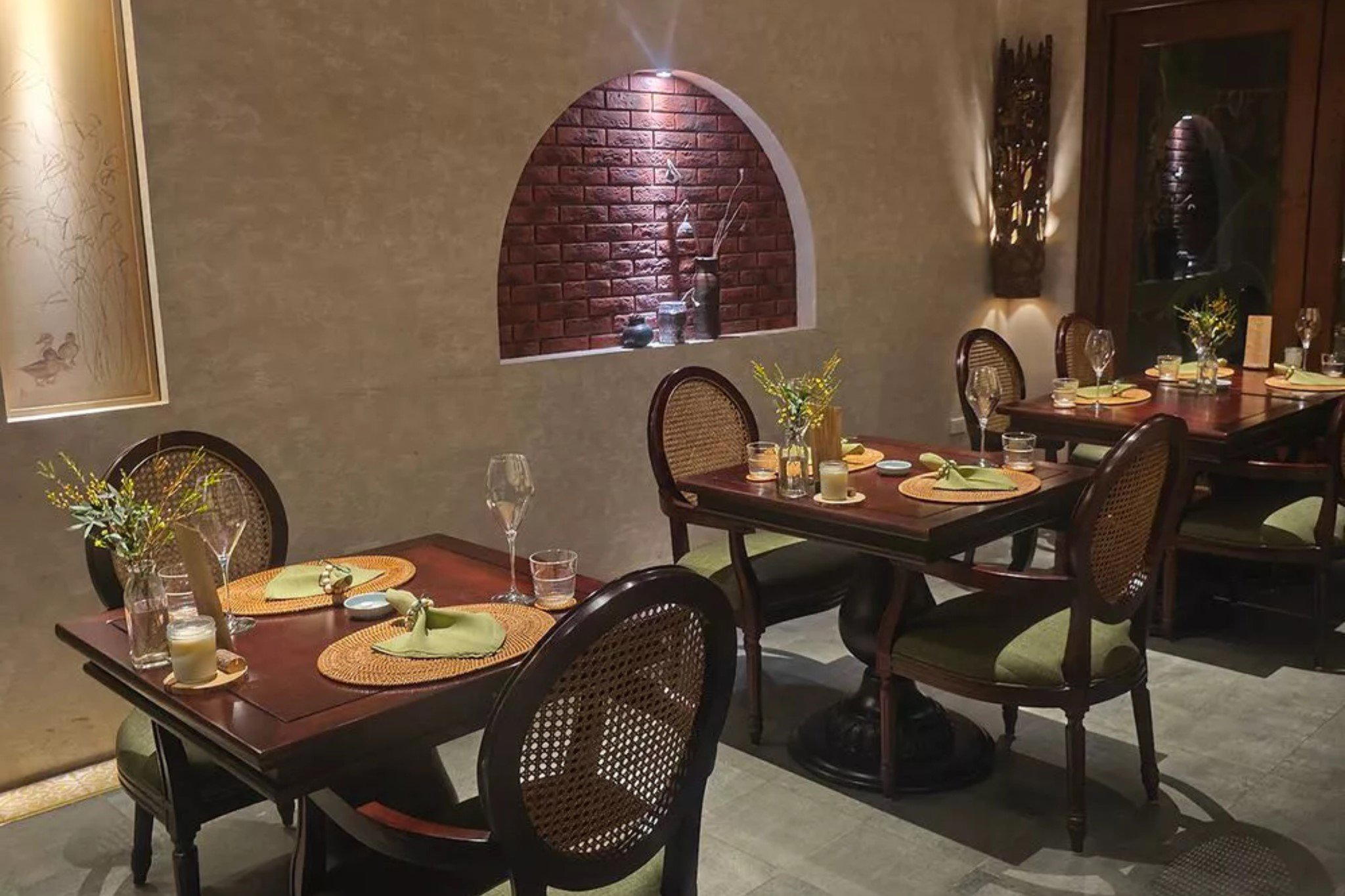
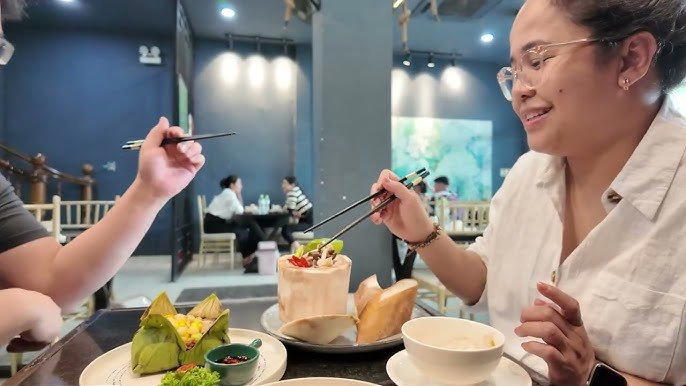
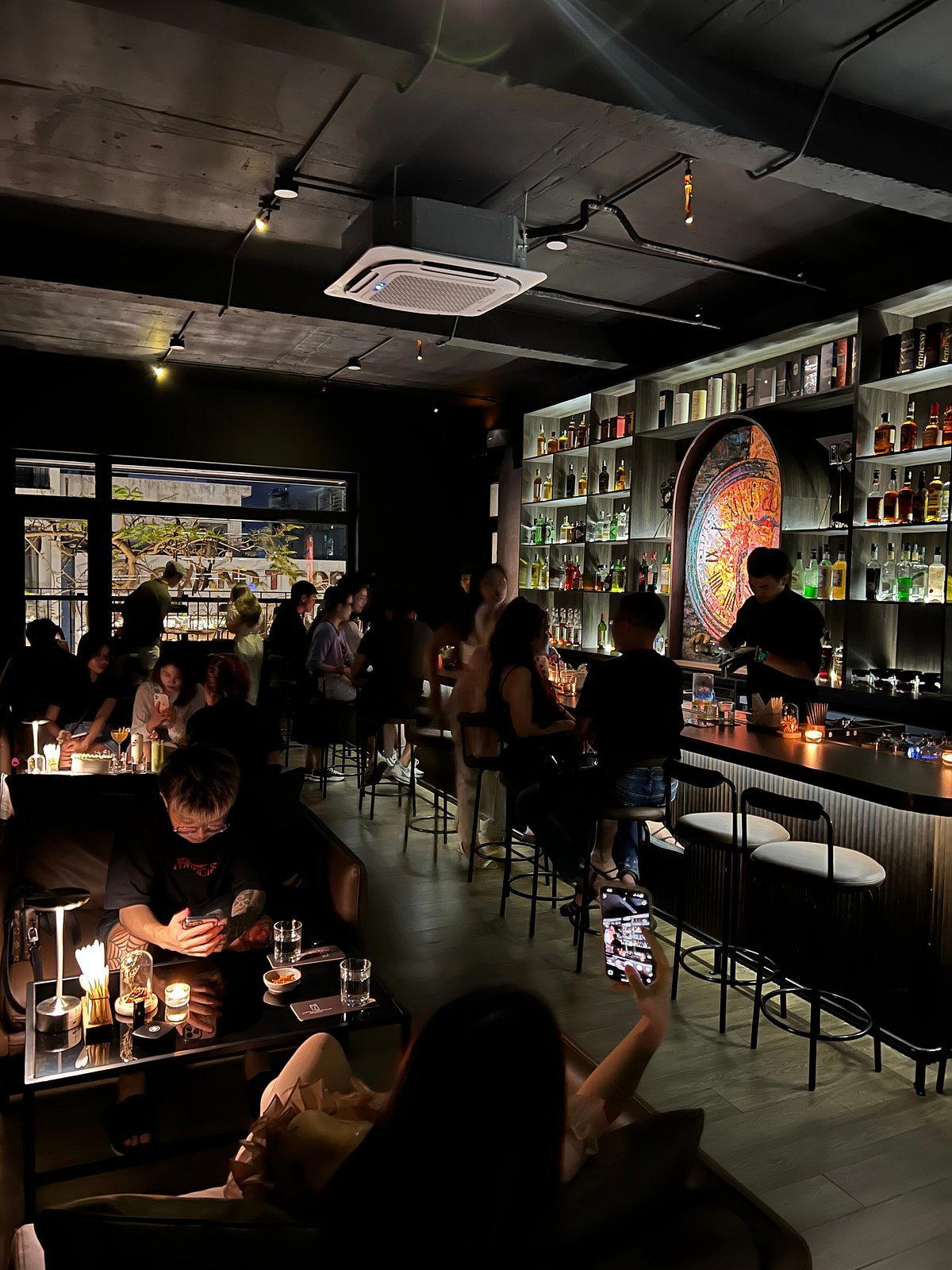
Clean, no-frills local eatery with simple, cozy seating and fast-paced, authentic street-food energy.