Blas


Michelin Plate · AA Rosettes 3 Rosettes · The Good Food Guide GFG Good
Our verdict
Housed inside a converted 1806 windmill on the northwest Pembrokeshire peninsula, Blas takes its name from the Welsh word for 'taste' and earns it through seasonal menus built on local John Dory, Solva crab, and Pembrokeshire lamb. Two consecutive Michelin Plate recognitions confirm its standing as one of the most considered dining rooms in rural Wales. The wine list, supplied by Justerini and Brooks, makes a point of finding serious options below £40.

Pearl is the En Primeur Club membership app — saves, bookings, and concierge access live there. Same editors, same standards.
- Address
- Twr Y Felin Hotel Ffordd Caerfai, St Davids, Haverfordwest SA62 6QT, United Kingdom
- Phone
- +44 1437 725555
- Hours
- Daily 8:30 AM–9 PM
- Website
- blasrestaurant.com
- Directions
- Get directions
- Booking
- Book on the venue's website
The menu
What to order
- Solva crab with swede and chicken skin
- Venison with black pudding
- Monkfish with curried mussels
A Windmill, a Dining Room, and the Pembrokeshire Larder
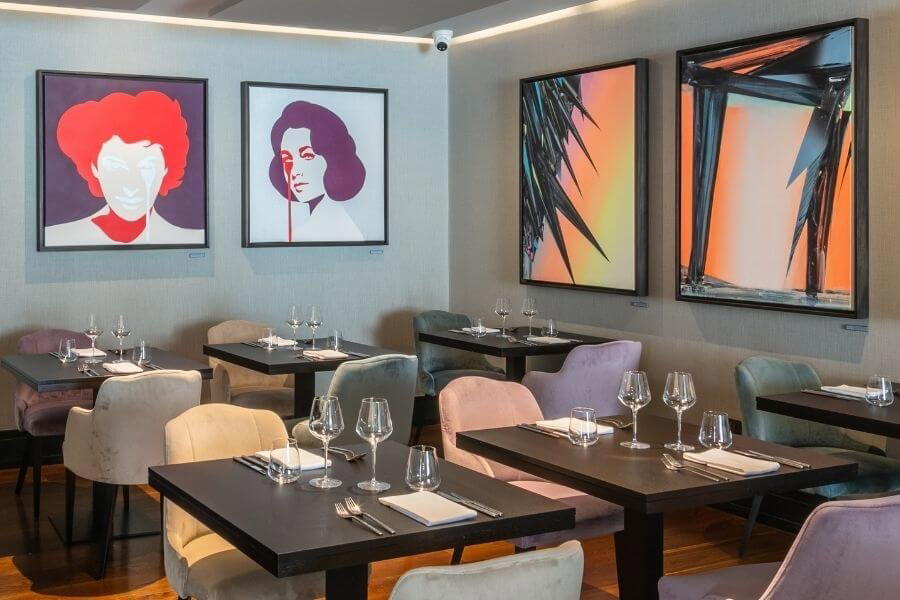
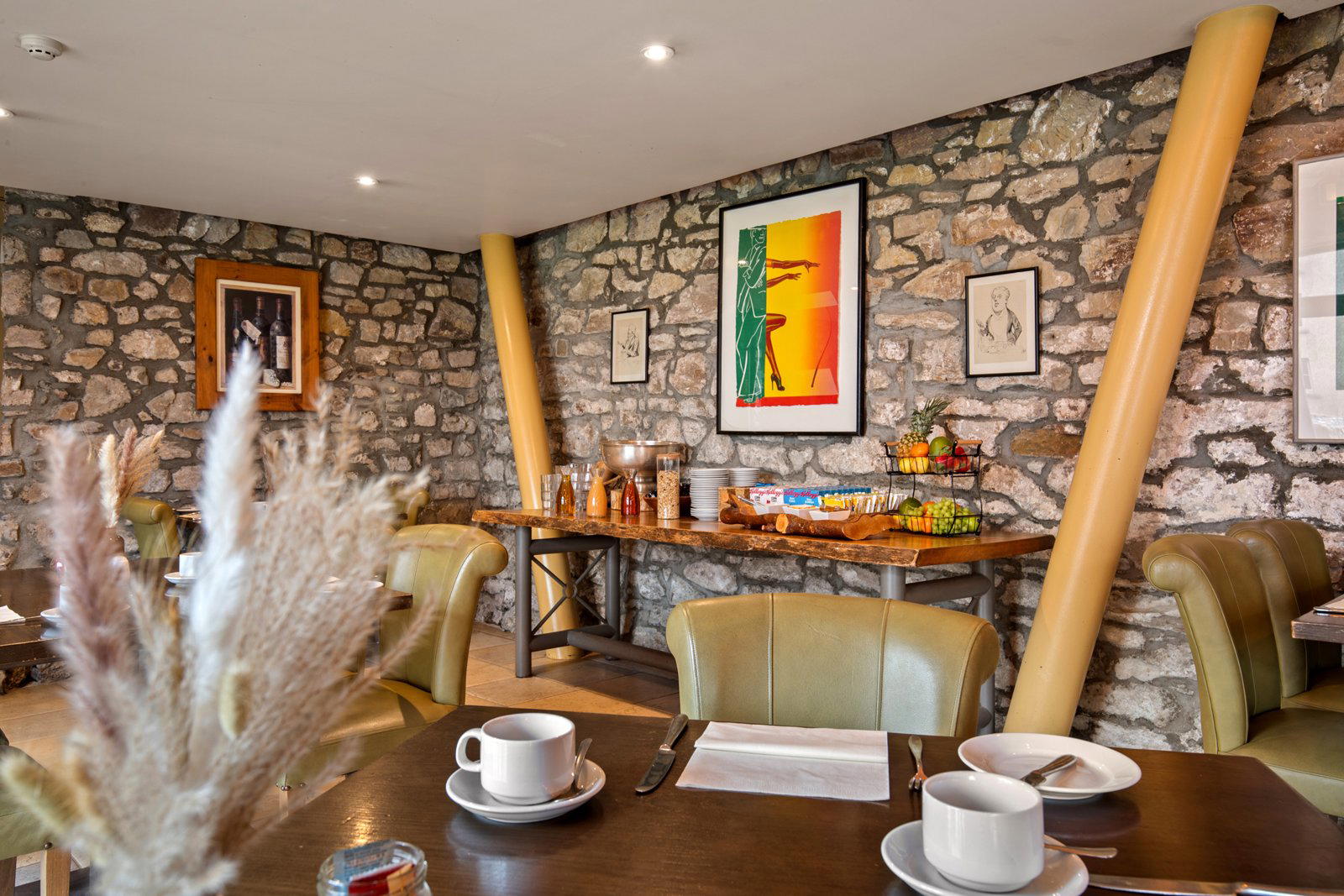
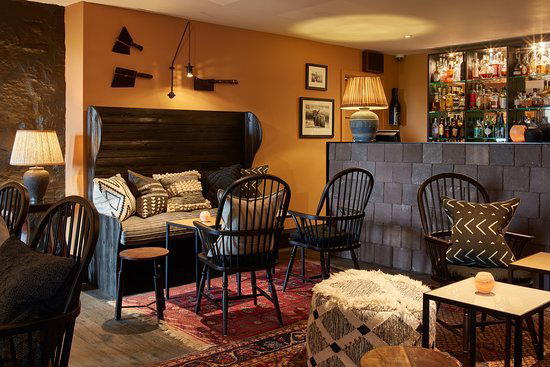
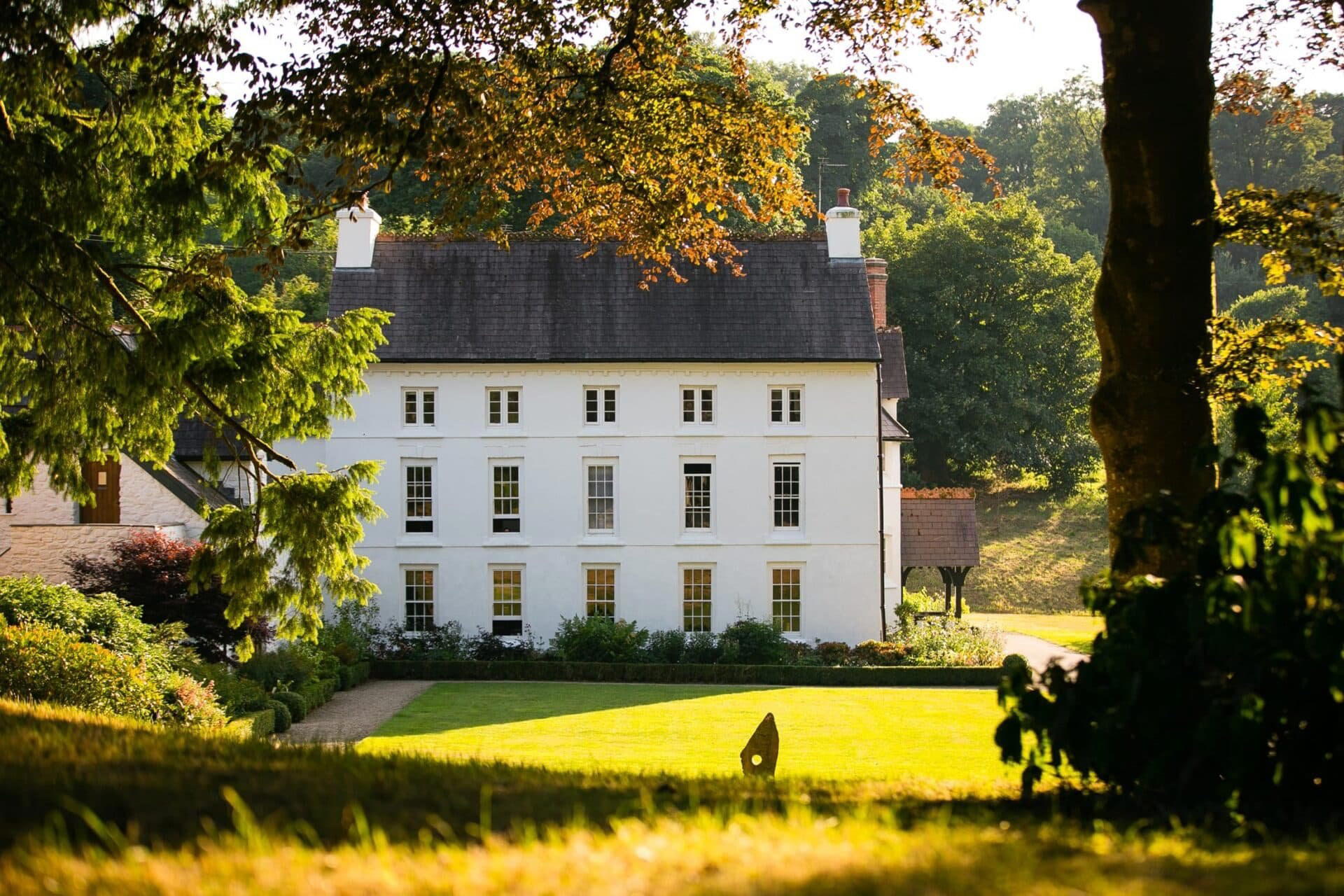
There are not many places in Britain where you eat dinner inside a structure built in 1806 to harness Atlantic wind. The approach to Twr y Felin Hotel along the Caerfai road already signals something different: the old stone tower rises against the northwest Pembrokeshire sky, and the surrounding peninsula has the stripped-back quality of a working coastline rather than a manicured resort. Inside, the dining room is sultrily lit, its walls hung with an extensive collection of contemporary artworks that sit in quiet conversation with the building's industrial bones. The effect is not heritage pastiche. It is a space that takes its own history seriously without being defined by it.
Blas, the hotel's restaurant, takes its name from the Welsh word for taste. The name does real editorial work here, because the kitchen's orientation is consistently towards what this particular corner of Wales actually produces, rather than towards any imported culinary programme. That distinction matters more than it might sound in a region that has spent decades watching its leading produce leave for London tables.
Pembrokeshire as a Producing Region
The Pembrokeshire coast holds a specific agricultural and marine identity within Wales. The peninsula's relatively mild climate, shaped by the Gulf Stream, supports a growing season that extends beyond what the latitude might suggest, and the inshore waters around St Davids produce crab, John Dory, monkfish, and other species that rarely appear on restaurant menus more than a few miles from where they were landed. For a kitchen committed to seasonal sourcing, this is a material advantage rather than a marketing position.
Menus at Blas reflect that geography in concrete terms. Solva crab, landed from the small harbour a few miles east of St Davids, appears as a starter paired with swede, chicken skin, and chervil. John Dory, a fish that rewards careful handling and tends to suffer in long supply chains, features as a seasonal main. Pembrokeshire lamb, raised on the salt-marsh grassland characteristic of the peninsula's coastal farms, takes its place on the menu when the season supports it. These are not decorative sourcing notes. They represent the actual protein and produce architecture of the menu.
The approach connects Blas to a broader pattern in British regional cooking, where the most interesting work is often happening at the periphery rather than the centre. Restaurants like L'Enclume in Cartmel and Moor Hall in Aughton have demonstrated that proximity to a specific producing region, combined with the discipline to cook within it, can generate a culinary identity that city restaurants with access to every supplier cannot replicate. Gidleigh Park in Chagford occupies a similar position in relation to Dartmoor's larder. Blas operates on the same logic, scaled to St Davids and its peninsula.
How the Kitchen Works the Ingredients
The cooking style is modern rather than rustic, which is the correct register for ingredients of this quality. Pared-back plating and restrained technique let the sourcing do the argumentative work, while original combinations prevent the menu from reading like a simple list of local things on plates. Venison arrives with black pudding, beetroot, and blackcurrant, a set of accompaniments that speak the dialect of game cookery without repeating its clichés. Charred onion is paired with hazelnuts, Parmesan, and thyme in a vegetable-led opener that treats an unglamorous ingredient as a serious subject. Monkfish comes with curried mussels, parsnip, and a caper and raisin purée whose sweet-sharp register signals a kitchen paying attention to the full flavour arc of a dish rather than just its headline protein.
Dessert section applies the same logic. Chocolate ganache with passion fruit, salted crumbs, and banana and miso ice cream is a composition where savoury elements are doing structural work, not functioning as the token unconventional note. This is the kind of detail that separates a kitchen with genuine technical ambition from one that has absorbed the visual grammar of contemporary fine dining without the underlying thinking.
Michelin has awarded Blas its Plate recognition in both 2024 and 2025, a signal that the guide's inspectors regard the cooking as competent and considered at a consistent level. For context, the Michelin Plate sits below Star level but above a simple listing, and in a county like Pembrokeshire, where Starred restaurants are rare, it places Blas in the top tier of serious dining options for the region. Those interested in the upper bracket of Michelin-recognised British cooking can explore properties like The Ledbury in London, hide and fox in Saltwood, or Midsummer House in Cambridge for comparison across the national range.
The Wine List and What It Signals
The wine programme, supplied by Justerini and Brooks, makes a point of offering genuine choice below £40, which is a meaningful editorial stance at a hotel restaurant in a rural location where captive-audience pricing is the path of least resistance. Justerini and Brooks is one of the older British wine merchants, with a portfolio that runs across Europe and the New World, and their involvement as supplier tends to produce lists with range and coherence rather than the branded-wine padding that fills many hotel dining rooms. The list functions as an honest companion to the menu rather than a revenue extraction mechanism.
Arriving and Planning a Visit
St Davids is the smallest city in the United Kingdom by population, a designation it holds by virtue of its cathedral rather than its scale. Reaching it requires either a drive along the A487 through Haverfordwest, roughly 45 minutes from Fishguard or 90 minutes from Carmarthen, or a rail journey to Haverfordwest followed by a connecting bus or taxi. The address is Twr y Felin Hotel, Ffordd Caerfai, St Davids SA62 6QT. The restaurant sits within the hotel, which means stays and dinner can be combined; for travellers exploring Pembrokeshire more broadly, the St Davids hotels guide covers the full accommodation range in the area.
The price range sits at the ££ level, which positions Blas as accessible relative to its Michelin Plate standing and well below the ££££ bracket occupied by London comparators such as The Fat Duck in Bray or Le Manoir aux Quat' Saisons. For a kitchen cooking at this level of technical ambition and ingredient quality, the value proposition is direct. For those planning a full itinerary around the city, the St Davids restaurants guide, bars guide, wineries guide, and experiences guide map the wider options across the peninsula.
Frequently asked questions
Is Blas good for families?
Blas sits inside a boutique hotel with a considered, artwork-hung dining room — the atmosphere leans toward relaxed adults rather than young children. The ££ price range and modern cooking style, with dishes built around Pembrokeshire seasonal produce, make it a reasonable choice for older children or teenagers with an appetite for ingredient-led food, but there is no specific family-format menu documented for the restaurant.
Is Blas formal or casual?
The setting — a 19th-century windmill converted into a boutique hotel with contemporary art and low lighting — signals a relaxed sophistication rather than formality. Michelin awarded the restaurant a Plate in both 2024 and 2025, which reflects cooking quality rather than dress code; the tone throughout is described as friendly and proud rather than stiff. Think considered modern dining in a room that takes its food seriously without demanding a jacket.
Is Blas award-winning?
Blas has received recognition including: Originally built in 1806 as a working windmill, the Twr y Felin Hotel features contemporary artwork and is decorated in an understated, modern style. Its restaurant, named after the Welsh word for 'taste’, offers appealing menus which showc….
What do people recommend at Blas?
Michelin's own notes single out dishes that pair local seafood — Solva crab, monkfish — with inventive accompaniments, as well as land-based plates such as venison with black pudding, beetroot, and blackcurrant. Desserts with savoury inflections, including a chocolate ganache with banana and miso ice cream, also draw attention. The wine list, supplied by Justerini and Brooks with meaningful options below £40, is consistently noted as a strength alongside the kitchen's restraint with high-quality Pembrokeshire ingredients.
Quick Comparison
| Venue | Cuisine | Awards |
|---|---|---|
| BlasThis venue — the venue you are viewing | Modern British Fine Dining | Michelin Plate · AA Rosettes 3 Rosettes |
| The Ledbury | Modern European, Modern Cuisine | Michelin 3 Star |
| Sketch, The Lecture Room and Library | Modern French | Michelin 3 Star |
| CORE by Clare Smyth | Modern British | Michelin 3 Star |
| Restaurant Gordon Ramsay | Contemporary European, French | Michelin 3 Star |
| Dinner by Heston Blumenthal | Modern British, Traditional British | Michelin 2 Star |
Recognition history
Dated appearances from independent guides and award organizations, with the underlying list record or original source where available.
Michelin Plate
Michelin
AA Rosettes 3 Rosettes
AA Rosettes
The Good Food Guide GFG Good
The Good Food Guide
Full recognition history (5 entries)
Michelin Plate
Michelin
Michelin Plate
Michelin
Continue exploring
More in St Davids
Restaurants in St Davids
Browse all →
Hotels in St Davids
Browse all →
Details
- Modern
- Elegant
- Intimate
- Sophisticated
- Special Occasion
- Date Night
- Historic Building
- Hotel Restaurant
- Extensive Wine List
- Local Sourcing
- A La Carte
- Wine
- Vegetarian Friendly
- Vegan Options
- Gluten Free Options
- Allergy Accommodating
Current opening hours
- Monday
- 8:30 AM–9 PM
- Tuesday
- 8:30 AM–9 PM
- Wednesday
- 8:30 AM–9 PM
- Thursday
- 8:30 AM–9 PM
- Friday
- 8:30 AM–9 PM
- Saturday
- 8:30 AM–9 PM
- Sunday
- 8:30 AM–9 PM
Hours can change for holidays and private events. Last verified .
Sultrily lit with mood lighting and contemporary artworks on greige walls, creating an ambient yet sometimes dark atmosphere.