On the Mexico-Querétaro highway at Km 152.1, Barbacoa Santiago operates as a roadside institution where the slow-cooked lamb tradition of central Mexico is the entire point. Positioned between Mexico City and Querétaro, it draws travellers who know that the Palmillas corridor is where weekend barbacoa culture runs deepest. The format is as direct as the food: no reservations, no theatrics, just lamb cooked the way the region has done it for generations.
Pearl is the En Primeur Club membership app — saves, bookings, and concierge access live there. Same editors, same standards.
- Address
- Carr. México-Querétaro Km 152.1 (Palmillas), 76830 Palmillas, Querétaro de Arteaga
- Directions
- Get directions
 Saves & bookings on Pearl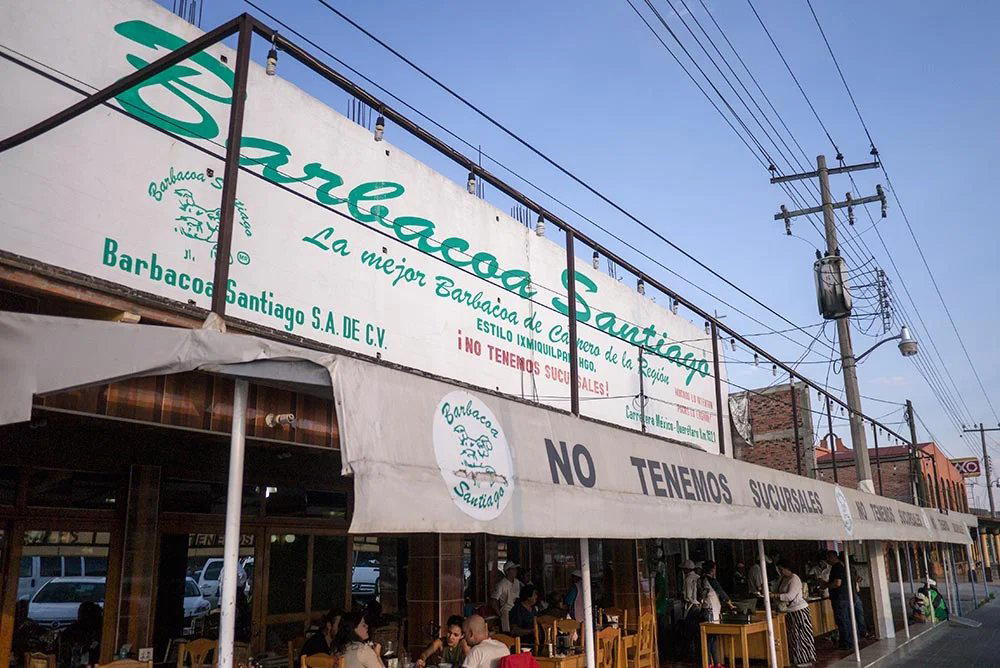
Where the Highway Meets the Pit
The stretch of Carretera México-Querétaro between the capital and Querétaro city is not typically considered a dining destination in the way that, say, Valle de Guadalupe or Oaxaca commands attention from food-focused travellers. But at Km 152.1 in Palmillas, a different kind of culinary geography applies. This is the central Mexican altiplano, where the land is dry, the agave grows thick, and the tradition of slow-cooking lamb underground in magueyed pits has been continuous for centuries. Barbacoa Santiago sits inside that tradition rather than reinterpreting it. The physical approach tells you this immediately: roadside position, the faint smoke in the air before you arrive, the queue that forms on weekend mornings. For a certain kind of traveller on the Mexico City-Querétaro corridor, this is the intended stop.
The Ingredient Logic of Central Mexican Barbacoa
Understanding what makes Palmillas-area barbacoa worth a deliberate detour requires understanding how the ingredient chain works. Central Mexican barbacoa is lamb-specific, which separates it sharply from the beef-dominant barbacoa of northern Mexico or the slower-cooked goat preparations found further south. The lamb comes from the surrounding high-altitude ranches of the Querétaro-Hidalgo corridor, where animals graze on scrubland that gives the meat a particular mineral character. This is not a supply chain that runs through a distribution centre. The proximity of the ranch to the pit is the whole point, and it is why the tradition is geographically fixed in ways that urban versions, however competent, cannot fully replicate.
The cooking medium is equally sourced from the land. Maguey leaves, from the same agave plants that define the visual character of this part of Mexico, line the underground pit and wrap the meat. They transfer moisture and a low vegetal bitterness during the eight-to-twelve-hour cook, which is why barbacoa from this region has a flavour depth that cannot be reproduced by oven or pressure cooker approximations. The consommé that emerges from the same pit, collected from the meat's dripping fat and juices over those overnight hours, is itself an argument for the process: gelatinous, intensely savoury, carrying the full record of what has been cooked above it. Across Mexico's more discussed restaurant scene, from Pujol in Mexico City to Levadura de Olla Restaurante in Oaxaca, chefs have spent years finding ways to reference these indigenous techniques at the fine-dining table. At Barbacoa Santiago, there is no translation layer. The technique is the restaurant.
The Palmillas Corridor as a Barbacoa Geography
Palmillas is not a dining neighbourhood in the conventional sense. It is a transit point, a pueblo alongside one of Mexico's most-travelled highways, and the restaurants that have earned reputations here have done so precisely because they serve travellers moving between two of the country's largest urban centres. The Querétaro state border is close, and the culinary character shifts noticeably from the Mexico City basin's broader range to something more specific: carnivorous, slow-cooked, weekend-oriented. Barbacoa, by its nature, is a Saturday and Sunday food across central Mexico. The overnight preparation cycle means weekday availability is inconsistent at leading, and any serious visit to Barbacoa Santiago should be planned around a morning arrival on a weekend, when the lamb is freshest and the full range of preparations is available.
This weekend-morning dynamic is worth understanding before you arrive. At comparable roadside institutions along the Querétaro corridor, the window between opening and sell-out can be under three hours. The format here is not one designed for lingering over multiple courses; it is designed for the focused consumption of barbacoa in its several forms, tortillas made from fresh masa, salsa verde and rojo prepared in volume, and the consommé served alongside. Logistics aside, the meal is typically fast and the turnover rapid, which makes the experience feel closer to a market stop than a restaurant visit in the contemporary sense. That is not a criticism. It is the correct register for what this tradition actually is.
How It Fits the Broader Mexican Dining Map
Mexico's restaurant conversation at the international level is dominated by a relatively small number of urban flagship addresses and a growing number of farm-proximity destination restaurants like Animalón in Valle de Guadalupe and Lunario in El Porvenir. These are places where sourcing is made visible, narrated, and placed at the centre of the dining proposition. What is less often discussed is the category of places where sourcing is simply assumed, embedded in a tradition so old and so locally specific that it requires no explanation to its regular clientele. Barbacoa Santiago belongs to this latter category. It is not operating in the same competitive space as KOLI Cocina de Origen in Monterrey or Pangea in San Pedro Garza Garcia. The comparison that matters is to the other roadside barbacoa operations of Hidalgo and Querétaro state, the benchmark institutions that have served the same dish in the same way for decades. Within that peer group, a roadside address at Km 152.1 with a sustained draw from Mexico City travellers is itself a form of credential.
For travellers building a more comprehensive picture of Mexican regional food, the Palmillas stop fits logically into a corridor that includes California Prime Rib in Celaya to the north and points further afield like Carnitas Don Vasco in Cancún, which operates a parallel tradition of slow-cooked pork in the Yucatan peninsula. The common thread is meat cooked slowly using techniques that predate the restaurant industry, served in formats that prioritise the ingredient over the setting. See also our full Palmillas restaurants guide for additional context on what the town offers beyond this single stop.
Planning Your Visit
Barbacoa Santiago sits at Km 152.1 on the Carretera México-Querétaro, making it accessible by car from both Mexico City (roughly two hours under normal traffic conditions) and Querétaro city (under an hour). Weekend mornings are the recommended window, both for freshness and to ensure the full preparation is available before supply runs out. Dress is casual by the nature of the setting, and the meal is priced in line with regional roadside tradition rather than the $$$$ tier represented by urban counterparts like Le Chique in Puerto Morelos or HA' in Playa del Carmen. No phone number is publicly listed; walk-in is the operating model.
Quick Comparison
Comparable venues nearby, for context on price, style, and recognition.
| Venue | Cuisine | Price | Notes |
|---|---|---|---|
| Barbacoa SantiagoThis venue — the venue you are viewing | Traditional Mexican Barbacoa | $$ | Not listed |
| Siembra Taquería | Modern Mexican Taqueria | $$ | Granada |
| Carlos'n Charlie's | Lively Mexican Party Restaurant | $$ | 2300500010421 |
| Taquería La Popular Arcos | Contemporary Mexican Taquería | $$ | Cooperativa Palo Alto |
| Planta Baja Restaurant - Sky Bar | Mexican Seafood Sky Bar | $$ | El Sauzal |
| Tacos Árabes Bagdad | Traditional Tacos Árabes | $$ | Centro |
Continue exploring
More in Palmillas
Restaurants in Palmillas
Browse all →
Bars in Palmillas
Browse all →

At a Glance
- Rustic
- Classic
- Well Known
- Lively
- Family
- Group Dining
- Casual Hangout
- Standalone
- Local Sourcing
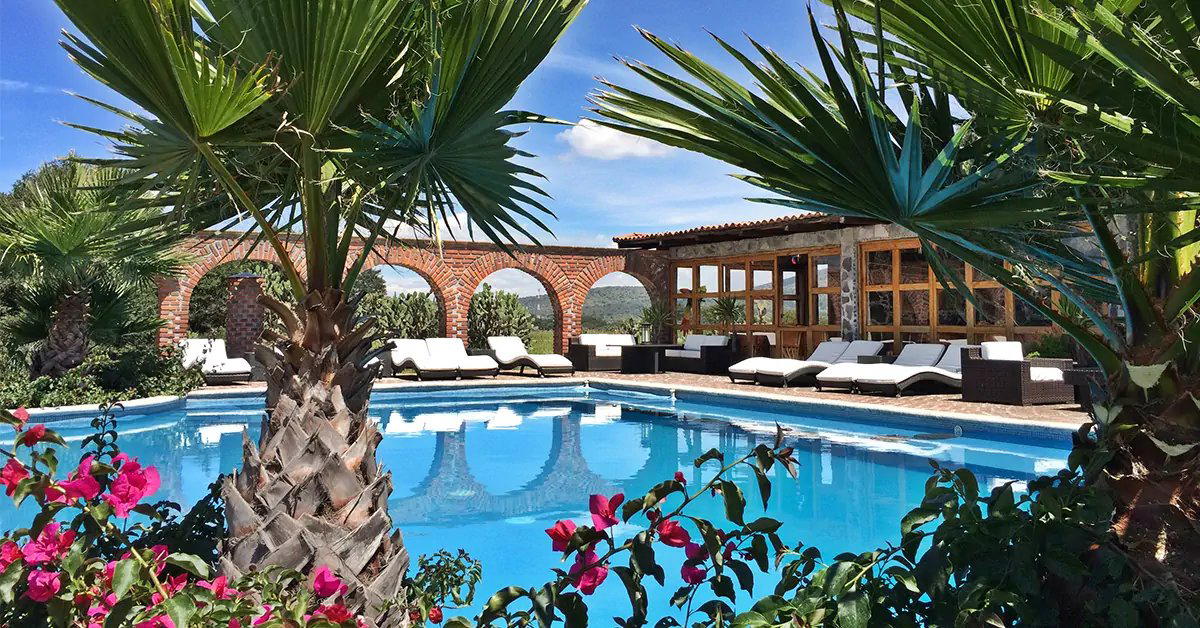
A large roadside destination with a traditional, bustling atmosphere centered on pit-cooked barbacoa, handmade tortillas, and a steady stream of travelers and families.
Know Before You Go
- Getting there
- Carr. México-Querétaro Km 152.1 (Palmillas), 76830 Palmillas, Querétaro de Arteaga